
Azure Synapse vs Snowflake: Which Cloud Data Warehouse is Right for You?
Azure Synapse vs Snowflake: these two cloud data warehouse platforms are dominating the data landscape, each offering powerful tools for storing, processing, and analyzing vast amounts of data. But with so many similarities, how do you choose the right one for your needs?
Choosing the right platform depends on your specific use cases, data volume, performance requirements, and budget constraints. This blog post will dive deep into the key features, benefits, and drawbacks of both Azure Synapse and Snowflake, providing you with a comprehensive comparison to help you make an informed decision.
Introduction
Azure Synapse Analytics and Snowflake are two popular cloud-based data warehousing and analytics platforms. Both offer a comprehensive suite of tools and services for data integration, transformation, storage, and analysis. This comparison explores the key features, target audience, and use cases of each platform to help you determine which best suits your needs.
Target Audience
The target audience for each platform varies based on their specific features and capabilities.
- Azure Synapse Analytics:Primarily targets organizations that are already heavily invested in the Microsoft Azure ecosystem. It is ideal for companies looking for a platform that seamlessly integrates with other Azure services, such as Azure Data Factory, Azure Databricks, and Azure Machine Learning.
Choosing between Azure Synapse and Snowflake is like deciding how to calculate your company’s profitability: do you focus on the gross profit vs net profit , or do you consider all the expenses? Both Azure Synapse and Snowflake are powerful data warehousing solutions, but their strengths lie in different areas.
Ultimately, the best choice depends on your specific needs and budget, just like choosing the right financial metric to measure your company’s success.
It’s a good fit for organizations with a strong need for real-time analytics and data exploration.
- Snowflake:Appeals to a broader audience, including organizations that are not necessarily using other AWS services. Its focus on scalability, performance, and ease of use makes it a popular choice for companies of all sizes. It’s particularly well-suited for organizations with large data volumes and complex analytical needs.
Data Ingestion and Storage: Azure Synapse Vs Snowflake
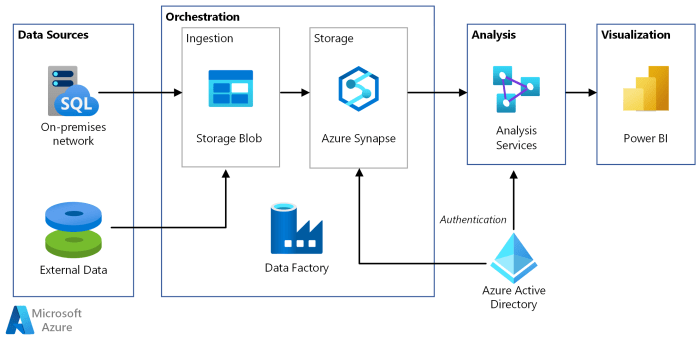
Data ingestion and storage are fundamental aspects of any data warehouse solution. Azure Synapse and Snowflake, being leading cloud data warehouses, offer diverse and robust capabilities in this area. This section delves into the different data ingestion methods supported by both platforms and explores the various storage options available, highlighting the performance implications of each approach.
Data Ingestion Methods
Data ingestion refers to the process of moving data from source systems into a data warehouse. Both Azure Synapse and Snowflake offer a range of methods to accommodate various data sources and ingestion needs.
- Azure Synapse
- Polybase:Enables direct query of data residing in various data sources like Azure Blob Storage, Azure Data Lake Storage, and even on-premises data sources. This method allows you to perform analysis without moving data, making it efficient for ad-hoc queries.
- Copy Activity in Azure Data Factory:Provides a robust and scalable solution for copying data from diverse sources into Azure Synapse. This method is particularly useful for scheduled data loads and can be integrated with various data transformation tools.
- Azure Synapse Link for Azure Cosmos DB:Enables real-time ingestion of data from Azure Cosmos DB into Azure Synapse. This method is ideal for scenarios where near real-time analytics is required.
- Azure Synapse Analytics Serverless SQL Pools:Offer a serverless approach to data ingestion. Data can be loaded into serverless SQL pools directly from various sources, including Azure Blob Storage and Azure Data Lake Storage, without the need for a dedicated server.
- Snowflake
- Snowpipe:A continuous data ingestion service that automatically loads data from cloud storage sources like Amazon S3, Azure Blob Storage, and Google Cloud Storage into Snowflake tables. This method is particularly efficient for handling high-volume, real-time data streams.
- Stage:A temporary storage area in Snowflake where data is loaded before being ingested into tables. Stages can be configured to use various storage providers, including Snowflake’s internal storage, Amazon S3, Azure Blob Storage, and Google Cloud Storage.
- Copy Command:Enables data loading from various sources, including external stages, other tables, and even files stored in cloud storage. This method provides flexibility for various data ingestion scenarios.
- Tasks:Snowflake’s Tasks feature allows for scheduled data ingestion and transformation. Tasks can be configured to run on a predefined schedule and can be used to automate data loading and processing workflows.
Storage Options
Data storage is another crucial aspect of data warehousing. Both Azure Synapse and Snowflake offer diverse storage options to accommodate different data characteristics and performance requirements.
- Azure Synapse
- Dedicated SQL Pools:Provide a traditional relational database approach to data storage. Data is stored in tables and can be accessed using SQL queries. This option is suitable for scenarios requiring high-performance query processing and ACID (Atomicity, Consistency, Isolation, Durability) properties.
- Serverless SQL Pools:Offer a serverless approach to data storage. Data is stored in a serverless environment and can be accessed using SQL queries. This option is cost-effective and scales automatically based on demand, making it suitable for scenarios where performance requirements are less stringent.
- Azure Data Lake Storage Gen2:Provides a highly scalable and cost-effective storage solution for large datasets. Data is stored in a flat file system, offering flexibility and enabling various data processing scenarios. This option is ideal for scenarios requiring large-scale data storage and processing.
- Snowflake
- Internal Storage:Snowflake’s internal storage is a fully managed data storage service optimized for query performance. Data is stored in a highly scalable and secure environment, offering a high level of availability and reliability. This option is ideal for scenarios where performance and data integrity are critical.
- External Stages:Allow you to use external storage services like Amazon S3, Azure Blob Storage, and Google Cloud Storage for data storage. This option provides flexibility and cost-effectiveness, especially for large datasets. This option is suitable for scenarios where cost optimization and integration with existing storage infrastructure are priorities.
Performance Implications of Different Storage Approaches
The choice of storage approach significantly impacts the performance of data warehousing operations. Different storage options offer varying levels of performance and scalability, making it essential to select the most appropriate option based on the specific use case.
- Azure Synapse
- Dedicated SQL Pools:Generally offer high query performance due to their optimized storage and indexing capabilities. However, they can be more expensive compared to serverless SQL pools.
- Serverless SQL Pools:Provide cost-effective storage, but query performance might be slightly lower compared to dedicated SQL pools, especially for complex queries.
- Azure Data Lake Storage Gen2:Offers high scalability and cost-effectiveness but might not be as optimized for query performance as dedicated SQL pools. However, its integration with Azure Synapse Analytics provides a powerful solution for data processing and analysis.
- Snowflake
- Internal Storage:Snowflake’s internal storage is optimized for query performance, offering fast and efficient data access. However, it can be more expensive compared to external stages.
- External Stages:Can be more cost-effective than internal storage, but query performance might be lower, especially for large datasets. However, they provide flexibility and allow for integration with existing storage infrastructure.
In general, dedicated SQL pools and Snowflake’s internal storage are suitable for scenarios requiring high-performance query processing. Serverless SQL pools and external stages are more cost-effective options, suitable for scenarios where performance requirements are less stringent. Azure Data Lake Storage Gen2 provides a scalable and cost-effective storage solution for large datasets, but its query performance might not be as optimized as other options.
Data Transformation and Processing
Data transformation and processing are crucial aspects of any data warehousing solution. Azure Synapse and Snowflake both offer robust capabilities for manipulating and transforming data, but they approach this process in slightly different ways.
SQL and Other Languages for Data Manipulation
Both Azure Synapse and Snowflake primarily rely on SQL for data manipulation. SQL, being a standard language for relational databases, offers a wide range of functions and commands for tasks like data filtering, aggregation, joining, and data cleaning.
- Azure Synapse:Leverages T-SQL (Transact-SQL), a dialect of SQL specifically designed for Microsoft SQL Server. T-SQL supports a broad spectrum of data manipulation features, including stored procedures, user-defined functions, and advanced analytics capabilities.
- Snowflake:Implements a SQL dialect optimized for its cloud-based architecture. Snowflake’s SQL dialect incorporates features like support for semi-structured data, powerful window functions, and advanced analytical functions.
Data Transformation Capabilities
Azure Synapse and Snowflake offer various tools and techniques for data transformation.
- Azure Synapse:
- Data Flow:A visual data transformation tool that uses a drag-and-drop interface to create data pipelines. It allows for easy integration with various data sources and supports a wide range of data transformation operations.
- Spark:Offers a distributed computing framework for large-scale data processing. Spark can be used for complex data transformations and analysis tasks.
- SQL Server Integration Services (SSIS):A powerful ETL tool for moving and transforming data. SSIS provides a graphical interface for creating and managing data pipelines.
- Snowflake:
- Stored Procedures:Allows for the creation of reusable SQL code blocks that can be called to perform specific data transformation tasks.
- User-Defined Functions (UDFs):Enables users to define custom functions for data manipulation, which can be reused across different queries.
- Snowpipe:A feature that allows for continuous data loading and transformation, enabling near real-time data processing.
Data Processing Performance
Both Azure Synapse and Snowflake are designed for high-performance data processing. However, their strengths and weaknesses differ based on specific scenarios.
- Azure Synapse:Exhibits strong performance for large-scale data processing tasks, particularly when dealing with structured data. Its dedicated hardware resources and optimized query engine contribute to efficient data processing.
- Snowflake:Offers a highly scalable and elastic architecture, allowing for dynamic resource allocation based on workload demands. Snowflake excels in handling complex queries and large datasets, demonstrating flexibility in adapting to varying processing needs.
Data Analytics and Visualization
Both Azure Synapse and Snowflake offer a robust set of tools and features for data analytics and visualization. They enable users to explore, analyze, and derive insights from their data, ultimately helping them make informed decisions. This section will delve into the data analytics capabilities of both platforms, comparing their features and discussing their integration with popular data visualization tools.
Data Analytics Features
Azure Synapse and Snowflake provide a comprehensive suite of data analytics features, including:
- SQL Query Engine:Both platforms offer powerful SQL query engines optimized for large-scale data processing. Azure Synapse utilizes a distributed query engine based on SQL Server, while Snowflake relies on a proprietary SQL engine built for cloud scalability.
- Data Exploration and Analysis:Both platforms offer tools for data exploration and analysis, allowing users to query data, create visualizations, and gain insights. Azure Synapse provides tools like SQL Server Management Studio and Azure Data Studio, while Snowflake offers its own web-based interface and tools like Snowflake SQL Client.
- Machine Learning:Both platforms integrate with machine learning capabilities. Azure Synapse leverages Azure Machine Learning services, providing access to a wide range of algorithms and models. Snowflake integrates with various machine learning platforms, including AWS SageMaker and Google AI Platform.
- Data Pipelines:Both platforms support data pipelines for automated data processing and transformation. Azure Synapse offers Azure Data Factory, while Snowflake provides its own data pipeline tools.
Integration with Data Visualization Tools
Both Azure Synapse and Snowflake integrate seamlessly with popular data visualization tools, allowing users to create interactive dashboards and reports.
- Power BI:Both platforms offer native connectors for Power BI, enabling users to connect to their data and create interactive dashboards.
- Tableau:Both platforms provide connectors for Tableau, allowing users to leverage Tableau’s visualization capabilities.
- Qlik Sense:Both platforms offer connectors for Qlik Sense, enabling users to connect to their data and create interactive dashboards and reports.
Data Exploration and Analysis Capabilities
Both platforms provide robust capabilities for data exploration and analysis, allowing users to gain insights from their data.
- Data Exploration:Both platforms offer tools for data exploration, including data profiling, data quality analysis, and data discovery.
- Data Analysis:Both platforms support various data analysis techniques, including statistical analysis, predictive modeling, and machine learning.
- Data Visualization:Both platforms offer tools for data visualization, allowing users to create interactive dashboards, reports, and charts.
Security and Governance
Data security and governance are paramount in cloud data warehouses, ensuring the protection of sensitive information and compliance with regulations. Azure Synapse and Snowflake offer robust security features and governance capabilities to meet these demands.
Security Features and Compliance Certifications
Both Azure Synapse and Snowflake prioritize data security through a comprehensive set of features and certifications.
- Azure Synapse leverages the security capabilities of Azure, including Azure Active Directory (Azure AD) for authentication and authorization, role-based access control (RBAC), and encryption at rest and in transit. It also offers compliance certifications like SOC 1, SOC 2, SOC 3, HIPAA, GDPR, and PCI DSS, demonstrating its commitment to meeting industry standards.
- Snowflake, similarly, relies on its own robust security infrastructure, including user authentication and authorization, granular access control, and data encryption. It also boasts compliance certifications like SOC 1, SOC 2, SOC 3, HIPAA, GDPR, and PCI DSS, ensuring adherence to regulatory requirements.
Access Control Mechanisms, Azure synapse vs snowflake
Both platforms provide granular access control mechanisms to manage user permissions and restrict access to sensitive data.
- Azure Synapse employs RBAC, allowing administrators to define roles with specific permissions for different users or groups. This ensures that only authorized individuals can access and modify data.
- Snowflake offers a similar access control system, allowing for the creation of roles and the assignment of specific privileges to users based on their roles. This enables fine-grained control over data access.
Data Encryption Options
Data encryption is crucial for safeguarding sensitive information. Both platforms offer comprehensive encryption capabilities.
- Azure Synapse provides encryption at rest for data stored in the data warehouse and encryption in transit for data moving between the data warehouse and other services. It supports both Azure Key Vault and customer-managed keys for encryption.
- Snowflake encrypts data at rest using its own internal encryption system and supports encryption in transit using TLS/SSL. It also allows for customer-managed keys for data encryption, enhancing security control.
Data Governance Capabilities
Data governance ensures that data is managed effectively, adhering to policies and regulations. Both platforms offer features to support data governance.
- Azure Synapse integrates with Azure Data Catalog for data discovery and metadata management. It also provides data masking and redaction capabilities for protecting sensitive information during data analysis.
- Snowflake offers data masking, row-level security (RLS), and data retention policies to control data access and lifecycle management. Its built-in audit logging provides detailed information about data access and modifications.
Integration and Ecosystem
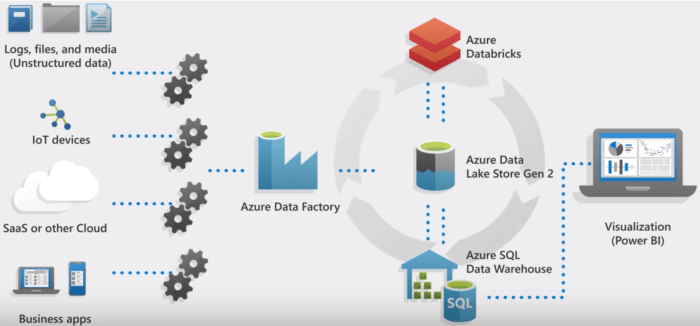
Both Azure Synapse and Snowflake offer robust integration capabilities, allowing seamless connections with various tools and services, fostering a rich ecosystem of partners and third-party applications. Understanding the strengths and weaknesses of each platform in terms of integration and extensibility is crucial for choosing the right data warehouse solution.
Integration with Other Tools and Services
The ability to integrate with other tools and services is crucial for building a comprehensive data analytics solution. Azure Synapse and Snowflake excel in this area, offering seamless connections with various data sources, development tools, and visualization platforms. Both platforms provide native connectors for popular data sources, including relational databases (e.g., SQL Server, Oracle, MySQL), NoSQL databases (e.g., MongoDB, Cassandra), and cloud storage services (e.g., Azure Blob Storage, AWS S3).
Choosing between Azure Synapse and Snowflake can be a tough decision, especially when considering the vast range of features and functionalities they offer. But before diving into the technical details, it’s important to remember that a solid financial foundation is crucial for any business, regardless of its data warehousing strategy.
That’s where having access to the right tools comes in, like the best business budgeting software , which can help you manage expenses, track income, and make informed decisions about your future. Ultimately, the choice between Azure Synapse and Snowflake should be driven by your specific needs and goals, and a clear understanding of your budget is essential for making that decision.
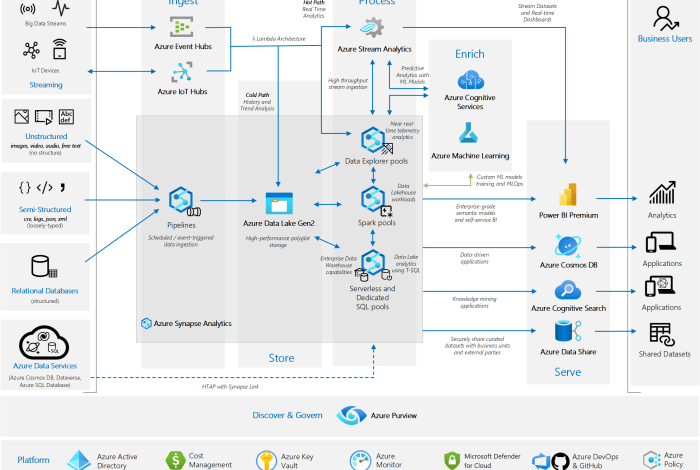
Azure Synapse leverages the vast ecosystem of Azure services, offering native integration with Azure Data Factory, Azure Databricks, Azure Machine Learning, and Power BI. This tight integration enables end-to-end data pipelines, from ingestion and transformation to analysis and visualization.Snowflake, on the other hand, boasts a robust ecosystem of third-party connectors, including tools from Tableau, Power BI, Alteryx, and Dataiku.
It also supports various open-source tools and frameworks, such as Python, R, and Apache Spark.
Comparison Table
| Feature | Azure Synapse | Snowflake |
|---|---|---|
| Native Connectors | Strong integration with Azure services, including Data Factory, Databricks, Machine Learning, and Power BI. | Wide range of third-party connectors for popular tools like Tableau, Power BI, Alteryx, and Dataiku. |
| Open Source Support | Supports Python, R, and Apache Spark through Azure Databricks. | Strong support for open-source tools and frameworks, including Python, R, and Apache Spark. |
| API Access | Provides REST APIs for programmatically interacting with the platform. | Offers a comprehensive API for programmatic access to data and functionalities. |
Partner Ecosystem
Both Azure Synapse and Snowflake have established extensive partner ecosystems, collaborating with various software vendors and technology providers to offer a wide range of solutions and services.Azure Synapse benefits from the extensive partner network of Microsoft, with numerous vendors offering solutions for data integration, data governance, data visualization, and other related areas.
This partnership network provides access to a wide range of pre-built connectors, data migration tools, and specialized applications that enhance the functionality of Azure Synapse.Snowflake also boasts a robust partner ecosystem, with a diverse range of technology providers offering solutions for data warehousing, data analytics, and data management.
Snowflake’s partner program provides access to pre-built integrations, data migration services, and specialized applications that complement its core functionalities.
Choosing between Azure Synapse and Snowflake for data warehousing can be tricky, especially when you need to manage data from multiple businesses. You’ll want a platform that can handle the complexities of consolidating financial data from different systems, something that a good accounting software for multiple businesses can help with.
Both Azure Synapse and Snowflake offer robust features for data integration and analysis, so ultimately the best choice depends on your specific needs and budget.
Comparison Table
| Feature | Azure Synapse | Snowflake |
|---|---|---|
| Partner Network | Leverages Microsoft’s extensive partner network, offering a wide range of solutions for data integration, governance, and visualization. | Boasts a robust partner ecosystem with various technology providers offering solutions for data warehousing, analytics, and management. |
| Pre-built Integrations | Access to pre-built connectors and integrations from Microsoft and its partners. | Provides pre-built integrations with various tools and services through its partner program. |
| Specialized Applications | Access to specialized applications from partners for data governance, security, and other areas. | Offers access to specialized applications from partners for data warehousing, analytics, and management. |
Strengths and Weaknesses
Azure Synapse excels in integration with other Azure services, providing a seamless and cohesive data analytics platform within the Microsoft ecosystem. Its tight integration with Azure Data Factory, Databricks, and Power BI enables end-to-end data pipelines and facilitates efficient data management.
However, its reliance on the Azure ecosystem might limit flexibility for organizations using other cloud platforms or on-premises systems.Snowflake’s strength lies in its open and flexible architecture, allowing seamless integration with various third-party tools and services. Its robust ecosystem of partners and third-party connectors provides a wide range of options for data integration, analytics, and management.
However, its reliance on third-party integrations might require additional configuration and management efforts.
Cost and Pricing
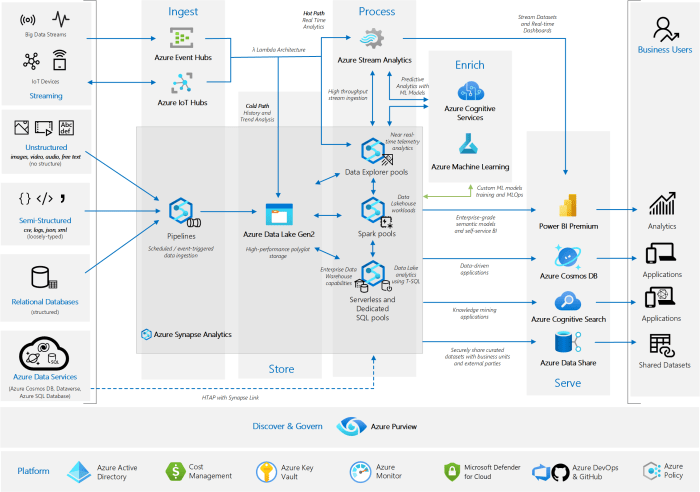
The cost of using a cloud data warehouse is a significant factor for businesses, and both Azure Synapse and Snowflake offer flexible pricing models. Understanding the pricing nuances and factors influencing costs is crucial for making informed decisions about which platform best suits your needs.
Pricing Models
Azure Synapse and Snowflake employ different pricing models, each with its own advantages and disadvantages.
- Azure Synapse offers a pay-as-you-go model based on consumption, where you only pay for the resources you use. This model is ideal for organizations with unpredictable workloads or those who want to optimize their spending.
- Snowflake uses a credit-based model, where you purchase credits and use them to execute queries and store data.
This model offers predictable costs and can be advantageous for organizations with consistent workloads.
Factors Influencing Cost
Several factors influence the cost of using Azure Synapse and Snowflake. These include:
- Data volume: The amount of data stored and processed directly impacts the cost, as both platforms charge based on storage and compute usage.
- Compute resources: The size and type of compute resources used for data processing and query execution also influence the cost.
- Query complexity: Complex queries requiring more processing power and resources will naturally increase the cost.
- Data loading and transformation: The frequency and complexity of data loading and transformation processes can affect the overall cost.
- Concurrency: The number of users accessing the platform concurrently can impact the required compute resources and, consequently, the cost.
Cost-Effective Scenarios
Both Azure Synapse and Snowflake have cost-effective scenarios depending on your specific needs and usage patterns.
- Azure Synapse is cost-effective for organizations with fluctuating workloads, short-term projects, or those who prioritize cost optimization. The pay-as-you-go model allows you to scale your resources up or down as needed, minimizing unnecessary spending.
- Snowflake is cost-effective for organizations with consistent workloads, long-term projects, or those who prefer predictable costs.
The credit-based model provides a fixed cost per query, simplifying budgeting and financial planning.
Use Cases and Examples
Azure Synapse and Snowflake are powerful cloud data warehousing platforms that cater to diverse business needs. These platforms offer robust capabilities for data ingestion, transformation, analysis, and visualization, making them suitable for a wide range of use cases across various industries.
This section will delve into real-world examples of how these platforms are being utilized in different industries and explore key use cases for each platform.
Examples of Azure Synapse and Snowflake in Different Industries
Azure Synapse and Snowflake are versatile platforms with applications in various industries. Here are some real-world examples:* Retail:A large online retailer uses Azure Synapse to analyze customer purchasing patterns and optimize inventory management. They leverage the platform’s data ingestion capabilities to capture real-time sales data from their website and mobile app, then use its analytical capabilities to identify trends and predict demand.
This allows them to proactively adjust inventory levels and ensure product availability, leading to increased sales and customer satisfaction.* Financial Services:A financial institution uses Snowflake to manage risk and comply with regulatory requirements. They use the platform’s data warehousing capabilities to store and analyze vast amounts of financial data, including customer transactions, market data, and regulatory reports.
This allows them to identify potential risks, detect fraudulent activities, and ensure compliance with regulations.* Healthcare:A healthcare provider uses Azure Synapse to improve patient care and streamline operations. They use the platform’s data integration capabilities to combine data from various sources, such as electronic health records, patient demographics, and lab results.
This allows them to gain a comprehensive view of each patient’s health history, identify potential health risks, and personalize treatment plans.* Manufacturing:A manufacturing company uses Snowflake to optimize production processes and improve efficiency. They use the platform’s data analysis capabilities to analyze sensor data from their production lines, identify bottlenecks, and predict equipment failures.
This allows them to optimize production schedules, reduce downtime, and improve overall efficiency.
Key Use Cases for Azure Synapse and Snowflake
Here’s a table highlighting the key use cases for each platform:| Use Case | Azure Synapse | Snowflake ||—|—|—|| Data Warehousing| Excellent for large-scale data warehousing, supporting both structured and semi-structured data. | Strong data warehousing capabilities, ideal for handling large datasets and complex queries.
|| Data Analytics| Provides a comprehensive suite of analytical tools for data exploration, modeling, and machine learning. | Offers a powerful SQL engine and data visualization tools for complex data analysis. || Data Integration| Seamless integration with Azure services and other cloud platforms, simplifying data ingestion and transformation.
| Supports a wide range of data sources and offers robust data integration capabilities. || Data Governance| Strong data governance features, including data security, access control, and compliance monitoring. | Provides comprehensive data governance tools for managing data access, security, and compliance.
|| Real-time Analytics| Supports real-time data ingestion and analysis, enabling businesses to make informed decisions quickly. | Offers real-time data processing capabilities for streaming data and near real-time analytics. || Machine Learning| Integrated with Azure Machine Learning services, facilitating the development and deployment of machine learning models.
| Supports machine learning workloads and integrates with popular machine learning frameworks. || Cloud Migration| Offers tools and services to facilitate the migration of on-premises data warehouses to the cloud. | Provides a smooth migration path for on-premises data warehouses to the cloud.
|| Cost Optimization| Flexible pricing models and cost optimization features to manage cloud spending effectively. | Offers various pricing options and cost optimization features for managing cloud expenses. |
Detailed Description of Each Use Case
The following section provides a detailed description of each use case, highlighting the benefits and challenges:* Data Warehousing:Both Azure Synapse and Snowflake are excellent platforms for data warehousing. They offer robust storage capabilities for handling large datasets, including structured and semi-structured data.
They also provide powerful query engines that can efficiently process complex queries, enabling businesses to gain insights from their data.* Data Analytics:Both platforms offer a wide range of analytical tools for data exploration, modeling, and machine learning. Azure Synapse integrates with Azure Machine Learning services, while Snowflake supports machine learning workloads and integrates with popular machine learning frameworks.
These capabilities allow businesses to leverage data analytics for predictive modeling, data mining, and other advanced analytical tasks.* Data Integration:Both platforms excel in data integration. Azure Synapse seamlessly integrates with Azure services and other cloud platforms, simplifying data ingestion and transformation.
Snowflake supports a wide range of data sources and offers robust data integration capabilities, including data pipelines and connectors for various data formats.* Data Governance:Both platforms prioritize data governance. Azure Synapse provides strong data governance features, including data security, access control, and compliance monitoring.
Snowflake offers comprehensive data governance tools for managing data access, security, and compliance, ensuring data integrity and regulatory compliance.* Real-time Analytics:Both platforms support real-time data ingestion and analysis. Azure Synapse offers real-time data ingestion capabilities through Azure Event Hubs and other streaming services.
Snowflake provides real-time data processing capabilities for streaming data and near real-time analytics. These capabilities allow businesses to make informed decisions based on real-time data.* Machine Learning:Azure Synapse is integrated with Azure Machine Learning services, facilitating the development and deployment of machine learning models.
Snowflake supports machine learning workloads and integrates with popular machine learning frameworks, enabling businesses to build and deploy machine learning models on the platform.* Cloud Migration:Both platforms offer tools and services to facilitate the migration of on-premises data warehouses to the cloud.
Azure Synapse provides migration tools and services to streamline the migration process, while Snowflake offers a smooth migration path for on-premises data warehouses to the cloud.* Cost Optimization:Both platforms offer flexible pricing models and cost optimization features to manage cloud spending effectively.
Azure Synapse provides pay-as-you-go pricing and cost optimization tools, while Snowflake offers various pricing options and cost optimization features to manage cloud expenses.