The Bicep Heart Trend Sweeps TikTok and Instagram Reels As Fitness Creators and Influencers Embrace the Latest Viral Phenomenon

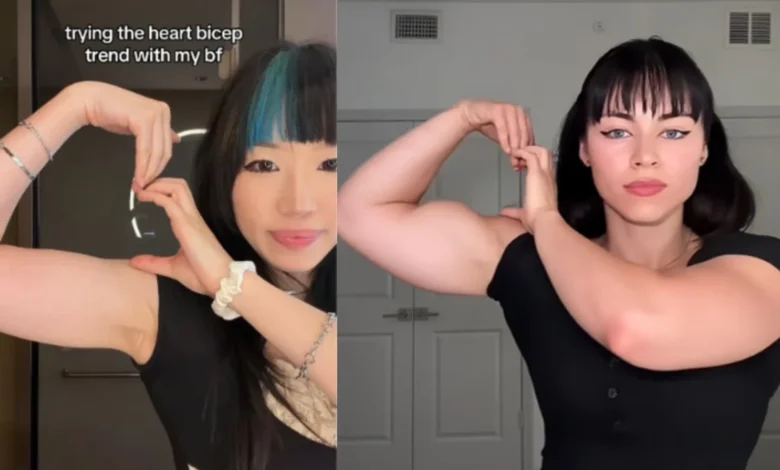
The landscape of social media short-form video content continues to evolve at a relentless pace, with new aesthetics, physical challenges, and visual memes emerging weekly across platforms such as TikTok and Instagram Reels. In late 2026, a distinctive combination of fitness culture and visual aesthetics captured the attention of millions of users worldwide, giving rise to what is now formally known as the Bicep Heart trend. Characterized by a specific physical pose that merges muscle flexing with hand-gestured heart geometry, this phenomenon has transformed from an isolated post into a cross-platform movement. While the trend initially manifested as a classic example of a social media thirst trap—a post designed to elicit physical admiration—it has quickly expanded to incorporate collaborative formats, comedic takes, and community-driven engagement.
As digital culture increasingly values concise, visually striking movements that encourage user participation, the Bicep Heart trend provides an accessible entry point for creators regardless of their athletic background or muscle mass. Understanding the trajectory of this trend requires a detailed examination of its origins, the mechanics of its execution, its rapid ascent across digital ecosystems, and the broader implications of fitness-related content on modern social media algorithms.
Origins and Chronology of the Viral Phenomenon
The genesis of the Bicep Heart trend can be traced precisely to the final week of October 2026. Prior to this period, fitness content on TikTok and Instagram Reels was largely dominated by traditional workout tutorials, transformation reveals, and standard bodybuilding poses. However, the paradigm shifted when TikTok creator @kavithageorge published a short video demonstrating a novel way to frame the arm muscles.
In her initial video, which served as the blueprint for the entire movement, the creator combined a standard bicep flex with a precise hand positioning technique to complete a symmetrical heart shape. The visual novelty of the gesture immediately resonated with viewers. Within less than seven days of publication, the inaugural video accumulated over 5.3 million views, sparking widespread imitation and duets across the platform.
By early November 2026, the trend had successfully migrated from TikTok to Meta’s Instagram Reels, capturing a broader demographic of lifestyle and fitness influencers. Digital anthropologists and social media analysts noted that the transition was accelerated by the inherent shareability of the content. Unlike complex dance challenges that require spatial awareness and choreography, or endurance-based fitness challenges that demand significant physical preparation, the Bicep Heart required merely seconds to execute, making it an ideal vehicle for rapid algorithmic distribution. By the second week of November, thousands of iterations of the video populated both platforms, establishing the movement as one of the defining viral trends of the late autumn season.
Mechanics and Execution: How the Bicep Heart is Formed
Despite its visual complexity upon first glance, the anatomy of the Bicep Heart trend is remarkably straightforward, enabling broad participation across diverse demographics. The execution relies on a specific sequence of physical adjustments designed to create a silhouette resembling a traditional heart symbol.
First, the participant must engage the upper arm by flexing the bicep muscle. Traditionally, this is performed by bending the elbow at a ninety-degree angle and contracting the brachii muscle group. However, unlike a conventional bodybuilding pose where the hand is clenched tightly into a fist, the Bicep Heart technique requires the fingers to remain extended and pointed directly toward the peak of the flexed bicep.
Next, the participant utilizes their opposite, free hand to form a distinct "C" shape. This hand is then positioned carefully to fill the negative space between the fingertips of the flexing arm and the apex of the bicep muscle. When executed with correct angles and adequate lighting, the upper contour of the flexed arm combined with the curvature of the opposing hand creates a distinct heart shape.
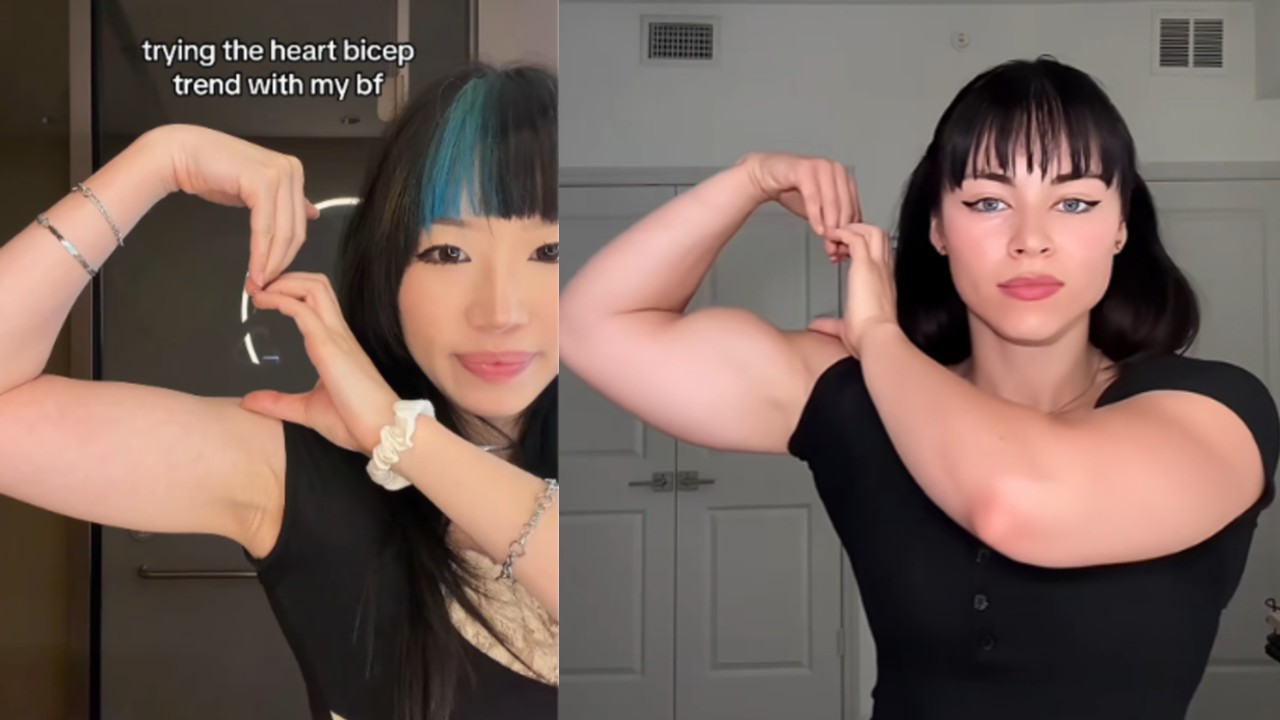
While the technique appears simple, variations in arm anatomy, flexibility, and camera angles have led to humorous "expectation versus reality" commentary videos, further fueling engagement. Participation is not restricted by gender, fitness level, or muscle hypertrophy; users ranging from seasoned powerlifters to individuals with minimal upper body muscle mass have successfully adapted the pose, contributing to the inclusivity and longevity of the trend.
Evolution and Diversification of Content Formats
As the Bicep Heart trend matured past its initial viral phase, creators began experimenting with derivative formats to sustain audience interest and drive higher engagement metrics. What began primarily as individual thirst traps evolved into collaborative content. Dual-creator videos emerged where partners or friends attempted to construct a single, unified bicep heart using adjacent arms, requiring a high degree of physical coordination and spatial synchronization.
Furthermore, a significant offshoot of the meme materialized in the form of direct audience prompts. Creators began publishing videos explicitly requesting their follower base to submit their own attempts at the Bicep Heart trend via direct messages or stitched video formats. This interactive loop transformed passive viewers into active participants, creating a closed-circuit ecosystem of content generation that significantly boosted algorithmic favorability on both TikTok and Instagram Reels.
Fitness coaches and lifestyle influencers also capitalized on the trend to promote body positivity. Many accounts utilized the viral format to emphasize that muscle definition is not a prerequisite for participation, encouraging body confidence among casual gym-goers and individuals newly embarking on their fitness journeys. By decoupling the trend from strict athletic standards, the movement maintained a lighthearted and accessible tone, shielding it from the toxicity that occasionally plagues physique-based online challenges.
Algorithmic Impact and the Economics of Thirst Traps
The rapid proliferation of the Bicep Heart trend offers valuable insights into the mechanics of modern content distribution algorithms. Short-form video platforms heavily prioritize metrics such as watch time, loop rate, and immediate user interaction (likes, comments, and shares). Visually ambiguous or novel physical gestures—such as the Bicep Heart—inherently trigger a psychological pause in the scrolling behavior of users, who stop to decipher how the image was constructed. This momentary pause dramatically increases the average watch time of the video, signaling to the algorithm that the content is compelling and worthy of broader distribution to "For You" and "Reels" recommendation feeds.
Moreover, the trend underscores the enduring viability of the "thirst trap" genre within social media economics. Physical aesthetics have historically driven massive engagement across digital platforms, but packaging these aesthetics within a clever visual puzzle or trend format elevates the content from mere self-promotion to interactive entertainment. Creators who participated in the trend frequently reported noticeable spikes in follower acquisition and profile visits, illustrating the direct correlation between trend adoption and audience growth.
Industry Reception and Sociological Implications
From a sociological perspective, the Bicep Heart trend reflects the ongoing gamification of fitness culture in the digital age. Physical training is increasingly intertwined with digital performance art, where the gymnasium serves not only as a space for physical self-improvement but also as a studio for content creation.
Cultural commentators have noted that trends like the Bicep Heart democratize fitness spaces by injecting humor and accessibility into what can otherwise be an intimidating environment. By transforming a traditional display of strength (the bicep flex) into a symbol of affection (the heart), creators subvert conventional expectations of masculinity and physical posturing. The juxtaposition of a muscular display with a universally recognized symbol of warmth and romance creates a disarming effect that appeals to a wide demographic.
As social media platforms continue to refine their recommendation engines, experts anticipate that similar micro-trends blending physical performance with visual puzzles will remain a staple of digital culture. The Bicep Heart trend demonstrates that virality does not always require high-production budgets or complex narratives; often, a novel physical perspective and a smartphone camera are all that is necessary to captivate a global audience.
Related posts: