The shift, formalized in the company’s 2026 sustainability report, marks a pivotal moment for Big Tech, which has spent the better part of a decade championing aggressive climate targets while simultaneously embarking on an unprecedented buildout of energy-intensive data centers. Meta’s admission that its 2030 goal is now under review highlights the growing tension between the massive computational power required to sustain the artificial intelligence boom and the global urgency of decarbonization.
The Surge in Carbon Intensity
Meta’s latest disclosure paints a stark picture of the environmental cost associated with the AI race. According to the 2026 report, the company’s total greenhouse gas emissions jumped from 15.6 million metric tonnes of carbon dioxide equivalent (CO2e) in 2024 to over 21.7 million metric tonnes in 2025. This surge—a year-over-year increase of nearly 40%—places Meta in a difficult position relative to its industry peers.
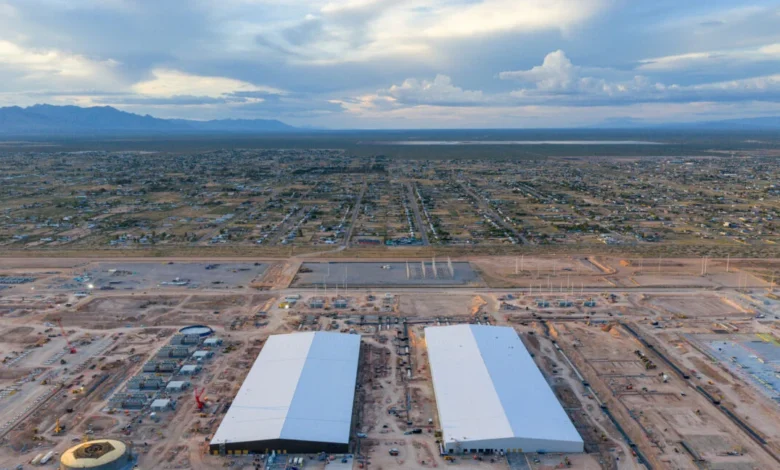
To put this figure into perspective, Meta’s annual emissions profile is now roughly equivalent to the entire carbon output of the state of Idaho. When compared to other U.S. states, Meta’s footprint has surpassed those of Hawaii, Maine, South Dakota, and New Hampshire. The primary driver of this increase is what the company categorizes as "capital goods," a classification that encompasses the massive quantities of servers, networking hardware, and specialized chips required to build out the high-density data centers needed for large language models.
A Departure from Industry Norms
While all hyperscalers—Amazon, Google, and Microsoft—are grappling with the reality that AI is reversing years of progress toward cleaner operations, Meta is the first to publicly signal that its 2030 deadline is no longer a certainty. Until now, the major tech players had largely maintained that their long-term sustainability pledges remained achievable, even as their electricity consumption grew exponentially.
By officially announcing a re-evaluation of its timelines, Meta has shifted the narrative. In the report, Rachel Peterson, vice president of data centers, and Blair Swedeen, global head of net zero and sustainability, provided the official company stance: “Our long-term ambitions haven’t changed, but our operating environment has.” They noted that the demand for AI infrastructure has grown at a pace that “defies projection,” forcing the company to reconsider its internal milestones and the "sequencing" of its climate strategy.
Chronology of the AI Climate Conflict
The friction between AI development and environmental goals has been mounting for years. A brief timeline illustrates the rapid escalation:
- 2020–2022: Tech companies reach a zenith of climate messaging, with most pledging net-zero operations by 2030. These targets were largely predicated on a mix of efficiency gains and renewable energy procurement.
- Late 2022: The public release of generative AI tools triggers a "compute arms race." Hyperscalers begin massive, unplanned expansions of data center capacity to support LLM training.
- 2023: Data center electricity demand begins to show signs of decoupling from previous efficiency models. Energy grid planners warn that AI data centers require significantly more constant, reliable power than standard cloud infrastructure.
- 2024: Industry-wide emissions reports start to reflect the "AI tax." Microsoft and Google report significant jumps in their carbon footprints, though both maintain their 2030 targets.
- November 2026: Meta becomes the first major tech firm to explicitly state that its 2030 net-zero timeline is being re-evaluated, citing the "current operating realities" of AI demand.
The Physical Reality of AI Infrastructure
The root of the issue lies in the fundamental physics of artificial intelligence. Training models like Llama requires thousands of high-performance GPUs (Graphics Processing Units) running 24/7. These machines generate significant heat and require massive amounts of electricity. While companies like Meta invest heavily in renewable energy projects—such as solar farms and wind power purchase agreements—the reality of the power grid often forces them to rely on fossil-fuel-generated electricity.
Because renewable energy is intermittent, data centers often draw power from grids that still rely on natural gas and coal to maintain the constant "baseload" power required for hyperscale computing. Even as tech companies invest in "carbon-free energy" (CFE) matching, the physical deployment of new AI infrastructure is outpacing the transition of the local electrical grids that serve these massive facilities.
Broader Impact and Industry Implications
The implications of Meta’s announcement extend beyond the company’s internal operations. First, it sets a precedent for transparency. By admitting the 2030 goal is under threat, Meta has potentially opened the door for other companies to revise their own targets. Critics argue that this is an admission of failure, while proponents of the tech industry suggest it is a necessary pivot toward "realistic" climate planning.
Second, the energy sector is feeling the strain. Utility companies across the United States are currently facing an unprecedented spike in demand for high-voltage grid connections. Some utilities have been forced to delay the decommissioning of aging fossil-fuel plants to ensure that tech hubs have the electricity they need to keep AI clusters running. This creates a feedback loop: the push for AI leads to higher energy demand, which keeps fossil-fuel plants online longer, which in turn inflates the carbon footprint of the companies using that power.
Third, there is the question of regulatory and investor pressure. ESG (Environmental, Social, and Governance) mandates have been a cornerstone of investor relations for the past decade. If Meta and other Big Tech firms begin to abandon their climate goals, it could trigger a broader cooling of the ESG market, or conversely, lead to increased scrutiny from regulators and environmental activists who may demand that tech firms be held to the same emissions standards as heavy industry or utilities.
Analyzing the "Capital Goods" Problem
The focus on "capital goods" in Meta’s report is significant. In sustainability accounting, Scope 3 emissions—which include the carbon generated during the manufacturing and shipping of hardware—often account for the largest share of a tech company’s footprint.
When a company like Meta orders hundreds of thousands of specialized chips to expand its AI capabilities, the carbon cost of manufacturing those chips is immense. As the industry moves toward more sophisticated and frequent hardware refreshes to keep pace with the latest AI advancements, the "embedded carbon" in these servers becomes a massive, ballooning figure that is difficult to offset. Unlike operational emissions, which can be mitigated by switching to green energy, capital goods emissions are tied to the physical production cycle, which currently remains carbon-intensive.
Future Outlook
Meta’s decision to reconsider its 2030 trajectory is a signal that the "AI-first" corporate strategy is inherently at odds with traditional decarbonization timelines. As the company continues to invest billions of dollars into its data center infrastructure, the tension between the physical growth of the internet and the planetary boundaries of carbon output will only intensify.
The company’s commitment to "transparent" reporting suggests that it will continue to update shareholders and the public on its progress, or lack thereof. Whether this re-evaluation results in a formal delay of the 2030 target, or a pivot to new, potentially more flexible metrics, remains to be seen. What is clear is that the tech industry has reached a crossroads where the promise of a carbon-neutral future is being challenged by the insatiable, energy-hungry requirements of the artificial intelligence revolution.
For now, the industry is watching Meta closely. If other hyperscalers follow suit, the 2030 net-zero movement—once the gold standard of corporate climate responsibility—may undergo a fundamental transformation, shifting from a firm deadline to a long-term, moving target that bends to the needs of the technological era. The challenge for Meta, and its peers, will be to prove that they can continue to innovate at the cutting edge of AI without permanently decoupling their growth from the health of the global climate.