Congressional Democrats Prepare Confrontation with SpaceX Over Starshield Disruptions in Ukraine

The central question currently dominating the national security discourse in Washington is who exactly decided to curtail the performance of Starshield assets in Ukraine, a decision that has triggered a legislative standoff between Congress and SpaceX. Accounts regarding the decision-making process have variously implicated Elon Musk, SpaceX leadership, the Pentagon, and the White House. Musk has consistently maintained that U.S. officials retain final authority over Starshield access, while simultaneously defending SpaceX’s right to restrict the use of its commercial Starlink service in active war zones. This ambiguity has now drawn the ire of Democratic leadership, who are preparing to leverage their newfound control over both chambers of Congress to demand accountability.
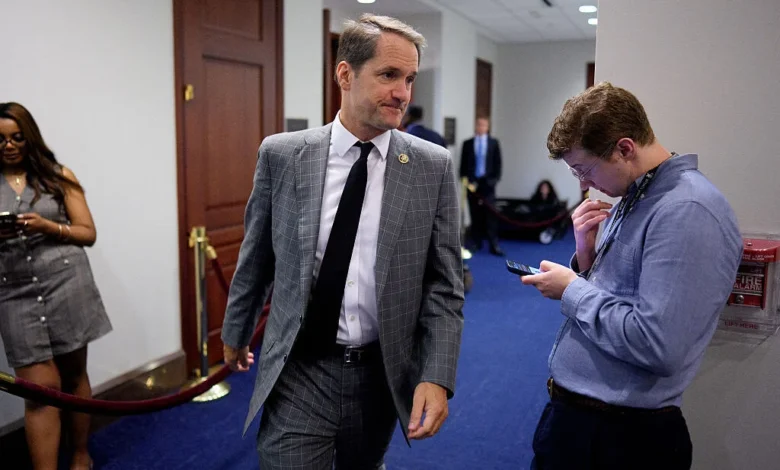
Representative Himes, in a formal communication to Elon Musk, laid out the stakes for the aerospace giant: "My ask to you is straightforward. Explain the changes that were made to the Starshield service in October 2026, why those changes were made, and whether those changes were made unilaterally by SpaceX or were directed by a U.S. Government official." This letter marks the beginning of what promises to be a rigorous period of congressional oversight, signaling that lawmakers are no longer content with informal explanations regarding the intersection of private sector corporate policy and American foreign policy.
The Evolution of Starlink and Starshield in Ukraine
To understand the current tension, one must look back to the early months of the 2022 invasion of Ukraine. When Russia launched its full-scale invasion, the rapid destruction of Ukraine’s telecommunications infrastructure threatened to leave the nation’s leadership and military in a digital vacuum. SpaceX’s rapid deployment of Starlink terminals provided a lifeline, allowing Ukrainian forces to maintain command and control. However, the integration of these systems into a war zone created an unprecedented scenario where a private corporation held the "kill switch" for a critical military communications network.
As the conflict evolved, the Pentagon sought to formalize this relationship. The development of Starshield—a dedicated, government-contracted version of the Starlink network—was intended to provide a more secure, military-grade architecture. Unlike the commercial Starlink, Starshield is designed to support government operations, including data transmission for intelligence and missile defense. The October 2026 disruptions, however, revealed that even with the transition to government-managed systems, the line between private corporate discretion and public national security policy remains dangerously blurred.
Legislative Strategy and Potential Consequences
The communications from Himes suggest that Congressional Democrats, who will control the House and Senate in January following decisive victories in the Midterm elections, are prepared to not just investigate the disruption of these services, but to take legislative action that could threaten SpaceX’s broader national security business. Himes’s letter was explicit regarding the legislative leverage at his disposal: "It is difficult for me to continue supporting the authorization of funding for these SpaceX-developed, government-owned systems, until I receive satisfactory answers to my questions about the Starshield service in Ukraine."
This is not merely a request for information; it is a threat to the financial foundation of SpaceX’s government portfolio. Options open to Congressional Democrats—and a coalition of Republicans who share concerns about corporate overreach—include demanding classified briefings, subpoenaing internal documents, and, most critically, restricting funding through appropriations to the U.S. Department of Defense.
Scrutinizing the Defense Portfolio
The scale of the financial relationship between the U.S. government and SpaceX is immense. Earlier this year, the U.S. Space Force awarded SpaceX a $2.29 billion contract to develop the Space Data Network Backbone. This project is intended to support the Golden Dome missile defense initiative, a cornerstone of the Pentagon’s modernization efforts. Furthermore, SpaceX has been deeply integrated into the National Reconnaissance Office (NRO) through the development and launch of classified intelligence satellites.
If Congress moves to attach conditions to this funding, the impact could be twofold. First, it would force a significant change in how SpaceX manages its government contracts, likely requiring more stringent oversight and perhaps a relinquishing of the autonomy Musk has historically enjoyed. Second, it could disrupt timelines for critical defense projects if contract negotiations become bogged down in political inquiry.
Analysts suggest that while it is highly unlikely the U.S. government would completely sever ties with SpaceX—given the company’s near-monopoly on heavy-lift launch capabilities and low-latency satellite constellations—the current situation represents a turning point. For the first time, the federal government is being forced to confront the reality of relying on a private entity that operates with a different set of geopolitical priorities than the state.
The Geopolitical Implications of Corporate Autonomy
The core of the dispute rests on the concept of "sovereign control." Traditionally, communication networks in war zones are either state-owned or operated by contractors strictly bound by military command. SpaceX’s model, which relies on a constellation of satellites that essentially function as a global utility, complicates this standard. When a private CEO can decide, based on corporate liability or personal geopolitical philosophy, to restrict service in a combat theater, it undermines the state’s ability to conduct foreign policy.
Critics of the current arrangement argue that the U.S. government has allowed a dangerous dependency to form. By outsourcing essential communications and intelligence infrastructure to a single firm, the Pentagon has effectively ceded a degree of its operational sovereignty. Proponents of SpaceX, however, argue that without the company’s agility and innovation, the U.S. military would be years behind in its space-based capabilities. The task for Congress, therefore, is to find a middle ground: ensuring the military retains its technological edge while guaranteeing that the control of that technology remains firmly in the hands of elected officials.
Reactions from the Industry and Beyond
While SpaceX has not issued a formal rebuttal to the specific inquiries from Representative Himes, spokespeople for the company have previously emphasized the "unprecedented nature" of the support they have provided to Ukraine. In internal memos leaked to the press, SpaceX leadership has noted that the company has incurred hundreds of millions of dollars in costs related to the conflict, arguing that they cannot be expected to provide infinite, cost-free support while navigating complex international law and the potential for nuclear escalation.
Meanwhile, industry experts have noted that other players, such as Amazon’s Project Kuiper or various government-led constellations, are still in the development phase. This creates a "bottleneck" where the U.S. government has few alternatives to SpaceX. This lack of competition is exactly what Congress is now looking to address. By signaling a willingness to tighten regulations, Democrats are also likely hoping to incentivize the entry of competitors into the space-data market, thereby reducing the influence of any single company.
The Path Forward: A Legislative Timeline
As January approaches and the new Congress convenes, the timeline for this investigation will likely unfold in three distinct phases:
- Phase One: Information Gathering. The initial phase will involve the formal submission of questions, requests for documentation, and potentially the scheduling of closed-door hearings with Department of Defense officials and SpaceX executives.
- Phase Two: Legislative Drafting. Depending on the nature of the responses received, the relevant committees—specifically the House Armed Services Committee and the Senate Armed Services Committee—will likely begin drafting language for the upcoming National Defense Authorization Act (NDAA). This language may include clauses mandating that contractors provide 24/7 service availability in designated conflict zones or face stiff penalties.
- Phase Three: Regulatory Restructuring. In the longer term, the government may seek to redefine the contractual relationship with SpaceX, moving from a standard "service provider" model to a "government-directed operation" model, where the Pentagon assumes greater control over the software and network-layer decisions that currently rest with the private firm.
The confrontation is a clear signal that the era of "hands-off" reliance on private space infrastructure is ending. As the line between space-based technology and national security continues to blur, the legislative branch is reasserting its authority to ensure that the tools of war are governed by the democratic process, not by the strategic decisions of a single corporation. Whether this effort will result in a more robust and secure national defense or stifle the very innovation that made the U.S. space sector the envy of the world remains the central debate of the upcoming legislative session.