Hera Mission Reveals the Aftermath of NASA DART Asteroid Impact and the Future of Planetary Defense

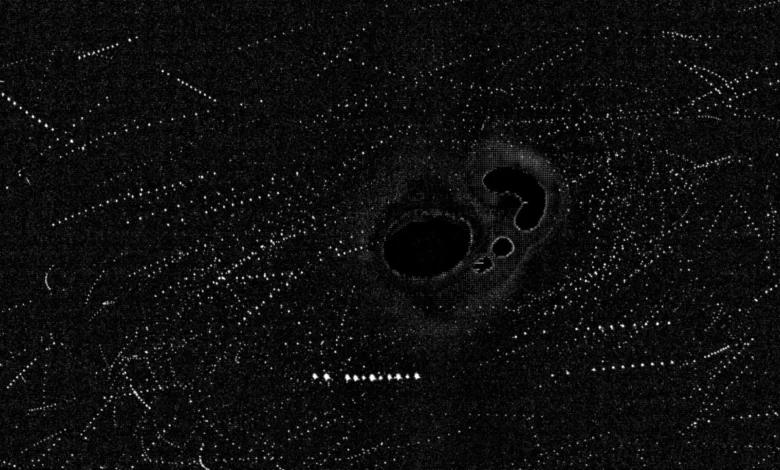
Four years after NASA executed a daring, high-stakes suicide mission to test humanity’s ability to defend the Earth from cosmic threats, the European Space Agency’s (ESA) Hera spacecraft has reached its destination to provide the definitive post-mortem of the event. In September 2022, NASA’s Double Asteroid Redirection Test (DART) probe slammed into the asteroid Dimorphos at a staggering speed of 13,700 mph. The primary objective was to determine if kinetic impact could effectively alter an asteroid’s trajectory. The mission was a resounding success, successfully shortening Dimorphos’s 12-hour orbital period around its larger companion, Didymos, by 33 minutes—a shift 25 times greater than the most conservative estimates predicted. However, while the success of the orbital deflection was clear from the outset, the physical mechanics of the collision remained shrouded in mystery. With the arrival of the Hera mission, scientists are finally peeling back the layers of that monumental event to understand exactly what happened to the asteroid after the dust settled.
A Chronology of the Collision and Discovery
The narrative of this experiment began long before the 2022 impact. For years, planetary scientists have sought to develop "kinetic impactor" technology, a method that involves striking a potential threat with a high-velocity spacecraft to nudge it into a different orbit. The Didymos-Dimorphos binary system was selected for this demonstration because it offered a safe, non-threatening laboratory environment 120 million miles from Earth.
The chronology of the mission is defined by several critical phases:
- November 2021: The DART spacecraft launched from Vandenberg Space Force Base, beginning its ten-month cruise toward the Didymos system.
- September 26, 2022: The DART impactor struck Dimorphos, releasing approximately 10 billion joules of energy. The impact was observed by the LICIACube, a small Italian CubeSat that captured images of the immediate plume of debris.
- 2022–2024: Following the impact, ground-based telescopes and the Hubble Space Telescope monitored the system, observing a significant change in the orbital period and a persistent tail of dust and boulders.
- October 2024: The Hera spacecraft, launched two years after the impact, arrived at the Didymos system to begin a multi-month reconnaissance mission.
Hera’s First Look: A Landscape Transformed
As Hera approached the binary system, the first high-resolution images transmitted back to Earth provided a stark realization for mission planners: Dimorphos was not just cratered; it was fundamentally reshaped. The impact of a car-sized spacecraft against a 500-foot-wide rock had resulted in a massive, stadium-sized crater that spans nearly the entire width of the asteroid.
Patrick Michel, Hera’s principal investigator from the Côte d’Azur Observatory, noted that the data forces a re-evaluation of how asteroids react to such impacts. "We had two primary predictions: either we made a crater, or we reshaped the asteroid," Michel stated. "In fact, we did both. The crater is so vast that the body has undergone a global transformation. We are currently observing a transition state between local cratering and a total structural shift, the mechanics of which are still being modeled."
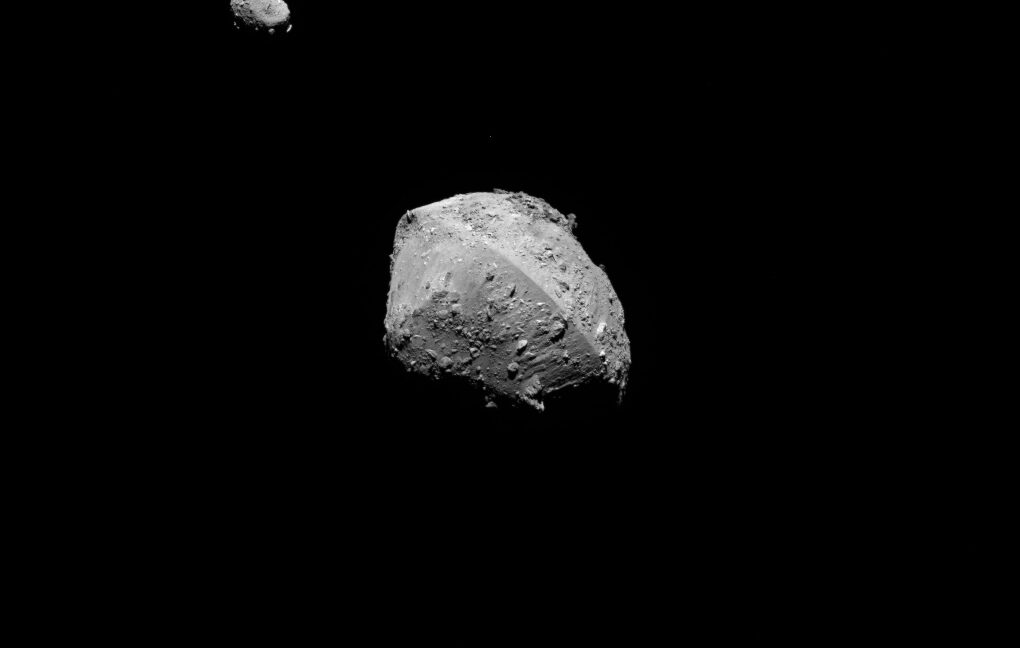
Furthermore, the stability of Dimorphos has been compromised. While the primary asteroid, Didymos, continues its rotation with expected stability, Dimorphos is now tumbling in its orbit. This erratic motion suggests that the impact did not merely move the asteroid; it fundamentally disrupted its structural equilibrium, leaving it in a state of chaotic rotation that continues to evolve.
The Mystery of the Debris Swarm
Perhaps the most startling discovery during Hera’s initial reconnaissance is the vast quantity of debris surrounding the binary system. Previous images from the Hubble Space Telescope hinted at a trail of material, but Hera’s hyperspectral imaging has revealed a literal cloud of hundreds of boulders, ranging in size from footballs to large household appliances, orbiting the system.
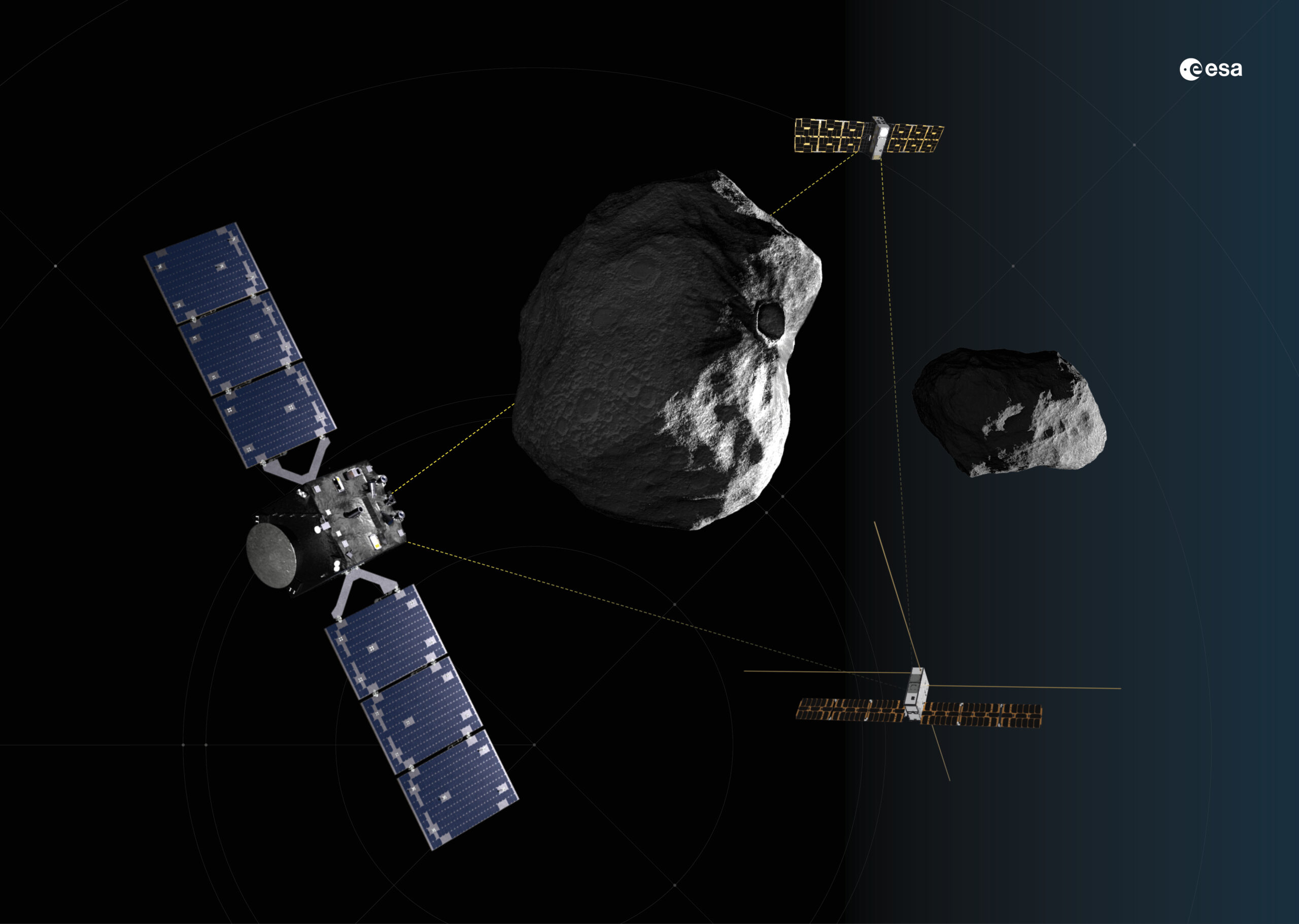
Naomi Murdoch, a planetary scientist at the Institut Supérieur de l’Aéronautique et de l’Espace, expressed the team’s surprise at the sheer volume of material. "Hera came to visit two asteroids, and we found hundreds of companions," she remarked. While initial hypotheses suggest these boulders were ejected by the DART impact, the scientific team is maintaining a degree of caution. Because the binary system has existed for eons, it is possible that some of these fragments are ancient, remnants of the very process that formed Dimorphos in the first place. Over the coming six months, Hera will utilize its two sub-satellites, Juventas and Milani, to conduct close-up investigations of these fragments to determine their composition and origin.
Official Responses and Scientific Significance
The Hera mission is more than a follow-up; it is a vital calibration tool for planetary defense. The data gathered by Hera will allow researchers to reconstruct the dynamics of the impact in unprecedented detail. By analyzing the internal structure, mass, and material composition of the debris and the crater itself, scientists will be able to refine the computer models that dictate how humanity would handle a real-world threat.
"Once we understand these dynamics, we have a breakthrough," Michel stated. "This is what solves planetary defense."
The significance of this cannot be overstated. Near-Earth asteroids are not monolithic; they vary wildly in density, porosity, and composition. Some are dense, metallic "rubble piles," while others are more porous and fragile. Knowing how Dimorphos—a typical asteroid composition—responded to the impact provides a baseline for predicting the behavior of other potential threats. If a future asteroid were identified on a collision course with Earth, the success of the deflection would depend entirely on the precision of these predictive models.
Implications for Global Security
The DART mission was a proof-of-concept, but the Hera mission is the validation of that concept. The implications of this research extend far beyond the Didymos system. International space agencies, including NASA and the ESA, are now collaborating to ensure that planetary defense is a global, data-driven effort.
The findings from the Hera mission will inform the next generation of asteroid-deflection strategy. By studying the debris field and the structural damage to Dimorphos, scientists will gain a better understanding of how the momentum of an impactor is transferred into an asteroid. This "momentum enhancement" factor is critical; it dictates exactly how much energy is required to shift an asteroid’s path sufficiently to miss Earth.
As Hera continues its mission, it will deploy its two CubeSats to land on or orbit closely to Dimorphos. These instruments will conduct seismic and radio science experiments to peer inside the asteroid, providing the first-ever look at the internal structure of a body that has been intentionally impacted.
For the scientific community, the DART-Hera mission sequence represents the transition of planetary defense from the realm of science fiction to a rigorous, engineering-led discipline. By successfully shifting the orbit of an asteroid and now meticulously documenting the aftermath, humanity has demonstrated that it is no longer entirely at the mercy of the solar system’s orbital mechanics. The lessons learned in the coming months from the boulders, the crater, and the chaotic tumbling of Dimorphos will provide the roadmap for protecting the planet for generations to come. The "mess" left behind by DART, as scientists have colloquially referred to it, is, in reality, a treasure trove of data that could one day be the difference between a near-miss and a global catastrophe.