The digital landscape underwent a seismic shift in 2022 as artificial intelligence (AI) transitioned from a futuristic experiment to a fundamental pillar of professional content creation. As businesses struggled to keep pace with the insatiable demand for high-quality, search-engine-optimized, and audience-specific content, AI-powered writing assistants emerged as the primary solution for enhancing productivity and maintaining a consistent online presence. This report examines the top 10 AI content generation tools that defined the industry in 2022, detailing their functional capabilities, market positioning, and the broader implications of AI-driven text generation on the global workforce.

The Rise of Generative AI in the Content Lifecycle
Historically, content creation was a resource-intensive process requiring significant manual input, editorial oversight, and long lead times. By early 2022, the maturation of Large Language Models (LLMs) enabled software platforms to mimic human writing styles, adhere to complex brand guidelines, and generate vast quantities of copy in seconds. Industry analysts noted that the adoption of these tools was not merely a cost-cutting measure; it was a necessary response to the "content crunch"—a state where the volume of marketing requirements surpassed the human capacity for manual production.
1. Jasper AI: The Industry Standard for Versatility
Jasper AI, formerly known as Jarvis, solidified its position as the premier tool for long-form content generation in 2022. By utilizing sophisticated machine learning algorithms, Jasper assists users in drafting blog posts, ad copy, and creative fiction. Its "Boss Mode" feature allows for extended, context-aware writing, enabling the AI to retain coherence across thousands of words. With its intuitive interface and integration with SEO tools like Surfer SEO, it has become the standard for professional marketers who require a balance between speed and creative control.
2. Copy.ai: Marketing Automation for Rapid Scaling
For digital agencies and social media managers, Copy.ai serves as a critical infrastructure tool. Designed specifically for high-velocity environments, it offers over 90 specialized templates for Facebook Ads, landing pages, and email sequences. Unlike platforms focused on long-form literature, Copy.ai excels in the "short-form" category, providing users with the ability to generate catchy hooks and persuasive call-to-action (CTA) snippets that drive conversion rates in competitive e-commerce markets.
3. Frase AI: Bridging the Gap Between Creation and SEO
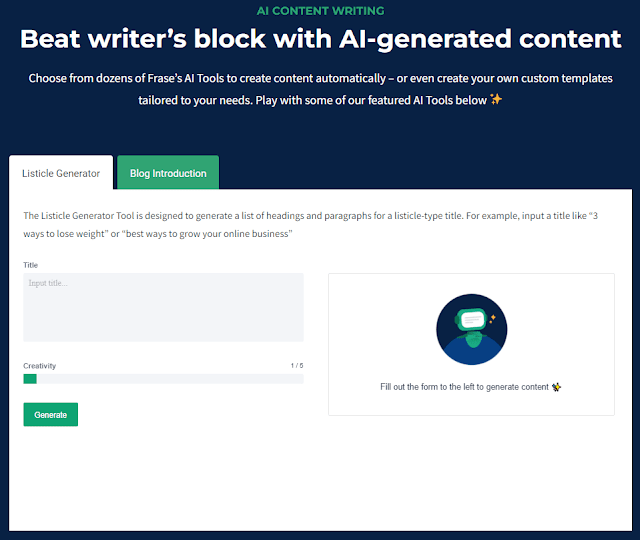
Frase represents the intersection of content generation and search engine optimization. Unlike standard writing assistants, Frase functions as a research and optimization engine. It crawls the top-performing search results for a given keyword, identifies the commonalities in headers and topics, and provides a structured brief for the user. This data-driven approach ensures that content is not only readable but also strategically positioned to rank on search engine results pages (SERPs).

4. Article Forge: The Fully Autonomous Writing Engine
Article Forge differentiates itself through a "hands-off" approach to content creation. While many tools require the user to provide extensive prompts or outlines, Article Forge requires only a target keyword. Through deep-learning research, it generates complete, unique, and human-readable articles. It remains a popular choice for bloggers operating large networks of niche sites where the sheer volume of content is the primary factor in traffic acquisition.
5. Rytr: Efficiency for Small Businesses and Students
Rytr has gained traction as a cost-effective alternative for solopreneurs and academic researchers. Its architecture is built for simplicity; users select a "use case," provide a brief input, and the AI produces a polished output. Rytr includes a built-in plagiarism checker, a critical feature for maintaining content integrity in professional and educational settings.
6. Writesonic: Grammatical Precision and Marketing Utility
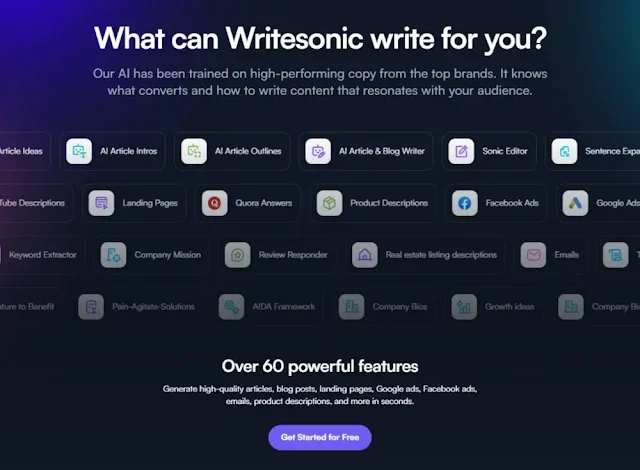
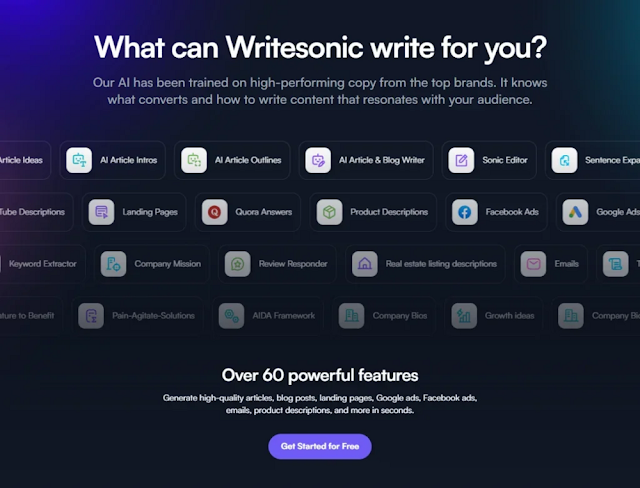
Writesonic is frequently cited for its robust integration of grammar and plagiarism-detection features. By combining these tools directly into the drafting process, it minimizes the need for third-party editing software. Its ability to generate long-form blog posts that require minimal human intervention has made it a staple for small business owners operating on limited budgets.
7. CopySmith: Enterprise-Level Scalability
CopySmith serves as a bridge between boutique content creation and enterprise requirements. It offers specific solutions for bulk content generation, such as product description management for large-scale retail websites. Its collaborative features allow team members to share drafts, manage workflows, and maintain brand voice across multiple campaigns simultaneously.

8. Hypotenuse.ai: The E-commerce Powerhouse
Hypotenuse.ai focuses heavily on the retail sector. The tool specializes in transforming raw product data—such as technical specifications and SKUs—into compelling, SEO-friendly product descriptions. For retailers managing thousands of inventory items, this tool effectively automates a task that would otherwise take human copywriters months to complete.
9. Kafkai: Niche-Specific SEO Content
Kafkai utilizes a specialized approach to SEO writing, offering pre-trained models for various niche industries. By training its models on industry-specific datasets, Kafkai ensures a higher degree of relevance for highly technical or specialized topics. It is widely used by digital agencies that manage clients across diverse sectors, from real estate to healthcare.

10. Peppertype.ai: The AI-Assisted Content Assistant
Peppertype.ai focuses on the user experience of the content creator. It offers a variety of content types, including personal bio generation, tweet ideas, and Quora answers. Its strength lies in its speed and its "feedback loop," where the AI learns from the user’s preferences to refine its style and tone over time.
Broader Implications and Future Outlook
The rapid proliferation of these tools has sparked a broader debate regarding the future of creative labor. While proponents argue that AI democratizes high-quality content production and allows humans to focus on strategy rather than mechanics, critics raise concerns regarding the homogenization of online text and the potential for copyright disputes.
Data from 2022 indicates that organizations adopting AI-assisted workflows saw an average increase in content output by 30-50% without a proportional increase in personnel costs. However, this has also led to an environment where content quality varies significantly based on the operator’s ability to provide effective prompts—a skill set now referred to as "prompt engineering."
Conclusion
The tools outlined above represent the vanguard of the AI revolution in digital media. While each platform offers unique benefits—ranging from deep SEO integration in Frase to the autonomous article generation of Article Forge—they share a common goal: reducing the cognitive and temporal burden of writing. As these technologies continue to evolve, the distinction between human-authored and AI-assisted content will likely blur, forcing businesses to prioritize originality, strategy, and ethical transparency as the ultimate differentiators in a crowded digital marketplace. Users are encouraged to weigh these options based on their specific volume requirements, technical expertise, and budgetary constraints to maximize the return on their digital marketing investments.