What is Blockchain Technology: A Comprehensive Guide to the Distributed Ledger Revolution

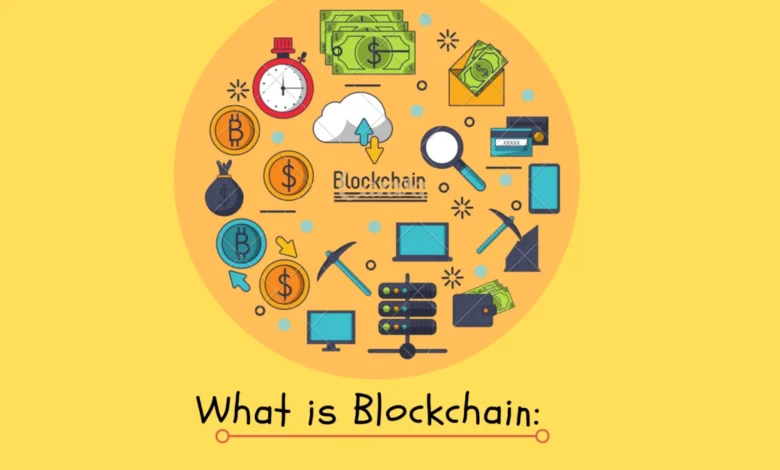
The traditional financial and data management systems that underpin modern society rely heavily on centralized intermediaries—banks, government agencies, and corporate servers—to validate transactions and store records. However, the emergence of blockchain technology represents a fundamental shift in how digital trust is established. By utilizing a decentralized, immutable ledger system, blockchain allows for the secure, transparent, and permanent recording of data without the requirement for a central authority. As industries ranging from global supply chain management to healthcare and finance begin to integrate this technology, understanding its architecture, history, and implications has become essential for navigating the future of the digital economy.
Historical Origins and Technical Evolution
The conceptual foundation of blockchain predates the popularization of Bitcoin by nearly two decades. In 1991, researchers Stuart Haber and W. Scott Stornetta introduced a method for timestamping digital documents to ensure they could not be backdated or tampered with. Their work utilized cryptographic hashes to link data blocks, creating a chain of custody that provided verifiable proof of integrity.
This theoretical framework remained largely academic until the late 1990s, when computer scientist Nick Szabo proposed "Bit Gold." Szabo’s concept envisioned a decentralized digital currency that solved the "double-spending" problem—a critical hurdle in digital finance where a single unit of currency could theoretically be spent twice. While Bit Gold was never fully realized, it provided the blueprint for the 2008 whitepaper published by the pseudonymous Satoshi Nakamoto. Nakamoto’s introduction of Bitcoin provided the first practical, functional application of a blockchain, successfully creating a trustless, peer-to-peer financial system.
Understanding the Mechanics: How Blockchain Functions
At its core, a blockchain is a distributed database that maintains a continuously growing list of records, referred to as "blocks." Each block contains a specific set of data, a timestamp, and a unique cryptographic hash of the previous block. This chaining mechanism ensures that if information within a block is altered, the hash changes, effectively breaking the chain and alerting the entire network to the attempted manipulation.
The process functions through a network of "nodes"—individual computers that participate in the blockchain. When a transaction is initiated, it is broadcast to the network. These nodes use consensus algorithms (such as Proof of Work or Proof of Stake) to validate the transaction. Once verified, the transaction is bundled into a block and added to the existing ledger. Because this ledger is distributed across thousands of computers globally, no single entity possesses control over the data, rendering the system resistant to censorship, system failure, and unauthorized modification.
Decentralization and the Security Paradigm
The primary advantage of blockchain is its decentralized nature. In traditional systems, data is stored in centralized servers, creating a single point of failure. If an attacker breaches the security of a central database, the integrity of all stored information is compromised.
Blockchain eliminates this vulnerability by replicating the ledger across all nodes in the network. If one node attempts to introduce fraudulent data, the remaining nodes cross-reference the ledger and identify the discrepancy, rejecting the invalid entry. This architectural design provides a "trustless" environment, where users do not need to rely on the reputation of an intermediary to ensure the accuracy of a transaction. The implications for sectors like legal contracts, land registry, and identity verification are profound, as blockchain offers a level of permanence and transparency that legacy systems cannot match.
Industrial Applications Beyond Cryptocurrency
While blockchain is frequently conflated with volatile digital assets like Bitcoin or Ethereum, its utility extends far beyond currency. Large-scale enterprises are increasingly adopting blockchain to improve operational efficiency and supply chain transparency.
One prominent example is the IBM Food Trust network, utilized by major retailers including Walmart and Unilever. The platform tracks the journey of food products from farm to fork. In the event of a foodborne illness outbreak, retailers can use blockchain to trace the specific source of contamination within seconds, rather than the weeks or months historically required. This granularity significantly reduces public health risks and limits the scope of product recalls, saving corporations millions in operational costs while increasing consumer safety.
Furthermore, the technology is being explored in the healthcare sector to manage electronic health records (EHRs). By providing patients with ownership of their encrypted medical data and allowing secure, audited access for healthcare providers, blockchain could solve long-standing issues regarding data silos and interoperability between different hospital networks.
Comparative Analysis: Database vs. Blockchain
It is essential to distinguish between a standard database and a blockchain. A traditional database, managed by a database administrator, relies on a client-server architecture. Users with the appropriate permissions can read, write, or delete data at will. This system is efficient for high-speed, centralized operations but lacks intrinsic trust.
Conversely, a blockchain is a distributed system where data is append-only. Once a block is added, it is effectively permanent. This makes blockchain unsuitable for applications requiring high-frequency, reversible edits, but ideal for environments where the audit trail and data integrity are paramount. The overhead required to reach consensus among nodes makes blockchain slower than traditional databases, yet the tradeoff is a level of security that is mathematically verifiable.
Current Challenges and Future Outlook
Despite its potential, blockchain faces significant challenges before mass adoption can occur. The energy consumption of certain consensus models, such as Bitcoin’s Proof of Work, has drawn criticism regarding environmental sustainability. However, newer protocols and the shift toward Proof of Stake are drastically reducing the carbon footprint of blockchain operations.
Regulatory uncertainty remains another hurdle. Governments globally are currently debating how to classify and tax blockchain-based assets and services. As legal frameworks evolve, the integration of blockchain into mainstream finance and administrative infrastructure will likely accelerate.
The industry is currently dominated by major service providers like Coinbase, which have built the infrastructure necessary for the public to interact with decentralized networks. As user interfaces become more intuitive and the "gas fees" (transaction costs) associated with major networks stabilize, the barrier to entry for the average consumer will diminish.
Conclusion: The Next Decade of Integration
Over the next five to ten years, the distinction between "blockchain technology" and "standard enterprise software" will likely blur. As companies realize the benefits of immutable, transparent, and decentralized record-keeping, blockchain will become a backend component of everything from supply chain logistics to voting systems and international trade settlements.
The transition to a blockchain-integrated economy will not happen overnight, as legacy systems are deeply entrenched. However, the movement toward decentralization is consistent with the broader evolution of the internet—moving from a centralized, top-down structure to a more resilient, peer-to-peer ecosystem. For stakeholders in the technology, finance, and industrial sectors, the focus must shift from speculative interest in digital assets to the practical, structural implementation of blockchain as a foundational layer for the next generation of global data architecture. The technology is no longer an experimental curiosity; it is a burgeoning pillar of the modern digital infrastructure.