Decoding the Digital Conversation: A Comprehensive Comparative Analysis of the Top 8 Social Intelligence Tools for 2026

Modern consumers no longer wait for annual market surveys or structured corporate focus groups to voice their opinions. Instead, they express their unprompted thoughts, grievances, praises, and product recommendations in real-time across decentralized digital ecosystems, ranging from Reddit threads and niche discussion forums to TikTok comment sections and YouTube review videos. This massive influx of spontaneous data presents both a challenge and an unprecedented opportunity for modern enterprise organizations. To harness these disparate signals, brands increasingly rely on social intelligence platforms to read the room at a massive, global scale, transforming raw cultural chatter into actionable business strategies.

Understanding the Evolution: From Social Metrics to Strategic Intelligence
To fully appreciate the role of modern social intelligence tools, industry professionals must differentiate between three closely related yet fundamentally distinct disciplines: social media analytics, social listening, and social intelligence. While all three categories draw their foundational data from digital and social channels, they serve vastly different organizational needs and answer distinct business questions.

Social media analytics primarily focuses on performance metrics. It evaluates quantitative data generated by a brand’s owned accounts and published content, including likes, shares, reach, impressions, clicks, and follower growth. The primary objective of social media analytics is reporting, performance tracking, and content optimization.
Social listening expands the scope beyond owned channels to monitor broader online conversations across the web. It tracks keywords, specific brand mentions, sentiment shifts, and share of voice. Organizations typically deploy social listening tools for brand monitoring, crisis management, and campaign tracking.
Social intelligence, however, represents the pinnacle of this data evolution. It synthesizes listening data, historical analytics, consumer demographics, and competitive context to generate broad strategic insights. Rather than simply measuring whether a campaign succeeded or failed, social intelligence informs consumer research, strategic planning, trend discovery, and overarching market and competitive intelligence.
Industry experts emphasize that growing enterprises eventually outgrow basic listening capabilities. Dylan Peterkin, a recognized social intelligence expert, notes that organizations typically transition to advanced intelligence platforms when their objectives shift past simple performance reporting toward a deeper understanding of target audiences and broader cultural currents. While a basic tool can measure marketing spend and immediate campaign return on investment, full-fledged intelligence allows brands to embed themselves naturally into the physical and digital spaces where their audiences naturally congregate, shaping both product development and content creation.
Core Evaluation Criteria for Social Intelligence Platforms
When enterprise procurement teams and marketing executives evaluate social intelligence software, they must look beyond surface-level feature lists. Industry standards dictate that a robust platform must feature broad data coverage, advanced noise reduction, sophisticated trend and theme detection, and an intuitive artificial intelligence layer wrapped in a user-friendly interface.

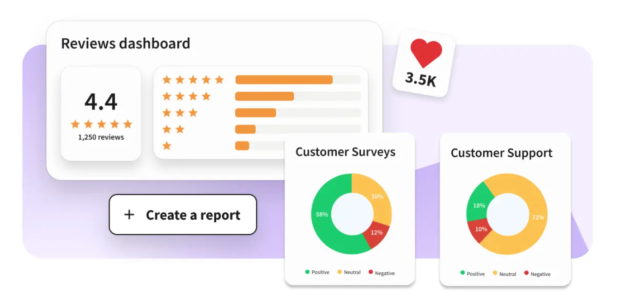
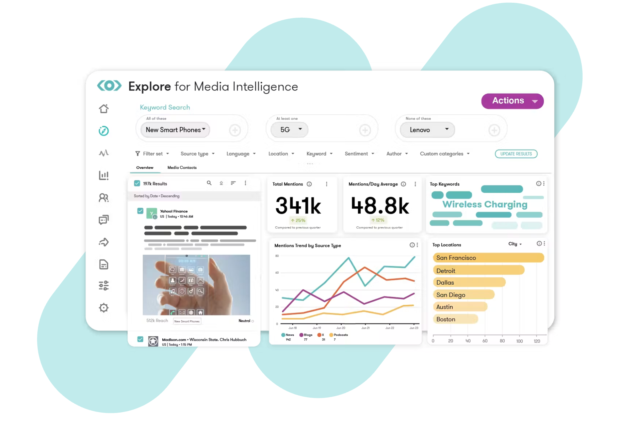
Data coverage serves as the foundational pillar of any effective intelligence tool. If a platform successfully monitors mainstream social networks but fails to capture crucial discussions occurring within Reddit communities or specialized industry forums, the resulting market picture remains incomplete. Furthermore, sophisticated platforms increasingly integrate online customer reviews and customer support ticket data alongside social feeds. Combining review site tracking with social data creates a powerful narrative combination, allowing organizations to map the complete customer journey, identify chronic pain points, and uncover white-space market opportunities.
Noise reduction remains an ongoing operational challenge. The digital landscape overflows with spam, automated bot activity, irrelevant keyword matches, and low-value chatter that can severely distort analytical outcomes. For instance, searching for a generic brand name like Apple requires an intelligence engine sophisticated enough to instantly segregate discussions regarding the multi-trillion-dollar technology corporation from conversations about fresh fruit. Advanced filtering mechanisms and bot-detection algorithms are therefore essential to ensure decision-makers act on pristine data rather than statistical noise.
The most valuable consumer insights invariably reside within behavioral patterns rather than isolated individual posts. Consequently, modern platforms rely heavily on conversation clustering algorithms. By grouping thousands of disparate comments into cohesive thematic clusters, these tools reveal unexpected consumer priorities. For example, a localized discussion among university students regarding textbook pricing, when viewed through a broader cluster analysis, may actually reflect a macro-economic trend concerning young adults struggling to afford basic living essentials. Recognizing these broader patterns provides brands with significantly higher strategic value.
Artificial Intelligence Integration and Actionability
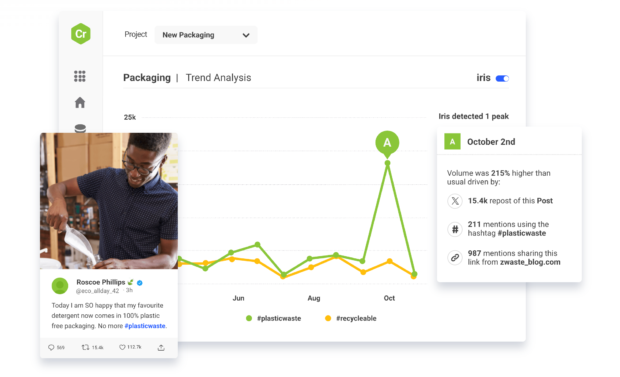
The integration of generative artificial intelligence has fundamentally transformed how organizations interact with social data. Historically, market researchers spent weeks manually compiling metrics and drafting voluminous reports. Today, advanced AI layers can summarize massive volumes of conversation data in seconds, explain unusual metric spikes, and identify the underlying drivers behind sudden shifts in brand perception.
Consider a scenario where a brand experiences a sudden 700% surge in online mentions, jumping from 10,000 to 80,000 references in a single day. A basic reporting tool merely confirms the volumetric increase. An intelligent AI-driven platform, however, determines the root cause: did a major celebrity organically endorse the product, did an automated bot network launch a spam campaign, or did a controversial corporate statement trigger a PR crisis? These distinct scenarios demand entirely different executive responses.
To maintain analytical integrity, elite platforms ensure that all AI-generated conclusions remain fully traceable to their underlying source conversations. Systems equipped with citation features allow analysts to independently verify every algorithmic summary against actual user posts, mitigating the risk of AI hallucination and ensuring absolute confidence in strategic decision-making.
Comparative Overview of the Top 8 Social Intelligence Tools
The market for social intelligence software features several established enterprise solutions and specialized platforms, each tailored to distinct organizational priorities. Below is a detailed comparative breakdown of the eight leading social intelligence tools currently shaping the industry.
-
Lumen
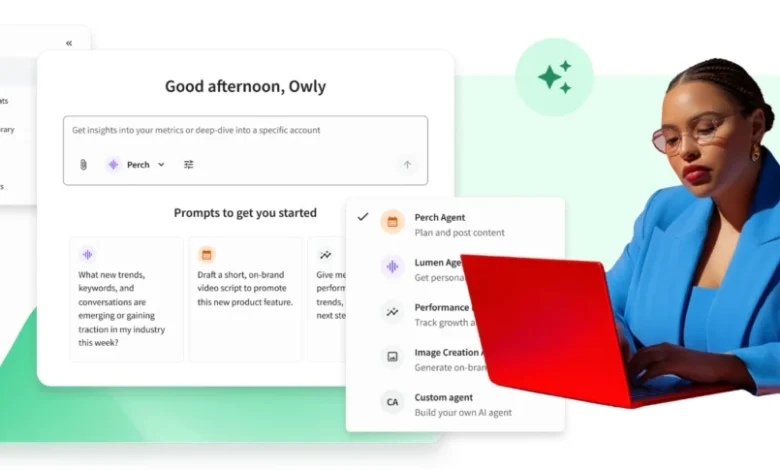
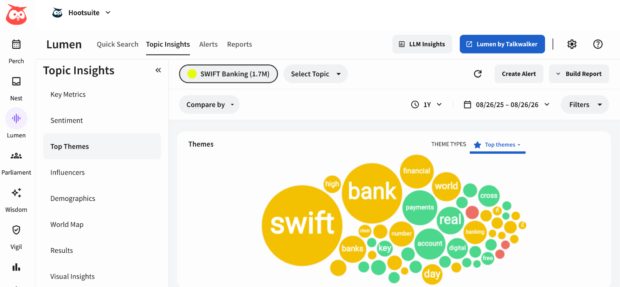
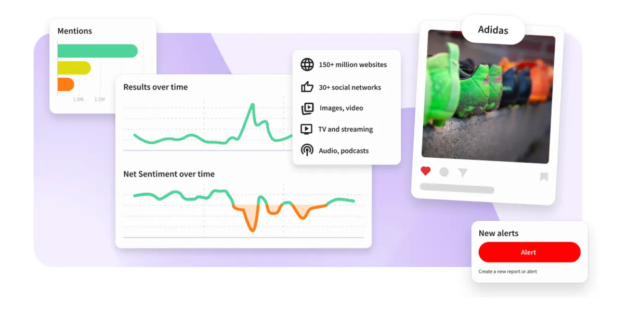
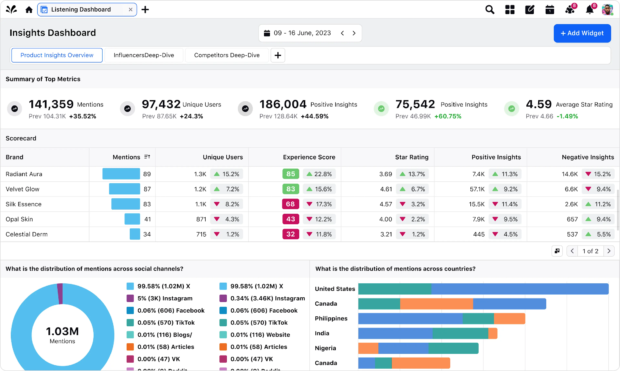
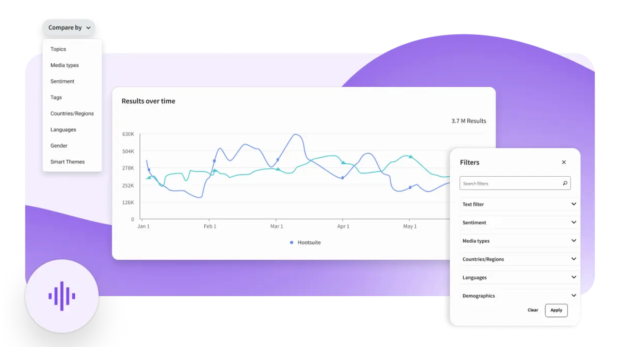
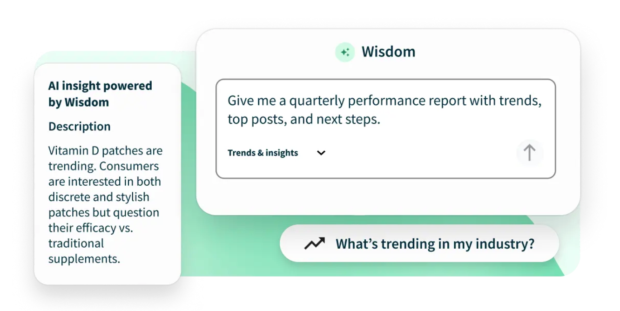
Developed by Hootsuite, Lumen is an enterprise-grade social intelligence platform boasting exceptionally broad global coverage, indexing over 150 million websites and tracking more than 30 social channels, including specialized networks like Reddit, LinkedIn, and Bluesky. Lumen operates in tandem with Wisdom, Hootsuite’s proprietary social-first AI agent. Wisdom enables users to query their social data using natural language, returning detailed answers complete with source citations and actionable strategic recommendations. Lumen is ideally suited for global enterprise teams requiring deep, real-time market intelligence.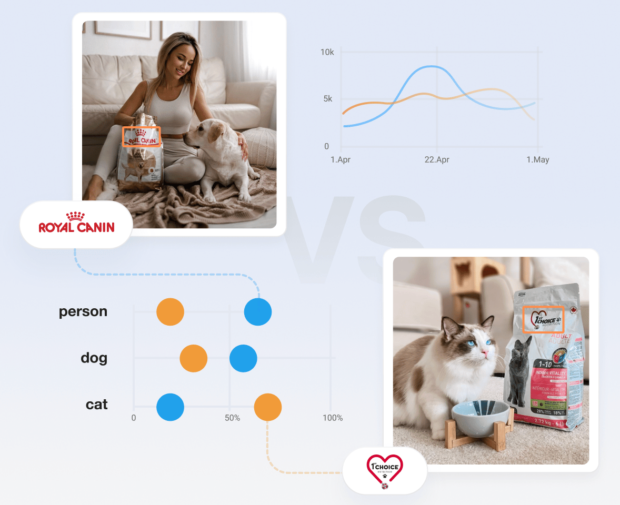
-
Brandwatch
Brandwatch is a powerhouse in the social intelligence sector, distinguished by its immense historical scale. The platform has indexed more than 1.6 trillion consumer conversations dating back to 2010, with millions of new entries added daily. Powered by its proprietary AI layer, Iris AI, Brandwatch excels at trend surfacing, sentiment scoring, and automated image and logo recognition. It is the premier choice for brands that require deep historical archives of consumer opinion for long-term longitudinal studies. -
Meltwater
Rooted deeply in public relations and media monitoring, Meltwater offers a comprehensive monitoring footprint spanning traditional news outlets, broadcast television, print media, and social networks. Its most innovative capability is its GenAI Lens, which tracks how brands are represented across major generative AI assistants like ChatGPT, Gemini, and Claude, while identifying the specific third-party publishers most frequently cited by those LLMs. Meltwater is exceptionally well-suited for PR-led corporate communications teams managing unified media, social, and AI visibility strategies.
-
Sprinklr
Sprinklr operates primarily as a unified customer experience (CX) management platform where advanced social listening functions as one component of a broader operational suite. Designed to break down silos between customer service, social engagement, and marketing departments, Sprinklr enables entire organizations to operate within a single shared ecosystem. Its robust artificial intelligence layer continuously scans billions of indexed conversations to identify emerging themes, market shifts, and operational anomalies. It is the ideal solution for enterprises prioritizing holistic customer experience and omnichannel management. -
YouScan
YouScan is a specialized social intelligence platform engineered specifically for visual-first brands and consumer goods companies. In addition to traditional keyword and text-based monitoring, YouScan features proprietary Visual Insights technology that scans over 500,000 online sources to detect logos, specific physical objects, and demographic indicators within shared images. Complemented by its Insights Copilot AI assistant, YouScan is the definitive tool for organizations whose brand equity relies heavily on visual media and aesthetic presentation.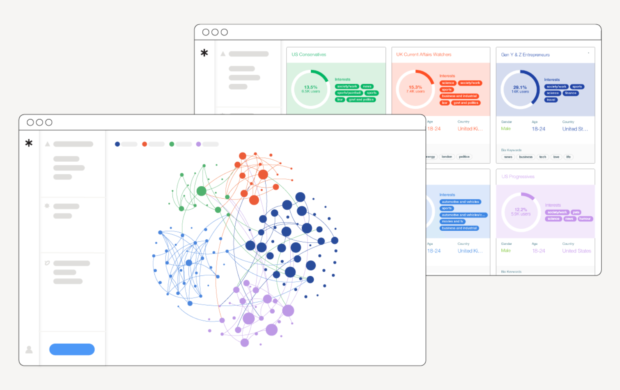
-
Audiense
Audiense functions as a dedicated audience intelligence platform, connecting social, behavioral, and purchase-intent signals to construct comprehensive profiles of target consumer segments. Built upon a foundational database of over 3 billion global consumer profiles, Audiense allows marketers to interact directly with AI-powered personas generated from their actual audience segments. This unique capability enables brands to test messaging concepts, creative directions, and product ideas against realistic simulated consumer groups prior to market launch. -
Pulsar
Pulsar is a social intelligence and audience segmentation platform that moves beyond monolithic conversation tracking by dividing target audiences into distinct behavioral communities. It analyzes how different demographic sub-groups discuss identical topics in unique ways. Pulling web and social data from 195 countries across multiple languages, Pulsar’s Narratives AI detects and ranks emerging thematic narratives across billions of global posts. It is best suited for research teams seeking granular community-level insights.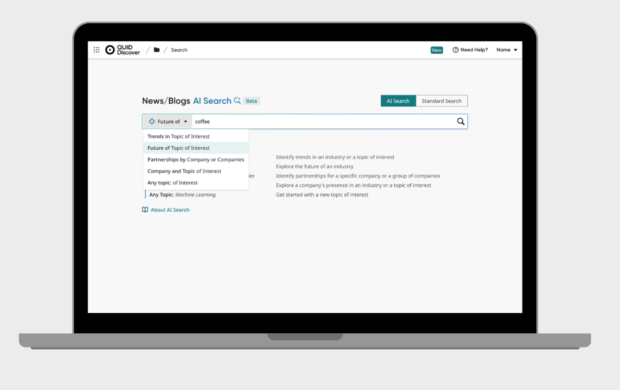
-
Quid
Quid operates at the intersection of consumer research and market intelligence, extending far beyond traditional social listening by ingesting data from social media, news broadcasts, patent filings, and financial reports. Quid’s core differentiator is its predictive analytical capability, which forecasts future shifts in shopper demand to inform inventory planning, dynamic pricing strategies, and product development cycles. It is widely adopted by enterprise organizations operating within pharmaceuticals, retail, and consumer packaged goods (CPG).
Financial Considerations and Procurement Strategies
Pricing models within the social intelligence sector vary significantly based on organizational scale and configuration requirements. Lightweight listening tools typically operate on predictable subscription tiers ranging from several hundred dollars per month. Conversely, sophisticated enterprise social intelligence platforms—such as Lumen, Brandwatch, and Meltwater—utilize bespoke, custom pricing models tailored to specific corporate needs.
When negotiating enterprise software contracts, vendors calibrate pricing across several key operational dials: total data volume ingested, breadth of source coverage required, number of active user seats, and the depth of advanced analytics and generative AI capabilities integrated into the deployment. Procurement teams are advised to conduct rigorous proof-of-concept testing to ensure the chosen platform delivers verifiable return on investment well beyond the initial implementation phase.
Strategic Implications for Modern Enterprises
As digital ecosystems continue to multiply and consumer behavior evolves at an unprecedented pace, the ability to rapidly convert unstructured online conversations into strategic business intelligence has transitioned from a competitive advantage to an operational necessity. Organizations that successfully deploy advanced social intelligence infrastructure—leveraging real-time monitoring platforms like Lumen alongside conversational AI agents like Wisdom—gain the agility required to anticipate market disruptions, protect brand reputation, and align product development directly with evolving consumer expectations. Ultimately, bridging the gap between passive listening and active intelligence empowers modern enterprises to navigate complex cultural landscapes with confidence, precision, and strategic foresight.