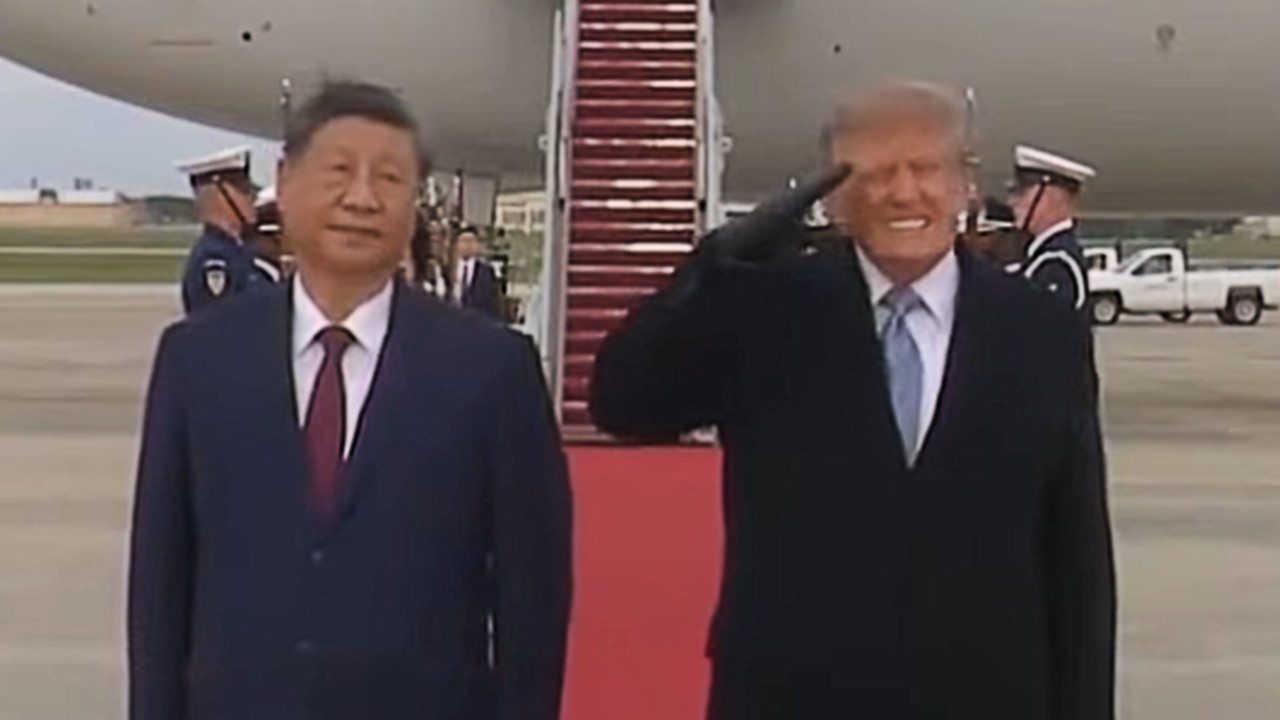
The intersection of high-stakes international diplomacy and modern internet culture produced a viral phenomenon on September 23rd, 2026, when a brief moment captured on video during a bilateral summit in Maryland quickly transformed into a global meme. The footage, which features U.S. President Donald Trump visibly flinching during a military flyover while Chinese President Xi Jinping remains completely unfazed, captured the attention of millions across various social media platforms. Within hours, the clip generated extensive commentary, parody, and political discourse, highlighting the rapid speed at which contemporary political optics are scrutinized, dissected, and recontextualized in the digital age.
The Genesis of the Viral Clip
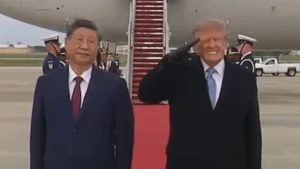
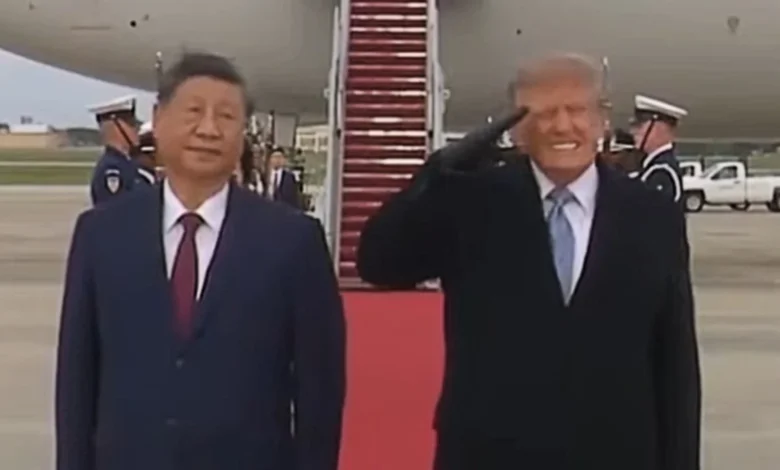
The incident occurred during an official diplomatic summit held in Maryland, where President Donald Trump and Chinese President Xi Jinping gathered for high-level discussions regarding bilateral trade, global security, and geopolitical relations. As part of the ceremonial events welcoming the foreign delegation, the two leaders stood side by side on a red carpet outdoors, rendering honors as a pair of United States Air Force B-1 strategic bombers executed a low-altitude military flyover.
The acoustic impact of heavy supersonic bombers operating at low altitudes is inherently dramatic, often producing a concussive shockwave and deafening sound pressure levels that catch individuals off guard. In the video recording of the ceremony, as the aircraft roared overhead, President Trump visibly winced, ducked his head slightly, and closed his eyes in a reflexive reaction to the sudden noise. In sharp contrast, President Xi Jinping maintained a rigid posture, exhibiting virtually no physical reaction to the environmental disruption. The stark juxtaposition between the two world leaders immediately drew the attention of online observers, setting the stage for widespread digital distribution.
Rapid Spread Across Digital Ecosystems
By the afternoon of September 23rd, 2026, clips of the flyover began circulating widely across major social networking platforms, including X (formerly Twitter), Reddit, and TikTok. Accounts belonging to political commentators, news aggregation pages, and independent creators seized upon the contrasting physical reactions of the two presidents.
One of the earliest high-visibility posts came from the political media organization MeidasTouch, which published the video on X with the caption noting that Trump winced in pain during the loud military flyover while Xi showed no reaction. The post accumulated tens of thousands of likes and thousands of reposts within its first twenty-four hours online. Simultaneously, the video found its way onto Reddit communities such as the popular subreddit r/therewasanattempt, where it was cataloged under the thematic title "to not flinch," attracting substantial user engagement and upvotes.
Internet Culture and Political Parody
As is characteristic of modern political discourse, users quickly leveraged the footage to generate internet memes, drawing parallels to existing pop culture references and historical events. One viral derivative utilized the "I Am A Surgeon" meme format to parody Trump’s sudden facial expression, while other users incorporated contemporary internet slang. Notably, a post by X user @raymackmelon utilized the term "mogged"—a slang expression denoting one individual dominating or overshadowing another through physical presence or composure—to describe President Xi’s calm demeanor relative to Trump’s reflexive flinch. This particular post gained immense traction, surpassing one hundred thousand likes within a single day.
Beyond lighthearted internet humor, the video also reignited partisan political debates. Critics of the former president used the moment to draw unfavorable comparisons regarding physical resilience, while detractors on both sides debated the optics of a U.S. commander-in-chief reacting visibly to domestic military aircraft. Furthermore, some users injected references to past political trauma, specifically recalling the 2024 assassination attempt on Trump in Butler, Pennsylvania, leading to polarized exchanges in comment sections regarding the nature of sensory reactions to loud noises and high-stress environments.
Implications for Political Optics and Diplomacy
While the incident itself was fundamentally a minor, involuntary physiological reaction to an extreme acoustic stimulus, the trajectory of the event underscores the profound influence of micro-moments in modern political communications. In an era where leaders are perpetually monitored by high-definition cameras, split-second reflexes can be extracted, magnified, and weaponized by political opponents and meme creators alike.
Diplomatic summits are meticulously orchestrated affairs designed to project strength, stability, and mutual respect between nations. Ceremonial displays involving military hardware are intended to showcase national power and technological prowess. However, the unexpected variable of human physiology demonstrated that even the most carefully managed state events remain susceptible to unpredictable, unscripted moments that can instantly shift the public narrative from serious geopolitical negotiations to viral internet entertainment.
As digital platforms continue to evolve, the line between serious political journalism and participatory internet culture remains increasingly blurred. The episode involving Donald Trump and Xi Jinping serves as a notable case study in how visual media from official state engagements is rapidly digested by the global public, proving that protocol and policy can be temporarily overshadowed by the universal human reflex to a very loud noise.
Related posts: