

Gartners Cloud Computing Future: Predictions and Trends
Gartner cloud computing future – Gartner’s Cloud Computing Future: Predictions and Trends is a fascinating topic that explores the dynamic world of cloud technology. This blog post dives into Gartner’s latest predictions, analyzing key trends and their impact on businesses and tech providers. We’ll explore how emerging technologies like edge and serverless computing are shaping the future of cloud, while addressing the ever-present challenges of security and privacy.
Beyond the technical aspects, we’ll delve into the human side of cloud computing, examining how it’s transforming workforces and demanding new skills. We’ll also discuss the environmental implications of cloud adoption and explore its potential to power the metaverse, a new frontier in digital experiences.
Gartner’s Cloud Computing Predictions
Gartner, a leading research and advisory company, consistently provides insightful predictions about the future of technology. Their cloud computing predictions offer valuable insights into the evolving landscape and its impact on businesses and technology providers.
The Rise of Cloud-Native Platforms
Cloud-native platforms are becoming increasingly prevalent as businesses embrace agility and scalability. Gartner predicts that by 2025, 95% of new digital workloads will be deployed on cloud-native platforms. These platforms offer several advantages, including:
- Microservices architecture:Breaking down applications into smaller, independent services allows for faster development and deployment.
- Containerization:Packaging applications and their dependencies into portable units simplifies deployment and management across different environments.
- DevOps and automation:Automating tasks like infrastructure provisioning, application deployment, and monitoring streamlines the development and operational processes.
This shift towards cloud-native platforms is driven by the need for businesses to adapt quickly to changing market conditions and deliver innovative digital experiences.
The Growing Importance of Cloud Security
As more businesses move to the cloud, security concerns become paramount. Gartner predicts that by 2025, 75% of organizations will have experienced a security breach due to cloud misconfigurations. This highlights the importance of adopting a robust cloud security strategy that encompasses:
- Cloud security posture management (CSPM):Continuously monitoring cloud environments for security vulnerabilities and misconfigurations.
- Cloud workload protection platforms (CWPP):Protecting workloads running in the cloud from threats like malware, ransomware, and data breaches.
- Cloud access security broker (CASB):Enforcing security policies and controlling access to cloud applications and data.
Organizations need to prioritize cloud security to mitigate risks and ensure the confidentiality, integrity, and availability of their data and applications.
The Emergence of Cloud-Based AI and Machine Learning
Cloud computing is enabling the widespread adoption of artificial intelligence (AI) and machine learning (ML). Gartner predicts that by 2025, 80% of enterprises will use AI-powered cloud services for at least one business function. These services offer numerous benefits, including:
- Automated decision-making:AI algorithms can analyze vast amounts of data to make informed decisions, improving efficiency and accuracy.
- Personalized customer experiences:AI-powered chatbots and recommendation engines can provide tailored interactions, enhancing customer satisfaction.
- Predictive analytics:AI can analyze historical data to predict future trends and patterns, enabling businesses to make proactive decisions.
The integration of AI and ML into cloud platforms is transforming industries and creating new opportunities for innovation.
Gartner’s predictions for the future of cloud computing are exciting, with a focus on security and automation. Microsoft’s Security Copilot, a game-changer in this space, provides an AI-powered approach to security, offering real-time threat detection and response. You can explore the power of this tool at the Microsoft Security Copilot Experience Center , where you can witness firsthand how this innovative technology is shaping the future of cloud security.
This focus on intelligent security solutions aligns perfectly with Gartner’s vision for a future where cloud computing becomes more secure and user-friendly.
The Rise of Multi-Cloud Strategies
Organizations are increasingly adopting multi-cloud strategies to leverage the strengths of different cloud providers and mitigate vendor lock-in. Gartner predicts that by 2025, 90% of enterprises will have adopted a multi-cloud or hybrid cloud strategy. This approach offers several advantages:
- Flexibility and choice:Organizations can choose the best cloud provider for each workload based on factors like cost, performance, and security.
- Increased resilience:Distributing workloads across multiple cloud providers reduces the risk of downtime or outages due to a single provider failure.
- Innovation and agility:Accessing a wider range of cloud services and technologies allows organizations to experiment with new solutions and accelerate innovation.
Multi-cloud strategies are becoming increasingly popular as businesses seek greater flexibility, resilience, and innovation in their cloud environments.
Emerging Cloud Technologies
The cloud computing landscape is constantly evolving, with new technologies emerging to address the growing demands of businesses. These emerging technologies are poised to revolutionize the way we think about and utilize cloud computing, unlocking new possibilities and driving innovation across industries.
Edge Computing
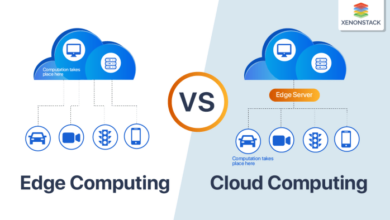
Edge computing brings computation and data storage closer to the source of data, reducing latency and improving responsiveness for applications that require real-time processing. This is especially relevant for applications like autonomous vehicles, IoT devices, and AR/VR experiences.
Gartner’s predictions for the future of cloud computing are fascinating, especially when considering the rapid advancements in smart home technology. The integration of cloud services into our daily lives is becoming increasingly seamless, as seen in the latest innovations from Philips Hue, which recently unveiled two new smart lights for your home – the Dymera wall light and a secure floodlight camera ( philips hue unveils two new smart lights for your home dymera wall light and a secure floodlight camera ).
This kind of connected home experience is exactly what Gartner envisions for the future of cloud computing, where everything is interconnected and controlled by our devices.
- Reduced Latency:By processing data closer to the user, edge computing minimizes the time it takes for data to travel to and from a centralized cloud, resulting in faster response times and improved user experiences.
- Enhanced Security:By keeping data local, edge computing reduces the risk of data breaches and security vulnerabilities associated with transmitting sensitive information over long distances.
- Improved Reliability:Edge computing provides a more resilient infrastructure by distributing workloads across multiple locations, reducing the impact of outages or network failures.
Serverless Computing
Serverless computing allows developers to focus on writing code without managing the underlying infrastructure. Instead of provisioning and managing servers, developers can simply deploy their code and pay only for the resources used during execution.
- Increased Scalability:Serverless platforms automatically scale resources based on demand, ensuring that applications can handle fluctuating workloads without manual intervention.
- Reduced Operational Costs:By eliminating the need for server management, serverless computing significantly reduces operational costs, allowing businesses to focus on core competencies.
- Faster Time to Market:Serverless platforms simplify deployment and management, enabling developers to bring applications to market faster and iterate more quickly.
Quantum Computing
Quantum computing utilizes the principles of quantum mechanics to perform calculations that are impossible for classical computers. This has the potential to revolutionize fields like drug discovery, materials science, and financial modeling.
- Accelerated Drug Discovery:Quantum computers can simulate complex molecular interactions, enabling faster and more accurate drug discovery and development.
- Enhanced Materials Science:Quantum computing can model the behavior of materials at an atomic level, leading to the development of new materials with improved properties.
- Improved Financial Modeling:Quantum computers can analyze vast datasets and optimize complex financial models, enabling better risk management and investment strategies.
Cloud Security and Privacy: Gartner Cloud Computing Future
The cloud has become the backbone of modern businesses, offering scalability, flexibility, and cost-effectiveness. However, this shift comes with a set of unique security and privacy challenges that require careful consideration and proactive measures. This section explores the evolving security and privacy challenges in the cloud environment, discusses emerging solutions and best practices for mitigating these risks, and Artikels a comprehensive cloud security strategy for businesses.
Gartner’s predictions for the future of cloud computing are exciting, with a focus on increased adoption and innovation. As businesses move more operations to the cloud, it’s crucial to have reliable tools, like a strong email client. Choosing between Microsoft Outlook vs.
Apple Mail depends on your specific needs and integration with other cloud services. Ultimately, the right choice will help you leverage the potential of cloud computing to its fullest.
Evolving Security and Privacy Challenges
The cloud environment presents a unique set of security and privacy challenges that differ from traditional on-premises IT infrastructure. These challenges are constantly evolving due to factors such as the increasing complexity of cloud services, the growing reliance on cloud-based applications, and the rise of sophisticated cyber threats.
- Data breaches and vulnerabilities: The concentration of sensitive data in the cloud makes it a prime target for cyberattacks. Cloud providers have robust security measures, but misconfigurations, outdated software, and human error can create vulnerabilities that attackers exploit.
- Data privacy regulations: Compliance with evolving data privacy regulations like GDPR, CCPA, and HIPAA is crucial. Cloud providers may offer compliance features, but organizations must ensure they are properly implemented and enforced.
- Shared responsibility model: The shared responsibility model in cloud computing means both the cloud provider and the organization share the burden of security. Organizations must understand their responsibilities and implement appropriate security controls.
- Cloud migration challenges: Migrating workloads to the cloud can introduce new security risks. Organizations must carefully plan and execute cloud migrations to minimize vulnerabilities.
- Cloud-native security: As organizations adopt cloud-native technologies like containers and serverless computing, securing these environments becomes increasingly complex. New security tools and approaches are needed to address these challenges.
Emerging Solutions and Best Practices
To address the evolving security and privacy challenges in the cloud, organizations must adopt a comprehensive and proactive approach that includes:
- Strong access control and identity management: Implement robust access control measures, including multi-factor authentication (MFA), to restrict unauthorized access to sensitive data.
- Data encryption: Encrypt data at rest and in transit to protect it from unauthorized access. Use industry-standard encryption algorithms and manage encryption keys securely.
- Regular security assessments and penetration testing: Conduct regular security assessments and penetration testing to identify and mitigate vulnerabilities.
- Security monitoring and threat detection: Implement security monitoring tools to detect suspicious activities and respond to threats promptly.
- Cloud security posture management (CSPM): Use CSPM tools to assess and improve the security posture of cloud environments. These tools can identify misconfigurations, vulnerabilities, and compliance issues.
- Cloud workload protection platforms (CWPP): Employ CWPP solutions to protect cloud workloads from attacks. These platforms offer features like runtime protection, vulnerability scanning, and threat detection.
- Security awareness training: Educate employees about cloud security best practices and the importance of data privacy.
- Collaboration with cloud providers: Work closely with cloud providers to leverage their security expertise and ensure compliance with industry standards.
Comprehensive Cloud Security Strategy
A comprehensive cloud security strategy should be tailored to the specific needs and risks of an organization. It should address the following key areas:
- Risk assessment and management: Conduct a thorough risk assessment to identify potential threats and vulnerabilities. Develop a risk management plan to mitigate these risks.
- Security policies and procedures: Establish clear security policies and procedures for managing cloud resources, access control, data protection, and incident response.
- Security architecture and design: Design a secure cloud architecture that incorporates best practices for network security, data protection, and access control.
- Security monitoring and incident response: Implement robust security monitoring tools and processes to detect threats and respond to incidents effectively.
- Compliance and governance: Ensure compliance with relevant data privacy regulations and industry standards.
- Continuous improvement: Regularly review and update the cloud security strategy to address evolving threats and vulnerabilities.
Cloud Adoption and Business Impact

The cloud has become an essential tool for businesses of all sizes, enabling them to innovate, scale, and compete in the digital age. Cloud adoption has become ubiquitous, transforming how businesses operate and delivering tangible benefits across various industries.
Real-World Examples of Cloud Adoption
Cloud computing offers businesses the agility and flexibility to adapt quickly to changing market conditions. Here are some real-world examples of how businesses are leveraging cloud computing to drive innovation and growth:
- Netflix: The streaming giant relies heavily on cloud infrastructure to deliver its services globally. Netflix uses Amazon Web Services (AWS) to scale its platform, handle peak demand, and deliver a seamless streaming experience to millions of subscribers worldwide. This allows them to quickly adapt to changing user demands and introduce new features without significant upfront investments.
- Spotify: The music streaming service leverages cloud technology to provide its services to over 400 million users across the globe. Spotify uses AWS to manage its infrastructure, store massive amounts of music data, and personalize user experiences. By using the cloud, Spotify can quickly scale its platform to meet the growing demand for music streaming, while also offering a highly personalized user experience.
- Airbnb: The online marketplace for lodging relies on cloud computing to manage its platform, handle user requests, and process payments. Airbnb uses Google Cloud Platform (GCP) to scale its platform, handle peak demand during travel seasons, and provide a reliable and secure experience for users.
This allows Airbnb to focus on expanding its business globally and offering a wider range of accommodations to its users.
Benefits of Cloud Adoption Across Industries
The cloud offers numerous benefits for businesses across various industries, including:
- Cost Reduction: Cloud computing allows businesses to reduce their IT infrastructure costs by eliminating the need for on-premises hardware and software. Instead of investing in expensive hardware and software licenses, businesses can pay for cloud services on a pay-as-you-go basis, only paying for the resources they use.
This can significantly reduce capital expenditures and operating expenses.
- Increased Agility and Scalability: Cloud computing provides businesses with the ability to scale their resources up or down quickly based on demand. This allows businesses to quickly respond to changing market conditions and adapt to fluctuations in demand without investing in additional hardware or software.
- Enhanced Security and Compliance: Cloud providers invest heavily in security and compliance, offering businesses access to robust security measures and compliance certifications. This can help businesses meet industry regulations and protect their sensitive data from cyber threats.
- Improved Collaboration and Productivity: Cloud-based collaboration tools enable teams to work together more effectively, regardless of their location. This can improve communication, streamline workflows, and boost productivity.
- Innovation and New Business Models: Cloud computing enables businesses to develop new products and services quickly and efficiently. The cloud provides access to a wide range of technologies and tools, allowing businesses to experiment with new ideas and bring them to market faster.
Business Outcomes Achieved Through Cloud Adoption
| Industry | Business Outcome | Cloud Solution |
|---|---|---|
| Retail | Increased sales and customer engagement | E-commerce platform on AWS |
| Healthcare | Improved patient care and reduced costs | Electronic health records (EHR) system on Azure |
| Manufacturing | Enhanced operational efficiency and reduced downtime | Industrial IoT platform on GCP |
| Financial Services | Improved customer experience and regulatory compliance | Digital banking platform on AWS |
| Education | Personalized learning experiences and improved student outcomes | Learning management system (LMS) on Azure |
The Future of Cloud Workforces
The cloud computing landscape is evolving rapidly, demanding a shift in the skills and roles required to manage and operate cloud environments. As organizations increasingly adopt cloud technologies, the demand for skilled cloud professionals is growing exponentially. This evolution is driven by the need to navigate the complexities of cloud architectures, manage security and compliance, and optimize cloud resources for performance and cost-efficiency.
Cloud Skills for the Future
The cloud computing industry is experiencing a skills gap, highlighting the need for individuals to develop specialized skills in areas such as cloud security, automation, and data analytics. Here’s a list of key skills required for cloud professionals in the future:
- Cloud Architecture and Design:Understanding cloud architecture principles, designing and implementing secure and scalable cloud solutions, and optimizing cloud infrastructure for performance and cost-effectiveness.
- Cloud Security and Compliance:Implementing and managing security controls in cloud environments, ensuring compliance with industry regulations and best practices, and mitigating risks associated with data breaches and cyberattacks.
- Cloud Automation and DevOps:Automating cloud infrastructure management, deploying and managing applications using DevOps principles, and leveraging automation tools for increased efficiency and agility.
- Cloud Data Management and Analytics:Managing and analyzing data stored in cloud platforms, leveraging data analytics tools and techniques to extract insights and optimize business processes.
- Cloud Networking and Connectivity:Understanding cloud networking principles, configuring and managing virtual networks, and ensuring secure and reliable connectivity between cloud services and on-premises systems.
- Cloud Cost Optimization:Analyzing cloud usage patterns, identifying cost optimization opportunities, and implementing strategies to reduce cloud expenses while maintaining performance and availability.
- Cloud Application Development:Developing and deploying cloud-native applications, leveraging cloud-based development tools and platforms, and optimizing applications for performance and scalability.
Resources and Training Programs
Several resources and training programs are available to help individuals develop the necessary cloud skills:
- Cloud Provider Certifications:Obtaining certifications from major cloud providers such as AWS, Azure, and Google Cloud provides validation of cloud expertise and demonstrates proficiency in specific cloud technologies.
- Online Learning Platforms:Platforms like Coursera, Udemy, and edX offer a wide range of cloud computing courses, covering various aspects of cloud technology and skills development.
- Professional Development Programs:Organizations like the Cloud Security Alliance (CSA) and the Information Systems Audit and Control Association (ISACA) offer professional development programs and certifications focused on cloud security and governance.
- University and College Programs:Many universities and colleges now offer degree programs and specialized courses in cloud computing, providing a comprehensive education in cloud technologies and best practices.
Cloud Computing and Sustainability
The rise of cloud computing has brought about a paradigm shift in how businesses operate, offering unparalleled scalability, flexibility, and cost-efficiency. However, the environmental impact of cloud computing is a crucial aspect that cannot be overlooked. As the demand for cloud services continues to grow, it’s essential to understand the environmental implications and explore ways to mitigate them.
Environmental Impact of Cloud Computing
The environmental impact of cloud computing is multifaceted and includes various factors such as energy consumption, resource utilization, and waste generation. The data centers that power cloud services consume significant amounts of electricity, leading to greenhouse gas emissions. The production and disposal of electronic devices used in cloud infrastructure also contribute to environmental pollution.
Additionally, the transportation of data and equipment across the globe further adds to the carbon footprint.
Role of Cloud Providers in Promoting Sustainable Practices, Gartner cloud computing future
Cloud providers play a critical role in promoting sustainable practices within the cloud ecosystem. They can implement various strategies to minimize their environmental footprint, including:
- Investing in renewable energy sources:Cloud providers can leverage renewable energy sources like solar and wind power to reduce their reliance on fossil fuels. Many cloud providers have already set ambitious goals to achieve carbon neutrality by investing in renewable energy projects.
- Optimizing data center efficiency:Data centers can be optimized for energy efficiency by implementing measures like cooling systems, server virtualization, and power management strategies. These measures can significantly reduce energy consumption and carbon emissions.
- Promoting sustainable practices among customers:Cloud providers can educate their customers on best practices for sustainable cloud usage. This includes encouraging customers to use energy-efficient cloud services, optimize resource utilization, and adopt sustainable data management practices.
Cloud Initiatives Focused on Reducing Carbon Footprint
Several cloud initiatives are focused on reducing the carbon footprint of cloud computing:
- Green Cloud Principles:The Green Grid, a non-profit organization, has developed the Green Cloud Principles, which provide guidelines for sustainable cloud computing. These principles encourage cloud providers to adopt sustainable practices, such as using renewable energy sources and optimizing data center efficiency.
- Sustainable Cloud Alliance:The Sustainable Cloud Alliance is a global coalition of organizations working to promote sustainable cloud computing practices. They provide resources and best practices to help cloud providers and customers reduce their environmental impact.
- Cloud Carbon Footprint Measurement Tools:Several tools are available to help cloud providers and customers measure their carbon footprint. These tools can assess the energy consumption and emissions associated with cloud services, enabling organizations to identify areas for improvement.
Cloud Computing and the Metaverse
The metaverse, a nascent digital realm where virtual and augmented realities converge, holds immense promise for reshaping our interactions, experiences, and even our perception of reality. The realization of this vision hinges heavily on the robust capabilities of cloud computing, which will serve as the backbone for powering the metaverse’s intricate infrastructure.
The Role of Cloud Computing in the Metaverse
Cloud computing is essential to the metaverse’s development and operation, providing the necessary resources and scalability to handle the demanding computational requirements.
- Scalability and Flexibility:The metaverse necessitates immense computational power to render complex virtual environments and support large numbers of users simultaneously. Cloud computing’s inherent scalability allows for dynamic resource allocation, ensuring smooth operation even during peak demand.
- Data Storage and Management:The metaverse will generate vast amounts of data, including user interactions, virtual assets, and environmental information.
Cloud-based data storage solutions provide the capacity and security to manage this data effectively.
- Advanced Computing Capabilities:Metaverse applications require advanced computing capabilities like artificial intelligence (AI), machine learning (ML), and edge computing to deliver realistic and immersive experiences. Cloud platforms offer access to these technologies, enabling developers to build sophisticated metaverse applications.
- Cost-Effectiveness:Cloud computing provides a cost-effective approach to building and operating metaverse infrastructure, allowing developers to access computing resources on demand and pay only for what they use.
Challenges and Opportunities in Integrating Cloud Technologies with Metaverse Applications
Integrating cloud technologies with metaverse applications presents both challenges and opportunities.
- Latency and Bandwidth Requirements:Real-time interactions in the metaverse demand low latency and high bandwidth to prevent lag and ensure seamless experiences. Cloud providers must optimize their networks and infrastructure to meet these stringent requirements.
- Security and Privacy Concerns:The metaverse involves sensitive user data, including personal information and virtual assets.
Cloud providers must implement robust security measures to protect this data from unauthorized access and breaches.
- Interoperability and Standardization:The metaverse will likely consist of various interconnected platforms and applications. Establishing interoperability standards and protocols is crucial to ensure seamless data exchange and user experiences across different platforms.
- Emerging Technologies:The metaverse will drive the adoption of emerging technologies like blockchain, Web3, and extended reality (XR). Cloud providers must adapt and integrate these technologies to support the evolving needs of metaverse applications.
Conceptual Model of Cloud Infrastructure Supporting Metaverse Experiences
Imagine a cloud infrastructure designed to support the metaverse, encompassing multiple layers:
- Edge Computing Layer:This layer, closer to users, handles real-time interactions, rendering, and local data processing, minimizing latency and improving responsiveness.
- Centralized Cloud Platform:This layer houses the core metaverse applications, databases, and AI/ML services, providing centralized management and control.
- Content Delivery Network (CDN):This layer distributes virtual assets, game updates, and other content globally, ensuring efficient delivery to users regardless of their location.
- Blockchain Network:This layer provides a secure and transparent platform for managing digital assets, transactions, and ownership in the metaverse.