SpaceX Targets First Orbital Starship Mission for September 22 Pending Regulatory Approval

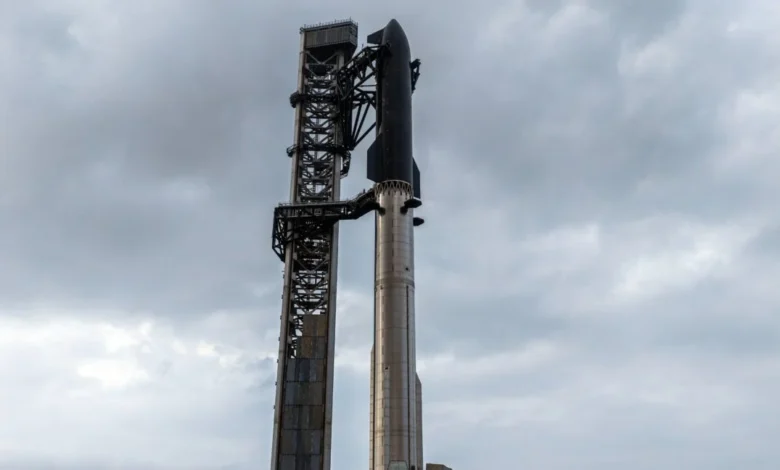
SpaceX has officially signaled its intent to launch the 14th iteration of its Starship test campaign as early as September 22, pending final authorization from federal regulatory bodies. This mission represents a pivotal moment in the history of aerospace engineering, as the company prepares to attempt the first orbital insertion of the experimental vehicle. With a target liftoff window beginning at 7:15 am local time in Texas (12:15 UTC), the mission is poised to be a landmark event. Given that sunrise in Brownsville, Texas, is scheduled for 7:17 am CT, the early morning departure is expected to provide significant visual documentation of the launch vehicle’s ascent through the troposphere.
The mission parameters are ambitious. The Super Heavy lift vehicle is slated to carry 26 of the company’s next-generation V3 Starlink satellites into a circular orbit at an altitude of 275 kilometers. According to technical documentation provided by SpaceX, the Starship upper stage will remain in orbit for approximately 10 hours, executing a series of six full revolutions around the Earth before concluding the mission. This flight serves as a high-stakes demonstration of the platform’s utility as both a launch vehicle for orbital infrastructure and a testbed for deep-space transport technologies.
A Chronology of the Starship Development Campaign
The journey to this 14th test flight has been characterized by iterative design cycles and rapid prototyping. Since the inaugural Integrated Flight Test (IFT-1) on April 20, 2023, SpaceX has adopted a "test, fail, learn" philosophy that has become the hallmark of its Boca Chica operations.
The first flight was primarily intended to clear the launch pad and survive the period of maximum dynamic pressure (Max-Q). While the vehicle experienced multiple engine failures and a loss of attitude control, it provided invaluable telemetry regarding the structural integrity of the Super Heavy booster. Subsequent tests throughout 2023 and 2024 saw steady improvements: the separation of stages became more reliable, the heat shield thermal protection systems were refined, and the landing maneuvers for the Super Heavy booster transitioned from theoretical models to operational realities.
By the time the industry reached the July 24, 2024 test flight, the vehicle had demonstrated a high degree of maturity. The first stage performed exceptionally well during the ascent phase, proving that the Raptor engine array—the most powerful liquid-methane rocket engine system in history—was capable of pushing the massive vehicle into the upper atmosphere with precision.
Analysis of Technical Challenges and Mitigation Strategies
The transition from suborbital test flights to orbital missions requires unprecedented precision in engine performance. During the July 24 flight, mission controllers identified a critical vulnerability in the Super Heavy booster’s return sequence. Following a successful boostback burn, the vehicle encountered atmospheric interference that led to unexpected complications.
"In the terminal phase of the burn, the three center engines showed signs of ice clogging, which triggered an early end to the maneuver," SpaceX stated in a formal technical update. This icing, caused by the rapid expansion of cryogenic propellants in the feed lines, resulted in a loss of thrust that precluded a soft landing. While eight of the 13 planned engines successfully reignited for the final landing burn, the resulting hard splashdown in the Gulf of Mexico demonstrated that the current filtration and software logic required further optimization.
In response, the engineering team has implemented comprehensive hardware modifications for the upcoming flight. These include enhanced filtering mechanisms designed to prevent ice accumulation within the liquid oxygen and methane supply lines. Furthermore, software engineers have overhauled the engine relight sequence, implementing more robust logic to ensure that ignition commands are prioritized even if individual sensor readings appear anomalous. These upgrades are designed to provide the redundant reliability necessary for returning a 70-meter-tall booster to the launch mount, a requirement for the ultimate goal of rapid reusability.
The Strategic Importance of V3 Starlink Deployment
The choice to include 26 V3 Starlink satellites as the primary payload is a strategic decision that bridges the gap between experimental flight testing and commercial operational utility. The V3 iteration of the Starlink constellation represents a significant leap in capacity, featuring larger arrays and more advanced phased-array antennas compared to their predecessors.
By placing these satellites into a 275 km orbit, SpaceX is not only validating the Starship’s cargo-carrying capacity but also expanding its global broadband footprint. Analysts suggest that the ability to launch dozens of heavy satellites in a single mission will dramatically reduce the cost per kilogram to orbit, potentially disrupting the existing launch services market. If successful, this mission will demonstrate that Starship is not merely a prototype but a viable, high-cadence heavy-lift launch system.
Regulatory Landscape and Launch Safety
The 75-minute launch window beginning at 7:15 am local time is contingent upon the Federal Aviation Administration (FAA) granting the final launch license. The FAA’s regulatory process involves rigorous review of flight safety, environmental impact, and debris mitigation strategies.
SpaceX has been working closely with local authorities in Cameron County, Texas, to ensure that the mission adheres to all safety protocols, particularly regarding the closure of State Highway 4 and the protection of the surrounding coastal ecosystem. Historically, the FAA has required extended periods for public safety analysis, especially as the size and power of the Starship vehicle continue to push the boundaries of current launch safety standards.
Industry observers expect that the FAA will focus heavily on the data gathered from the July 24 splashdown. The agency’s approval process typically includes a review of how the vehicle handles off-nominal scenarios—such as an engine-out condition during the boost phase—to ensure that the flight path does not pose a risk to populated areas or maritime traffic.
Implications for the Future of Space Exploration
The successful completion of this 10-hour orbital mission would serve as a watershed moment for the aerospace sector. For decades, the industry has operated under the limitations of expendable rockets, where the majority of the hardware is discarded after a single use. The Starship program seeks to invert this economic model by achieving rapid reusability, effectively treating the launch vehicle more like an aircraft than a traditional rocket.
If SpaceX can consistently reach orbit, deploy heavy payloads, and successfully recover both the Super Heavy booster and the Starship upper stage, it will open the door to a new era of space exploration. Potential applications include the deployment of massive orbital observatories, the construction of modular space stations, and the logistics support required for sustained lunar and Martian habitation.
Furthermore, the integration of orbital refueling—a critical future component of the Starship program—depends entirely on the vehicle’s ability to maintain a stable, long-duration orbit. By testing the upper stage’s performance over a 10-hour window, SpaceX is gathering the necessary data to refine life-support systems, power management, and thermal control, all of which are essential for long-duration missions.
Conclusion and Outlook
As the industry looks toward September 22, the mood at SpaceX’s Starbase facility is one of cautious optimism. The transition from testing the vehicle’s raw power to demonstrating its operational finesse is a complex transition. However, the data gathered from the previous 13 flights has provided a roadmap for continuous improvement.
While the technical hurdles—specifically regarding engine reliability and atmospheric reentry—remain significant, the engineering solutions being implemented suggest a clear path toward the successful deployment of the Starship system. Should the mission proceed as planned, the sight of a fully operational Starship ascending into the Texas dawn will mark the beginning of a new chapter in the commercialization of space, confirming that the dream of routine, heavy-lift access to Earth orbit is closer to reality than ever before.
The eyes of the scientific community and the aerospace industry will remain fixed on the Gulf Coast, awaiting the final regulatory "go" and the eventual ignition of the Raptor engines that will propel the next generation of space exploration into the stars.