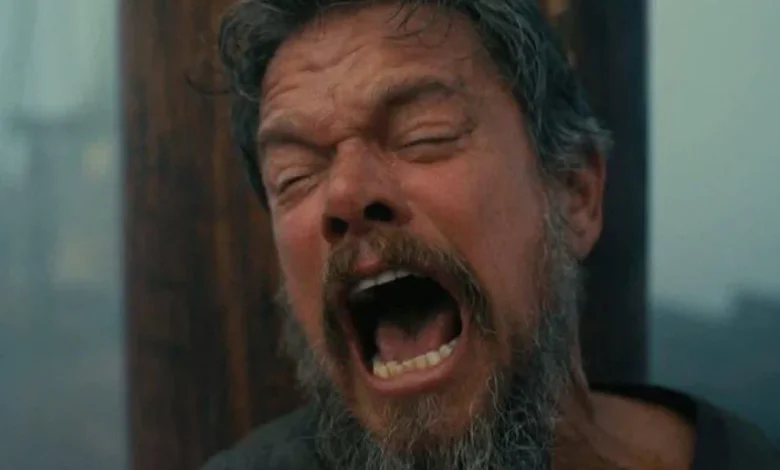
The internet has been set ablaze with a new viral phenomenon: the "Matt Damon Yelling" meme, also known as "Odysseus Screaming." This potent reaction image, depicting the acclaimed actor Matt Damon in a state of profound anguish as the legendary Greek hero Odysseus, has rapidly become a ubiquitous symbol of frustration, despair, and overwhelming negativity across social media platforms. The meme’s meteoric rise can be directly attributed to its striking portrayal of raw emotion, making it an instantly relatable visual shorthand for a myriad of everyday struggles and profound disappointments. Its origins are firmly rooted in Christopher Nolan’s highly anticipated 2026 epic fantasy film, The Odyssey, with the meme format emerging online mere days after the movie’s mid-July release.
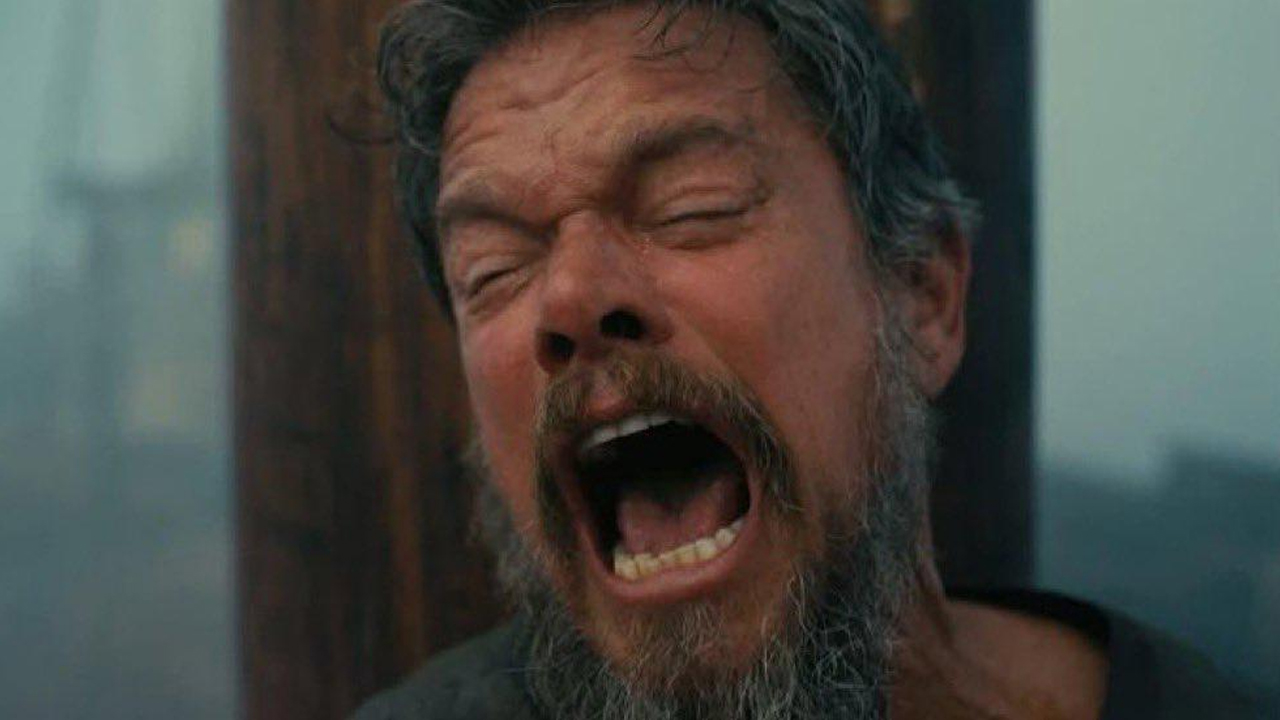
The core of the meme lies in its capture of a pivotal, albeit fictionalized, moment from the film. Odysseus, played by Damon, is shown screaming in torment, a scene derived from the mythical hero’s perilous journey and his struggle against the enchanting yet deadly call of the Sirens. In the film’s narrative, Odysseus is bound to the mast of his ship, desperately attempting to resist the hypnotic allure of the Sirens’ song, which promises knowledge and oblivion. His visceral reaction, a primal cry of anguish and internal conflict, has been masterfully translated into a universally understood expression of extreme distress. While often presented as a static image, the meme has also evolved to encompass reaction GIFs and short video clips, further amplifying its reach and versatility.
The Genesis of the Meme: A Cinematic Cry for Help
The inception of the "Matt Damon Yelling" meme can be traced directly to a scene within Christopher Nolan’s The Odyssey. The film, a modern interpretation of Homer’s epic poem, reimagines the arduous voyage of Odysseus as he strives to return home after the Trojan War. In the critical sequence that would soon capture the internet’s imagination, Odysseus and his loyal crew navigate treacherous waters. As they approach the island of the Sirens, notorious for their irresistible song that lures sailors to their doom, Odysseus, bound to the ship’s mast as per his own grim instructions, experiences a profound internal battle. The raw, unadulterated agony etched on Matt Damon’s face as he grapples with the overwhelming temptation and the horrifying realization of his vulnerability has become the meme’s indelible mark.
The immediate aftermath of The Odyssey‘s release in mid-July 2026 saw a flurry of online activity. It was not long before screenshots of this intensely emotional scene began circulating, swiftly adapted into meme formats. One of the earliest documented instances of the meme’s proliferation occurred on July 20th, 2026, when X (formerly Twitter) user Adam_Karpiak shared a post featuring the image of Damon’s screaming Odysseus. The accompanying caption, "when you upload your resume and still have to retype your entire work history," perfectly encapsulated a common and deeply frustrating modern-day experience. This initial post resonated powerfully, garnering over 962,100 views, 71,000 likes, and 140 replies within a mere four days, signaling the meme’s potent potential for widespread adoption. This early success demonstrated the meme’s ability to tap into shared feelings of exasperation and the absurdities of daily life, setting the stage for its rapid evolution.
The Viral Cascade: From Image Macro to GIF Sensation
Following Adam_Karpiak’s foundational post, the "Odysseus Screaming" meme experienced a rapid and multifaceted expansion across various online platforms. Users began employing both the static image in image macros and as a direct reaction, while others ingeniously repurposed the scene as a GIF caption format, adding dynamic layers to its expressive power.
The meme’s versatility was further highlighted on July 21st, 2026, when X user corporatedudes ingeniously integrated the clip into a "Blasting Fetty Wap on the JBL Speaker" meme. The accompanying text read, "POV: Passing siren island but they got the JBL Charge 4 bumping 2016 rap." This clever juxtaposition of ancient myth with contemporary pop culture and relatable social scenarios achieved remarkable traction, accumulating over 1.3 million views, 32,000 likes, and 30 replies within three days. This instance underscored the meme’s adaptability to diverse cultural references and its ability to generate humor through unexpected combinations.
Simultaneously, the meme found fertile ground on Reddit. On the same day, Redditor Waitingforlunch posted an iteration to the popular /r/memes subreddit. This version humorously addressed the perennial frustration of a computer restart failing to resolve technical issues, with the caption "When restarting the computer doesn’t fix the problem." This post garnered significant engagement, reaching over 410 upvotes and 20 comments in just three days, illustrating the meme’s appeal to a broad audience grappling with common technological woes.
The momentum continued unabated. On July 22nd, 2026, Redditor KEORANDOMDOTCOM shared another relatable scenario on /r/memes: the sheer horror of wearing socks and then inadvertently stepping into a wet patch. This meme, captioned "WHEN YOU’RE WEARING SOCKS AND STEP INTO SOMETHING WET," resonated with thousands, securing over 3,200 upvotes and 40 comments within two days. The visceral discomfort of this common experience was perfectly captured by Damon’s contorted expression, solidifying the meme’s status as a go-to visual for unpleasant surprises.
Adding to the meme’s growing repertoire, X user airbagg3d contributed a particularly viral post on July 22nd. Employing the clip within the context of a "White People At The Function" meme, the user humorously depicted the overwhelming, almost involuntary, reaction to hearing the iconic song "Mr. Brightside" by The Killers. This post achieved astronomical reach, accumulating over 1.5 million views, 63,000 likes, and 110 replies within two days. The meme’s ability to capture specific cultural touchstones and shared social experiences proved to be a powerful driver of its virality.
The meme’s reach extended to newer platforms as well. Later on July 22nd, Threads user hollabackcards utilized the format to express the internal struggle of resisting the urge to rewatch The Odyssey for a third time. This meta-commentary on the film’s impact and the meme’s own proliferation garnered over 1,200 likes, 30 comments, and 55 reposts in two days, demonstrating the meme’s ability to be self-referential and comment on its own existence within popular culture.
A Spectrum of Agony: Diverse Applications of the Meme
The "Matt Damon Yelling" meme has proven remarkably adaptable, finding application across a wide spectrum of relatable human experiences, from minor inconveniences to more significant frustrations. Its core strength lies in its ability to distill complex negative emotions into a single, powerful visual.
Numerous examples highlight this versatility:
- One iteration humorously depicts the chaotic state of an inbox, with the caption "How your email finds me," suggesting a state of overwhelming disarray.
- Another meme tackles sensitive social issues, showing the meme’s face alongside the caption "Conservatives seeing a black person in a movie," reflecting societal divides and reactions to representation.
- In a nod to pop culture analysis, a meme targets fans of specific media, with the caption "when you see a new Rewatchables episode featuring Wesley Morris," indicating an eager and perhaps slightly overwhelmed anticipation.
- The meme also finds its place in niche fandoms, such as in the Warhammer 40,000 community, where it’s used to express the despair of losing numerous units to a single enemy action: "WHEN TAU COMMANDER FARSIGHT KILLS EVEN ONE OF MY 60 KHORNE BERSERKERS IN MELEE."
- The allure of premium viewing experiences is also satirized, with a meme captioned "IMAX imax 20h Them: I’ll just watch it on my phone Me:" implying a conflict between convenience and quality.
- In a poignant reflection on the limitations of the healthcare system, a meme illustrates the frustration of medical professionals, captioned "Me, a board-certified addiction medicine doctor, who still can’t prescribe methadone in 2026 because I don’t work at the right place:" highlighting systemic bureaucratic hurdles.
These diverse examples underscore the meme’s remarkable ability to serve as a universal symbol for a broad range of negative emotions and experiences, from the mundane to the more profound.
The Template: A Blank Canvas for Despair
For creators seeking to harness the meme’s power, a readily available template exists, featuring the iconic image of Matt Damon as Odysseus in his moment of intense anguish. This template serves as a blank canvas, allowing users to overlay their own captions and contextualize the raw emotion for their specific comedic or relatable narratives. The simplicity of the template, combined with the inherent expressiveness of the original image, ensures its continued appeal and adaptability for a wide array of online content creation.
Search Interest and Broader Implications
The rapid proliferation and widespread adoption of the "Matt Damon Yelling" meme suggest a significant surge in online search interest surrounding the term. While specific data from search engines is not provided in the source material, the sheer volume of engagement across platforms like X, Reddit, and Threads indicates a considerable portion of the online population actively seeking out, sharing, and creating content related to this meme. This heightened search interest is a direct indicator of its cultural penetration and its emergence as a significant digital phenomenon.
The meme’s success can be analyzed through several lenses. Firstly, it highlights the power of relatable emotional expression in digital communication. In an era often characterized by curated online personas, the raw, unadulterated anguish depicted by Damon serves as an authentic and potent outlet for users to express their own frustrations and anxieties. Secondly, the meme’s origin within a major cinematic release underscores the symbiotic relationship between popular culture and internet meme creation. Blockbuster films, with their visually striking and emotionally charged scenes, provide fertile ground for memeification, allowing audiences to engage with and recontextualize cinematic moments in novel ways.
Furthermore, the meme’s rapid spread across diverse platforms and demographics suggests a shared global sentiment of overwhelm and stress. The ability to distill complex feelings of despair, frustration, or even existential dread into a single, easily digestible image makes it a powerful tool for collective catharsis and shared understanding in the digital age. As with many viral memes, the "Matt Damon Yelling" phenomenon serves as a cultural barometer, reflecting the collective mood and the shared experiences of internet users grappling with the challenges of modern life. Its enduring presence in online discourse is a testament to its effectiveness in capturing and conveying a universal human emotion.