The Evolution of Fernão: Enhancing Personal AI Agents Through API Integration and Task Decomposition

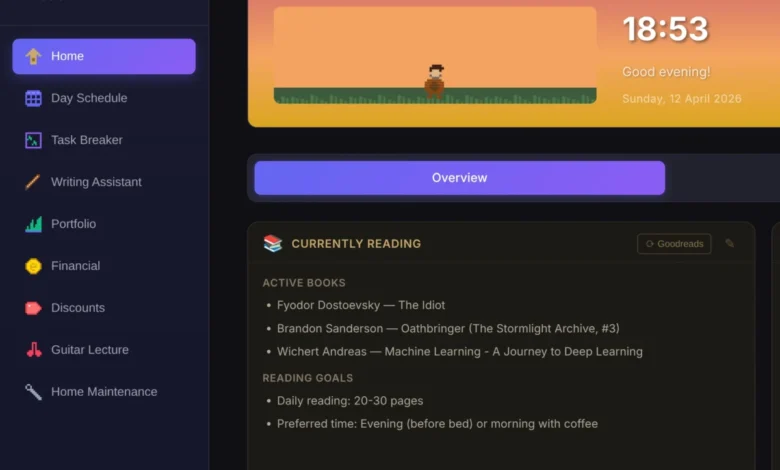
The development of Fernão, a bespoke artificial intelligence agent designed for personal productivity, has reached a significant milestone with the implementation of advanced API integrations and sophisticated task-decomposition algorithms. This second phase of the project marks a transition from a rudimentary prototype to a streamlined "personal operating system" capable of managing complex schedules and workflows with high efficiency. By addressing architectural bottlenecks in calendar synchronization and introducing a novel "Task Breaker" module, the project demonstrates the growing potential for individual developers to create customized alternatives to mass-market productivity suites.

Architectural Refinement: Transitioning from ICS to Google Calendar API
A primary focus of the recent updates was the overhaul of the agent’s scheduling logic. In its initial iteration, Fernão utilized the iCalendar (ICS) format—a universal calendar standard—to retrieve user data. While functional, the ICS method introduced significant latency due to its lack of native filtering capabilities. Under the ICS protocol, the agent was required to download the entire calendar database for every request, regardless of whether it needed a single day’s events or a decade’s worth of data. This "brute force" approach resulted in schedule generation times nearing five minutes, a duration that rendered the agent impractical for real-time use.
To rectify this, the architecture was migrated to the Google Calendar API. Unlike the static nature of ICS feeds, the API allows for server-side filtering, enabling the agent to request only the specific events relevant to a targeted time range. The technical shift resulted in a 93% reduction in latency, with the schedule retrieval process dropping from approximately 300 seconds to 20 seconds.

The new pipeline incorporates a dual-layered retrieval system. The primary function attempts to connect via the Google Calendar API, utilizing environment-stored calendar IDs to fetch specific event metadata, including start times, locations, and descriptions. In the event of an API failure or connectivity issue, the system includes a robust fallback mechanism that reverts to the original ICS feed, ensuring the agent remains functional under varying network conditions. This shift highlights a broader trend in software development where specialized API calls are replacing general-purpose data feeds to optimize the performance of LLM-driven applications.
Ecosystem Integration and the Microsoft To-Do Synchronization
Beyond speed optimizations, the latest update focuses on interoperability within existing productivity ecosystems. Fernão now features a bidirectional synchronization capability with Microsoft To-Do. This integration allows users to mark tasks as completed within the Fernão interface, with the status change immediately reflected in the Microsoft ecosystem.

This development serves as a practical application of the "Personal Operating System" (Personal OS) concept. In this framework, users do not rely on a single, monolithic application for all needs but instead assemble a modular workflow from preferred tools. By using an AI agent as a central orchestrator, the developer can leverage the specialized features of Microsoft To-Do for task storage while utilizing Fernão’s custom interface for daily execution.
Industry analysts suggest that this modular approach may pose a long-term challenge to traditional SaaS (Software as a Service) providers. If users can easily replicate and integrate features across platforms using AI agents, brand loyalty to specific ecosystems may diminish. This has led to speculation regarding whether major tech corporations will eventually restrict API access to prevent "platform leakage," where users interact with data through third-party agents rather than the company’s proprietary—and often monetized—user interfaces.

The Task Breaker: Applying LLMs to Project Management
The most significant functional addition to the Fernão suite is the "Task Breaker" module. This feature addresses a common hurdle in productivity: the "giga-task" or structural project that is too large to be immediately actionable. The Task Breaker utilizes Large Language Models (LLMs) to decompose complex objectives into manageable, 20-minute intervals.
The workflow for this module is structured around a specific prompt engineering strategy. When a user inputs a large-scale project—such as "Project Documentation"—the agent analyzes the provided context, including company structure, available resources, and deadlines. It then generates a series of concrete, verb-oriented subtasks. For instance, a broad goal of building a "Knowledge Hub" is broken down into specific actions like "Audit Sales department pages" or "Assign ownership to Finance documentation."

The logic behind the 20-minute chunking is rooted in productivity science, specifically the Pomodoro Technique and the concept of "lowered activation energy." By presenting the user with tasks that require minimal time commitments, the agent reduces the psychological barrier to starting complex work. Furthermore, the agent automatically assigns due dates based on the user’s specified availability, creating a complete project timeline that can be exported directly to the user’s primary task manager.
Chronology of Development and Performance Metrics
The development of Fernão has followed a rapid iterative cycle, moving from a concept to a multi-module assistant within a matter of weeks. The following timeline outlines the project’s progression:

- Phase 1 (Initial Build): Establishment of the core LLM connection and basic ICS calendar integration. Focus was on proof-of-concept for natural language interaction.
- Phase 2 (Optimization): Implementation of Google Calendar API. Introduction of the "Task Breaker" module. Refinement of the front-end interface to include "Submit All" functionality for task batches.
- Performance Benchmark: The transition to API-based fetching reduced data processing time by over 90%.
- Current Status: The agent is now capable of managing multi-week projects by distributing subtasks across a calendar, a feature typically reserved for high-end project management software.
Technical Analysis of LLM Prompting for Structured Output
A critical component of Fernão’s success is its use of structured prompting to ensure the LLM returns data in a usable format. The "Task Breaker" relies on a specific template that enforces strict rules:
- Actionability: Every subtask must start with a verb.
- Temporal Consistency: Each task is estimated at 20 minutes.
- Strict Formatting: The output is restricted to a markdown list, which allows the back-end code to parse the text and convert it into API calls for Microsoft To-Do without manual intervention.
This "zero-shot" prompting technique, combined with variables like current_date and task_context, allows the agent to maintain high accuracy without the need for extensive fine-tuning. However, the developer noted that "emojification"—the tendency of LLMs to add unnecessary icons to UI elements—remains a minor hurdle in maintaining a professional aesthetic, requiring ongoing refinement of the system instructions.

Broader Implications and Future Roadmap
The ongoing development of Fernão reflects a significant shift in how individuals interact with technology. As AI tools become more accessible, the barrier to creating highly specialized, private tools continues to fall. The implications for the tech industry are twofold: first, the potential for a "de-SaaS-ification" of the market, where users build rather than subscribe; and second, a renewed emphasis on API availability as a competitive advantage.
The roadmap for Fernão includes the integration of several high-complexity modules:

- Voice Integration: Allowing for hands-free interaction and task dictation.
- News Reader: A module designed to aggregate and summarize industry-specific news based on user interests.
- Health and Wellness: Integration with biometric data to suggest optimal work-rest cycles.
As these agents evolve, they move closer to becoming true digital twins—entities that understand a user’s schedule, preferences, and professional obligations. While the current version of Fernão is a tool for personal use, the architectural decisions made during its development—prioritizing API efficiency, modularity, and structured data—provide a blueprint for the next generation of personal productivity software. The project serves as a case study in how the strategic replacement of legacy protocols (like ICS) with modern interfaces (like REST APIs) can transform the utility of AI-driven applications.