Beyond Automation: New WARC and TikTok Study Highlights Human Insight as Key to AI’s Creative Marketing Success

A groundbreaking new report from marketing strategy group Warc, in collaboration with TikTok, has cast a critical eye on the evolving relationship between artificial intelligence tools and the marketing workflow, asserting that while AI accelerates production, true creative advantage hinges on integrating profound cultural intelligence. The comprehensive study, titled "The New Creative Advantage: How Community Intelligence is Reshaping Creative Success in the Age of AI," delves into how marketers can strategically embed community insights to refine AI outputs, thereby significantly enhancing overall campaign performance and relevance in an increasingly automated landscape.
The collaborative research initiative drew feedback from a robust sample of 400 marketers spanning key global markets, including the U.K., U.S., Australia, and Brazil. This broad geographical and professional scope provides a nuanced perspective on how the rapid ascent of generative AI technologies has begun to fundamentally reshape the creative advertising sector, highlighting both its profound capabilities and its inherent limitations.
The Rapid Ascent of AI in Creative Marketing: A Brief Chronology
The marketing industry has witnessed an unprecedented surge in AI adoption over the past few years, particularly with the widespread public availability of sophisticated generative AI models since late 2022. This period marked a significant inflection point, transitioning AI from a niche technological tool to a mainstream utility accessible to a vast array of professionals. Initially, the excitement was palpable, driven by promises of unprecedented efficiency, personalization at scale, and the democratization of creative production. Marketers, facing ever-increasing demands for content volume across a fragmented media ecosystem, quickly integrated AI into various stages of their workflow, from brainstorming and ideation to content generation and performance optimization.
Early adopters lauded AI for its capacity to automate repetitive tasks, generate multiple creative variations quickly, and analyze vast datasets for consumer insights at speeds unattainable by human teams alone. This led to a pervasive industry belief that AI would primarily serve to amplify output, enabling brands to maintain a constant presence across diverse platforms. However, as the initial novelty has matured, a more nuanced understanding of AI’s capabilities and shortcomings has begun to emerge, prompting critical questions about its role in delivering truly impactful and resonant creative work. This WARC and TikTok report arrives at a pivotal moment, offering empirical data and expert analysis to guide marketers through this evolving technological landscape.
Unpacking the Report’s Core Findings: Efficiency Versus Relevance
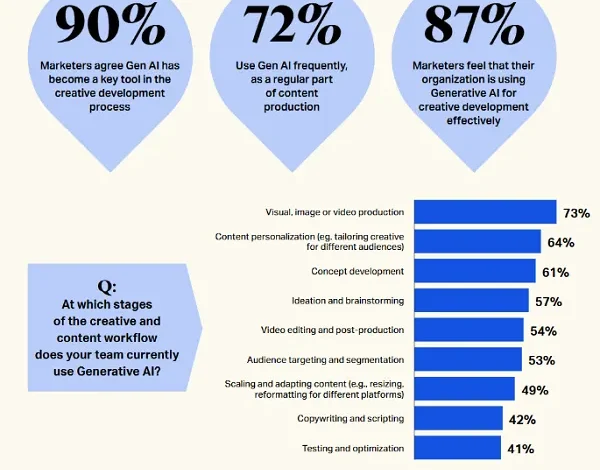
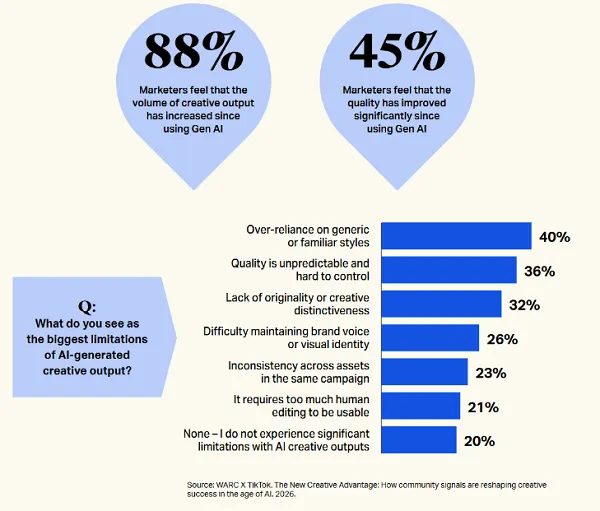
The report’s findings underscore a crucial distinction: while AI tools have undeniably proven useful in facilitating faster and expanded workflows, helping marketers meet the escalating pressure to produce more assets, their value diminishes significantly when it comes to generating truly relevant and culturally resonant content. A strong majority of surveyed marketers acknowledged AI as a key component of their creative process, particularly for tasks related to content generation and asset production. This indicates a widespread acceptance and integration of AI as a powerful accelerant in the marketing engine.
However, a critical finding revealed that the prevailing content trend of the moment is relevance over sheer volume. This insight challenges the initial AI-driven premise that more content automatically translates to better performance. The study explicitly states that this vital element of relevance cannot be fully replicated by current AI tools without significant human guidance and contextual understanding.
Andy Yang, TikTok’s Global Head of Creative and Brand Ads, articulated this sentiment powerfully within the report, stating, "The brands winning today are not the ones generating the most content. They are the ones learning fastest from the people they serve. That speed of learning is what we call cultural intelligence: the ability to read what a community values, in the moment it is forming that value, and to respond with something that feels native rather than inserted." This statement encapsulates the report’s central argument: success in the AI era is less about the quantity of output and more about the quality of insight driving that output.
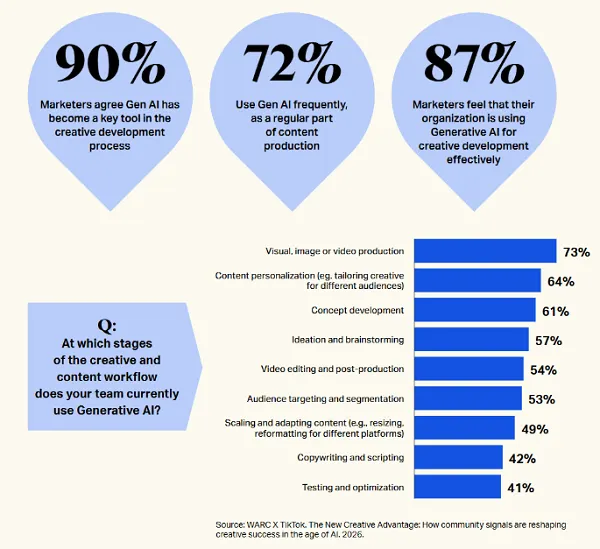
The study further identified specific areas where AI’s perceived value drops, notably in complex creative tasks such as copywriting and scripting. While AI can certainly assist in generating drafts or variations, marketers rated its utility lower for these critical functions that demand nuanced understanding of tone, emotion, and cultural context. This suggests a clear boundary for AI’s current capabilities: it can support and facilitate new ideas and accelerate production, but it cannot, at present, autonomously undertake the entirety of the creative process, especially where originality and deep cultural connection are paramount, without significant human intervention and strategic oversight.
Addressing AI’s Weaknesses: The Quest for Creative Originality and Cultural Nuance
A significant portion of the WARC and TikTok report dedicated itself to examining the inherent weaknesses of AI, particularly concerns surrounding its perceived lack of creative originality. Marketers expressed valid anxieties that reliance on AI alone could lead to generic, homogenous, or uninspired creative outputs that fail to capture audience attention or differentiate brands effectively. AI models, by their nature, learn from existing data, making them excellent at pattern recognition and replication, but inherently less capable of generating truly novel, breakthrough ideas that defy established norms or tap into nascent cultural shifts.
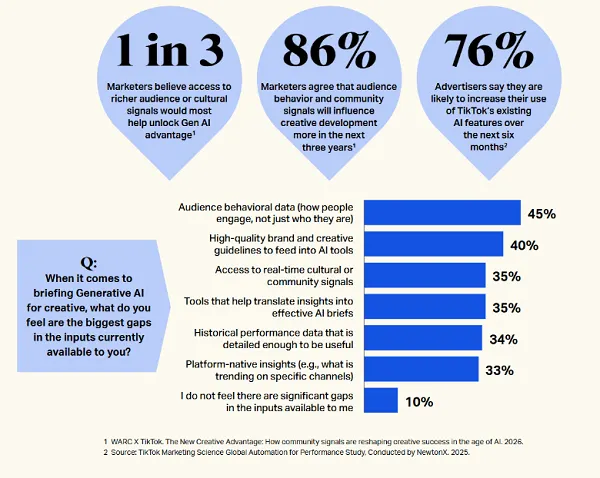
To bridge these critical gaps, marketers surveyed indicated a strong belief that injecting more cultural insights into the AI workflow could dramatically improve the relevance and effectiveness of AI-generated content. This highlights a clear path forward: AI should not operate in a vacuum of purely algorithmic efficiency, but rather be continuously fed and refined by deep human understanding of cultural currents, emerging trends, and community values.
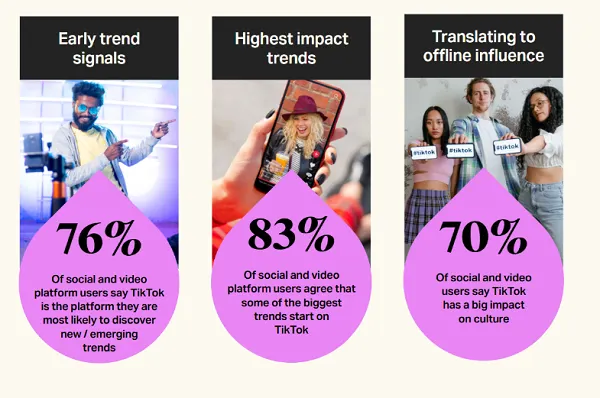
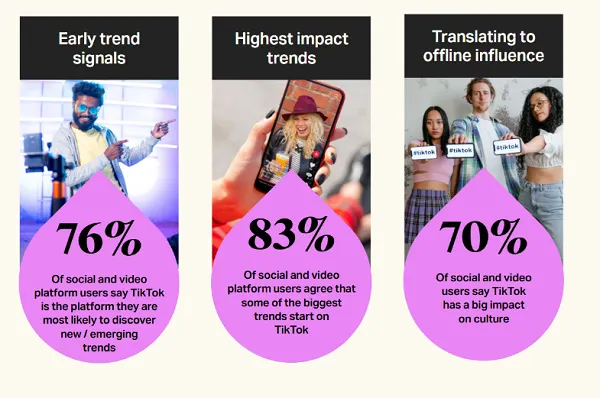
This is precisely where platforms like TikTok enter the strategic equation. TikTok, renowned for its dynamic, trend-setting user base and its rapid propagation of cultural phenomena, emerges as a potent source of this essential "cultural intelligence." The study posits that TikTok’s unique cultural influence can serve as a vital guide for creative approaches, enabling marketers to tap directly into what is gaining traction and resonance at any given moment. By systematically understanding these fast-evolving trends and applying them to their creative strategies, marketers can significantly enhance their alignment with target audiences. This process fosters the creation of content that not only captures attention but also genuinely resonates with consumers, sparking authentic conversations and building stronger brand connections. The data presented in the report further illustrated that by adopting this framework, marketers could refine their creative briefs, ensuring they are better attuned to prevailing cultural dynamics, while simultaneously leveraging AI tools to interpret key signals and translate them into improved creative choices.
Supporting Data and Broader Industry Context
The findings of the WARC and TikTok report align with broader industry trends and data concerning AI adoption and its challenges. According to various market analyses, the global AI in marketing market is projected to grow at a compound annual growth rate (CAGR) of over 25% for the next five years, reaching tens of billions of dollars. This growth is fueled by marketers’ relentless pursuit of efficiency, personalization, and measurable ROI. Studies from leading industry bodies often indicate that over 60-70% of marketing organizations have already integrated some form of AI into their operations, primarily for tasks such as programmatic advertising, content optimization, customer service chatbots, and predictive analytics.
However, alongside this enthusiastic adoption, concerns about AI’s limitations persist. A 2023 survey by Statista revealed that while 44% of marketers believe AI is improving content creation, a significant portion still highlights issues with AI-generated content lacking originality (38%) or not fully understanding target audiences (31%). These figures underscore the WARC/TikTok report’s assertion that raw AI output often falls short on the critical dimension of relevance.
The report implicitly advocates for a "human-in-the-loop" approach, a concept gaining traction across various industries. This approach posits that while AI can handle data processing and content generation at scale, human oversight, strategic direction, and creative refinement are indispensable for ensuring quality, ethical integrity, and cultural appropriateness. Moreover, the rise of the "creator economy" further emphasizes the importance of authentic, human-centric content. Influencers and creators on platforms like TikTok thrive precisely because they understand and embody cultural nuances, building genuine connections with their audiences—a model that brands increasingly seek to emulate.
Implications for the Future of Marketing: Evolving Skill Sets and Strategic Advantage
The insights from the WARC and TikTok report carry profound implications for the future trajectory of the marketing profession. It signals a definitive shift from a focus on purely technological adoption to a strategic integration that prioritizes human ingenuity and cultural acumen.
-
Evolving Skill Sets for Marketers: The report underscores the need for marketers to evolve their skill sets. Beyond traditional marketing competencies, future marketers will increasingly need to be adept at "AI whispering"—the art of crafting precise prompts and guiding AI tools effectively—and, more critically, developing robust "cultural intelligence." This involves a deep understanding of sociology, anthropology, current events, and digital ethnography to discern emerging trends and values within diverse communities. The role shifts from simply creating content to becoming a strategic curator and cultural interpreter, leveraging AI as a powerful assistant rather than a replacement.
-
Human-AI Collaboration as the New Paradigm: The study reinforces the idea of a symbiotic relationship between human marketers and AI. Instead of AI replacing human jobs wholesale, it suggests a partnership where AI handles the heavy lifting of data analysis and content production, freeing up human creative talent to focus on higher-order strategic thinking, conceptualization, and infusing campaigns with cultural relevance and emotional resonance. This collaborative model will likely lead to more innovative and impactful marketing outcomes than either human or AI could achieve independently.
-
Ethical Considerations and Authenticity: The push for cultural intelligence also indirectly addresses growing ethical concerns surrounding AI in marketing, particularly regarding bias and authenticity. AI models, if trained on biased data, can perpetuate and amplify stereotypes. By grounding AI outputs in real-time, human-curated cultural insights, marketers can mitigate these risks, ensuring that content is not only relevant but also inclusive, respectful, and genuinely authentic to the target audience. The report implicitly champions a marketing approach that values genuine connection over superficial engagement.
-
Strategic Competitive Advantage: For brands, mastering this hybrid approach—combining AI’s efficiency with human cultural intelligence—will become a significant competitive differentiator. Brands that can quickly identify and respond to cultural shifts with AI-accelerated, yet culturally resonant, campaigns will be better positioned to capture market share, build brand loyalty, and maintain relevance in a fast-paced digital environment. This strategic advantage extends beyond mere campaign performance to fostering deeper, more meaningful relationships with consumers.
-
The Evolving Role of Platforms like TikTok: The report highlights TikTok’s increasingly vital role not just as an advertising platform, but as a rich, real-time repository of cultural insights. Its algorithms, while often seen as a black box, are intrinsically tied to user engagement with emergent trends. Marketers who learn to effectively monitor and interpret these signals from platforms like TikTok will possess a powerful compass for guiding their AI-driven creative endeavors, transforming these platforms into crucial intelligence hubs.
Official Responses and Expert Perspectives
Andy Yang’s direct statement, emphasizing "cultural intelligence" as the core differentiator for winning brands, serves as the most prominent official response within the report. It underscores TikTok’s strategic vision for its role in the marketing ecosystem—not merely as a channel for viral content, but as a dynamic source of invaluable human insight. Industry analysts and thought leaders widely concur with the report’s overarching message. Many have long cautioned against an overreliance on AI for creative tasks without sufficient human oversight, predicting that a purely automated approach would inevitably lead to a dilution of brand authenticity and connection. This report provides empirical validation for those concerns and offers a concrete pathway forward. WARC, as a global authority on marketing effectiveness, publishing such a report in collaboration with a platform like TikTok, signals a strong industry endorsement for this integrated, human-centric approach to AI in marketing. It serves as a guiding document for best practices, encouraging marketers to re-evaluate their strategies and invest in the skills and processes necessary to harness AI’s power without sacrificing the vital spark of human creativity and cultural understanding.
In conclusion, the WARC and TikTok report eloquently articulates a nuanced vision for the future of marketing: AI, when properly contextualized and guided by profound cultural intelligence, serves as an unparalleled amplifier for community connection. The study makes it abundantly clear that AI tools, while indispensable for enhancing efficiency and scaling content production, critically need the right human-provided context and insights to optimally shape their outputs. Platforms like TikTok are identified as pivotal in providing this relevant, real-time cultural insight, effectively bringing together the technological prowess of AI with the irreplaceable depth of human understanding. This powerful synergy promises to unlock a more effective, resonant, and ultimately more human-centric marketing strategy in the years to come, solidifying the idea that the most impactful marketing will always be a collaboration between intelligent machines and insightful minds.
Informa, which owns a controlling stake in Informa TechTarget, the publisher behind Social Media Today, is also invested in WARC and Omdia. Informa has no influence over Social Media Today’s coverage.