Mastering Social Listening Metrics: The 7 Essential Indicators That Shape Modern Brand Strategy

In the hyper-connected digital economy, modern brands operate in a ceaseless echo chamber of public opinion, customer reviews, and trending conversations. Social listening has consequently evolved from a passive monitoring exercise into an essential corporate discipline. Rather than merely observing the internet, forward-thinking organizations are systematically tracking social listening metrics to decode vast reservoirs of online dialogue and translate unstructured chatter into measurable business outcomes.

Industry analysts emphasize that raw data holds little value without context. By monitoring specific indicators such as mention volume, audience sentiment, and share of voice, enterprises across sectors can bridge the gap between consumer expectations and corporate messaging. This analytical rigor allows brand stewards to protect corporate reputations, refine product positioning, and capitalize on emerging market shifts long before they saturate mainstream consciousness.
Understanding the Evolution and Mechanics of Social Listening

Social listening metrics quantify public conversations occurring across digital landscapes, capturing what consumers articulate about specific brands, competing entities, products, and entire industrial sectors. While the methodology originates in marketing departments, its utility now extends deeply into product development, customer support, sales enablement, and executive leadership.
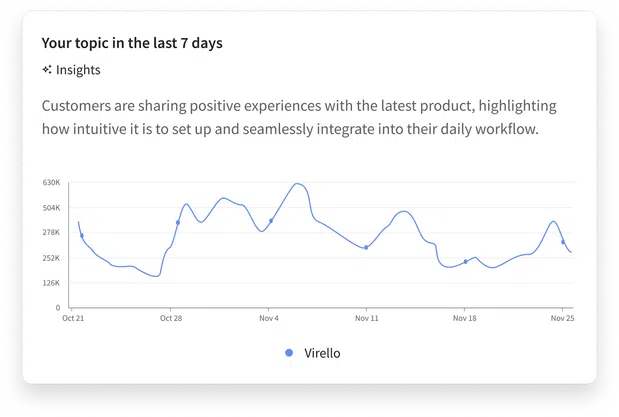
To operationalize these insights successfully, analysts must distinguish between generic metrics and key performance indicators (KPIs). A metric represents a standalone data point—such as the number of times a brand is named over a given weekend. However, that same metric transitions into a KPI only when aligned with a defined corporate objective. For instance, tracking mention volume becomes a vital KPI when an enterprise sets a concrete target to elevate brand awareness following a multi-million-dollar product launch. Similarly, measuring share of voice shifts from a passive exercise to a strategic imperative when leadership aims to systematically outpace market rivals in online discussions.
Strategic Implications: Beyond Marketing and Advertising
The systematic analysis of online conversations serves multiple operational imperatives within a modern enterprise. Chief among these is the capacity to accurately gauge audience perception. Corporate messaging often diverges from how end users actually experience a product. Social listening uncovers these nuances, highlighting underappreciated features or persistent misconceptions that require immediate clarification.
Tom Bukevicius, CEO and Founder of Scube Marketing, observed this dynamic during a recent client campaign. Rather than questioning the core utility of the advertised product, target audiences expressed profound confusion regarding its differentiation from lower-priced alternatives. By pivoting the campaign messaging from feature-heavy descriptions to explicit comparison and positioning, the firm successfully realigned public perception with product reality, proving that market gaps often stem from communication missteps rather than product flaws.
Furthermore, early anomaly detection in conversation volume and sentiment acts as an indispensable shield for brand reputation. Negative sentiment rarely materializes overnight; it builds incrementally through shared grievances and widely distributed reviews. Identifying these warning signs early provides crisis communication teams with the necessary runway to formulate measured, effective responses rather than engaging in frantic damage control.
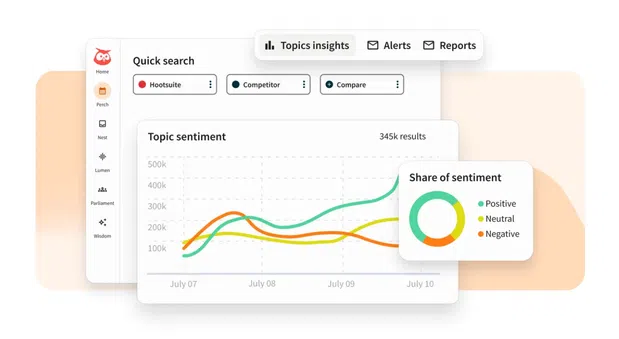
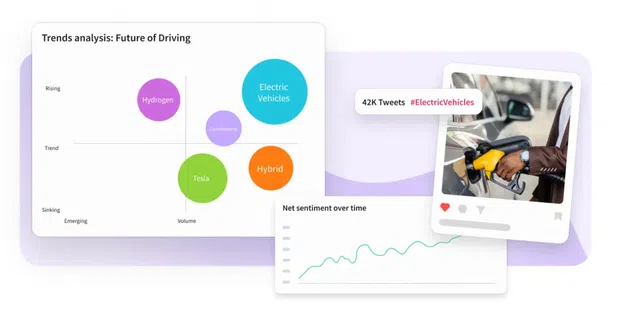
Concurrently, tracking topic volume enables organizations to spot macro-trends while they are still in their infancy. Spotting a rising conversational wave allows marketing teams to evaluate whether a trend authentically aligns with corporate values, granting them the first-mover advantage to join the dialogue while it remains fresh and engaging.
The Seven Core Social Listening Metrics That Matter

While digital tools capture thousands of disparate data points, industry consensus points to seven primary metrics that deliver genuine strategic clarity.
-
Mention Volume
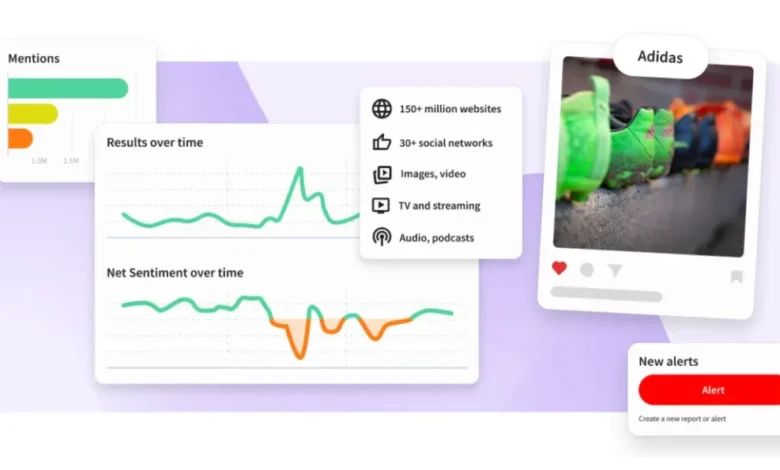
Mention volume tallies the aggregate frequency with which a brand, product line, executive, or competitor is referenced across digital channels. A sudden, unprovoked spike or drop in mention volume rarely occurs by chance. It typically signifies a major catalyst, such as a viral marketing campaign, an unexpected product failure, or a PR crisis. While volume alone cannot reveal the emotional valence of the conversation, it serves as an immediate trigger for deeper investigation.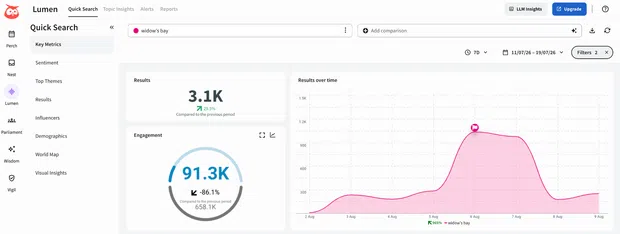
-
Sentiment Analysis
Sentiment analysis categorizes the emotional tone underlying online discussions, typically sorting mentions into positive, neutral, or negative buckets using natural language processing. Because mention volume can surge due to adverse events, sentiment analysis provides the qualitative context required to interpret raw numbers accurately. By tracking net sentiment over time, organizations can measure the long-term efficacy of brand reputation campaigns and customer satisfaction initiatives. -
Share of Voice (SOV)
Share of voice measures the proportion of total category conversations that a specific brand commands relative to its direct competitors. A rising SOV indicates expanding market mindshare, whereas a sudden loss of voice signals that a competitor’s campaign or product release is successfully capturing public attention. Tracking SOV before, during, and after major promotional pushes offers a reliable gauge of campaign impact.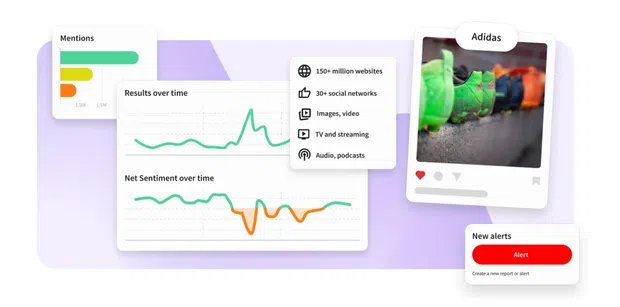
-
Potential Reach
Reach estimates the absolute number of unique individuals who could potentially encounter a mention or conversation regarding a brand. Because not all mentions carry equal weight—a commendation from an industry influencer with millions of followers far outweighs a dozen unengaged posts—reach helps quantify the upper boundaries of audience exposure. -
Engagement Rate
Engagement rate measures the intensity of audience interaction, tracking actions such as likes, comments, shares, and saves. High engagement signals that a specific topic, meme, or content pillar resonates deeply with the target audience, giving teams a clear mandate to replicate successful formats.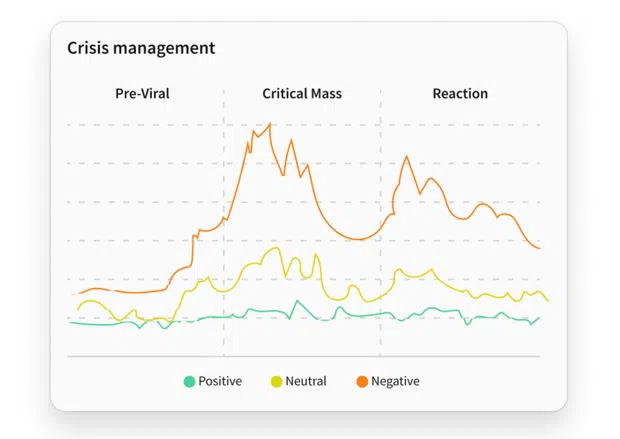
-
Trend and Topic Volume
This metric monitors the velocity with which specific keywords, hashtags, or cultural themes gain or lose traction across the web. Identifying rising trends early allows brands to participate authentically before market saturation sets in. -
Conversation Themes
Conversation themes extract the underlying subjects, recurring questions, and specific complaints embedded within unstructured text. This metric provides actionable context, transforming abstract data into concrete material for product improvement, FAQ development, and targeted content creation.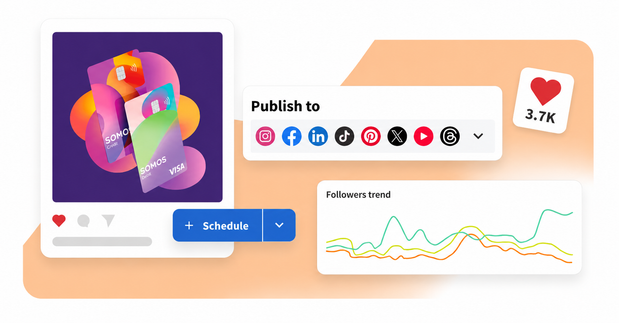
Methodological Integration and Enterprise Software Solutions
To harness these seven metrics effectively, organizations increasingly rely on integrated software suites designed to streamline monitoring, reporting, and execution. Platforms such as Hootsuite have developed specialized ecosystems to address each phase of the social intelligence workflow.
Tools utilizing real-time monitoring engines—such as Hootsuite’s Lumen—scan more than 150 million data sources simultaneously, ensuring that corporate stakeholders remain informed of industry developments as they unfold. These systems provide continuous oversight of sentiment shifts and mention volumes, triggering automated alerts when abnormal patterns emerge.
To evaluate the downstream effects of social listening insights, integrated management platforms like Perch allow organizations to correlate listening data with direct publishing performance. Brands can assess whether strategic pivots successfully altered public discourse and generated meaningful audience interaction, compiling these findings into customizable reports for executive leadership.

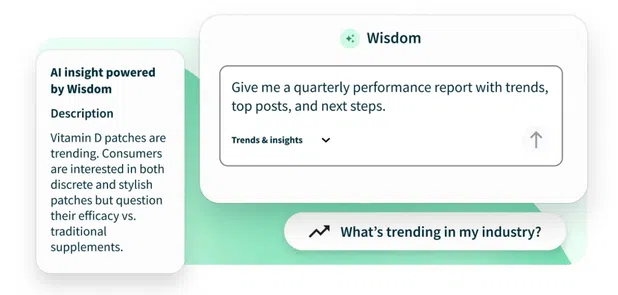
Finally, artificial intelligence tools, such as Hootsuite’s Wisdom, bridge the chasm between raw data collection and strategic execution. By processing complex datasets through natural language prompts, AI-driven applications can synthesize listening metrics into plain-language summaries and draft responsive content strategies, streamlining the transition from analytical discovery to market action.
Fact-Based Implications for Future Corporate Strategy

The systematic tracking of social listening metrics fundamentally alters how businesses operate. By institutionalizing the practice of continuous digital monitoring, organizations eliminate the blind spots traditionally associated with periodic market research and annual surveys.
As consumer behavior continues to migrate toward decentralized digital communities and rapid-fire social networks, the enterprises that succeed will be those capable of listening at scale. Transforming unstructured online dialogue into structured key performance indicators ensures that marketing, product, and executive teams remain synchronized with public sentiment, safeguarding brand equity and securing a sustained competitive advantage in an increasingly volatile global marketplace.