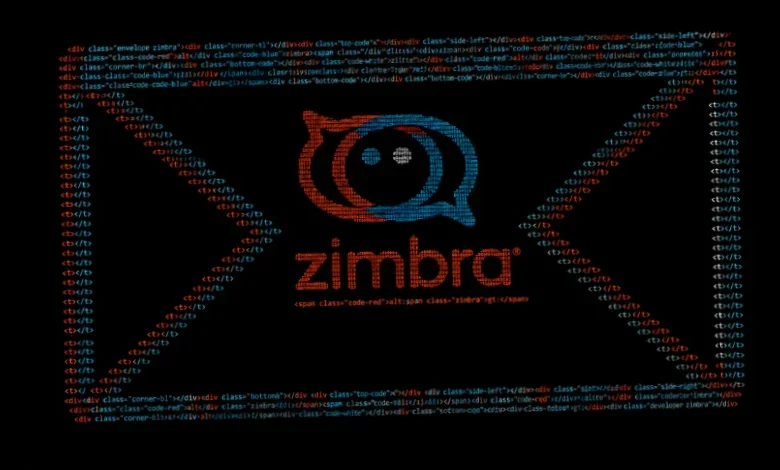
A sophisticated Russian state-sponsored espionage group, identified by cybersecurity researchers and government agencies as TA488 and CL-STA-1114, systematically infiltrated Western organizations for an extended period by exploiting a previously unknown vulnerability within Zimbra’s widely used webmail client. This campaign, which commenced as early as July 2025, allowed the threat actors to gain access to sensitive email data, including the last 90 days of correspondence, the entire email directory, saved browser credentials, and two-factor authentication recovery codes, all by simply opening a specially crafted email. The exploitation method, dubbed a "view-based exploit," necessitated no further user interaction beyond the initial viewing of the malicious message, effectively operating as a zero-click attack in practice.
The full extent of this operation was brought to light through a joint advisory released by the U.S. National Security Agency (NSA), the Cybersecurity and Infrastructure Security Agency (CISA), and international partner agencies. This advisory, published on Thursday, was complemented by in-depth research from Palo Alto Networks’ Unit 42 and threat intelligence firm Proofpoint, providing a comprehensive overview of the campaign’s mechanics, attribution, and impact. The vulnerability, officially designated as CVE-2025-66376, is a stored cross-site scripting (XSS) flaw residing in the Classic User Interface of Zimbra Collaboration. Attackers ingeniously leveraged the handling of CSS @import directives within HTML emails to execute JavaScript code within the context of an authenticated user’s webmail session. This allowed the malicious payload, known as ZimReaper, to inherit the victim’s full access privileges, enabling it to pilfer sensitive information directly from the compromised mailbox.
Unveiling the Exploitation Chain: A Technical Deep Dive
The technical intricacies of CVE-2025-66376 are noteworthy. The vulnerability lies in how Zimbra’s webmail client parses and renders specially crafted HTML emails. Threat actors employed a technique referred to as "tag-splitting" to evade Zimbra’s built-in sanitization mechanisms. This involved embedding an <svg onload="..."> tag, which is capable of executing JavaScript, within a <div> element styled with display:none. The crucial step was fragmenting this tag using malicious @import directives and HTML comments. These directives and comments were designed to be stripped away by Zimbra’s sanitizer, but in doing so, they inadvertently reassembled the remaining parts of the SVG tag. The result was a fully functional <svg onload=eval(atob(...))> element, which the browser then executed, initiating the malicious script.
The exploit’s effectiveness hinges on its ability to bypass traditional security measures that might flag outright JavaScript injection. By breaking the script into pieces and relying on the sanitization process to inadvertently reconstruct it, the attackers created a highly stealthy method of execution. The differing CVSS scores assigned to CVE-2025-66376 by the National Vulnerability Database (NVD) and MITRE highlight the nuances of its exploitation. NVD assigns a score of 6.1, classifying the exploit as requiring user interaction (viewing the message), while MITRE rates it at 7.2, suggesting it does not require explicit user interaction beyond the initial rendering. Palo Alto Networks’ Unit 42 definitively categorized it as "zero-click," underscoring the seamless nature of the attack once a vulnerable user viewed the email.
A Chronology of Compromise and Response
The timeline of this campaign reveals a significant period of undetected activity before its public disclosure. Proofpoint, which tracks the primary threat actor group as TA488, indicated that they exploited CVE-2025-66376 as an unknown vulnerability for at least five months throughout 2025, preceding the official patch. The vulnerability affected Zimbra Collaboration versions 10.0 prior to 10.0.18 and 10.1 prior to 10.1.13. Zimbra proactively addressed this critical flaw, releasing patches on November 6, 2025. However, the gravity of the situation was underscored when CISA added CVE-2025-66376 to its Known Exploited Vulnerabilities (KEV) catalog on March 18, 2026, mandating its remediation for federal agencies and serving as a strong recommendation for all organizations utilizing Zimbra.

The disclosure of the vulnerability and the subsequent patching efforts did not, however, negate the immediate threat to compromised systems. As Proofpoint pointed out, "The patch closes the hole, not the account." This means that credentials and sensitive data already exfiltrated by the ZimReaper payload remained compromised, even after the underlying vulnerability was fixed. This underscores the critical importance of post-patch remediation steps, including account reviews and credential resets.
The ZimReaper Payload: Data Exfiltration and Persistence
The ZimReaper payload itself is a sophisticated piece of malware designed for maximum data extraction and the establishment of persistent access. Upon successful execution, it targets several key areas within the compromised user’s session and mailbox:
- Credential Theft: It systematically steals the Cross-Site Request Forgery (CSRF) token, which is crucial for maintaining authenticated sessions, and any passwords saved by the browser’s autofill feature. This provides immediate access to other services the user might be logged into.
- Two-Factor Authentication Bypass: The payload also extracts "scratch codes" used for two-factor authentication (2FA) recovery. These codes, often generated by the user for emergency access, become a direct pathway for attackers to bypass 2FA protections.
- Information Gathering: Zimbra version details are collected through the platform’s own APIs, providing attackers with intelligence on the specific configuration of the victim’s environment.
- DNS Tunneling for Exfiltration: Sensitive data, including the stolen credentials and configuration details, is exfiltrated using DNS queries directed to attacker-controlled infrastructure. This method is often used to blend malicious traffic with legitimate network activity.
- Global Address List Enumeration: The payload performs a brute-force enumeration of the Global Address List (GAL) by querying every two-character combination. This allows the attackers to map out the organization’s entire communication network, identifying potential future targets.
- Email Archiving: The primary objective of the attack is to exfiltrate email data. The ZimReaper payload archives the last 90 days of the victim’s emails into a TGZ archive, which is then sent to the command-and-control (C2) server.
Furthermore, the payload actively works to establish persistent access by creating an app-specific password named "ZimbraWeb" via the CreateAppSpecificPasswordRequest API. This allows the attackers to gain IMAP, POP3, or SMTP access to the mailbox without requiring 2FA, effectively bypassing modern security controls. Proofpoint’s analysis suggests that TA488 subsequently utilized compromised mail servers to send further exploit emails, raising the possibility that these app-specific passwords or other stolen credentials were used to maintain their foothold within victim networks. In a notable case analyzed by Seqrite, involving a Ukrainian state hydrology agency, the payload also modified the zimbraPrefImapEnabled setting to TRUE, further solidifying access. The critical point highlighted by researchers is that "app-specific passwords survive password resets," making their revocation a necessary, albeit often overlooked, step in the recovery process.
Targeted Sectors and Geographical Reach
The scope of this espionage campaign extends across a wide array of critical sectors and geographical regions, indicating a broad strategic objective by the Russian state-sponsored actors. Unit 42 identified at least nine command-and-control (C2) IP addresses and nine domains used by the threat actors, with each server active for an average of 35.4 days, demonstrating a dynamic and adaptive infrastructure.
While specific victim organizations were not named, the list of targeted sectors and regions paints a clear picture of the campaign’s focus:
- Government and Defense: Organizations within NATO member states, including government bodies, defense contractors, and scientific research institutions, were primary targets. This aligns with typical espionage objectives of gathering intelligence on military capabilities and geopolitical strategies.
- Transportation: The inclusion of transportation organizations suggests an interest in logistical information and potentially critical infrastructure operations.
- Financial Services: Targeting financial institutions indicates a motive to gather economic intelligence or potentially disrupt financial operations.
- Nuclear Installations: The mention of nuclear installations within the U.S. highlights the high-stakes nature of the intelligence being sought, potentially related to national security and energy infrastructure.
Geographically, the campaign cast a wide net:

- NATO Member States: A significant focus on countries within the North Atlantic Treaty Organization points to a clear geopolitical motivation behind the cyber operations.
- Ukraine: Repeated targeting of Ukrainian entities, including government agencies, suggests ongoing intelligence gathering related to the conflict and political landscape.
- Commonwealth of Independent States (CIS): The inclusion of CIS nations indicates a broader regional intelligence objective.
- Africa: The inclusion of African countries suggests an expansion of intelligence-gathering operations into new strategic areas.
- United States: U.S. government entities, scientific bodies, and defense industrial base organizations were explicitly mentioned as targets, underscoring the direct threat to American national security interests.
Proofpoint’s telemetry further corroborates the broad scope, noting that U.S. organizations, including those within the government, scientific, and defense industrial base sectors, were among the targets.
Attribution and the Evolving Threat Landscape
Attributing cyber activity to specific threat actor groups is a complex and often fluid process, involving the convergence of technical indicators, geopolitical context, and intelligence from multiple sources. In this case, the Russian state-sponsored group has been referred to by various monikers within the cybersecurity community:
- LAUNDRY BEAR: A name frequently used by intelligence agencies and researchers.
- Void Blizzard: Another designation for the same or a closely related group.
- CL-STA-1114: The identifier used by Palo Alto Networks’ Unit 42.
- TA488: The designation used by Proofpoint, which has closely tracked the group’s activities.
The joint advisory acknowledges that while these names are in community use, the mapping may not be one-to-one, suggesting potential overlaps or distinctions between the groups as perceived by different entities. Proofpoint initially could not definitively tie TA488 to Void Blizzard based on its own telemetry, but U.S. government partners confirmed the association.
Further complicating the attribution landscape, Seqrite attributed its January case to APT28 with medium confidence. However, Dutch intelligence, which also refers to the group as LAUNDRY BEAR, considers LAUNDRY BEAR and APT28 to be separate actors. This divergence in attribution highlights the challenges of definitively identifying state-sponsored cyber operations and the potential for multiple Russian-linked groups to be involved in similar activities.
Regardless of the precise nomenclature, the underlying threat is consistent: a persistent and sophisticated Russian state-sponsored entity actively engaged in espionage against Western targets. The advisory itself warns of ongoing activity and assesses that the group will "very likely keep going after Zimbra and other Western email systems, even if this campaign winds down." This underscores the enduring nature of the threat, even as organizations implement patches and defensive measures.
The Imperative of Vigilance: Patching and Account Review
The discovery and remediation of CVE-2025-66376 serve as a critical reminder of the ongoing cybersecurity challenges faced by organizations worldwide. While Zimbra has released patches, the campaign’s long duration and the nature of the exploit necessitate a two-pronged approach to defense: immediate patching and thorough account review.

Patching:
- Zimbra Collaboration 10.0 reached its end-of-life on December 31, 2025. Version 10.0.18 serves as an emergency baseline for those still on this unsupported version.
- Organizations running 10.1 deployments are urged to upgrade to at least version 10.1.13.
- For those on 10.0, a migration to a supported 10.1 build is strongly recommended. The latest 10.1 release, 10.1.20 (released July 20, 2026), also addresses four additional stored XSS flaws in the Classic Web Client, further enhancing security.
Account Review and Remediation:
The critical post-patching step involves a comprehensive review of all accounts that may have been exposed. This includes:
- Identifying Potentially Compromised Mailboxes: Any mailbox that opened or previewed a message within a vulnerable Classic UI session should be treated as potentially compromised.
- Password Resets: All affected users must immediately reset their account passwords.
- Invalidating Active Sessions: All active login sessions for affected accounts should be terminated to prevent ongoing unauthorized access.
- Regenerating 2FA Scratch Codes: Users should generate new 2FA scratch codes to replace any that may have been compromised.
- Reviewing Unopened Messages: For messages that landed in mailboxes but were never opened, security teams should attempt to retrieve and analyze their HTML content for the tell-tale fragmented
@importpattern, which can be detected using YARA rules provided by Proofpoint.
The payload’s ability to create app-specific passwords that survive password resets further emphasizes the need for vigilance. Organizations should consider disabling or closely monitoring the creation of such passwords, particularly if not strictly necessary for legitimate third-party integrations.
Broader Implications and Future Outlook
This incident highlights several critical implications for the cybersecurity landscape:
- The Enduring Threat of State-Sponsored Espionage: The sophistication and persistence demonstrated by TA488/CL-STA-1114 underscore the ongoing threat posed by nation-state actors seeking to gain strategic advantages through cyber means. Their focus on critical infrastructure and government entities remains a paramount concern.
- The Evolving Nature of Exploitation Techniques: The use of tag-splitting and the clever abuse of CSS
@importdirectives to bypass sanitization mechanisms demonstrate the continuous innovation of threat actors in finding new ways to exploit software vulnerabilities. This necessitates a proactive and adaptive approach to security, moving beyond signature-based detection. - The Importance of Supply Chain Security: Zimbra Collaboration is a widely used platform, particularly among government and commercial entities. Vulnerabilities within such widely adopted software have a cascading effect, impacting a large number of organizations and necessitating rapid vendor response and user adoption of patches.
- The Criticality of Zero-Trust Architectures: The ability of the ZimReaper payload to inherit user privileges and establish persistent access reinforces the argument for zero-trust security models. By assuming no user or device can be inherently trusted, organizations can implement more granular access controls and continuous verification, limiting the blast radius of any single compromise.
- The Interplay of Technical and Geopolitical Factors: The targeting of specific regions and organizations clearly links cyber operations to broader geopolitical objectives. Understanding this nexus is crucial for anticipating future threat actor motivations and developing effective defensive strategies.
While Proofpoint has not observed activity from TA488 since February 2026, potentially due to the actor dismantling infrastructure following public disclosures, the advisory’s warning of ongoing activity and the likely continued targeting of Zimbra and other Western email systems cannot be ignored. The cybersecurity community must remain vigilant, prioritizing timely patching, robust account security practices, and continuous monitoring to defend against the ever-evolving tactics of sophisticated threat actors. The battle for data security is ongoing, and proactive defense remains the most effective strategy.