Google System Release Notes for October 2026 detail latest updates across Play services and Store ecosystem

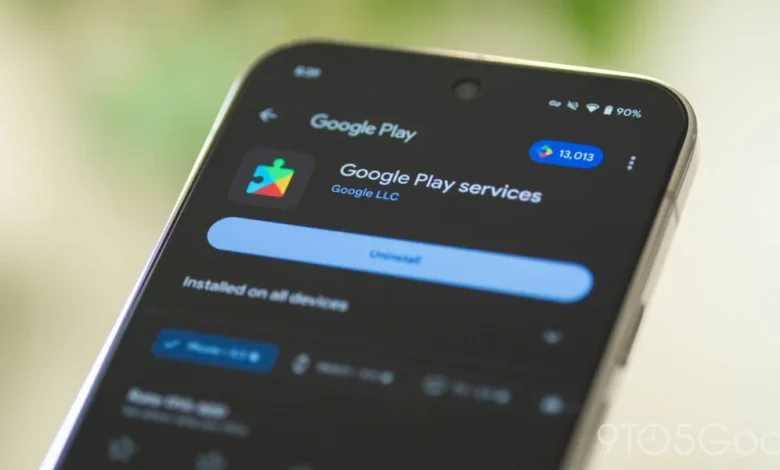
Google has officially published its comprehensive system release notes for October 2026, providing a granular look at the incremental improvements, security patches, and functional updates deployed across its vast Android ecosystem. These monthly updates serve as the backbone for the Google Play system, ensuring that billions of devices—ranging from smartphones and tablets to Wear OS smartwatches, Android TV units, automotive infotainment systems, and PCs—remain synchronized, secure, and performant without requiring full operating system overhauls.
The October cycle, spanning from October 1 through October 26, 2026, focuses heavily on the stability of core components such as Private Compute Services, Google Play services, the Play Store, and the underlying Android WebView engine. These updates are critical for maintaining the integrity of the Android platform, particularly as Google shifts more functionality away from static OS images into modular, updatable "System" services.
Understanding the Google System Architecture
To comprehend the significance of these monthly logs, it is necessary to understand the "Google System" framework. Unlike traditional operating system updates—which are often delayed by hardware manufacturers (OEMs) and cellular carriers—Google System updates are pushed directly via the Google Play Store infrastructure. This modular approach allows the company to bypass the "fragmentation" issue that historically plagued Android, enabling the rapid deployment of security fixes and feature enhancements across a heterogeneous fleet of devices.
The Google System is composed of a suite of first-party applications and services, including:
- Google Play services: The background layer that manages APIs, authentication, and location services.
- Google Play Store: The primary gateway for application distribution and device management.
- Android WebView: The component that allows apps to display web content seamlessly.
- Private Compute Services: The privacy-focused layer that manages machine learning tasks locally on the device.
- Android System Intelligence: The engine behind predictive features and smart suggestions.
For users wishing to verify their status, the update path remains consistent: navigating to the Settings app, selecting the "Google" services section, and inspecting the "System services" menu under the Privacy & security tab.
Chronological Breakdown of October 2026 Updates
The October release schedule reflects a tiered approach to deployment, with updates staggered throughout the month to ensure system stability and to allow for staged rollouts.
Early October: Strengthening the Foundation
The month commenced with critical updates to Android System Intelligence (version B.29 / C.7) on October 1, aimed at improving the device’s local inference capabilities. This was followed by a series of updates on October 5, including Google Play services v26.39 and Google Play Store v53.5. These releases primarily targeted developer services and security refinements, ensuring that application programming interfaces (APIs) remained compliant with the evolving privacy standards mandated by the company’s internal safety protocols.
Mid-October: Optimization and Connectivity
On October 12, Google issued a dual update for the Play Store (v53.6) and Play services (v26.40). The focus during this window shifted toward "Device Connectivity" and "Wallet" optimizations. As mobile payment adoption continues to rise globally, the Wallet service receives near-constant iteration to support new regional banking integrations and enhanced NFC (Near Field Communication) security protocols. Android WebView v156, released on October 7, addressed several browser-rendering vulnerabilities, further hardening the platform against web-based exploits.
Late October: The Final Push
The latter half of the month saw the release of v26.41 and v26.42 for Play services on October 19 and 26, respectively. These versions represent the culmination of the month’s development efforts, integrating bug fixes discovered in earlier iterations and preparing the ecosystem for upcoming seasonal feature drops. The inclusion of Private Compute Services B.31 / C.9 on October 26 underscores Google’s commitment to privacy-preserving computation, allowing the device to process data for personalized features without uploading sensitive user information to the cloud.
Analyzing the Impact of Modular Updates
The shift toward modular, frequent updates has profound implications for the industry. From a security perspective, it minimizes the "window of exposure" for known vulnerabilities. When a security flaw is identified in a core component like WebView, Google can issue a fix that reaches the majority of active devices within days, rather than waiting months for an OEM-specific firmware patch.
Furthermore, these updates allow Google to iterate on user-facing features without forcing a disruptive OS update. For instance, enhancements to Google Wallet or device connectivity protocols can be introduced silently in the background. This provides a "living" operating system experience where devices effectively improve over time.
However, this architecture also presents challenges. Because these features are often released in "staged" phases, a specific functionality mentioned in the changelog may not appear on every device immediately. Factors such as regional deployment, device model, and user engagement metrics influence when a feature becomes active. This can occasionally lead to confusion among the user base, as two individuals with the same phone model might have different experiences with a newly announced feature.
Data Security and Privacy Integration
A notable emphasis in the October 2026 logs is the continued focus on "Security & Privacy." By decoupling these services from the base Android OS, Google ensures that privacy controls are uniform across all versions of the operating system, from Android 14 through the latest versions of 2026. The update to Private Compute Services specifically addresses the need for secure, on-device data processing, which is increasingly essential for generative AI tasks running locally on mobile hardware.

By isolating these processes, Google protects the user’s data from being compromised even if a secondary application experiences a security failure. This "sandbox" approach is the cornerstone of modern mobile security, and the October updates demonstrate that Google is refining these barriers to be both more robust and more efficient in terms of battery consumption and thermal management.
The Developer Perspective
For developers, the monthly system notes are essential reading. Updates to "Developer Services" often include new APIs that allow third-party applications to interact more deeply with the Android ecosystem. Whether it is improving the efficiency of background tasks or adding new capabilities for cross-device connectivity, these updates empower developers to build more sophisticated applications that perform consistently across the fragmented landscape of Android hardware.
The inclusion of versioned updates for Android WebView is particularly vital for web developers. As web standards evolve rapidly, the ability of the system-wide WebView to stay current ensures that web-based applications and hybrid apps remain functional and secure.
Broader Industry Implications
The strategy employed by Google sets a benchmark for the broader mobile industry. As competition between Android and competing platforms intensifies, the ability to maintain the "freshness" of an operating system is a primary differentiator. By effectively managing the Google System, the company maintains a tight grip on the user experience, ensuring that even entry-level devices retain a degree of modern functionality long after their hardware release date.
This model is also being observed by competitors in the mobile space, many of whom are attempting to replicate the modularity of Google’s update system. The success of the October 2026 updates confirms that the modular approach is not merely a stopgap measure, but the standard for future mobile software engineering.
Conclusion
The release of the October 2026 Google System updates highlights a mature and highly organized update pipeline. By prioritizing security, connectivity, and privacy, Google continues to bridge the gap between hardware release cycles and software evolution. Users are encouraged to keep their devices updated through the system settings, as these minor version increments are essential for long-term device stability.
As the industry looks toward the end of 2026, it is clear that the focus will remain on refining these background services, ensuring that the Android ecosystem remains a secure and reliable platform for billions of global users. While individual updates might appear incremental, their cumulative effect is the sustained health and relevance of the most widely used mobile operating system in the world.