The Rise of Things To Say: How Ironic Hustle Culture Memes Took Over TikTok and Instagram

The digital meme landscape undergoes constant shifts, cycling through absurd humor, hyper-specific subcultures, and surrealism at a dizzying pace. In late August 2026, a new satirical format emerged across short-form video platforms like TikTok and Instagram Reels, capturing the collective internet imagination. Dubbed "Things To Say," the meme series presents lists of intentionally terrible, socially inappropriate, and aggressively absurd advice on what a person should say in everyday scenarios—ranging from professional job interviews and medical consultations to romantic dates and casual interactions with pets. Combining elements of classic advice macros with the modern, deadpan irony of contemporary "sigma grindset" and hustle culture humor, the format has rapidly expanded into a cross-platform phenomenon boasting millions of views and widespread user participation.
Anatomy of the Format and Its Cultural Roots
At its core, the "Things To Say" trend relies on subverting conventional social expectations. While historical internet memes like Advice Dog offered simplistic, often morally dubious guidance in a straightforward manner, modern ironic memes thrive on multilayered sarcasm. The "Things To Say" template typically features a bold, capitalized header specifying a target audience or situation—such as "Things to say to your doctor," "Things to say on a date," or "Things to say to your puppy"—paired with a relevant or entirely incongruous reaction image.
The listed phrases are deliberately crafted to guarantee immediate social friction or confusion. Rather than offering genuine communication strategies, the text instructs individuals to assert dominance, invoke bizarre financial or legal threats, or completely misread the emotional tenor of a room. This structural absurdity aligns closely with previous internet trends, such as the "Rare Fish Investment" and "Invest in Rare Fish Multiple Uncles" memes, which similarly mocked the hyper-capitalist, pseudo-entrepreneurial language pervasive among online influencers. By applying this aggressive, transactional vocabulary to mundane or deeply personal human relationships, creators generate humor through sheer cognitive dissonance.
Chronology and Viral Trajectory
The trajectory of the "Things To Say" phenomenon began to take shape in mid-August 2026, quickly accelerating through the social media ecosystem over a span of several weeks. The timeline of its viral spread highlights how rapidly niche internet humor can scale across multiple platforms through algorithmic amplification and user-generated adaptations.
August 17, 2026: The Genesis
The format made its formal debut on TikTok when user @cawkringinvestor published a satirical list titled "Things to say after cracking"—utilizing street slang for sexual intercourse. The post offered a stark departure from standard relationship content, instructing viewers to deliver deadpan, financially transactional, or emotionally detached remarks to a partner immediately after intimacy. Lines such as "Can I pay with card?", "It would have been easier if you cooperated," and "You did better than my grandma" struck a chord with viewers. The post rapidly accumulated over 1.7 million views within its first month, establishing the tonal blueprint for subsequent iterations.
Late August to Early September 2026: Cross-Platform Expansion
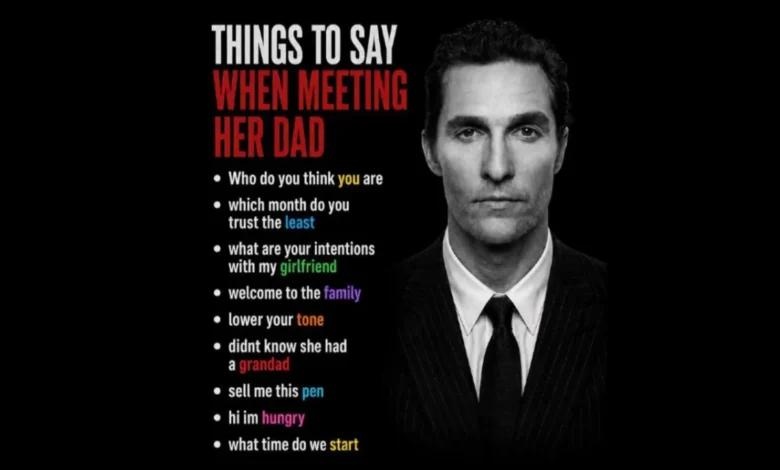
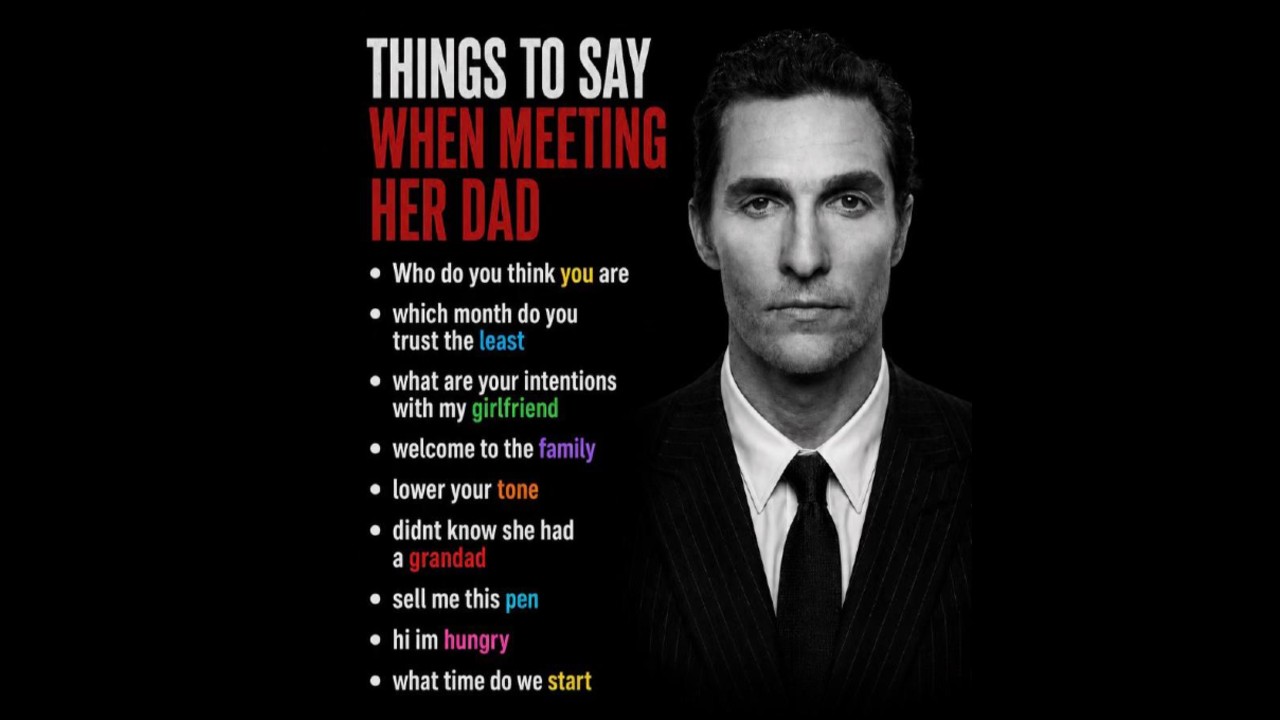
Following the initial success of @cawkringinvestor’s post, the template was quickly generalized and adapted to a wide array of social contexts. On August 30, TikTok creator @therealuncle1 introduced a variation focused on meeting a partner’s father, paired ironically with an image of actor Matthew McConaughey. This installment pulled in over 1.1 million views in a single week.
The momentum continued on August 31, when user @richhomiethugger2867 applied the format to job interviews, securing more than 2.2 million views. As the days progressed, the trend migrated seamlessly to Instagram Reels. On September 2, user jack_sonsm48 published a fresh iteration that garnered tens of thousands of likes within days. A notable milestone occurred on September 5, when Instagram account @_thebayharborbutcher published a medical-themed list featuring Hugh Laurie’s curmudgeon character from House M.D. Featuring lines like "You have six (6) seconds to live" and "I’m allergic to idiots," the post secured over 69,000 likes in less than four days, proving the format’s versatility across different fictional and real-world domains.
Categorical Variations and Examples
As the trend matured, creators pushed the boundaries of the format by applying it to increasingly absurd scenarios. The modular nature of the text lists allowed for endless customization, resulting in distinct thematic sub-genres:
- Romantic and Dating Contexts: Expanding beyond the initial post-intimacy jokes, "Things to say on a date" lists instructed daters to declare that their money is "tied up in assets," inquire about ovulatory cycles, or claim they left their wallet in the car while demanding to know if their companion "sends."
- Interpersonal and Familial Dynamics: Subverting traditional family hierarchies, lists directed at mothers featured lines such as "Do not talk back to me lady" and "You have exactly 10 minutes to impress me." Similarly, lists targeted at Uber drivers suggested asking the driver to hit pedestrians or offering them a beer mid-transit.
- Pet Ownership: Pet-focused variations reimagined domesticated animals as adversarial business partners or legal threats. Instructions for interacting with a puppy included telling the animal, "You contribute nothing to this household," threatening legal action ("I’ll see you in court"), and demanding that the dog name three countries.
- Pop Culture Crossovers: Users also integrated video game and television lore into the trend. A popular crossover featuring the character King Asgore from the indie game Undertale combined the format’s characteristic demands with game-specific references, asking the monarch to "Sell me these SOULS" and questioning, "What are your intentions with my mum?"
Quantitative Impact and Search Metrics
While standalone engagement metrics on TikTok and Instagram Reels demonstrated high audience retention—with individual top-tier posts regularly crossing the one-million-view threshold—the broader data reflects a classic viral content lifecycle. The rapid proliferation of user-generated templates across competing platforms indicates a high degree of content recycling and remix culture. Content creators frequently utilized green-screen effects and stitched video formats to read the ironic lists aloud, introducing a performative layer that enhanced the humor through deadpan delivery.
Platform analytics from late August through early September 2026 show that search interest for ironic meme formats and hustle-culture satires experienced localized spikes, driven primarily by younger demographics frequenting TikTok, Instagram, and curated meme archive databases. The ability of the format to transcend specific niches—moving fluidly from dating humor to workplace satire—allowed it to maintain high algorithmic visibility without immediate saturation fatigue.
Broader Implications of Ironic Hustle Culture Satire
The emergence of "Things To Say" within the broader context of internet culture offers insight into how contemporary audiences process social anxiety and digital fatigue. Ironic hustle culture memes function as a coping mechanism against the overwhelming saturation of unsolicited online advice, self-improvement seminars, and toxic productivity messaging that has dominated social media feeds for years.
By weaponizing the language of corporate efficiency, hyper-individualism, and aggressive negotiation, creators strip these concepts of their authority. Telling a puppy that it "contributes nothing to this household" or instructing a job interviewer to "lower their tone" parodies the absurdities of modern professional expectations and interpersonal alienation. The humor arises from the total inversion of social norms; in a digital environment where everyone is encouraged to optimize every waking second, the ultimate counter-cultural rebellion is to suggest complete, unapologetic social ineptitude.
Furthermore, the longevity of the "Things To Say" format highlights the durability of modular text-based memes in an era dominated by high-production video. While video platforms prioritize motion, editing pace, and visual effects, the underlying mechanics of these viral posts remain rooted in the simple, readable listicle format popularized decades earlier. By pairing static, text-heavy lists with rapid-fire video delivery, creators successfully bridged the gap between traditional image macros and modern short-form video consumption.
As digital culture continues to evolve, formats like "Things To Say" demonstrate the persistent appetite for deadpan irony and participatory satire. Whether the trend will pave the way for new iterations of absurd behavioral guides or remain a defining snapshot of late-summer 2026 internet humor, its rapid ascent underscores the collective desire to laugh at the unwritten, and often ridiculous, rules governing daily human interaction.