The Legal and Strategic Consequences of Andrew and Tristan Tate’s Conduct While Under Detention in Romania

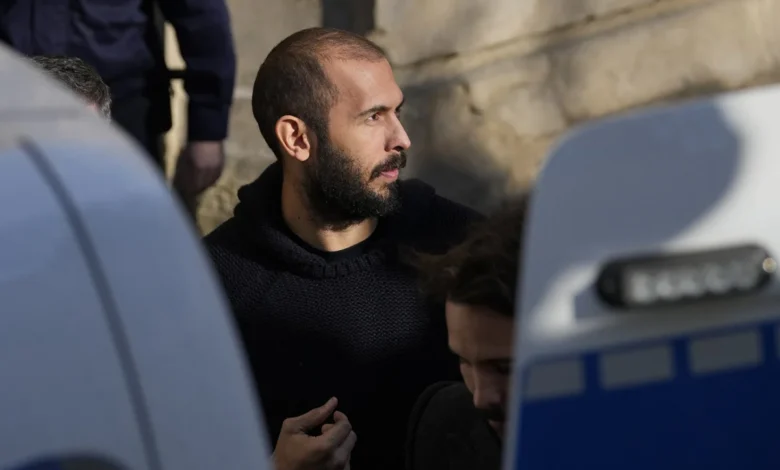
The transition of Andrew and Tristan Tate from a central Bucharest detention facility to house arrest in late March marked a significant procedural shift in a high-profile human trafficking and organized crime case that has captivated international audiences. While the move from a jail cell to a private compound in a wealthy suburb north of Bucharest was framed by the defense as a legal victory, evidence obtained by judicial authorities suggests that the brothers’ behavior while in custody may have irrevocably complicated their legal standing. Romanian prosecutors and judicial experts warn that the actions taken by the Tates during their months of incarceration—including alleged attempts to influence witnesses, evade jurisdiction, and manipulate public perception—have created a volatile legal environment that may result in further criminal charges as the trial date approaches.
A Chronology of the Investigation
The case against the Tate brothers, along with their associates Georgiana Naghel and Luana Radu, began in earnest on December 29, 2022, when Romanian authorities executed a series of raids. The suspects were taken into custody on allegations of forming an organized crime group, human trafficking, and rape. The detention was initially ordered for 30 days but was repeatedly extended by local courts, which cited the high risk of the defendants absconding and their potential to interfere with the integrity of the ongoing investigation.
Throughout the early months of 2023, the prosecution built its case, relying on evidence that included intercepted communications, digital forensic analysis, and testimony from alleged victims. By late February, a court document summarizing a judicial session revealed that the presiding judge had denied further release requests, citing "new reasons" for the continued detention. These included specific allegations that the Tates had formulated a plan to flee to Dubai—a jurisdiction with which Romania lacks an extradition treaty—under the guise of seeking medical treatment for a lung condition. While Andrew Tate later clarified on social media that the reported medical "tumor" was actually scarring from past physical trauma, authorities viewed the request as a transparent attempt to evade justice.
Allegations of Witness Tampering and Intimidation
The prosecution’s narrative suggests that the brothers utilized their massive online presence to exert pressure on those involved in the case. According to court records, the Tates allegedly encouraged their followers to target specific witnesses who had provided statements against them. This strategy included an attempt to pressure at least one victim into retracting her testimony, with judges noting that the tone of these online campaigns was designed to induce a "state of fear."
The intimidation tactics reportedly extended beyond digital harassment. In December, a U.S.-based law firm associated with the brothers issued a cease-and-desist letter to a witness in Florida, demanding a retraction of her statements under the threat of a defamation lawsuit. Romanian authorities have characterized this move as a strategic component of a larger intimidation campaign. Legal experts, such as Mihai Mareș, a prominent criminal defense lawyer and lecturer at the Alexandru Ioan Cuza University of Iași, have suggested that such actions could fundamentally undermine the Tates’ defense. Mareș noted that any attempt to influence witness testimony or interfere with judicial proceedings can be classified as a separate criminal offense, potentially widening the scope of the investigation beyond the original charges of trafficking and exploitation.
Internal Security Breaches and Institutional Influence
One of the most concerning aspects of the prosecution’s findings involves the alleged actions of Luana Radu, a former police officer and one of the two alleged accomplices. Court documents indicate that between April and December 2022, Radu purportedly gained unauthorized access to classified databases belonging to the Romanian Ministry of Internal Affairs. The presiding judge stated that it would have been logistically impossible for Radu to access these sensitive systems without internal assistance, suggesting the involvement of unidentified parties within the police force.
This breach raises significant questions regarding the security of the evidence collection process. Prosecutors have also unearthed information suggesting that previous complaints of violence and coercion filed by women against the brothers were left unresolved, leading to speculation that Radu may have used her law enforcement background to stifle these initial reports. These "unresolved" complaints are now being scrutinized to determine if they form a pattern of systemic abuse that remained unchecked due to potential corruption or professional interference.
Political Entanglements and Strategic Outreach
In a move that prosecutors interpret as an attempt to control the narrative, evidence has emerged that the Tates sought to influence Romanian political figures. Wiretaps suggest that Andrew Tate instructed his associates to reach out to high-profile, right-wing politicians, specifically George Simion and Diana Șoșoacă. Both figures are known for their anti-Western rhetoric and populist stances, often echoing themes that align with the Tates’ broader brand of anti-establishment sentiment.
According to intercepted communications, the directive was to offer rewards to these politicians in exchange for their public support. However, both Simion and Șoșoacă reportedly declined to intervene. This failed attempt to secure political leverage underscores the Tates’ perceived desperation to frame their prosecution as a political vendetta rather than a standard criminal proceeding. The failure of this outreach further isolated the brothers from the mainstream legal and political establishment in Romania.
Implications for the Upcoming Trial
As the case moves toward a trial expected to begin in late April, the atmosphere in the Romanian judicial system remains tense. While the appeals court’s decision on March 31 to grant house arrest provided the Tates with a temporary reprieve, the ruling does not signal a dismissal of the underlying charges. The defendants remain under constant surveillance, and their legal team is now faced with the task of defending against not only the primary charges but also the additional allegations of witness tampering, obstruction of justice, and illicit digital activity.
Legal analysts observing the proceedings emphasize that the "irritation" felt by judges and prosecutors is not merely anecdotal; it has been explicitly documented in court filings. In the Romanian legal system, where judicial discretion plays a significant role in sentencing and bail conditions, such animosity can have tangible impacts. "Any subsequent statements they may give will be viewed with a certain amount of skepticism by the judicial bodies," Mareș noted. The Tates’ compulsion for public controversy, which served them well in the digital creator economy, appears to be a liability in the rigid, evidence-based environment of a high-stakes criminal trial.
Broader Impact and Global Scrutiny
The case of the Tate brothers has become a flashpoint for broader discussions regarding the intersection of online influence, misogyny, and the limits of legal accountability. By attempting to use their status as influencers to pressure witnesses and court systems, the Tates have inadvertently highlighted the challenges authorities face when dealing with defendants who possess the financial and social capital to mobilize vast digital armies.
The upcoming trial will serve as a crucial test for the Romanian justice system. If prosecutors successfully link the Tates’ online activities to concrete actions of witness intimidation, it could set a precedent for how jurisdictions handle digital-age obstruction of justice. Conversely, the defense team’s insistence that the legal actions taken in the U.S. and the inquiries made to Romanian politicians are legitimate strategies remains the core of their counter-narrative.
For now, the brothers remain confined to their compound, awaiting the next phase of a trial that will likely be defined as much by their behavior during their months of incarceration as by the original evidence that brought them before the court. The prosecution’s commitment to investigating the new allegations suggests that the legal road ahead will be increasingly difficult, as the boundaries between their digital "brand" and the reality of the Romanian criminal code continue to collide in the courtroom.