For years, cybersecurity defenders have wrestled with a persistent strategic dilemma when trying to integrate artificial intelligence into their defensive operations. On one hand, security teams could adopt massive, resource-intensive frontier models that offered deep reasoning capabilities but proved exceptionally expensive to deploy, hard to control, and unwieldy when scaled across complex enterprise codebases. On the other hand, defenders could rely on smaller, open-weight models that, while cheaper and more flexible, frequently struggled with complex vulnerability remediation and forced internal engineering teams to build custom tooling, guardrails, and supporting infrastructure entirely from scratch. This friction left organizations vulnerable to rapidly evolving, automated threats that move at machine speed.
To bridge this critical capability gap, Google has officially launched the Fairwind Program, a high-security, limited-access initiative designed to put the company’s most advanced cyber defense capabilities directly into the hands of trusted government agencies, key public sector organizations, and strategic cybersecurity partners. Led by Four Flynn, Vice President of Security and Privacy at Google, the program aims to help critical institutions proactively detect, analyze, and mitigate cyber risks at an unprecedented scale before malicious actors can exploit them.
The launch of the Fairwind Program marks a significant evolution in how major technology providers collaborate with the public sector to secure critical infrastructure. By granting authorized defenders access to specialized artificial intelligence tooling, Google hopes to shift the cybersecurity paradigm from reactive incident response to proactive, autonomous system hardening.
Core Architecture: Combining Gemini 3.8 Flash Cyber with CodeMender
At the technological heart of the Fairwind Program is a specialized integration between Google’s most advanced cyber-focused artificial intelligence model, Gemini 3.8 Flash Cyber, and CodeMender, an enterprise-grade remediation harness. While traditional vulnerability scanning tools excel at identifying weaknesses and generating alerts—often creating widespread awareness and administrative anxiety without offering actionable solutions—the combination of Gemini 3.8 Flash Cyber and CodeMender is engineered to deliver complete end-to-end security through automated remediation.
Gemini 3.8 Flash Cyber provides the advanced semantic reasoning and contextual understanding required to comprehend complex software architectures, isolate vulnerabilities, and generate accurate code patches. Meanwhile, the CodeMender harness acts as a secure validation layer, testing the proposed patches within a controlled environment to ensure they resolve the underlying flaw without introducing functional regressions or secondary security vulnerabilities.

According to Google security architects, this pairing achieves agentic-scale vulnerability management at a fraction of the operating cost associated with traditional general-purpose frontier models. Tasks that previously required weeks of manual code review, triage, testing, and patch deployment can now be completed within minutes. Crucially, all of these operations take place strictly within an organization’s secure cloud environment, ensuring that proprietary source code and sensitive operational data never leave the bounds of enterprise privacy controls.
Staged Access and Strict Operational Safeguards
Recognizing the dual-use nature of advanced artificial intelligence capabilities—where the same reasoning power used to patch vulnerabilities could theoretically be misused to discover zero-day exploits—Google has implemented a rigorous, multi-tiered vetting and onboarding process for the Fairwind Program. Access is being rolled out in carefully monitored stages, prioritizing organizations whose operational resilience is vital to national security, public safety, and economic stability.
Initial participation in the program is restricted to more than 650 global partners, including prominent cybersecurity heavyweights and vital government entities. To maintain the integrity and security of the program, participating institutions must adhere to strict operational standards and governance frameworks. These mandatory requirements include restricting model access exclusively to verified internal cybersecurity professionals, incident response specialists, and authorized penetration testing units. Furthermore, organizations are required to deploy robust infrastructural protections, such as mandatory multi-factor authentication (MFA) and granular identity and access management controls, to prevent unauthorized access to the AI tooling.
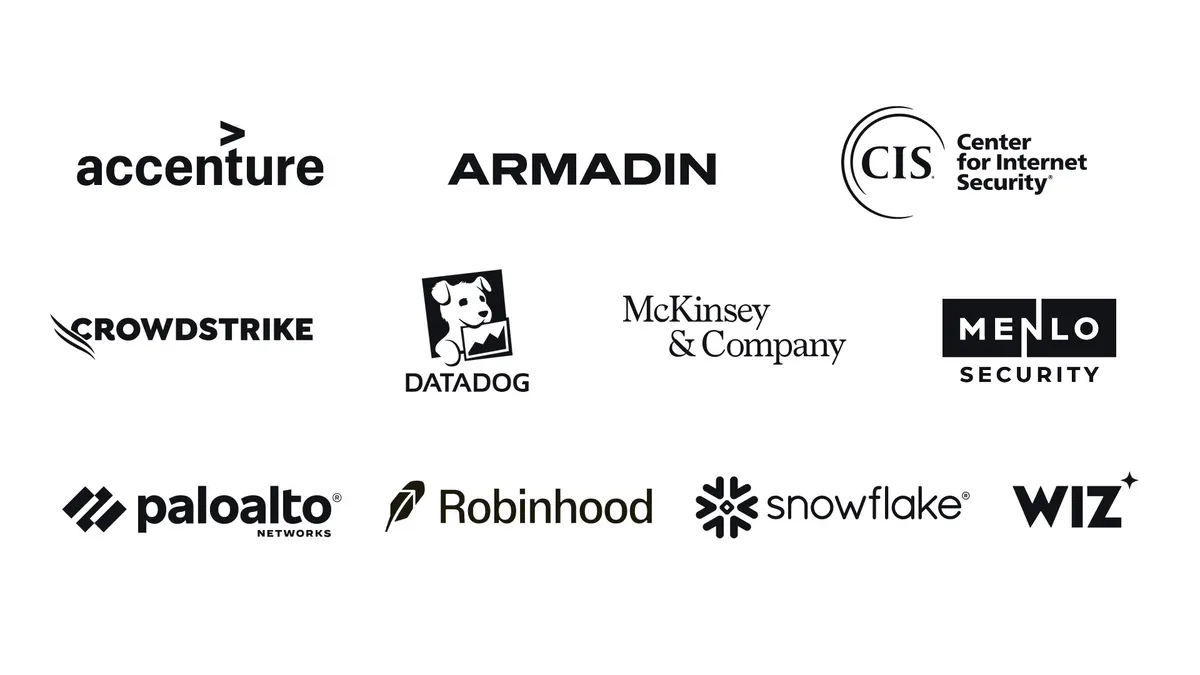
The ecosystem of participating partners features some of the most recognized names in global cybersecurity and enterprise cloud infrastructure, including Armadin, CrowdStrike, Palo Alto Networks, Snowflake, and Wiz. Industry leaders from these organizations have praised the initiative, noting that autonomous remediation frameworks like Gemini 3.8 Flash Cyber and CodeMender provide the exact type of high-speed leverage required to counter modern, automated adversarial campaigns.
Expanding Ecosystem Impact and Grassroots Cybersecurity Funding
The launch of the Fairwind Program does not exist in a vacuum; it forms a core pillar of Google’s broader, long-term commitment to enhancing global cyber resilience across the entire digital ecosystem. For over a decade, Google has pioneered zero-trust architectures, automated threat intelligence sharing, and integrated AI defenses that protect billions of user accounts daily across products like Google Cloud, Workspace, and Android.
Beyond enterprise and governmental platforms, Google has concurrently focused on fortifying grassroots cybersecurity defenses for organizations that traditionally lack the financial and technical resources to defend themselves against sophisticated cyberattacks. Through philanthropic investments channeled via Google.org, the company’s cumulative global cybersecurity funding has now surpassed $100 million.
In alignment with the Fairwind Program launch, Google released its 2026 U.S. Cybersecurity Impact Report. The report highlights the deployment of $36 million in targeted grants directed toward 35 university-led cyber clinics across the United States. To date, these clinics have provided free, hands-on security assessments, technical support, and workforce training to more than 1,250 high-risk institutions, including regional hospitals, public school districts, and municipal water and utility providers. By simultaneously advancing elite AI defense capabilities for nation-states and foundational security support for local public infrastructure, Google is attempting to address cybersecurity disparities across every tier of society.
Future Roadmap and Access for the Wider Developer Community
While initial high-tier access to Gemini 3.8 Flash Cyber is restricted to approved participants in the Fairwind Program, Google has structured its AI threat defense ecosystem to ensure broader availability of automated security tools. Any standard Google Cloud customer can leverage CodeMender by combining it with publicly available models hosted on the Gemini Enterprise Agent Platform. These tools integrate directly with Google Cloud’s broader AI Threat Defense suite, allowing enterprises of all sizes to begin automating their software security pipelines.
Looking ahead, Google has confirmed that the Fairwind Program will evolve iteratively in response to user feedback, threat landscape shifts, and technological advancements. The company plans to expand partner access over time while maintaining an open dialogue with industry stakeholders, policymakers, and open-weight research communities. This collaborative approach is intended to strike a delicate regulatory and technical balance between fostering open innovation and maintaining strict security safeguards against proliferation risks.
Strategic Implications for the Future of Cyber Warfare
The introduction of agentic-speed vulnerability remediation represents a fundamental inflection point in the perpetual arms race between offensive hackers and defensive security teams. Historically, defenders have operated at a permanent structural disadvantage: malicious actors only need to find a single vulnerability to breach a network, whereas defenders must secure every potential attack surface continuously. Furthermore, while attackers have increasingly adopted automation and generative AI to scale their operations and discover flaws at unprecedented speeds, defenders have largely remained reliant on manual code reviews and slow, bureaucratic patching cycles.
By operationalizing tools like Gemini 3.8 Flash Cyber and CodeMender through initiatives like the Fairwind Program, the cybersecurity industry is witnessing the dawn of machine-speed defense. Shrinking the window of vulnerability—the critical elapsed time between the public disclosure or internal detection of a software flaw and the successful deployment of a verified patch—from weeks to minutes fundamentally alters the economic calculus of cyber attacks. If widespread adoption of these autonomous remediation frameworks succeeds, it threatens to render entire classes of automated exploits obsolete, providing governments and enterprises with the proactive advantage necessary to secure the digital foundations of modern society.