AI Researchers Challenge CBS and Google Over Claims of Spontaneous Language Acquisition in Large Language Models

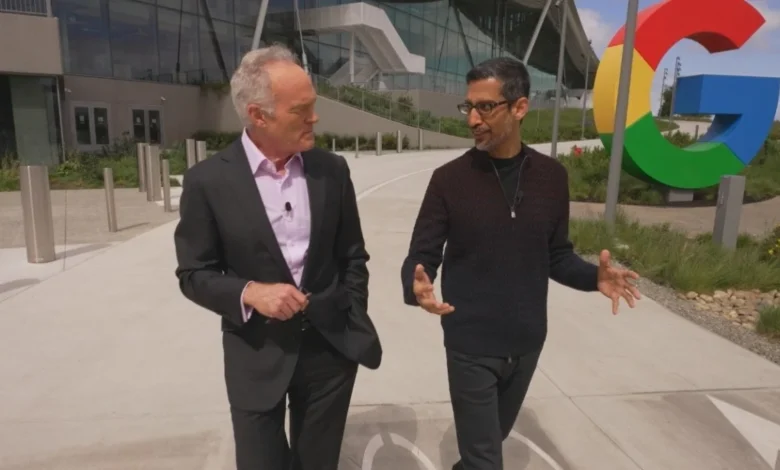
The intersection of artificial intelligence, corporate public relations, and mainstream media reporting has become a focal point of intense scrutiny following a recent segment on the CBS news program 60 Minutes. The broadcast, which featured an in-depth interview with Google CEO Sundar Pichai, sparked immediate backlash from the academic and technical communities. At the heart of the controversy is the assertion that Google’s Large Language Model (LLM), PaLM, demonstrated an ability to learn a language it had not been trained on—a claim that prominent AI researchers argue is misleading, if not entirely inaccurate.
The 60 Minutes Segment and the Emergence Narrative
On a recent Sunday broadcast, 60 Minutes aired a segment exploring the rapid advancement of artificial intelligence. During the interview, correspondent Scott Pelley discussed the concept of "emergent properties," defined by the program as AI systems teaching themselves skills that they were not explicitly expected to possess. Pelley framed these developments as mysterious, suggesting that even the architects of these systems do not fully comprehend how such capabilities arise.
To illustrate this, the segment presented a demonstration of an AI program responding to prompts in Bengali. Pelley stated that the system "adapted on its own" to a language it was not trained to know. James Manyika, a Google vice president, further fueled this narrative by claiming that with minimal prompting, the model could "translate all of Bengali," a feat that supposedly propelled Google to expand its research efforts to encompass a thousand languages.
The Technical Reality: Data, Training, and Prompting
The reaction from the scientific community was swift and critical. Researchers specializing in machine learning and AI ethics challenged the narrative presented by CBS and Google, pointing to existing technical documentation that contradicts the "spontaneous learning" account.
Margaret Mitchell, a leading AI researcher and former co-lead of Google’s AI ethics team, was among the first to address the claim. Mitchell highlighted that the PaLM model, which powers the Google Bard chatbot, was indeed trained on Bengali data. According to the original research paper published by Google, Bengali accounts for approximately 0.026% of the model’s total training corpus.
"By prompting a model trained on Bengali with Bengali, it will quite easily slide into what it knows of Bengali: This is how prompting works," Mitchell stated in a social media critique. She emphasized that the fundamental architecture of LLMs relies on statistical pattern matching within the data they have already ingested. The suggestion that a model could effectively speak a language it has never encountered is, according to Mitchell and other experts, a technical impossibility within current transformer-based architectures.
Chronology of the PaLM Disclosure
The claims made during the 60 Minutes broadcast echo messaging used by Google during the official unveiling of PaLM at the company’s annual developer conference in 2022. During that event, CEO Sundar Pichai demonstrated the model’s proficiency in Bengali to showcase its versatility.
At that time, Pichai noted that the model had not been explicitly taught to translate or answer questions in a Q&A format. The narrative presented then—and reiterated by CBS—is that the model achieved these tasks through "emergent capabilities."
However, the distinction between "not trained to translate" and "not trained on the language" is critical. A model trained on a vast dataset of internet text in various languages will naturally develop associations between those languages. When a user provides a prompt in Bengali, the model is not "learning" the language in real-time; it is retrieving and synthesizing patterns from its pre-existing training data.
Official Responses and Corporate Clarification
Following the public outcry, Google provided clarification regarding the nature of its training protocols. Jason Post, a spokesperson for Google, stated that the company never claimed PaLM was entirely devoid of Bengali training data.
"While the PaLM model was trained on basic sentence completion in a wide variety of languages (including English and Bengali), it was not trained to know how to translate between languages, answer questions in a Q&A format, or translate information across languages while answering questions," Post said in an official statement.
The company maintains that the "emergent" aspect refers to the model’s ability to perform complex tasks—such as translation and reasoning—that were not the specific objectives of its initial training phase. Google characterizes this as an "impressive achievement," arguing that the model’s ability to generalize its training across different task formats is a significant milestone in AI development.
Academic Critique of "Emergent Properties"
The use of the term "emergent properties" has become a point of contention among experts. Emily M. Bender, a professor at the University of Washington and a prominent voice in AI ethics, argued that the framing of these capabilities serves to mystify the technology.
Bender specifically criticized Manyika’s claim that the model could "translate all of Bengali." She described this as an "unscoped, unsubstantiated claim," questioning the lack of empirical benchmarks or rigorous testing protocols to verify such a sweeping statement. "What does ‘all of Bengali’ actually mean? How was this tested?" Bender asked, noting that such rhetoric often obscures the reality that these models are essentially probabilistic engines trained on massive, often uncurated, datasets.
Furthermore, critics argue that the "emergent properties" narrative is frequently used as a proxy for Artificial General Intelligence (AGI)—the hypothetical point at which an AI system gains human-level cognitive capabilities. By characterizing these models as "black boxes" that possess near-magical, unexplainable skills, tech firms can shift the public perception toward a sense of awe, which critics believe distracts from the more mundane, yet serious, issues of data bias, labor exploitation, and the environmental impact of large-scale computing.
Broader Implications for AI Journalism and Public Trust
The incident highlights a growing tension between the rapid commercialization of AI and the need for objective, accurate reporting. As tech companies compete for dominance in the generative AI market, the marketing of these products often relies on the promise of groundbreaking, near-sentient capabilities.
When mainstream outlets like 60 Minutes adopt these narratives without sufficient technical vetting, it risks creating a public perception of AI that is disconnected from its current functional reality. Researchers are concerned that this contributes to "AI hype," which can lead to misinformed policy decisions, unrealistic investor expectations, and a misunderstanding of how these tools actually function.
The critique offered by Mitchell and Bender serves as a reminder of the importance of algorithmic transparency. For the public to make informed decisions about the role of AI in society, the discussion must move beyond the "magic" of emergence and toward a detailed understanding of training data, model limitations, and the specific mechanisms that allow these systems to generate output.
Conclusion: The Need for Rigor
As the industry continues to evolve, the demand for accountability is likely to increase. The criticism directed at CBS and Google is not merely a semantic disagreement over technical terms; it is a fundamental challenge to the way that AI development is communicated to the general public.
The incident underscores a crucial lesson for both the media and the technology sector: as artificial intelligence becomes more integrated into the fabric of daily life, the standard for evidence and verification must rise. Moving forward, the scientific community remains committed to demystifying these systems, ensuring that the development of AI is grounded in observable, reproducible, and transparent research rather than the allure of emergent myths.