Legal Risks Escalate for Andrew and Tristan Tate Following Transition to House Arrest

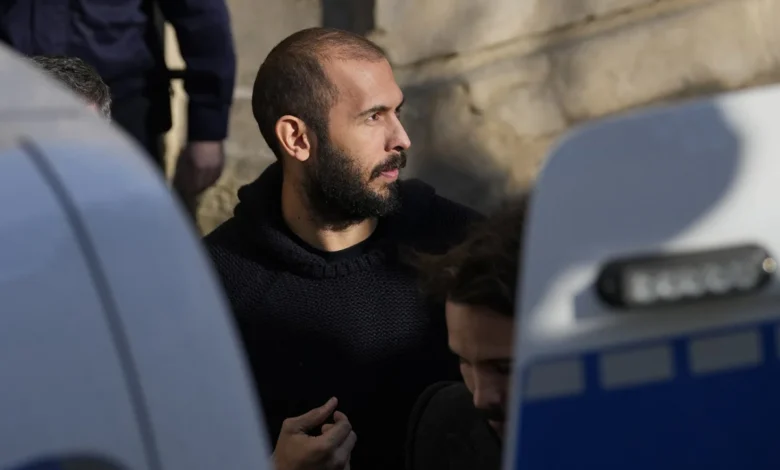
In late March, the controversial social media influencer Andrew Tate and his brother, Tristan, were released from a Romanian detention facility and placed under house arrest, marking a significant, albeit temporary, shift in their ongoing legal battle. Alongside their two alleged accomplices, Georgiana Naghel and Luana Radu, the siblings had been incarcerated since December 29, 2022, following their arrest on serious allegations of organized crime, human trafficking, and the formation of a criminal group. While the move to house arrest—a court-ordered measure that keeps the defendants confined to a secure compound—represents a procedural victory, legal experts and judicial sources suggest that the brothers’ conduct during their detention may have severely compromised their long-term defense strategy.
The shift to house arrest does not equate to an acquittal. As the Romanian justice system prepares for a trial expected to commence in late April, prosecutors are reportedly compiling evidence suggesting that the Tates’ actions while behind bars were not merely attempts to clear their names, but rather proactive efforts to obstruct the course of justice.
A Chronology of the Investigation
The legal saga began in earnest in April 2022, when Romanian authorities initiated a probe into the brothers’ activities. The investigation gained momentum throughout the year, culminating in the December 29 raid on the Tates’ residence in Bucharest. During the subsequent months of detention, the brothers’ legal team faced repeated setbacks as judges consistently denied bail, citing the risk of flight and the danger the defendants posed to public order.
The court’s decision to move the Tates to house arrest on March 31 was made by a different panel of judges, an outcome that has reportedly caused significant concern within the Romanian prosecutor’s office. Sources close to the investigation indicate that the prosecution views the brothers’ ongoing influence over their online following as a tool for witness intimidation, a factor that continues to weigh heavily on the judicial assessment of the case.
Allegations of Witness Intimidation and Obstruction
Central to the prosecution’s frustration are wiretapped phone conversations obtained from the Bucharest detention center. According to court filings, these recordings indicate that Andrew Tate allegedly orchestrated a plan to flee to Dubai under the guise of seeking medical treatment for a health condition. The defense initially claimed that a spot on Andrew’s lung was a potential tumor; however, the influencer later contradicted this on social media, describing it as "scarring from an old battle." Romanian authorities denied the travel request, viewing it as a clear attempt to evade the jurisdiction of the Romanian courts, particularly given that the United Arab Emirates lacks an extradition treaty with Romania.
Furthermore, the investigation into witness tampering has expanded. Prosecutors allege that the brothers, leveraging their vast digital platform, encouraged their followers to target individuals cooperating with law enforcement. Specific allegations suggest that supporters of the influencers directed threatening messages at witnesses, demanding they retract their testimonies. One notable incident involves a cease-and-desist letter sent by a U.S. law firm to a witness in Florida, an action that Romanian prosecutors characterize as a component of a wider strategy to undermine the integrity of the criminal proceedings.
Mihai Mareș, a prominent criminal defense lawyer and lecturer at the Alexandru Ioan Cuza University of Iași, notes that these tactics carry profound legal risks. "Any subsequent statements they may give will be viewed with a certain amount of skepticism by the judicial bodies," Mareș observed. He added that if the cease-and-desist notifications were perceived as attempts to force the withdrawal of criminal complaints, they could lead to the opening of new criminal investigations specifically related to the obstruction of justice.
Complicity and the Role of Institutional Access
The investigation has also cast a spotlight on Luana Radu, a former police officer and alleged accomplice. According to court documents, Radu is suspected of having accessed classified police databases between April and December 2022. Prosecutors argue that such an intrusion could not have been achieved without external assistance, suggesting a high level of operational coordination within the group.
The implications of this potential security breach are severe. If proven, the unauthorized access to sensitive police information would represent a significant breach of state security, potentially leading to additional charges that could complicate the defense’s argument that the original human trafficking case is based on weak or fabricated evidence.
Moreover, the prosecutor’s office has received reports of prior, unresolved complaints filed by various women alleging violence and coercion at the hands of the brothers. The existence of these older, dormant cases, coupled with the current allegations, suggests a pattern of behavior that the prosecution intends to present as a fundamental element of their case.
Strategic Outreach and Political Implications
In an attempt to solidify their standing, the Tates reportedly sought to engage with Romanian political figures known for their nationalist, anti-Western, and populist rhetoric, including George Simion and Diana Șoșoacă. According to intercepted communications, Andrew Tate allegedly instructed his team to promise these politicians future rewards in exchange for their support in framing the investigation as a political persecution.
Both politicians have maintained a distance from the Tates, refusing public requests to advocate on their behalf. The outreach attempt itself, however, has provided the prosecution with further ammunition to argue that the brothers are attempting to manipulate the political environment to influence the outcome of their trial. The association with figures like Șoșoacă—who has been placed on a sanctions list by the Ukrainian government—adds a layer of geopolitical sensitivity to a case already under intense international scrutiny.
Broader Impact on the Judicial Process
The decision to grant house arrest has been met with a mixture of professional skepticism and concern regarding the potential for further interference. The compound where the Tates are currently held is under constant surveillance, a measure intended to prevent the very actions that prosecutors have repeatedly warned about: flight, tampering, and influence peddling.
Legal experts emphasize that the Tates’ behavior—what one judicial insider described as a compulsion to court controversy—has arguably done more to harm their legal standing than any individual piece of evidence presented by the prosecution. By consistently challenging the authority of the court and attempting to subvert the judicial process through extra-legal means, the defendants have created an environment where judges are increasingly inclined to view their testimony and that of their associates as unreliable.
As the April trial date approaches, the Tates find themselves in a precarious position. While they are no longer behind bars, the breadth of the investigation has expanded significantly since their initial arrest. The combination of the original charges, the new allegations of obstruction, and the potential for additional investigations into data breaches and witness tampering means that the legal risks for the brothers have only increased.
The case serves as a stark reminder of the complexities involved in prosecuting high-profile individuals who maintain the ability to influence public opinion from the confines of house arrest. As the Romanian justice system navigates these hurdles, the international community continues to watch closely, waiting to see whether the judicial process will remain focused on the original charges or if the additional allegations of interference will lead to a broader, more severe prosecution. The Tates’ attempt to leverage their fame and digital influence as a defensive mechanism appears, at this stage, to have created a secondary legal battlefield that may prove as dangerous as the primary charges they face.