The Enterprise Playbook: Harnessing Social Listening for Strategic Lead Generation in 2025


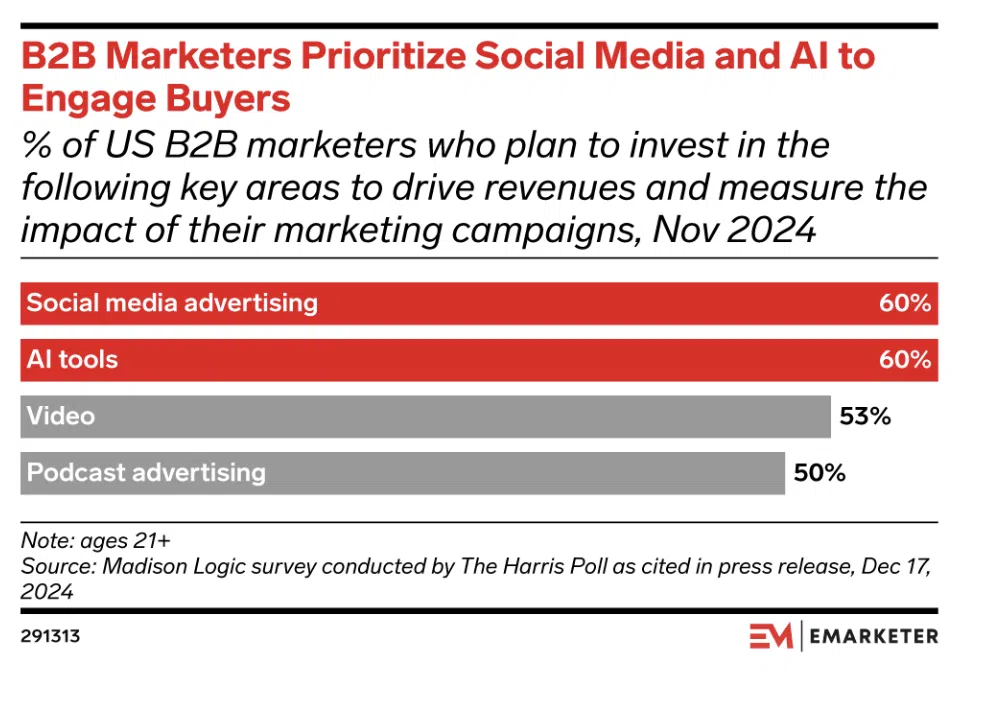
Enterprise lead generation has undergone a profound structural shift as traditional outbound methods face diminishing returns and buyers increasingly demand self-directed, digital-first evaluation processes. In response to this evolution, organizations are increasingly turning to advanced social listening to capture early buying signals, identify hidden pain points, and shorten the sales cycle. Industry research underscores this strategic pivot; data from eMarketer indicates that approximately 60 percent of United States business-to-business (B2B) marketers have prioritized increased investments in social media advertising and artificial intelligence capabilities. This capital allocation reflects a broader recognition that modern buyers initiate their research phases across public forums, professional networks, and peer-to-peer discussion boards long before ever filling out a traditional landing page form.

The fundamental distinction between traditional brand monitoring and modern lead-generation listening lies in organizational intent. While brand monitoring operates primarily as a defensive mechanism—tracking general sentiment and public perception to protect corporate reputation—lead-generation listening functions as an offensive sales catalyst. Instead of simply aggregating mentions of a company name, lead-generation listening actively scours digital landscapes for expressions of customer frustration, category-specific questions, vendor comparisons, and explicit product searches. By treating social media platforms as real-time intelligence feeds rather than mere broadcasting channels, enterprise sales and marketing teams can intercept prospective buyers during the critical window before a formal request for proposal (RFP) is issued.
The strategic imperative for adopting this methodology is supported by changing buyer behaviors. According to findings from Forrester, social media has firmly cemented its position as the second most meaningful source of information for B2B buyers, rivaling traditional search engines and industry publications. Furthermore, Gartner reports that 61 percent of B2B buyers now express a distinct preference for a rep-free buying experience, meaning they actively avoid traditional sales pitches until they have thoroughly researched their options independently. Social listening bridges this gap by allowing brands to observe unprompted discussions where potential customers openly evaluate software, hardware, and service solutions without a vendor present in the room.

To operationalize these insights effectively, enterprise organizations must establish a rigorous framework for tracking high-intent buying signals across diverse platforms. The most actionable signals generally fall into four distinct categories: active product searches, acute pain points and operational frustrations, competitor evaluations, and emerging industry themes. On professional networks like LinkedIn, decision-makers frequently discuss budget cycles, software migrations, and internal structural inefficiencies. Concurrently, community-driven platforms like Reddit and niche review sites provide unfiltered, blunt assessments of marketplace offerings. When a user explicitly complains about long enterprise onboarding times or asks for a scalable alternative to an established market leader, they are broadcasting a warm buying intent that can be quantified and routed directly to a sales development representative.
Industry experts emphasize that successfully converting these digital signals into qualified pipeline requires strict adherence to value-first engagement principles. Sarah Stephenson, Director of Social Media at TMP, highlights that organizations frequently stumble by restricting their queries to branded keywords rather than listening for broader industry friction points. According to Stephenson, the most valuable insights emerge from the "how-to" moments, workflow bottlenecks, and comparative discussions occurring across the digital ecosystem. When an enterprise brand identifies these conversations, the immediate instinct to deploy a heavy sales pitch must be resisted. Citing data that shows 73 percent of B2B buyers actively avoid suppliers engaging in irrelevant or aggressive outreach, Stephenson advises teams to lead exclusively with relevant resources, strategic insights, or objective peer perspectives to build foundational trust before attempting any commercial conversion.

The integration of artificial intelligence has further revolutionized enterprise social listening by solving the perennial challenge of data overload. Human teams alone cannot manually parse the millions of public posts, comments, and forum threads generated daily across the global web. Modern enterprise platforms, such as Hootsuite Social OS and its integrated AI tools like Lumen and Wisdom, now automate the heavy lifting of scanning vast volumes of unstructured data. These AI systems categorize incoming conversations by sentiment, urgency, and topical relevance, filtering out background noise and delivering a curated, prioritized shortlist of genuine business opportunities directly to marketing and sales teams.

Despite the integration of automation, human judgment remains paramount in the final phases of lead qualification and outreach. Gartner projections indicate that by 2030, roughly 75 percent of B2B buyers will still prefer sales experiences that prioritize human interaction over fully automated engagement. Consequently, AI acts as a sophisticated triage mechanism rather than a replacement for human relationship-building, ensuring that high-priority signals reach the right human representative swiftly and accurately. Once a high-intent signal is surfaced and verified, structured workflows must seamlessly push the contextual data into corporate Customer Relationship Management (CRM) systems like Salesforce. This synchronization allows sales reps to review past interactions, specific technical frustrations, and behavioral context directly within a customer profile, thereby personalizing subsequent outreach and dramatically improving conversion metrics.

Implementing a comprehensive social listening and lead-generation workflow typically involves a five-step lifecycle: defining the ideal customer profile, establishing granular keyword and boolean query tracking across target platforms, configuring real-time alert rules for high-intent tiers, building cross-departmental tagging and routing protocols, and integrating the resulting data streams directly into enterprise CRM infrastructure. When executed with discipline, this operational cadence transforms social media from an isolated broadcast channel into a predictable, measurable driver of sustainable revenue. Ultimately, as market competition intensifies and buyer preferences shift further toward self-guided research, social listening serves not as a temporary tactical shortcut, but as a permanent cornerstone of modern enterprise revenue generation, offering unprecedented relevance, deeper customer understanding, and a distinct competitive advantage in the digital marketplace.