The Rise of the "Things to Say" Meme: How Irony and Absurd Advice Revitalized Hustle Culture Humor on TikTok and Instagram

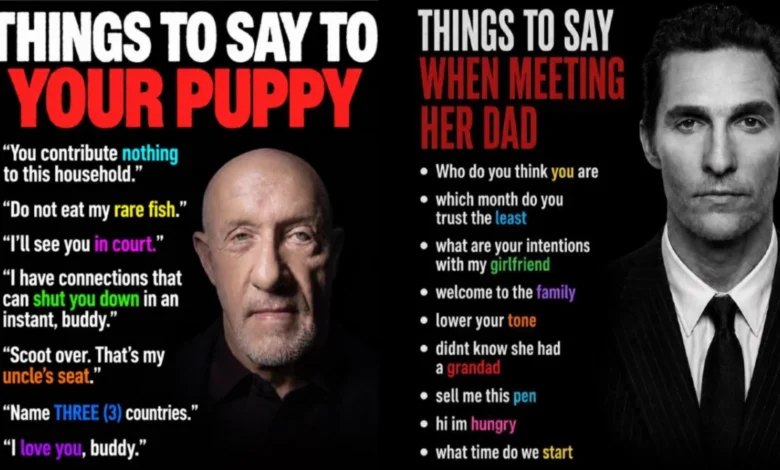
The digital landscape of short-form video and image-based social media platforms is once again experiencing a significant shift in humor, as hustle culture and sigma grindset aesthetics undergo a heavily ironic renaissance. Sparked by a viral wave of content across Instagram and TikTok, a new phenomenon known simply as the "Things to Say" meme has captured the attention of millions of users worldwide. This emerging format blends the hyper-masculine, ultra-serious undertones of traditional hustle culture memes with absurd, entirely counterproductive social advice. By juxtaposing images of stereotypically cool celebrities and public figures with exhaustive lists of catastrophically bad things to say to ordinary people—ranging from romantic partners to domestic pets—internet users have found a fresh, highly scalable vehicle for deadpan satire.
To understand the mechanics and rapid expansion of this trend, media analysts and internet culture researchers have traced its origins back to mid-August 2026. The format has evolved quickly, moving from niche internet subcultures into mainstream feeds, demonstrating the cyclical nature of digital trends where older ironic tropes are constantly recycled, deconstructed, and rebuilt for modern audiences.
Origins and Chronology of a Viral Trend
The "Things to Say" meme traces its roots back to a specific post published in mid-August 2026 by TikTok creator @cawkringinvestor. The original post utilized the visual and tonal language commonly associated with financial influencers, sigma grindset tutorials, and alpha-male lifestyle coaches. However, rather than offering genuine financial counsel, time-management strategies, or self-improvement tips, the video delivered a series of ironic, deeply awkward suggestions regarding what a person should say to their romantic partner immediately after engaging in intimate relations, colloquially referred to in internet slang as "cracking."
The initial list of recommendations included jarringly transactional and bizarrely nonchalant phrases such as asking, "Can I pay with card?" and enthusiastically declaring, "Woohoo!" The incongruity between the serious, stoic delivery expected of internet "gurus" and the sheer social ineptitude of the suggested phrases formed the core comedic engine of the post.
By late August 2026, the format broke containment from its initial niche on TikTok and began spreading rapidly across Instagram Reels and grid posts. Creators across various follower brackets began adopting the template, replacing the original subject matter with increasingly mundane or absurd scenarios. Within days, the meme had evolved past the confines of romantic relationships, expanding into family dynamics, professional environments, and interactions with household animals.
Anatomy of the Format: Visuals and Mechanics
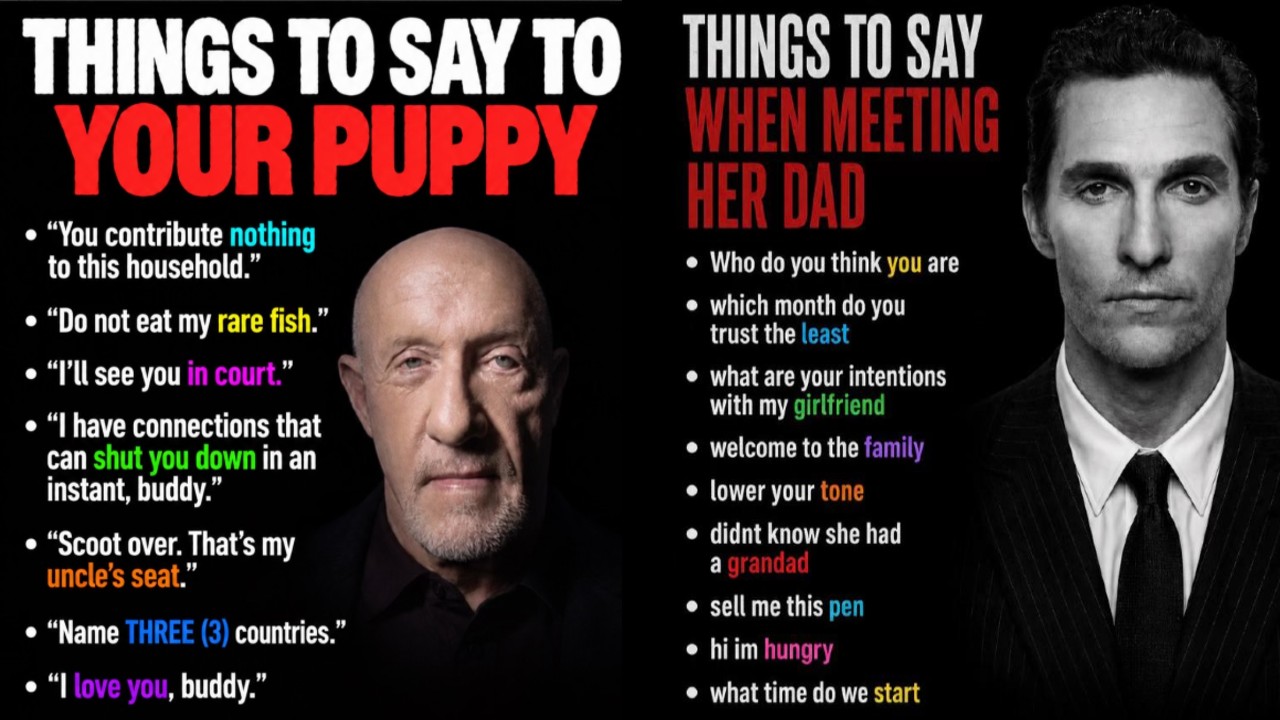
At its structural core, the "Things to Say" meme relies on a stark juxtaposition between two primary elements: visual authority and textual absurdity. Each individual meme typically features a high-contrast photograph of a notable celebrity, historical icon, or fictional character widely perceived in pop culture as embodying effortless coolness, stoicism, or masculine authority. Figures ranging from silver-screen legends to contemporary action stars frequently serve as the visual anchor for the text.
Adjacent to or superimposed over these images is a lengthy, itemized list detailing "things to say" to a specific, often hyper-specific target. These targets subvert the solemnity of the celebrity image by focusing on mundane, high-stakes, or entirely inappropriate social scenarios. Examples documented across major platforms include lists directed at a partner’s parents during a first dinner, instructions for addressing a middle school teacher during a parent-teacher conference, and step-by-step dialogue scripts intended for a domestic house cat.
This structural design bears a striking resemblance to classic early-internet humor formats, most notably the legendary "Advice Dog" macro series that dominated image-board culture in the late 2000s. In those legacy formats, an image of a wide-eyed canine was paired with captions giving undeniably terrible life advice, operating on layers of nested irony. The "Things to Say" meme modernizes this lineage by replacing the cartoon dog with hyper-stylized human icons, effectively weaponizing the aesthetic of modern motivational content to deliver anti-advice.
Contextualizing the Revival of Hustle Culture Satire
The rapid adoption of the "Things to Say" format cannot be viewed in isolation; it represents the latest chapter in the evolution of hustle culture satire. Over the past several years, social media platforms have been saturated with self-proclaimed entrepreneurs, crypto-investors, and lifestyle coaches offering unrequested guidance on how to optimize every second of the day. This phenomenon, often categorized under "sigma grindset" or "hustle culture" memes, eventually bred its own counter-culture of fatigue and mockery.
Internet users began pushing back against the relentless commercialization of self-improvement by leaning heavily into absurdism. Previous iterations of this pushback included ironic trends encouraging users to invest heavily in the "rare fish market" or consult an impossibly large network of "multiple uncles" for financial strategy. The "Things to Say" meme serves as a direct stylistic descendant of these earlier movements, retaining the deadpan delivery and pseudo-authoritative presentation while shifting the focus from questionable financial ventures to interpersonal social sabotage.
Sociological Implications and Audience Reception
From a communications perspective, the widespread appeal of the "Things to Say" format highlights changing consumption habits among digital natives. Audiences are increasingly fatigued by earnest content, showing a strong preference for multi-layered irony that requires the viewer to recognize and appreciate the underlying satire.
By utilizing iconic figures to deliver socially destructive advice, the meme creates a comedic tension that resonates with younger demographics navigating complex social landscapes. The humor stems not from the plausibility of the advice, but from its catastrophic unsuitability for real-world application. Recommending that an individual utter deeply confusing financial or transactional phrases to their partner’s parents provides a safe, vicarious outlet for social anxiety and the fear of awkwardness.
Furthermore, the participation of diverse creators—ranging from independent lifestyle humorists to mainstream meme aggregation accounts—has ensured that the format remains dynamic. Because the structural formula is simple to replicate, users can continually inject niche pop culture references, hyper-specific local scenarios, and shifting cultural touchstones into the template, extending its lifespan well beyond the typical two-week window of standard viral content.
Industry Analysis and Future Trajectory
Digital media experts note that formats relying on modular text lists paired with static images possess high longevity compared to audio-dependent video trends. Because the "Things to Say" meme functions effectively as a static image, a carousel post, or a short-form video featuring voiceover narration, it easily crosses platform boundaries between TikTok, Instagram, X (formerly Twitter), and Reddit.
As platforms continue to algorithmically favor content that generates high engagement through shares and comments—often driven by users tagging their friends in the comment sections to point out specific absurd entries on the lists—the reach of the meme remains robust. While the specific iterations centered around early-fall 2026 contexts will inevitably evolve, the underlying satirical framework has firmly established itself within the modern meme canon.
Ultimately, the "Things to Say" phenomenon underscores the resilience of internet humor, proving that digital communities will continually find innovative ways to mock the over-serious structures of modern self-help culture. By turning the idealized imagery of Hollywood icons and internet gurus into mouthpieces for catastrophic social advice, users have transformed everyday awkwardness into a unifying, globally shared digital punchline.