The Rise of the Digital Watchdog: Katherine Abughazaleh and the Shifting Landscape of Media Accountability


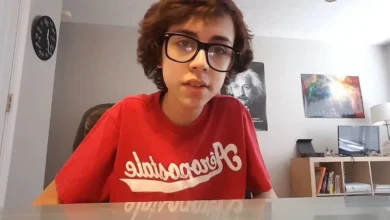
The abrupt departure of Tucker Carlson from Fox News in April 2023 marked a significant inflection point in the American cable news landscape, reverberating far beyond the network’s Manhattan headquarters. While the media industry scrambled to analyze the business implications of the exit, a new generation of digital activists had already been dismantling the power of such figures from the outside. At the forefront of this movement is Katherine Abughazaleh, a 24-year-old senior video producer for Media Matters for America, whose viral social media presence has redefined how political misinformation is monitored and challenged in the digital age.
A Career Forged in the Monitor Room
Abughazaleh’s work centers on the meticulous observation of primetime cable news. As a producer for Media Matters, a progressive nonprofit dedicated to tracking and correcting conservative misinformation, her primary responsibility involves the systematic monitoring of Fox News. This role requires an intensive engagement with the network’s daily output, extracting transcripts and video clips to analyze evolving political narratives.
Her transition from a behind-the-scenes researcher to a social media personality was organic. Beginning in January 2023, Abughazaleh began utilizing TikTok to distill her professional findings into accessible, concise, and often biting commentary. Her content—which frequently dissects the rhetoric of high-profile hosts like Tucker Carlson—quickly gained traction, amassing nearly 130,000 followers within months. By framing complex media analysis through the lens of short-form video, she successfully reached demographics that traditional, long-form media watchdog reports often struggle to penetrate.
The Anatomy of a Media Disruption
The timing of Carlson’s exit provided a unique case study for Abughazaleh’s approach to media criticism. When Fox News announced on April 24, 2023, that it would part ways with its highest-rated host, the event followed a tumultuous period for the network. The announcement occurred just days after Fox News settled a $787.5 million defamation lawsuit with Dominion Voting Systems, which had alleged the network broadcasted false claims regarding the integrity of the 2020 presidential election.
While the specific reasons for Carlson’s departure remain a subject of industry debate, the intersection of legal pressures, declining advertiser appeal, and internal corporate shifts provided the backdrop for his exit. For Abughazaleh, the event was a validation of her methodology: that consistent, public-facing scrutiny can effectively peel back the layers of a media titan’s influence. Her viral commentary on the situation—often emphasizing that the power lies in the network’s timeslot rather than the individual anchor—offered a sober counter-narrative to the sensationalism surrounding the departure.
Understanding the Digital Media Landscape
The rise of independent, platform-specific creators like Abughazaleh signals a departure from legacy media models. Unlike traditional editorial board critiques, her content is platform-native, utilizing the specific vernacular and pacing of TikTok and Twitter to engage an audience that is increasingly skeptical of corporate media structures.
This digital strategy is not without risks. The public nature of her work has made her a target for intense, often vitriolic harassment. Data from the nonprofit sector suggests that female journalists and media professionals covering political extremism face a disproportionate amount of gendered harassment, including threats of violence and sexualized abuse. Abughazaleh has documented receiving numerous threats and has faced organized efforts by bad actors to contact her employer in an attempt to discredit her or jeopardize her professional standing. Despite these challenges, her engagement metrics suggest that her audience values the transparency of her work, which she describes as "watching conservatives for work but making fun of them for pleasure."
Socio-Political Context and Evolution
Abughazaleh’s own background provides a unique perspective on the conservative media ecosystem she now monitors. Raised in a conservative household in Texas, she traces her political shift to her formative years in Arizona, where exposure to diverse socio-economic environments challenged her previous political assumptions. This trajectory—from a youth steeped in conservative ideology to a professional career in progressive media advocacy—is a narrative shared by many in the current wave of media literacy activists.
Her work on platforms like YouTube, where she has produced in-depth investigations into entities like the "Christian Nationalist" homeschooling programs promoted by right-wing figures and the business practices of "conservative-alternative" retail platforms, demonstrates a shift in how watchdog groups are operating. The strategy is to follow the money, exposing the commercialized "grifts" that often accompany political extremism in the digital sphere.
The Broader Implications for Media Watchdogs
The impact of Abughazaleh’s content extends to its tangible effects on her audience. Many of her followers report using her clips to facilitate conversations with family members who are daily consumers of right-wing cable news. By providing "shareable" evidence of misleading rhetoric, she has helped bridge the gap between media analysis and personal intervention, a goal that many traditional nonprofits have long strived for but rarely achieved at this scale.
However, the proliferation of such content also raises questions about the "platforming" of harmful rhetoric. While some critics argue that sharing clips of inflammatory content gives it a wider audience, Abughazaleh maintains that these narratives are already dominant in the conservative ecosystem. She argues that leaving them unaddressed allows them to propagate without context, whereas her commentary provides a necessary framework that deconstructs the claims in real-time.
Looking Ahead: The Future of Cable News Monitoring
As the media industry continues to fragment, the reliance on single-host, monolith brands like Tucker Carlson Tonight is being challenged by decentralized media consumption. Fox News, in navigating its post-Carlson era, faces the challenge of maintaining audience loyalty in an environment where viewers are increasingly capable of migrating to alternative digital platforms.
Abughazaleh’s work remains a bellwether for this transition. Whether she is analyzing the shifting lineup of an 8:00 p.m. time slot or investigating the monetization of right-wing ideologies online, her role reflects a broader, industry-wide shift toward accountability. As the distinction between professional journalism and independent digital commentary continues to blur, producers like Abughazaleh are proving that the most effective tools for media criticism are no longer found in dusty archives, but in the rapid, iterative feedback loops of the social web.
Ultimately, her work serves as a reminder that the influence of cable news is not a fixed constant. Through sustained, public-facing scrutiny and the utilization of digital tools to deconstruct political messaging, the next generation of media watchdogs is successfully reclaiming the narrative, ensuring that even the most powerful media personalities are held to account by the very audience they seek to influence. Whether the network succeeds in replacing its former stars or continues to struggle with declining reach, the era of the unchallenged anchor appears to be reaching its conclusion, accelerated by the persistent, digital-first vigilance of a new generation of analysts.