Pennsylvania Confronts Public Health Crisis as Measles Outbreak Claims Fourth Life

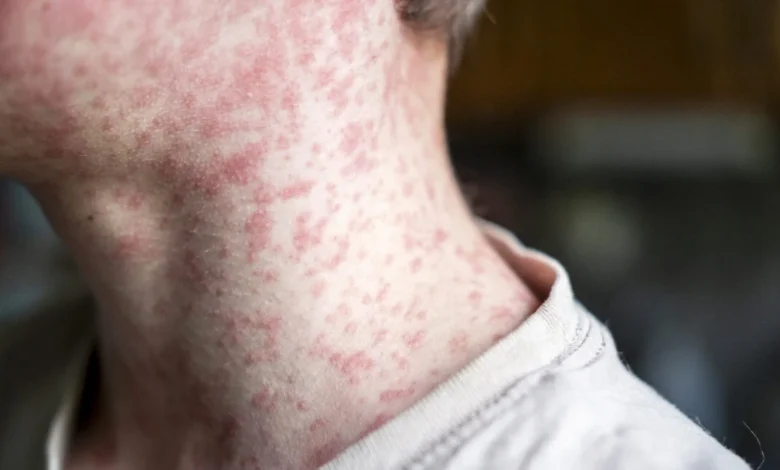
The Pennsylvania Department of Health confirmed on Tuesday that the state’s ongoing measles outbreak has resulted in a fourth fatality, underscoring the severity of a viral surge that has now reached 38 counties. The latest victim, an 18-year-old unvaccinated resident of Mifflin County, succumbed to complications linked to the highly contagious virus. This tragedy follows the weekend confirmation of a death involving an unvaccinated 40-year-old woman in Jefferson County, as state officials work to contain an epidemiological event of a magnitude not seen in the region for over thirty years.
The official death toll now includes two infants from Lancaster County—a newborn boy and a six-week-old girl—both of whom were too young to receive the measles, mumps, and rubella (MMR) vaccine. These cumulative losses highlight the stark reality of the current outbreak, which has grown to include 693 confirmed cases and 133 hospitalizations since the start of the year.
Clinical Complications and the Case of ADEM
The death of the 18-year-old Mifflin County resident has brought renewed focus to the rare but devastating neurological complications associated with the measles virus. According to Mifflin County Coroner Andrea L. Alcalde, the teenager’s death was caused by acute disseminated encephalomyelitis (ADEM).
ADEM is a complex, rapidly progressing autoimmune response triggered by a viral infection. In patients suffering from measles, the virus can inadvertently provoke the immune system to attack the central nervous system. This inflammatory process results in the degradation of myelin, the protective sheath that insulates nerve fibers in the brain and spinal cord. Without this insulation, nerve signals become disrupted or blocked, leading to profound neurological impairment.
Before the widespread implementation of the MMR vaccine in the mid-20th century, ADEM was a recognized, albeit infrequent, sequela of measles infection. While medical science has advanced in supportive care, the condition remains notoriously difficult to treat once the autoimmune cascade begins. Coroner Alcalde, who conducted an extensive review of medical records to reach her determination, emphasized that the diagnosis was confirmed through a rigorous analysis of all available clinical data.
Chronology of the Pennsylvania Outbreak
The current outbreak began as a localized concern before escalating into a statewide public health emergency. The progression of the virus has been marked by a steady uptick in case reports, placing immense pressure on hospital systems across the Commonwealth.
- Early 2026: Initial cases of measles were detected in Pennsylvania, sparking immediate concern among health officials regarding potential gaps in community vaccination coverage.
- Mid-2026: The infection count reached a critical threshold as transmission patterns shifted from isolated clusters to broader community spread. The tragic deaths of two infants in Lancaster County brought national attention to the outbreak, particularly as vaccine skepticism became a focal point of public discourse.
- Late Summer 2026: Reports of hospitalizations began to climb, with the state health department noting that nearly 20% of all confirmed cases required clinical intervention to manage respiratory distress and other secondary complications.
- September 2026: The confirmation of the deaths of the 40-year-old woman in Jefferson County and the 18-year-old in Mifflin County marked the most significant spike in mortality associated with the outbreak.
The state health department is scheduled to update its official outbreak dashboard on Wednesday to include these two most recent fatalities, bringing the official count to four. With 99 new cases reported in just the last seven days, the velocity of the virus shows few signs of immediate deceleration.
Data Trends and Vaccination Barriers
The resurgence of measles in Pennsylvania is largely attributed to pockets of low vaccination coverage. Public health experts have long maintained that a community requires a vaccination rate of approximately 95% to achieve "herd immunity," a threshold that prevents the virus from finding a sufficient number of susceptible hosts to sustain an outbreak.
The data provided by the Pennsylvania Department of Health reveals that the current outbreak is not confined to urban centers, but is affecting a wide geographic swath of the state. The 693 cases represent a significant burden on the healthcare infrastructure. Beyond the tragic loss of life, the economic and logistical costs of managing 133 hospitalizations—many of which involve prolonged stays in isolation wards—are straining local hospitals.
Public health analysts point to a "vaccine gap" that has emerged over the last few years, driven by a combination of misinformation and a decline in routine pediatric checkups. The state’s response has included an aggressive public awareness campaign aimed at clarifying the safety and efficacy of the MMR vaccine, which remains the gold standard for measles prevention.
Official Response and Public Health Strategy
Pennsylvania Secretary of Health Debra Bogen issued a sobering statement following the latest death report. "My thoughts are with the two families who lost loved ones to this highly contagious virus, as Pennsylvania faces the worst measles outbreak in more than three decades," Bogen stated. "We remain committed to working with our partners across Pennsylvania to stem this outbreak and prevent more deaths. That means ensuring people have the facts about measles and access to the MMR vaccine—which kept measles outbreaks at bay for decades."
The Department of Health is currently coordinating with local health agencies, school districts, and community leaders to identify and reach vulnerable populations. This includes hosting pop-up vaccination clinics and providing resources for primary care physicians to facilitate outreach to patients who have fallen behind on their immunization schedules.
Broader Implications: The Lessons of 2026
The severity of the 2026 outbreak serves as a stark reminder of the infectious nature of the measles virus. Measles is one of the most contagious human diseases; an infected individual can spread the virus to up to 90% of unvaccinated people in close proximity. The virus can linger in the air for up to two hours after an infected person has left a room, meaning that transmission can occur even without direct contact.
The recent deaths have reignited the debate surrounding vaccine mandates and public health mandates in schools. In Pennsylvania, while medical exemptions are permitted, the threshold for obtaining non-medical exemptions has been a subject of ongoing legislative review. Public health officials are now emphasizing that measles is not merely a "childhood illness" that can be dismissed as a minor rite of passage, but a serious systemic disease that carries high risks of hospitalization, permanent disability, and death.
Looking ahead, the state’s strategy focuses on three pillars: rapid contact tracing to break transmission chains, the restoration of routine vaccination rates to pre-pandemic levels, and the combatting of misinformation regarding the safety of the MMR vaccine. Experts suggest that the road to stabilization will be measured in months rather than weeks, as the virus continues to circulate in communities where herd immunity has been compromised.
As the commonwealth navigates this crisis, the medical community remains united in its message: the vaccine is the only effective barrier against the virus. The tragedy of four deaths in a single outbreak is a statistic that serves as a profound call to action for public health authorities and families alike. For the families of the victims, the outbreak represents a permanent, life-altering loss; for the state, it remains a critical challenge to restore public confidence in one of the most successful preventive medicine tools in history.