Google Bolsters AI & Economy Research Program with Nobel Laureate Philippe Aghion, Professor Ajay Agrawal, and Leading Economists

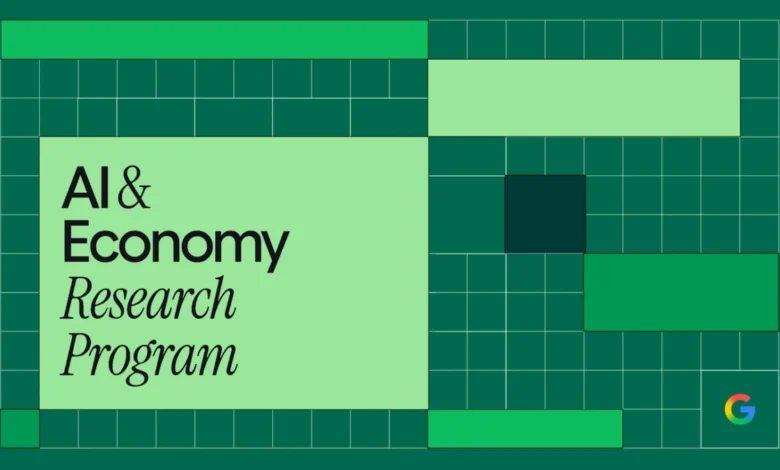
As artificial intelligence continues to transform the global economic landscape, technology leaders are increasingly looking to bridge the gap between rapid software deployment and rigorous economic analysis. Google has announced a major expansion of its AI & Economy Research Program, welcoming several world-renowned economists, academic advisors, and visiting fellows to deepen the scientific understanding of how AI influences global productivity, labor markets, and commercial innovation. Among the prominent figures joining the initiative are Nobel Laureate Philippe Aghion and Professor Ajay Agrawal, alongside seasoned research directors Anu Madgavkar and Daniel Rock. This strategic recruitment drive highlights a growing industry-wide recognition that navigating the structural shifts brought on by machine learning requires deep multidisciplinary collaboration among academia, private enterprise, and public policymakers.
The Evolution of the AI & Economy Initiative
The expansion of Google’s research team builds upon the recent launch of the AI & Economy ATLAS v1.0, accompanied by its interactive open-access platform. The ATLAS project was designed to track and measure how individuals and enterprises integrate Google’s artificial intelligence tools into their daily workflows and professional operations. However, company executives and chief economists quickly realized that merely tracking software adoption patterns represents only the initial phase of a much larger socioeconomic transition.
Technological revolutions have historically been characterized by long, uneven adoption curves rather than instantaneous transformations. Recognizing this complexity, Google structured its AI & Economy Research Program to measure and analyze this ongoing evolution in real time. The core research agenda focuses on several pivotal pillars: the future of work and labor displacement, productivity growth and macroeconomic expansion, the global diffusion of advanced technologies, and the acceleration of scientific discovery driven by algorithmic models.
To tackle these vast thematic areas effectively, Google’s leadership recognized the necessity of incorporating external academic rigor and independent empirical oversight. By bringing in external advisors and dedicated research directors, the company aims to ensure that its economic inquiries remain objective, methodologically sound, and broadly applicable to policymakers and labor organizations worldwide.
Leadership and Academic Expertise
Guiding this expanded research agenda is a newly reinforced leadership team that combines industry insights with rigorous academic frameworks. Anu Madgavkar and Daniel Rock have been appointed as Directors of Google’s AI & Economy Research Program. They will steer empirical projects, oversee data collection methodologies, and integrate research insights across the program’s multidisciplinary agenda.
Madgavkar and Rock join an established leadership group that includes Alex Imas, Director of AGI Economics at Google DeepMind, and Zanna Iscenko, AI & Economy Lead within Google’s Chief Economist’s Office. This executive group coordinates the day-to-day operations of the research initiatives, ensuring that empirical findings are systematically translated into actionable insights for corporate strategists and public officials alike.

In addition to these program directors, Google has recruited a distinguished roster of Academic Advisors and Visiting Fellows. Most notably, Nobel Laureate Philippe Aghion—widely recognized for his groundbreaking contributions to growth theory and the economics of innovation—brings decades of expertise regarding how technological disruption affects creative destruction, market competition, and long-term economic growth. Joining him is Professor Ajay Agrawal, a leading scholar on the economics of artificial intelligence and digital transformation, whose work has heavily influenced how businesses understand the commercial viability and operational bottlenecks of machine learning technologies.
These external scholars, alongside a broader network of visiting researchers, will serve as a vital bridge between theoretical economic modeling and real-world enterprise data. Their presence is expected to enhance the scientific validity of upcoming ATLAS iterations and provide an independent sounding board for complex policy questions.
Bridging the Gap Between Industry and Public Policy
One of the central challenges facing the global economy in the wake of generative AI’s rapid rise is the potential for widening economic divides. While early adopters and highly skilled technical workers stand to gain immense productivity advantages, there are persistent concerns regarding job displacement, wage stagnation, and unequal technology access across developing regions.
Google’s expanded research team intends to address these systemic challenges head-on. By combining granular telemetry data from the ATLAS platform with traditional econometric methodologies, the program aims to identify the specific organizational practices, public policy frameworks, and workforce training programs required to foster inclusive growth.
According to program coordinators, the ultimate goal is twofold: to maximize the unprecedented economic opportunities presented by artificial intelligence while deliberately mitigating the structural disruptions that often accompany industrial transitions. This involves identifying pathways through which AI can effectively upskill workers, democratize specialized expertise, and drive broadly shared economic prosperity rather than concentrated corporate wealth.
Implications for the Global Labor Market
The implications of this research extend far beyond corporate boardrooms and Silicon Valley analytics departments. As governments around the world grapple with the need for updated regulatory frameworks, labor market protections, and educational reforms, reliable empirical data remains scarce. Traditional economic indicators often lag years behind technological implementations, leaving lawmakers to draft policies based on short-term projections rather than verified long-term trends.
By publishing its datasets openly and collaborating with prominent academic minds, Google’s AI & Economy Research Program aims to provide a public good for researchers, trade unions, educational institutions, and international policymakers. The insights generated by Aghion, Agrawal, Madgavkar, Rock, and their colleagues will help demystify the mechanics of AI-driven productivity. Organizations interested in following the progress of these studies, reviewing upcoming publications, and interacting with global data sets can access the initiative’s resources directly through the official portal at ai.google/economy. As the digital economy enters this unprecedented chapter, the integration of rigorous economic science into the heart of technological development will play a definitive role in shaping the future of human labor and global prosperity.