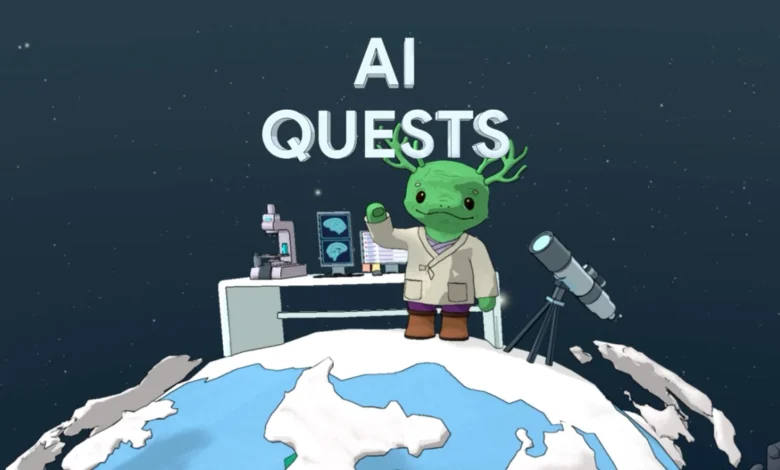
Google Research, in close collaboration with the Stanford Accelerator for Learning, has officially launched its third interactive educational module in the acclaimed AI Quests series. Entitled "Polar Peaks," the new curriculum is specifically designed for students aged 11 to 14, blending foundational artificial intelligence literacy with advanced concepts in modern neuroscience. This latest release aims to demystify emerging technologies for young learners while demonstrating how computational models can radically accelerate complex scientific research. By stepping into virtual simulation environments that mirror real-world laboratory challenges, students are encouraged to engage critically with automated systems, reinforcing the principle that meaningful technological innovation requires rigorous human oversight, ethical mindfulness, and empirical validation.
The rollout of "Polar Peaks" arrives at a critical juncture in K-12 education, where educators worldwide are grappling with how to integrate artificial intelligence into standard curricula safely and effectively. Since the inception of the AI Quests initiative, the program has achieved significant global reach, recording more than 400,000 completed quests across various educational settings and localized into ten distinct languages. Alongside the release of the third module, Google Research has introduced a comprehensive suite of dedicated educator training modules. Available through the Google AI Educator Series, these resources are engineered to help teachers seamlessly incorporate complex AI literacy concepts into existing lesson plans, fostering rich classroom discussions about data integrity, algorithmic bias, and the societal implications of machine learning.
Background and Chronology of the AI Quests Initiative
To understand the trajectory of the AI Quests series, one must examine its foundational objectives and developmental timeline. The initiative was conceived to bridge the gap between abstract computer science theories and tangible, real-world problem-solving. Rather than teaching students how to write raw code, the program focuses on cultivating fundamental AI literacy—helping young learners understand how machines process information, recognize patterns, and assist human experts in high-stakes domains.
The journey began with the release of the first two quests, which drew direct inspiration from pioneering initiatives within Google Research. The initial module focused heavily on global flood forecasting, echoing the real-world predictive models developed by Google to provide early warnings to vulnerable communities facing extreme weather events. The second quest shifted its focus toward healthcare, specifically drawing from automated screening tools designed to detect diabetic retinopathy—a leading cause of blindness. These early modules established a proven pedagogical framework: immerse students in urgent, real-world crises, provide them with virtual tools analogous to those used by professional researchers, and guide them through the process of analyzing complex datasets.
With "Polar Peaks," the curriculum transitions from environmental forecasting and clinical diagnostics to the uncharted frontiers of connectomics—the mapping of neural connections within the brain. In this virtual narrative, students are tasked with helping a game character suffering from severe memory loss. Guided by in-game mentors, learners must scan, clean, and map neural pathways, directly experiencing the painstaking data curation that precedes any computational breakthrough.
Bridging Connectomics and Cutting-Edge Neuroscience
The release of "Polar Peaks" is not merely an academic exercise; it is deeply rooted in more than a decade of genuine neuroscience research conducted by Google and its academic partners. Connectomics represents one of the most data-intensive challenges in modern science, requiring the analysis of petabytes of microscopic imaging data to trace individual neurons and their synapses.
The pedagogical design of the new quest mirrors actual milestones achieved by Google Research scientists. Notably, the conclusion of the quest features direct insights from researchers who spearheaded recent monumental achievements in the field, including the mapping of the complete male fruit fly brain. Announced in late 2026, this breakthrough yielded the largest and most detailed brain map by number of neurons to date. By connecting classroom simulations to these historic scientific milestones, "Polar Peaks" illustrates to students how artificial intelligence acts as an indispensable catalyst for discovery, turning impossible manual workloads into manageable, automated analyses.
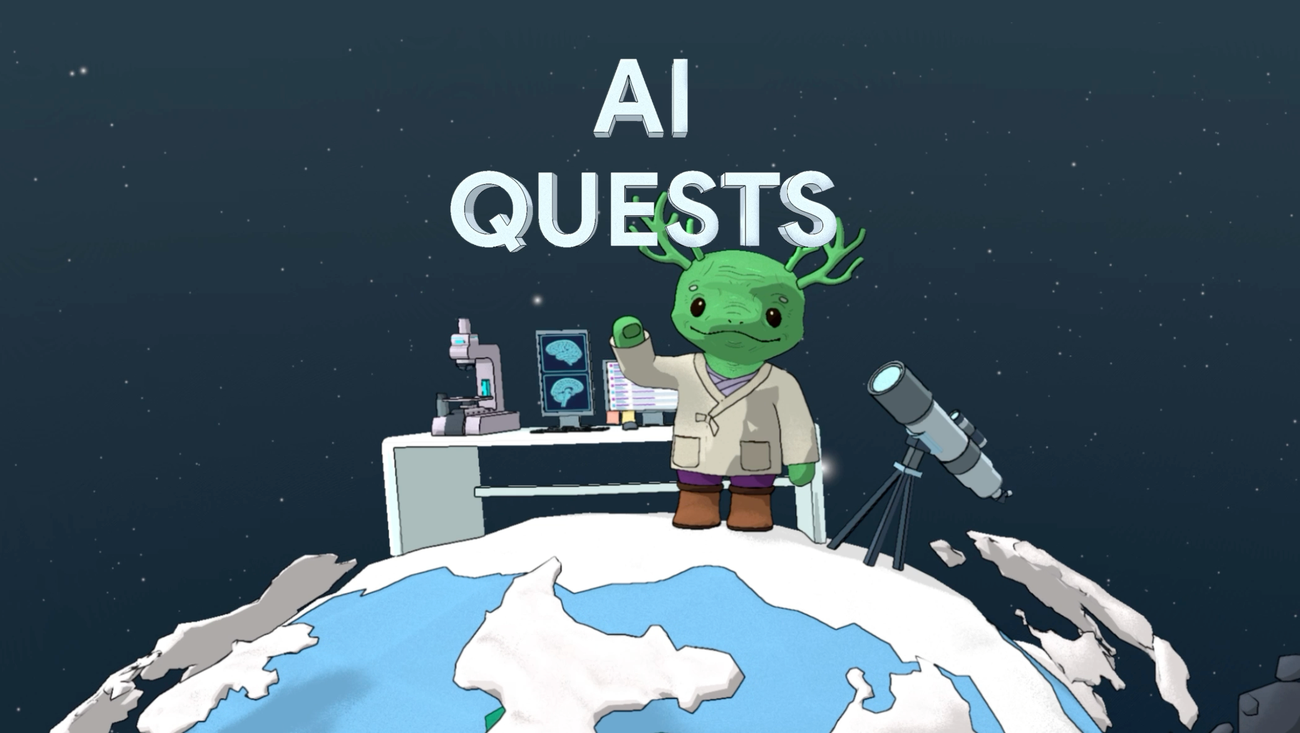
Within the gameplay loop, students perform tasks such as lab searches, the identification of incorrectly labeled neural scans, and the training of basic AI models. These practical exercises drive home a vital educational lesson: machine learning models are only as reliable as the data used to train them. By encountering and correcting labeling errors within the simulation, learners develop a healthy skepticism toward automated outputs, learning to question data provenance and recognize the necessity of human curation in scientific inquiry.
Educator Support and Professional Development
Recognizing that the successful deployment of technological literacy tools depends entirely on the preparedness of classroom instructors, Google Research has structured a comprehensive professional development framework. The newly introduced teacher training modules provide educators with step-by-step guidance on how to facilitate discussions around the ethical dimensions of AI, manage group activities, and assess student comprehension.
The training modules for the first two quests are currently accessible through the Google AI Educator Series portal, while the specialized training module accompanying "Polar Peaks" is scheduled for release in the coming weeks. Educational researchers note that this multi-tiered approach addresses one of the primary pain points in modern education: the lack of standardized, high-quality training for teachers tasked with teaching emerging technologies. By providing robust support materials, Google aims to lower the barrier to entry for educators who may feel intimidated by the technical complexities of artificial intelligence and neuroscience.
The broader educational community has already begun to take notice of the initiative’s impact. Earlier in 2026, the AI Quests series was honored with a Webby Award in the category of AI Education, Learning & Training, alongside recognition as the Best Global K–12 Learning Solution at the ETIH Innovation Awards. These accolades underscore the program’s effectiveness in combining engaging game design with rigorous academic content.
Implications for Future Workforce Readiness and AI Literacy
The launch of "Polar Peaks" highlights a broader pedagogical shift regarding how technical literacy should be introduced to young minds. As artificial intelligence systems become ubiquitous across professional sectors—from medical diagnostics to structural engineering—educational experts argue that foundational literacy must extend beyond passive consumption to active, critical evaluation.
By engaging students between the ages of 11 and 14, the AI Quests series targets a developmental window where cognitive frameworks for problem-solving and digital citizenship are rapidly solidifying. Analysts point out that familiarizing students with concepts like data cleaning, model validation, and neural network mapping at an early age demystifies the technology, potentially encouraging a more diverse and well-prepared future workforce to enter STEM disciplines. Furthermore, by framing AI not as an autonomous oracle but as a collaborative tool requiring human oversight, the curriculum instills a balanced perspective that resists both uncritical techno-optimism and unfounded technological fear.
Looking forward, Google Research and its collaborators at the Stanford Accelerator for Learning intend to expand the AI Quests catalog, introducing additional modules that address emerging scientific and societal challenges. As classrooms worldwide continue to adapt to an increasingly automated economy, initiatives like "Polar Peaks" provide a blueprint for how industry leaders and academic institutions can partner to build scalable, high-impact educational resources that prepare the next generation for the complexities of a data-driven world.