Security Researcher Publishes Working Exploits for Four Critical Linux Kernel Flaws Enabling Root Access

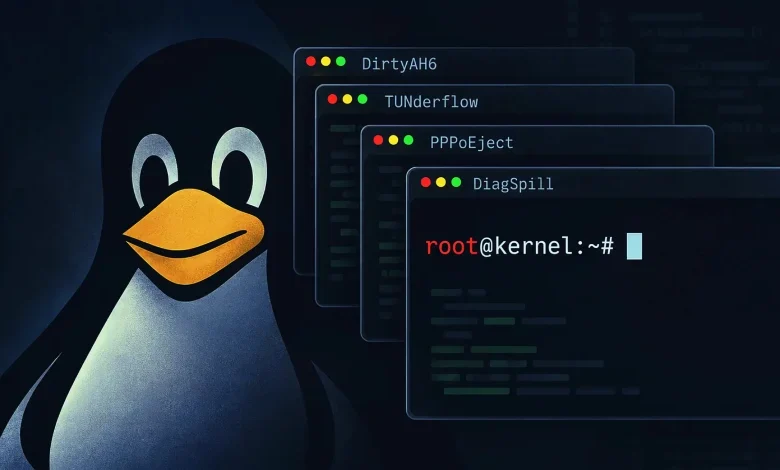
The landscape of open-source operating system security faces a fresh challenge following the public release of functional exploit code targeting four distinct local privilege escalation vulnerabilities within the Linux kernel. Discovered and documented by security researcher Asim Manizada, these four flaws—collectively dubbed the "LPE Quartet"—grant an unprivileged local user the ability to escalate their privileges to root, representing the highest tier of administrative control on a targeted system. Although kernel maintainers and major Linux distributions have actively integrated patches over the past several weeks to neutralize the threats, the public availability of the exploits places unpatched legacy systems at immediate risk.
The vulnerabilities, formally cataloged under distinct Common Vulnerabilities and Exposures (CVE) identifiers, affect various foundational components of the Linux networking subsystem. Ranging from IPsec implementations to virtual network device drivers, these memory-safety defects stem from underlying programming oversights that have persisted within the codebase for over a decade. While the release of functional proof-of-concept code heightens the urgency for system administrators to apply updates, security analysts emphasize that properly maintained systems running contemporary, patched kernels remain fully protected against potential compromise.
Chronology and Disclosure Timeline
The discovery and remediation of the LPE Quartet followed a structured, coordinated vulnerability disclosure process designed to minimize the window of exposure for end-users while ensuring transparency within the open-source community.
Mid-July marked the initial phase of the disclosure lifecycle, when Asim Manizada formally submitted his findings to the Linux kernel security team after identifying the memory-safety flaws. Upon receiving the technical reports, kernel maintainers initiated rapid triage and began drafting software patches to address the root causes of the vulnerabilities within the networking modules. Recognizing the severity of bugs that could lead to full root compromise, maintainers coordinated with major Linux distributions—including Debian, Ubuntu, Red Hat, and SUSE—to ensure that security advisories and updated kernel packages could be prepared and tested concurrently.
On September 18, following a multi-week embargo period that allowed distributions to distribute stable updates to their user bases, Manizada published a comprehensive technical write-up alongside working exploit scripts. This responsible disclosure timeline ensured that administrators had adequate opportunity to secure their infrastructure before malicious actors could reverse-engineer the vulnerabilities from public code repositories. To date, incident response teams have recorded zero instances of these four exploits being utilized in active, real-world cyberattacks, reinforcing the success of the coordinated embargo.

Technical Breakdown of the LPE Quartet
The four vulnerabilities target deep-seated memory-safety mechanisms within specialized networking stacks inside the Linux kernel. A detailed examination of the bugs reveals distinct vectors of exploitation, specific prerequisites, and varying levels of networking exposure.
+---------------------------------------------------------------------------------+
|                               THE LPE QUARTET                                   |
+---------------------+-------------------+------------------+--------------------+
| Flaw Name           | CVE Identifier    | Kernel Subsystem | Local Prerequisite |
+---------------------+-------------------+------------------+--------------------+
| DirtyAH6            | CVE-2026-80844    | IPsec AH6 (IPv6) | User Namespaces    |
| TUNderflow          | CVE-2026-81000    | TUN/TAP Devices  | User Namespaces    |
| PPPoEject           | CVE-2026-68121    | PPPoE            | User Namespaces    |
| DiagSpill           | CVE-2026-74469    | SCTP (sctp_diag) | None               |
+---------------------+-------------------+------------------+--------------------+
The first vulnerability, DirtyAH6 (CVE-2026-80844), resides within the IPsec Authentication Header implementation for IPv6. By leveraging unprivileged user namespaces—a feature enabled by default on many standard Linux distributions that permits unprivileged users to establish private sandboxes with simulated root privileges—an attacker can interact with the AH6 subsystem to corrupt kernel memory. In specialized laboratory conditions, Manizada demonstrated that DirtyAH6 could theoretically be triggered remotely, though such an attack requires the target system to function as an IPv6 router utilizing specific transport-mode authentication headers, paired with complex memory shaping.
The second and third vulnerabilities, TUNderflow (CVE-2026-81000) and PPPoEject (CVE-2026-68121), affect the TUN/TAP virtual network device driver and the Point-to-Point Protocol over Ethernet (PPPoE) infrastructure, respectively. Much like DirtyAH6, exploiting these memory corruption flaws locally requires the presence of unprivileged user namespaces. Once initiated within an unprivileged sandbox, the flaws allow local users to manipulate internal kernel structures, ultimately achieving arbitrary code execution and a transition to root privileges.
The fourth flaw, DiagSpill (CVE-2026-74469), deviates from the previous three by bypassing the requirement for unprivileged user namespaces. Instead, it targets the Stream Control Transmission Protocol (SCTP) diagnostic interface (sctp_diag). As long as the SCTP networking module is loaded on the target machine, any local user can interact with the vulnerable subsystem without special permissions. Furthermore, DiagSpill shares characteristics with DirtyAH6 regarding remote attack vectors, capable of inducing system crashes over the network if non-default SCTP diagnostic configurations are explicitly enabled by network administrators.
The Role of Artificial Intelligence in Modern Vulnerability Research
A notable aspect of this discovery cycle is Manizada’s methodology. The researcher utilized custom artificial intelligence tooling designed to map and analyze complex memory management pathways within the Linux kernel. Rather than relying solely on traditional manual code auditing or standard fuzzing techniques, the AI-assisted process helped identify subtle, compounding logic errors and memory-safety lapses that had remained dormant for periods ranging between 10 and 21 years.
This disclosure aligns with an emerging trend throughout 2026 where advanced machine learning models and large language models (LLMs) are increasingly integrated into security research workflows. Earlier in the year, similar AI-driven methodologies facilitated the discovery of the Open vSwitch vulnerability known as OVSwrap, as well as the Dirty Frag kernel flaw disclosed in May. Manizada has indicated that the publication of the LPE Quartet likely marks the conclusion of this specific phase of his AI-assisted bug-hunting initiatives, highlighting both the efficacy and the potential defensive implications of automated code analysis.

Implications for Multi-User Environments and Container Security
The publication of working local privilege escalation exploits fundamentally alters the risk calculus for shared computing environments, enterprise multi-user servers, and containerized architectures.
In enterprise and academic settings where multiple users maintain low-privileged shell accounts on a single host, local privilege escalation represents a critical threat vector. An adversary who successfully compromises a low-level, non-administrative account can leverage public exploit code to break out of confinement boundaries, seize complete control of the host operating system, access sensitive data belonging to other tenants, or pivot deeper into corporate infrastructure.
Additionally, security researchers have noted the theoretical implications of these memory corruption flaws regarding container escapes. Although Manizada did not construct dedicated container-breakout payloads during his initial testing, the ability to corrupt core kernel memory from within a user namespace traditionally serves as a stepping stone for sophisticated actors attempting to break out of Docker, Kubernetes, or LXC containers and compromise the underlying host kernel.
Remediation, Mitigation, and Defensive Recommendations
Security teams and system administrators are strongly urged to apply official kernel patches provided by their respective Linux distributions. Because the vulnerabilities reside deep within foundational networking modules, reliance on feature-disabling workarounds is discouraged by kernel developers, as alternative code paths or undiscovered vectors may still expose the system to identical memory-safety risks.
For organizations unable to deploy immediate kernel updates due to rigorous change-management schedules or compatibility testing, temporary mitigation strategies can reduce exposure:
- Restrict Unprivileged User Namespaces: Since three of the four vulnerabilities (DirtyAH6, TUNderflow, and PPPoEject) require unprivileged user namespaces to reach the vulnerable code paths, administrators can disable this feature via systemctl or kernel runtime parameters (e.g., setting
kernel.unprivileged_userns_clone=0on supporting distributions). While this may impact certain container runtimes and sandboxed applications, it effectively neutralizes the primary local attack vector. - Blacklist Unused Kernel Modules: Administrators should audit their system configurations and blacklist networking modules that are not actively required for operations, such as SCTP or specialized PPPoE drivers, thereby reducing the overall attack surface available to local users.
- Monitor Endpoint Telemetry: Security operations centers (SOCs) should deploy Endpoint Detection and Response (EDR) solutions tuned to detect anomalous process behavior, sudden kernel crashes, unauthorized root shell spawning, and suspicious memory allocation patterns indicative of exploitation attempts.
As the open-source community continues to refine its defensive postures against increasingly sophisticated vulnerability research techniques, timely patch management remains the single most effective defense against the persistent threat of kernel-level exploitation.