The Rise of the "Permission to Cry, Soldier" Meme: How a Call of Duty Cosplayer Sparked a Viral TikTok Phenomenon

The digital landscape of short-form video platforms is uniquely positioned to cultivate hyper-specific subcultures, catchphrases, and running jokes that evolve overnight. In the closing months of 2026, TikTok experienced a wave of emotional and satirical content centered around a singular phrase: "Permission to cry, soldier." This evocative catchphrase, rooted in military aesthetics and parasocial emotional validation, quickly broke containment from a niche reaction channel to become a widespread internet meme. The trend highlights the complex interplay between artificial intelligence, cosplay, emotional performance, and internet humor, capturing the attention of millions of users worldwide.
Main Facts and Origins of the Trend
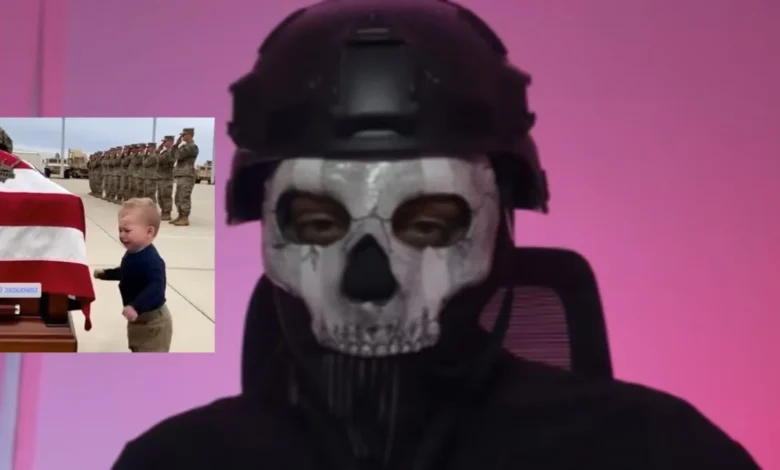
At the center of the phenomenon is the TikTok creator known as Ghost Reactings, operating under the handle @ghostreactings. Emerging in early 2026, the creator carved out a distinct niche by posting reaction videos while dressed in full cosplay as the character "Ghost"—the iconic, skull-masked operator from the critically acclaimed video game franchise Call of Duty: Modern Warfare II.
However, the content of Ghost Reactings possessed a distinctly surreal quality. A significant portion of the source material being reacted to, as well as the creator’s own voice and commentary, utilized artificial intelligence generation. Rather than providing traditional gaming commentary or high-energy reactions typical of the platform, the persona adopted a stoic, commanding, yet strangely empathetic military demeanor.
The foundational moment for the "Permission to Cry, Soldier" meme occurred on September 3rd, 2026. On this date, @ghostreactings published a video responding to a piece of AI-generated content depicting a young child walking up to his deceased father’s coffin, offering a military salute, and subsequently breaking down in tears. The poignant, albeit artificial, tragedy struck a chord with viewers. Within two months, the video amassed over 2.8 million views.
While the creator did not explicitly utter the exact phrase "Permission to cry, soldiers" within the audio of that specific video, the thematic elements of the interaction sparked a viral behavioral loop. Commenters began inundating the video—and subsequent posts by the creator—with inquiries asking whether they, as surrogate soldiers under his command, had formal "permission" to express sadness or cry in response to the emotional media presented. The juxtaposition of a hardened, tactical military persona granting emotional absolution provided a rich vein of internet humor and sincerity alike.
Chronology and Rapid Spread Across TikTok
By late October 2026, the interaction model pioneered by Ghost Reactings transformed from a comment-section running joke into a full-scale platform-wide meme. Creators across the ecosystem began producing parodies, commentary, and narrative videos incorporating the catchphrase, accelerating its spread exponentially.
On October 28th, 2026, TikTok user @ada.gerry published a derivative meme directly referencing the catchphrase. The video resonated deeply with the platform’s algorithm, accumulating over 590,000 views within a single week. This early success signaled that the joke had transcended the original creator’s audience and was now legible to the broader TikTok community.
The momentum intensified the following day when prominent creator @vexbolts published a direct parody of Ghost Reactings’ distinctive content style on October 29th. The parody, which mimicked the stoic delivery, tactical gear, and sentimental framing of the original videos, captured the zeitgeist and secured over 1.7 million views in just six days.
As is common with viral internet trends, the community quickly subverted the sincere emotional premise of the meme with absurdist humor. On October 31st, 2026, creator @emc237000 posted a viral clip highlighting an audio comment left on the original "salute" video. In the clip, a user dramatically claimed to be weeping over the content, immediately followed by the unmistakable domestic audio cues of using a toilet and running water. This juxtaposition of profound digital grief and mundane bodily functions propelled the video to over 683,000 views in four days, illustrating how internet communities rapidly deconstruct earnest emotional displays into ironic satire.
Supporting Data and Ecosystem Metrics
The trajectory of the "Permission to Cry, Soldier" meme underscores several measurable shifts in how digital content consumption operates on platforms like TikTok. The synergy between AI-generated source material and human-driven cosplay performance creates a high-engagement loop.
- Audience Reach: Core foundational videos associated with the trend easily cleared millions of views, with Ghost Reactings’ September 3rd catalyst crossing 2.8 million views within eight weeks.
- Viral Velocity: Secondary adaptations, such as @vexbolts’ parody, achieved 1.7 million views in under a week, demonstrating a rapid diffusion rate typical of successful platform-wide trends.
- Engagement Patterns: The comment sections of these videos functioned as collaborative narrative spaces, where thousands of users roleplayed as subordinates seeking emotional authorization from the fictional military persona.
Broader Impact and Digital Implications
The rise of the "Permission to Cry, Soldier" phenomenon offers valuable insights into modern internet culture, specifically regarding how younger demographics process trauma, sentimentality, and irony.
First, the trend highlights the normalisation of artificial intelligence in daily media diets. Both the content being reacted to and the presentation style of the creator heavily relied on AI tools. Rather than alienating viewers, the artificial nature of the tear-jerking videos became a canvas for collective emotional projection. Users openly acknowledged the manufactured nature of the scenarios while still engaging with them on a genuine emotional level—or mocking that very sincerity.
Second, the meme reflects a broader cultural fascination with the intersection of hyper-masculine, stoic archetypes (such as military operators and tactical cosplayers) and vulnerability. By framing emotional release—traditionally stigmatized in hyper-masculine environments—as an order that must be explicitly "permitted" by a military authority figure, the joke provides a psychological safe harbor. Users can express sadness or sentimentality under the guise of roleplay and irony, lowering the social friction associated with public displays of emotion online.
As short-form video algorithms continue to reward rapid iteration, parody, and parasocial engagement, phenomena like the "Permission to Cry, Soldier" meme demonstrate the lightning-fast speed at which digital communities can build, deconstruct, and move on from collective cultural touchstones. Whether the specific catchphrase achieves long-term longevity or fades into the vast archives of internet history, it remains a defining viral moment of the late 2026 digital landscape.