The Evolution of the Closing the Curtains Meme From Webcomic Punchline to Mainstream Political Satire

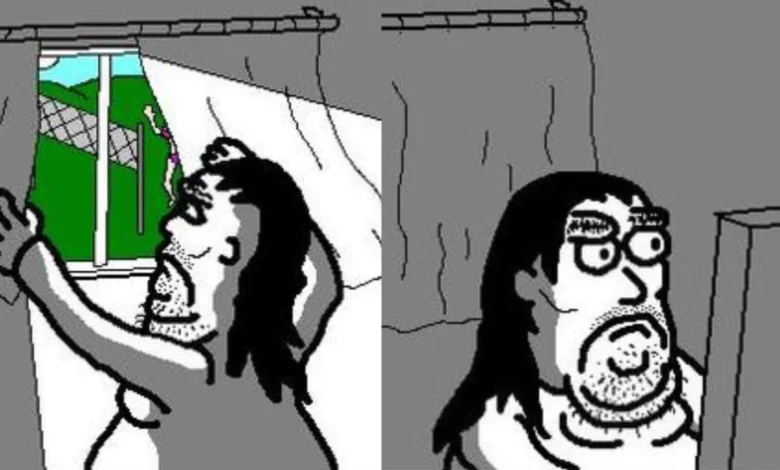
The digital culture landscape is continuously shaped by repurposed imagery, evolving from niche webcomics into ubiquitous symbols of online cynicism and detachment. Among the most enduring templates in this ecosystem is the exploitable comic series universally known as Closing the Curtains. Featuring an overweight, anti-social archetype retreating from the outside world to focus on his computer screen, the meme has spanned nearly two decades of internet history. What began in 2007 as a pointed jab within toxic forum subcultures has gradually mutated into a flexible vehicle for political commentary, stock market satire, and existential exhaustion. Its recent adoption by official institutional channels underscores how internet vernacular has permanently infiltrated mainstream communication strategies.
Main Facts and Origins of the Comic
The roots of Closing the Curtains trace back to the height of early-2000s forum culture, specifically the interactions dominating the Something Awful web forums. In November 2005, a user operating under the handle CrumFUNist initiated a thread harshly criticizing webcomic creator Bob Averill, who published work under the moniker Lego_Robot. The friction between Averill and the forum user base persisted for years, characterized by abrasive interactions and amateurish MS Paint illustrations.
In May 2007, Averill responded to his critics by publishing a comic strip titled "This one’s not funny" on his platform, originally known as Lego Robot Comics and later rebranded as PlasticBrickAutomaton. The narrative of the comic directly targeted his detractors, depicting a disheveled, overweight character browsing a forum discussion thread to mock Lego_Robot. As the character sits at his glowing monitor, a pair of women playing volleyball outside catches his attention. Rather than engaging with the real world or enjoying the pleasant weather, the character simply rises from his chair, draws the curtains shut to block out reality, and returns to his digital isolation.
The Chronology of a Viral Exploitable
The transition of Averill’s webcomic from a self-referential retaliation into a broad internet template occurred in stages, heavily driven by image boards and social aggregation platforms like Reddit and 4chan.
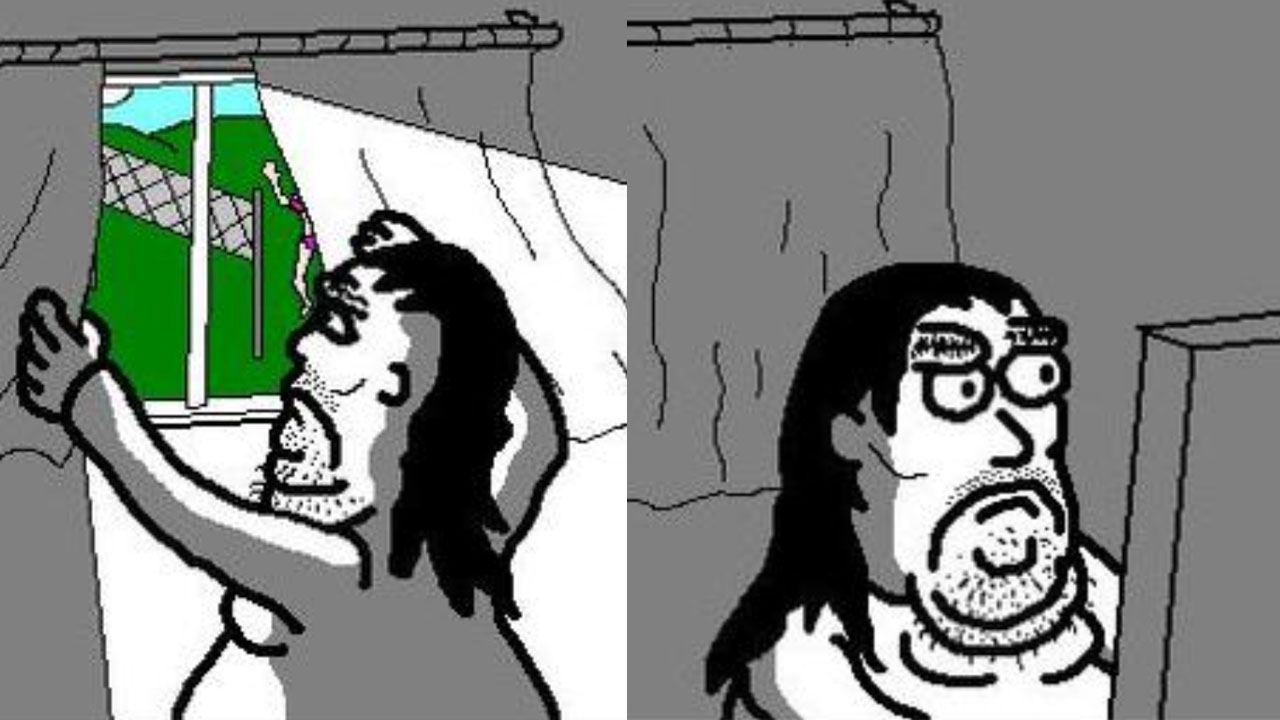
Following Averill’s ban from the Something Awful forums in September 2007, the comic began circulating independently. By November 2005—and seeing widespread traction through subsequent years—users on Finnish domain MBnet and various image-sharing forums began cropping the comic down to its final three panels. This streamlined version isolated the core behavioral loop: acknowledging an external event, rejecting it, and closing the blinds.
As platforms like Reddit gained prominence at the turn of the decade, the exploitable format exploded in popularity. On December 31, 2010, a Reddit user submitted an edited iteration depicting brilliant New Year’s Eve fireworks exploding outside the window, titled "This is how I will celebrate New Years." The post struck a chord with digital audiences, pulling in over 2,100 upvotes and hundreds of comments.
This template proved uniquely adaptable for monumental global events, seasonal milestones, and perceived societal panics. In May 2012, a user adapted the comic to depict a solar eclipse occurring outside while the protagonist remained transfixed by surfing Reddit. Later that year, in December 2012, another iteration captured the anxieties surrounding the Mayan calendar doomsday predictions, showing a mushroom cloud erupting outside the window with the caption, "What I’ll be doing December 21st." Subsequent years saw the fireworks iteration regularly reposted to communities like r/funny, consistently pulling in thousands of upvotes as a tongue-in-cheek celebration of introverted nihilism.
The Metamorphosis into Chudjak and Modern Satire
By the early 2020s, the visual language of internet memes had undergone a significant shift, leaning heavily into heavily stylized character archetypes derived from Wojak variants. Among these was the Chudjak, a caricature frequently employed in fatalistic online subcultures to represent cynical detachment or the "Nothing Ever Happens" philosophy—a mindset that dismisses sensationalized global news as cyclical noise that will ultimately fail to alter daily life.
The integration of the Chudjak into the Closing the Curtains format surfaced around early 2024. On March 26, 2024, a Facebook page named Daily Reminder published a version where a Chudjak character pulls the blinds on a nuclear mushroom cloud to quietly resume computing in a darkened room. Within days, the imagery spread to 4chan’s /pol/ board and X (formerly Twitter), where users began deploying it as a uniform reaction image to breaking geopolitical crises. For instance, when reports emerged in April 2024 regarding drone launches in the Middle East, social media users weaponized the meme to signify public fatigue and detachment from escalating international conflicts.
Official Institutional Adoption and Public Reaction

The absolute convergence of underground webcomic lore and mainstream political discourse materialized in July 2025. On July 10, the official X account of the White House (@WhiteHouse) published a meme utilizing an AI-generated adaptation of the Chudjak Closing the Curtains template.
The graphic was deployed in direct response to record-breaking surges in tech stocks, specifically highlighting NVIDIA and the broader semiconductor market following a turbulent period in early 2025. The image depicted the Chudjak character shutting his blinds against a glowing green stock market graph shooting upward, accompanied by the bold text caption, "PANICANS hardest hit"—a reference to online communities prone to hyperbolic economic anxiety. Within 24 hours, the post accumulated over 5 million views and more than 24,000 likes, generating immense media discussion regarding the shifting tone of official government communications.
The use of the meme by a state-level communications team immediately drew mixed reactions from internet historians, political analysts, and digital rights commentators. While some observers viewed the post as an unorthodox yet effective embrace of modern internet culture to signal economic confidence, others criticized the aesthetic choices. Prominent online commentators pointed out that the visual lineage of the Chudjak variant bore uncomfortable resemblances to imagery associated with real-world extremist subcultures, while others simply marveled at the surreal nature of state actors utilizing niche internet sub-genres. X user @ettingermentum publicly questioned the visual references, while others highlighted the uncanny valley nature of corporate-approved meme formats.
Implications and Broader Cultural Significance
The trajectory of Closing the Curtains from an obscure 2007 webcomic retaliation to a White House-endorsed social media graphic highlights a fundamental shift in how public information and institutional marketing operate. Memes are no longer isolated to the fringes of message boards; they have become the primary currency of digital rhetoric.
From a sociological perspective, the enduring appeal of the Closing the Curtains template lies in its psychological resonance. The character represents a universal modern impulse: the overwhelming weight of external events—whether geopolitical conflicts, astronomical phenomena, apocalyptic cultural milestones, or dizzying economic shifts—pitting the fragile comfort of individual routine against the chaos of the outside world. By choosing to draw the blinds, the subject embodies a form of voluntary insulation that many digital natives recognize within themselves.
When public institutions appropriate such imagery, they acknowledge the pervasive cynicism and digital fatigue defining contemporary society. Whether this strategy bridges the gap between official messaging and younger demographics or merely trivializes complex global realities remains a subject of ongoing debate among communications professionals. Nonetheless, Closing the Curtains remains a masterclass in meme longevity, proving that a simple visual gag about ignoring the world outside can successfully outlast the very platforms and forums that birthed it.
Related posts: