The Unblinking Eye of the Street: How Rémy Buisine Became the Definitive Chronicler of French Unrest

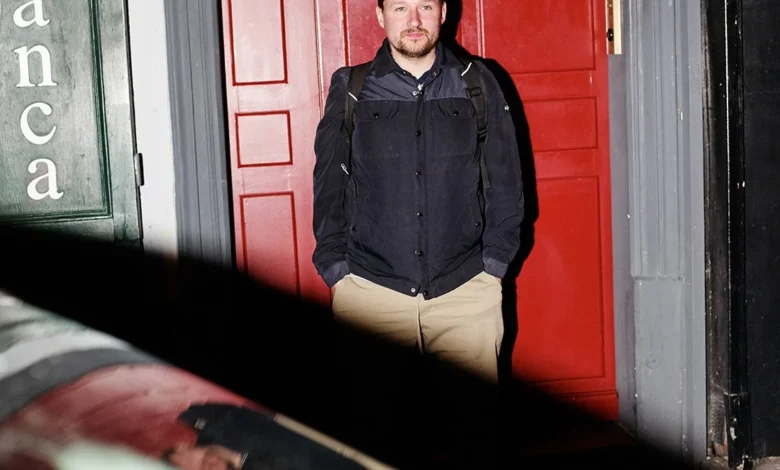
The April 6 demonstration in Paris was a sprawling, chaotic tapestry of civil dissent that drew anywhere from 57,000 to 400,000 participants. Amidst the sea of bodies and the rhythmic, percussive sounds of flash-bang grenades, 32-year-old video journalist Rémy Buisine moved with the practiced ease of a veteran. Clad in a nondescript navy puffer jacket and blue jeans, he blended into the crowd, yet he was arguably the most significant individual on the ground. As a lead reporter for the French online media outlet Brut, Buisine has transformed the landscape of modern digital journalism, providing millions of viewers with an unfiltered, real-time window into the socio-political upheaval that has gripped France.
The Genesis of a Movement
The current wave of civil unrest in France finds its roots in the government’s controversial pension reform bill, championed by President Emmanuel Macron. The legislation, which seeks to raise the minimum retirement age from 62 to 64, has become a lightning rod for broader grievances regarding labor rights, economic precarity, and the perceived disconnect between the Élysée Palace and the working class.
While initial protests in January were largely orchestrated by established trade unions and populated by older demographics, the atmosphere shifted dramatically on March 16. When the government invoked Article 49.3 of the French Constitution to force the bill through the National Assembly without a parliamentary vote, the movement underwent a radical transformation. Thousands of protesters—predominantly under the age of 30—spontaneously descended upon the Place de la Concorde. This surge marked the birth of what the media dubbed “wild” protests: decentralized, nightly, and fiercely anti-establishment. For Buisine, these events represented a shift in the nature of French civic life, as he noted that many of the faces he encountered were those of first-time protesters, signaling a generational awakening.
The Rise of the Livestreaming Journalist
Buisine’s methodology represents a departure from traditional broadcast news. Eschewing the heavily produced, polished style of legacy media, his work relies on the raw, unedited immediacy of the smartphone livestream. His presence on platforms like TikTok, Facebook, and the Brut app has redefined engagement metrics; at the height of the recent protests, his broadcasts attracted upwards of 70,000 concurrent viewers, contributing to a massive influx of over one million new followers to the Brut TikTok channel, which now boasts a total audience of 4.2 million.
His career path is as unconventional as his reportage. Raised in a small village in northeastern France, Buisine lacked the formal journalism credentials often required by the elite Parisian press. After a stint in soccer social media management and community management for local radio, he found his niche during the 2015 protests against the El Khomri labor laws. Utilizing the now-defunct app Periscope, he began to document the streets, learning the craft through trial and error and by observing established correspondents. By 2016, his digital footprint was significant enough to earn him a founding role at Brut, a platform that was initially viewed with skepticism by the French political establishment.
A Chronology of Conflict
The life of a frontline digital journalist is dictated by the pulse of the crowd. On the day of the April 6 protest, Buisine’s routine was a rigorous, high-stakes choreography. By mid-afternoon, near the Montparnasse station, he began the process of preparing for potential escalation. The transition from observer to tactical reporter is marked by the donning of protective gear: hermetically sealed goggles, a gas mask, and the strategic positioning of tear gas decontaminant spray.
At 3:29 p.m., the atmosphere intensified. A loud, unidentified detonation prompted a reaction from the crowd, who began chanting “ACAB”—a slogan that echoed through the streets with a distinct French cadence. As the gendarmerie—a military-grade police force—lined the boulevard with riot shields, the tension reached a breaking point. By 3:37 p.m., the first warning shots were fired. Buisine’s focus remained laser-sharp, capturing the movement of black-clad demonstrators and the subsequent deployment of tear gas. Throughout the evening, he remained in the thick of the action, navigating the kettling of protesters at the Place d’Italie and capturing the optics of burning barricades and fires near the Tolbiac metro station. It was not until 10:54 p.m., after more than seven hours of continuous filming and approximately 28,000 steps, that he concluded his stream.
Data, Dangers, and Demands
The efficacy of Buisine’s reporting lies in his willingness to endure the physical risks inherent to the frontline. He has been subjected to tear gas and physical force, occurrences that are statistically common yet legally contentious, given the protections supposedly afforded to members of the press. Data from media watchdogs suggests that the safety of journalists covering French protests has become a critical concern, with instances of police violence against reporters sparking debates about the freedom of the press.
Beyond the physical danger, there is an emotional tax. Buisine’s career has seen him cover the "Gilets Jaunes" (Yellow Vests) protests, an experience he describes as deeply traumatic. He recalls the sight of severe injuries, including permanent disfigurement and the loss of limbs among protesters. Despite this, he argues that the long-form, unedited livestream is the only format that accurately captures the "essence" of a movement. By providing a platform for ordinary citizens to articulate their frustrations for 10 or 20 minutes at a time, he gives voice to those who feel discarded by the political elite.
The Broader Implications for Journalism
The success of Brut and the popularity of reporters like Buisine underscore a profound shift in how the public consumes information. The traditional gatekeepers of news are increasingly being bypassed in favor of digital creators who offer transparency and access. However, this shift raises questions about the sustainability of such models. Buisine’s life is entirely subsumed by his work; he remains on call at all hours, living a life of perpetual motion and high adrenaline.
The impact of this style of reporting extends to the highest levels of government. In 2020, Buisine conducted a two-and-a-half-hour livestreamed interview with President Macron, a testament to the fact that the digital medium can no longer be ignored by the state. Yet, the work remains grueling. The day after the April 6 protests, despite having slept only a few hours and suffering from the respiratory effects of tear gas inhalation, Buisine was back in the office by 9:30 a.m. to lead an editorial meeting. His commitment is total; his schedule is dictated by the next breaking story, whether it be a protest in Paris or a building collapse in Marseille.
As the French public continues to grapple with the fallout of the pension reforms and the broader challenges of economic inequality, the role of the digital witness becomes ever more vital. Rémy Buisine’s work serves as a reminder that in the age of decentralized media, the most powerful tool for truth-telling is not an expensive broadcast rig, but a smartphone, a steady hand, and a refusal to look away from the fire.
Related posts: