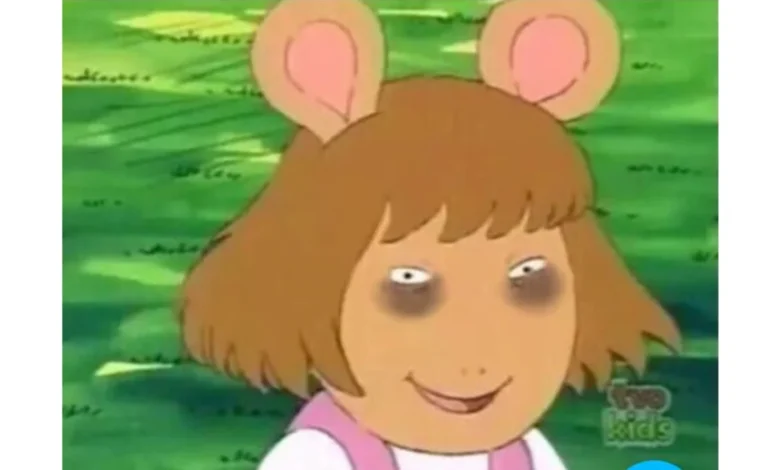
The internet’s enduring fascination with relatable exhaustion has found a new, albeit familiar, icon in "Tired D.W.," also known as "D.W. With Black Eyes." This meme, featuring D.W. Read, a beloved character from the animated children’s television series Arthur, has evolved from a simple digital alteration into a widespread commentary on fatigue, stress, and the everyday struggles of modern life. The image, initially a photoshopped depiction of D.W. with exaggerated dark circles under her eyes, has become a potent symbol of weariness, resonating across social media platforms and fostering a sense of shared experience among its audience.
Genesis of the Meme: From Disorientation to Despair
The visual journey of the Tired D.W. meme can be traced back to April 27th, 2014. On the microblogging platform Tumblr, a user known as tomhardest posted an altered image of D.W. Her eyes were not only separated but also depicted in a disoriented manner, juxtaposed with another image related to the show. The original caption, which alluded to a physiological reaction, quickly sparked online discussion and reinterpretation. While this initial iteration gained traction for its peculiar and somewhat unsettling depiction of the character, it laid the groundwork for the meme’s eventual evolution.
Within months, the edited image began to circulate on platforms like Reddit, particularly within the /r/funny subreddit. Redditor JamesonBeer, in June 2014, shared a version of the meme that explicitly linked D.W.’s altered expression to being under the influence of marijuana, tapping into the growing online discourse surrounding cannabis culture. This iteration garnered significant attention, with over 2,500 upvotes, indicating a strong resonance with the humor and themes explored. By July 28th, 2016, the narrative shifted slightly. A now-defunct Twitter account, @arthurtbh, posted a variation of the meme that focused on general fatigue, asking, "how’s your sleeping schedule?" This subtle but significant alteration marked a broadening of the meme’s thematic scope, moving beyond specific states of altered consciousness to encompass the universal experience of sleep deprivation.
The Crucial Addition: The Dark Circles of Exhaustion
The meme’s trajectory took a pivotal turn in July 2018. A tweet by user @tristehomo on July 19th introduced the now-iconic addition of dark circles under D.W.’s eyes. This modification transformed the image from merely disoriented to overtly exhausted. The accompanying caption, a visceral declaration of perpetual weariness – "’you always look tired’ BECAUSE I AM TIRED BITCH" – struck a chord with millions. The tweet rapidly went viral, accumulating over 185,000 likes and 99,000 retweets within two years. This surge in popularity was recognized by major online publications, with BuzzFeed featuring the tweet in a collection later that month, cementing its status as a significant internet phenomenon.
This particular iteration of the meme tapped into a widespread cultural sentiment. In an era characterized by demanding work schedules, the constant influx of information, and the pervasive pressure to maintain a high level of productivity, the feeling of being perpetually tired became a shared reality for many. D.W.’s wide, slightly vacant stare, now accentuated by the dark circles, perfectly encapsulated this feeling of being overwhelmed and under-rested. The character, originally designed for a young audience, was recontextualized as a symbol for adults grappling with the stresses of modern life.
The Mechanics of Virality: Spread and Adaptation
Following the viral success of the "black eyes" version, the Tired D.W. meme exploded across social media. Its adaptability proved to be a key factor in its widespread dissemination. Users began to employ the image as a template for image macros, overlaying it with captions that reflected a diverse range of relatable scenarios.
On August 18th, 2018, just a month after the @tristehomo tweet, user @ThomasAbowd posted a version of the meme with the caption, "Yeah, I can fit it in my schedule." This caption, delivered with the visual of exhausted D.W., humorously conveyed the overwhelming feeling of being overcommitted and the inability to realistically take on more tasks. The meme achieved remarkable reach, garnering over 210,000 likes and 100,000 retweets within three years, demonstrating its powerful ability to articulate a common social anxiety.

The meme’s influence extended to meme-generating platforms such as Imgflip, where it was added in 2018. This provided a readily accessible tool for users to create their own variations, further accelerating its spread and diversification. The template allowed for a multitude of comedic and poignant interpretations of fatigue, from the mundane realities of insufficient sleep to the existential dread of overwhelming responsibilities.
Thematic Evolution and Contemporary Relevance
The meme’s longevity can be attributed to its capacity for adaptation and its ability to speak to enduring human experiences. While the initial iterations focused on being "high" or generally "tired," later adaptations explored more nuanced aspects of exhaustion.
On March 31st, 2020, a Tumblr user by the name of sxxndwxvx shared a variation that garnered significant attention, accumulating over 64,400 notes in under two years. This suggests a continued engagement with the meme’s core sentiment, even as societal contexts evolved.
More recently, on December 10th, 2021, a Redditor named ParadoxPoco posted a version to the /r/me_irl subreddit that resonated deeply with users. The caption, expressing excitement about going to bed after waking up, humorously highlighted the paradoxical desire for sleep even at the beginning of the day. This post received over 7,700 upvotes in a month, underscoring the meme’s continued relevance in articulating the pervasive feeling of sleep deprivation and the longing for rest.
The meme’s adaptability extends to its visual language. While the core image of D.W. with dark circles remains central, the surrounding text allows for infinite reinterpretations. Examples include:
- The Multitasker’s Lament: "Me trying to not get fired, regularly exercise, fulfill all social obligations, save money, and stay caught up on all my TV shows." This caption exemplifies the overwhelming demands of modern life and the feeling of juggling too many responsibilities.
- The Sleep Deficit: "friend: how long did you sleep for? me: 8 friend: hours? me: minutes." This dialogue highlights the stark reality of insufficient sleep, where even a nominal amount of sleep feels like a luxury.
- The Daily Grind: "Oh I forgot to sleep." This simple, declarative statement captures the pervasive sense of being so consumed by tasks that basic needs are overlooked.
- The Futility of Rest: "Me getting 4 hours of sleep Rids Me getting 8 hours of sleep Kids. There is no winning, I’m always tired." This iteration speaks to the chronic nature of fatigue, where even adequate sleep doesn’t always provide the desired rejuvenation.
- The Long Haul: "One week down… 51 more to go!" This caption, often used in contexts related to work or extended projects, expresses the daunting feeling of a long journey ahead, amplified by exhaustion.
Analysis of Impact and Broader Implications
The enduring popularity of the Tired D.W. meme is a testament to its effectiveness in translating a complex emotional and physical state into a universally understood visual shorthand. Its success lies in its ability to tap into a collective consciousness of exhaustion that permeates contemporary society. In an era where discussions around mental health, burnout, and work-life balance are increasingly prominent, memes like Tired D.W. serve as a form of digital catharsis and solidarity.
The meme functions as a social mirror, reflecting the anxieties and struggles of its audience. By identifying with D.W.’s exhausted visage, individuals can express their own feelings of being overwhelmed without needing to articulate them verbally. This shared understanding fosters a sense of community, allowing people to feel less alone in their struggles. The meme’s ability to humorously address serious issues like burnout and sleep deprivation makes these topics more accessible and less stigmatized.
Furthermore, the evolution of the meme demonstrates the dynamic nature of internet culture. What began as a simple alteration of a children’s character has transformed into a multifaceted commentary on adult life. This metamorphosis highlights the power of digital platforms to recontextualize familiar imagery and imbue it with new layers of meaning. The "Tired D.W." meme is not merely a fleeting online trend; it is a cultural artifact that encapsulates a significant aspect of the modern human experience, offering a shared laugh and a knowing nod to the universal struggle against fatigue.