How Retailers Can Build Their Own Digital Marketplaces: Insights from the CS-Cart and TackleTarts Expert Exchange

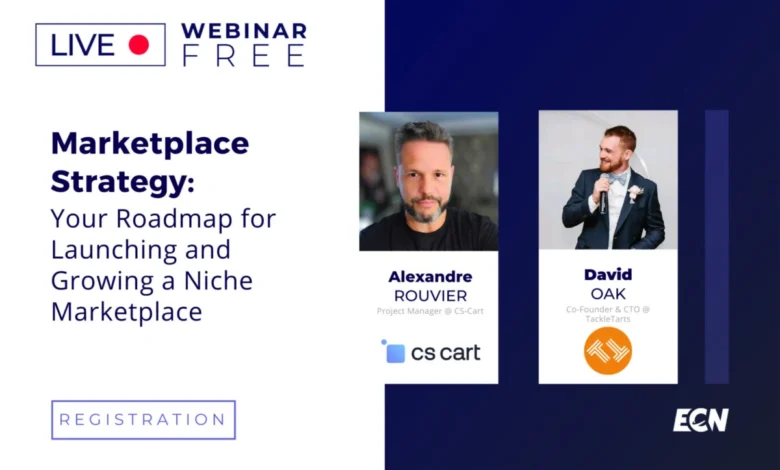
The modern e-commerce landscape is undergoing a fundamental transformation, shifting away from traditional single-vendor storefronts toward collaborative, multi-vendor digital marketplaces. For retailers seeking to exponentially scale their revenue, expand their product catalogs, and capture a larger share of consumer wallet spend, building a proprietary marketplace represents a golden opportunity. To help businesses navigate this complex transition, e-commerce authorities recently united for an exclusive collaborative session. By examining a real-world case study featuring e-commerce technology provider CS-Cart and specialist retailer TackleTarts, industry professionals can now access a comprehensive roadmap for developing, launching, and scaling an independent digital marketplace.
The complete event replay, detailing strategic frameworks, technological prerequisites, and collaborative methodologies, remains accessible to merchants worldwide through a dedicated registration portal. This strategic initiative addresses a growing demand among modern retailers who wish to transition from standard online merchants into platform operators, curating diverse product offerings and collaborating with third-party vendors to maximize consumer appeal.
Main Facts and Event Overview
The collaborative webinar, hosted jointly by the editorial team at E-Commerce Nation and technology experts from CS-Cart, explores the mechanics of multi-vendor architecture through the lens of TackleTarts, a specialized niche retailer. Rather than focusing solely on theoretical business models, the presentation provides a granular case study of how mid-market merchants can successfully orchestrate a transition toward a marketplace ecosystem.
Participants in the session gain direct access to industry-tested strategies designed to solve the primary friction points of marketplace development. These include vendor onboarding, inventory synchronization, payment splitting, legal compliance, and customer experience management. The core premise of the presentation centers on a vital industry shift: consumers increasingly prefer platforms that offer vast product varieties, competitive pricing, and seamless checkout experiences in a single destination. By transforming a traditional e-commerce site into a marketplace, individual retailers can leverage third-party inventory to satisfy this consumer demand without incurring the heavy capital expenditures associated with holding massive physical stock.
Background Context of the E-Commerce Marketplace Boom
To fully understand the significance of the CS-Cart and TackleTarts collaboration, one must examine the broader macroeconomic and digital trends shaping the global retail sector. Over the past decade, multi-vendor marketplaces have come to dominate the digital commerce ecosystem. According to aggregated global retail data, marketplace platforms account for a disproportionately large percentage of total e-commerce transactions worldwide, outperforming traditional standalone retail sites in traffic acquisition, conversion rates, and customer retention.
This dominance is driven by changing consumer expectations. Modern shoppers prioritize convenience, breadth of assortment, and competitive pricing. Traditional retailers operating single-brand websites often struggle to compete with these expectations due to inherent limitations in working capital, warehousing capacity, and supplier relationships. Consequently, forward-thinking retailers are turning to marketplace builder software—such as the solutions provided by CS-Cart—to level the playing field.
However, building a marketplace is fundamentally different from launching a standard e-commerce store. It requires a shift in operational philosophy. Platform operators must manage a two-sided network: attracting and satisfying end consumers while simultaneously recruiting, vetting, and retaining quality third-party vendors. The CS-Cart and TackleTarts case study was specifically designed to demystify this dual-audience challenge, providing actionable insights drawn from actual implementation experiences.
Chronology and Evolution of the Partnership
The initiative to document and share the TackleTarts marketplace journey unfolded over several critical phases, reflecting the typical lifecycle of a digital marketplace project.
In the initial exploratory phase, leadership at TackleTarts recognized that their niche retail model had reached a growth plateau. While their proprietary product lines enjoyed loyal customer support, market research indicated that consumers were frequently visiting larger, multi-vendor platforms to fulfill complementary purchasing needs within the same vertical. Recognizing the risk of customer churn, management evaluated several strategic alternatives, including expanding their internal purchasing department or partnering with existing giant marketplaces. Both options presented severe drawbacks: internal expansion tied up excessive capital, while listing on third-party giants eroded profit margins and stripped away direct customer relationships.
During the second phase, spanning mid-to-late 2023, TackleTarts made the strategic decision to build its own marketplace. This required selecting an adaptable, scalable software architecture. After extensive market evaluation, the enterprise partnered with CS-Cart, utilizing their specialized multi-vendor platform builder. This technology allowed TackleTarts to retain complete control over the user interface, data ownership, and brand positioning while opening their digital infrastructure to carefully selected external merchants.
The third phase involved operational integration and vendor recruitment. During this critical window, TackleTarts established clear governance frameworks, commission structures, and quality control guidelines. By collaborating with complementary merchants who shared their commitment to customer service and product excellence, TackleTarts curated an attractive, cohesive catalog that significantly enriched their overall value proposition.
Finally, in October 2023, the formal case study and expert exchange were broadcast to the broader European e-commerce community via E-Commerce Nation. This event marked the transition of the TackleTarts project from a private corporate strategy to a publicly shared industry benchmark, offering a repeatable blueprint for other merchants eager to replicate their success.
Supporting Data and Technological Prerequisites
Developing a marketplace requires a robust technological foundation capable of handling complex operational workflows that do not exist in traditional single-vendor e-commerce. During the presentation, technical specialists from CS-Cart detailed the core infrastructural requirements that businesses must evaluate before embarking on a marketplace development journey.
Data security and system scalability stand out as paramount concerns. A functional marketplace must seamlessly integrate distinct vendor dashboards, automated inventory updates, multi-currency payment processing, automated tax calculations, and sophisticated dispute-resolution workflows. CS-Cart’s framework addresses these requirements by providing modular architecture, allowing retailers to customize vendor permissions and commission models according to their unique business requirements.
Furthermore, empirical data shared during the webinar underscores the financial viability of the marketplace model. Retailers that successfully transition to a multi-vendor structure typically experience a significant reduction in inventory holding costs, as third-party vendors manage their own stock. At the same time, average order values tend to increase because consumers can add products from multiple distinct vendors into a single shopping cart. This basket-building behavior directly improves customer lifetime value and enhances return on ad spend (ROAS) for the platform operator.
Insights and Statements from Industry Stakeholders
While specific executive quotes from the live session focus heavily on tactical execution, the underlying philosophy shared by the participating organizations highlights a unified vision for the future of retail. Representatives from the E-Commerce Nation editorial team emphasized that the democratization of marketplace technology has leveled the playing field for mid-sized merchants.
"Retailers no longer need the multi-billion-dollar budgets of global tech conglomerates to launch a multi-vendor platform," noted industry observers involved in coordinating the event. "With modular, out-of-the-box software builders like CS-Cart, specialized merchants can leverage their existing brand equity and community trust to build hyper-targeted marketplaces that outperform generalized platforms in customer loyalty and vertical expertise."
TackleTarts’ journey serves as a practical validation of this thesis. By focusing on quality over sheer scale, the retailer demonstrated that a successful marketplace does not need to sell everything to everyone. Instead, by carefully curating a network of aligned merchants within a specific industry vertical, a business can create a highly lucrative ecosystem that benefits all participating stakeholders.
Fact-Based Analysis of Broader Implications
The widespread adoption of independent marketplaces carries profound implications for the broader retail and digital commerce sectors. As major marketplaces face increasing regulatory scrutiny regarding data privacy, anti-competitive practices, and product authenticity, consumer trust is beginning to fragment. Shoppers are increasingly seeking out specialized, community-driven platforms where they feel confident in the curation and quality of the goods.
This cultural shift plays directly into the hands of independent retailers who choose to build their own marketplaces. By maintaining strict quality control over their vendor onboarding processes, platform operators can guarantee high standards of customer service and product integrity—areas where monolithic, automated marketplaces often fall short.
Moreover, the economic implications for independent merchants are substantial. In an era marked by rising digital advertising costs and shrinking profit margins, relying solely on traffic acquisition for a single-brand store is becoming increasingly unsustainable. Marketplaces offer a diversified revenue model. Platform operators can generate income not only from direct product sales but also from vendor commission fees, featured listing placements, and integrated B2B services.
However, industry analysts caution that building a marketplace is not a guaranteed path to instant profitability. The endeavor demands rigorous project management, dedicated legal frameworks to handle vendor liability, and continuous technical maintenance. Retailers must be prepared to act as platform administrators and community moderators, shifting their primary corporate focus from direct inventory management to ecosystem orchestration.
Conclusion and Future Outlook
The collaborative case study presented by CS-Cart and TackleTarts, hosted on E-Commerce Nation, marks an important educational milestone for the European e-commerce community. By breaking down the strategic, operational, and technological steps required to build a proprietary marketplace, the initiative has provided mid-market retailers with a clear, actionable path toward sustainable digital growth.
For merchants seeking to future-proof their operations against rising customer acquisition costs and fierce competitive pressures, the transition from traditional retailer to platform operator offers a compelling forward-looking strategy. As software solutions continue to mature and lower the barriers to entry, the proliferation of specialized, independent digital marketplaces is expected to accelerate significantly in the coming years.
Retailers interested in exploring the technical nuances, strategic frameworks, and lessons learned from the TackleTarts case study can access the complete event replay and supplementary documentation by visiting the official registration portal provided by the organizing entities.
Related posts: