Apple Vision Pro Doesnt Support Prescription Lenses With A Prism Value And Some Contact Lenses

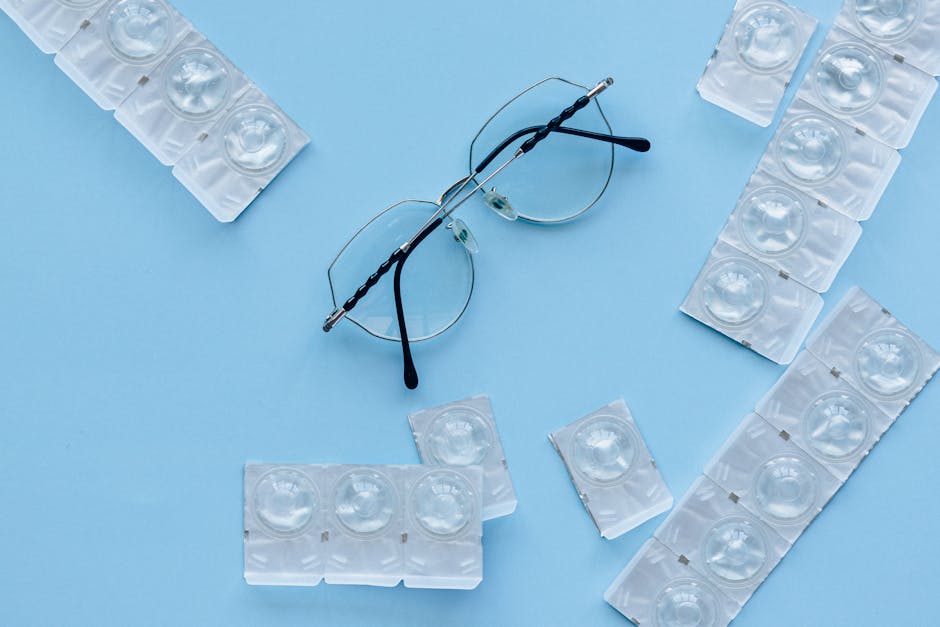
Apple Vision Pro Prescription Lens Limitations: No Prism and Limited Contact Lens Compatibility
The highly anticipated Apple Vision Pro headset, a revolutionary leap into spatial computing, has unfortunately introduced a significant limitation for a segment of its potential user base: individuals requiring prescription lenses with a prism correction or certain types of contact lenses. This absence of support for prism prescription lenses, and the specific restrictions on some high-power contact lenses, renders the Vision Pro inaccessible for a notable group of users who rely on these optical corrections for clear and comfortable vision. This article delves into the technical reasons behind these limitations, explores the implications for affected users, and discusses potential future solutions.
The fundamental challenge lies in the physical design of the Apple Vision Pro and its interaction with prescription eyewear. The headset is engineered to fit snugly against the user’s face, creating an immersive visual experience by positioning the displays remarkably close to the eyes. This proximity is crucial for achieving the wide field of view and perceived depth that defines spatial computing. However, this close fit also severely restricts the space available for accommodating external prescription lenses. For standard single-vision or even some progressive lenses, Apple has developed custom lens inserts manufactured by ZEISS. These inserts magnetically attach to the Vision Pro, seamlessly integrating with the headset’s optical system. The problem arises when a prescription includes prism. Prism correction is used to realign images that are misaligned due to conditions such as strabismus (eye turn) or binocular vision disorders. This is achieved by physically shifting the apparent position of the image, effectively bending light. Incorporating a prism into a lens significantly alters its thickness, shape, and potentially its optical center. The ZEISS-designed inserts, while sophisticated, are optimized for standard lens prescriptions and do not have the design flexibility or the spatial allowance to incorporate the necessary prismatic power without compromising the headset’s overall optical path and creating unwanted distortions. The precise and delicate calibration of the Vision Pro’s internal optics, which are responsible for delivering a coherent and undistorted stereoscopic image, can be easily disrupted by the added complexity and bulk of a prism-corrected lens. Any deviation in the light path introduced by a prism could lead to double vision, eyestrain, or a complete failure of the intended immersive experience.
Beyond prescription glasses, the Vision Pro also presents challenges for users of contact lenses, particularly those with high prescription powers. While the headset is designed to accommodate standard contact lenses without a prescription insert, there are specific limitations. The primary concern for high-power contact lenses revolves around potential interactions with the headset’s proximity sensors and the light emitted from the displays. The Vision Pro utilizes a sophisticated eye-tracking system to monitor user gaze and enable interaction. This system relies on infrared emitters and cameras. Certain types of contact lenses, especially those with specific coatings or materials, could potentially interfere with the accuracy of these sensors. Moreover, the intense light output from the micro-OLED displays, while crucial for visual fidelity, might, in conjunction with very high-power contact lenses, lead to increased perceived glare or discomfort for some individuals. The current guidance from Apple suggests that contact lenses with a base curve outside a certain range or specific lens materials might not be compatible. This is likely due to the way these lenses sit on the eye and how they might reflect or refract the light from the headset’s displays or interfere with the eye-tracking system. The precise specifications regarding acceptable contact lens base curves and materials are not universally published, leading to a degree of trial and error for users. This ambiguity can be frustrating for those who have relied on specific contact lens brands and types for their visual needs.
The implications of these prescription lens limitations are far-reaching. For individuals with prism in their prescription, the Apple Vision Pro, in its current iteration, is simply not a viable option for achieving clear and comfortable vision. This is a significant disappointment for those who have been eagerly awaiting the arrival of spatial computing technology and have invested in a premium device. These users might face a dilemma: forgo the advanced capabilities of the Vision Pro or invest in alternative visual aids or treatments that may not be immediately available or practical. This exclusion from the immersive experience not only impacts their ability to use the device for entertainment and productivity but also prevents them from exploring the potential of spatial computing for therapeutic or educational purposes where precise visual alignment is paramount. The cost of prescription glasses or contact lenses is already a considerable expense for many, and the added burden of needing specialized solutions for a single piece of technology can be prohibitive.
For contact lens wearers with high prescriptions, the limitations add another layer of complexity. While some may find that their existing contact lenses work, others might face discomfort or functional issues, requiring them to explore alternative contact lens options or even resort to prescription glasses with the aforementioned limitations. The reliance on specific contact lens parameters means that a portion of the user base cannot simply pop in their usual lenses and expect a seamless experience. This necessitates careful consultation with optometrists and potentially trying different lens brands or types, which can be time-consuming and costly.
The lack of support for prism prescriptions is a particularly pressing issue that highlights a gap in the current market for extended reality (XR) devices. While the technology behind XR is advancing rapidly, the integration of complex optical corrections has lagged behind. This is an area where innovation is desperately needed. The industry needs to move beyond accommodating only the "standard" user and actively work towards inclusivity for all visual needs. This could involve developing more adaptable lens insert systems that can accommodate a wider range of prescription complexities, including prism. The design of future headsets might need to consider modular components that allow for greater customization of the interpupillary distance (IPD) and the integration of prism elements directly into the headset’s optical stack, albeit with significant engineering challenges.
Furthermore, a more proactive approach to user education and collaboration with optical professionals is essential. Apple and other XR manufacturers should work closely with optometrists and ophthalmologists to understand the diverse range of visual needs and to develop clear guidelines and potential solutions. This collaboration could lead to the development of standardized compatibility tests for contact lenses and the exploration of specialized lens designs that can be integrated into XR headsets. Open communication about the technical limitations, accompanied by a roadmap for future improvements, would be invaluable for users facing these challenges.
In the interim, users with prism prescriptions may need to explore alternative visual solutions to experience spatial computing, such as specialized visual therapy or, if their prism needs are minor, potentially over-the-counter magnifiers used in conjunction with the headset (though this is highly speculative and likely to degrade image quality). For contact lens wearers, consulting with their eye care professional about compatible lens options is the most prudent course of action. The development of third-party solutions, such as custom-designed lens inserts for prism prescriptions, could also emerge, but these would likely be costly and require rigorous testing to ensure they do not negatively impact the Vision Pro’s sophisticated optical system. The current situation, while disappointing, underscores the ongoing need for advancements in both XR hardware design and optical integration to ensure that these transformative technologies are accessible to a broader audience. The future of spatial computing hinges on its ability to adapt to the diverse visual requirements of all potential users, and overcoming these prescription lens limitations is a critical step in that direction.


