Apple Vision Pro Privacy
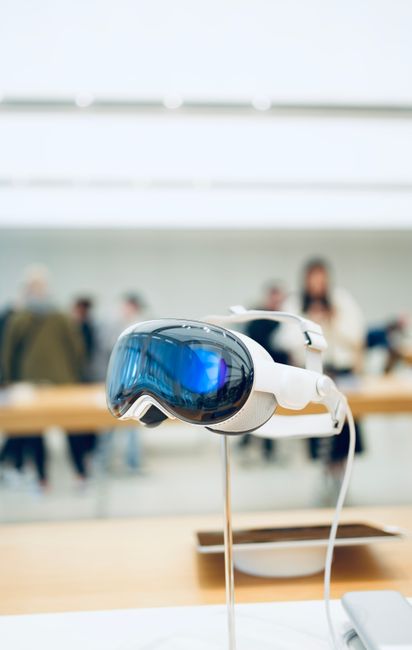
Apple Vision Pro Privacy: A Deep Dive into Data Security and User Control
The Apple Vision Pro, a groundbreaking spatial computing device, introduces a paradigm shift in how users interact with digital content and the physical world. Alongside its innovative capabilities, a paramount concern for any advanced technology, particularly one that collects extensive user data, is privacy. Apple has consistently positioned itself as a champion of user privacy, and the Vision Pro is no exception, incorporating a multi-layered approach to data security and user control. Understanding these mechanisms is crucial for any prospective user.
At its core, the Vision Pro’s privacy framework is built upon the principle of minimizing data collection and maximizing on-device processing. The device relies heavily on its powerful M2 and R1 chips to perform complex computations locally, rather than constantly transmitting raw data to external servers. This is particularly relevant for sensitive information such as eye-tracking data, hand gestures, and environmental mapping. For instance, the eye-tracking system, essential for navigating the Vision Pro’s interface, processes this data directly on the device. This means that your gaze patterns are not uploaded to Apple’s servers for analysis or any other purpose. The device learns your preferences and adapts to your interactions without external scrutiny of your eye movements.
Environmental understanding is another key function of the Vision Pro. The device utilizes a suite of external cameras and sensors to map your surroundings, creating a digital representation of your physical space. This allows for the seamless integration of digital content into your real-world environment. However, the data collected for this mapping, such as room dimensions and object placement, is also largely processed on-device. While some aggregated and anonymized data might be used to improve the spatial mapping capabilities over time, Apple emphasizes that this data does not identify individual users or their specific home environments. The goal is to understand general spatial characteristics, not to create a persistent, identifiable map of your private spaces.
Biometric authentication, a cornerstone of modern security, is handled with robust privacy measures on the Vision Pro. The device employs Persona, a digital representation of the user’s face, for authentication and communication. The creation and processing of Persona data occur entirely on the device. This means that the detailed scans of your facial features are not sent to Apple’s cloud. This commitment to on-device processing extends to other biometric data, such as the unique characteristics of your hands as detected by the device’s tracking sensors. The raw sensor data is transformed into actionable inputs for the operating system without being stored or transmitted in its raw form.
Apple’s commitment to privacy is further manifested in its robust encryption protocols. All data stored on the Vision Pro, whether it be user preferences, downloaded applications, or personal content, is encrypted using industry-standard AES-256 encryption. This ensures that even if the device were to fall into the wrong hands, the data would remain inaccessible without the correct decryption keys, which are tied to the user’s Apple ID and device passcode. Furthermore, data transmitted between the Vision Pro and other Apple services, such as iCloud, is protected with end-to-end encryption. This means that only the user and the intended recipient (or Apple service) can access the data. Apple itself cannot decrypt this data, further strengthening privacy assurances.
App privacy controls on the Vision Pro are designed to be granular and transparent, mirroring the robust system present on iOS and iPadOS. Users have the ability to control what data each application can access. This includes permissions for location, camera, microphone, photos, contacts, and more. The Vision Pro’s interface provides clear indicators when an app is accessing these sensitive resources, much like the green and orange dots on an iPhone. Users can review and revoke these permissions at any time through the device’s privacy settings. This empowers users to make informed decisions about the data they are sharing with third-party developers.
The App Store review process for the Vision Pro will also incorporate stringent privacy guidelines. Apple has a long-standing policy of scrutinizing apps for privacy violations, and this will undoubtedly extend to the spatial computing ecosystem. Applications that engage in excessive data collection or fail to adequately protect user privacy will be subject to rejection or removal from the App Store. This acts as a crucial gatekeeper, ensuring that developers adhere to Apple’s privacy standards before their applications reach users.
User control extends to the content viewed and interacted with on the Vision Pro. While specific content consumption data might be used to personalize recommendations within certain Apple services (like Apple TV+), users retain control over this data. They can opt out of personalized recommendations or clear their viewing history. This allows individuals to maintain a degree of anonymity regarding their entertainment choices. For third-party applications, the responsibility for data handling and transparency largely falls on the developer, but Apple’s app review process and user-permission system provide a vital layer of oversight.
A critical aspect of Vision Pro privacy relates to its integration with the Apple ecosystem. Devices like the Vision Pro often work in conjunction with other Apple products and services, such as the iPhone, iPad, and Mac. Data synchronization across these devices is managed through iCloud. As mentioned, iCloud data is protected by robust encryption. Furthermore, Apple offers features like iCloud Private Relay, which can further enhance privacy when browsing the web through Safari on the Vision Pro, masking the user’s IP address and encrypting their internet traffic. This holistic approach ensures that privacy is considered across the entire user experience, not just on the Vision Pro itself.
The Vision Pro also incorporates features designed to enhance user privacy in public or shared spaces. For example, the device’s display is designed to be visible to the user but less so to others around them, reducing the risk of accidental information exposure. While the exact mechanisms for this are not fully detailed, the intention is to provide a more personal and private viewing experience in environments where privacy might be compromised.
Transparency in data handling is a core tenet of Apple’s privacy philosophy. The company provides detailed privacy policies and in-app explanations for data collection and usage. While the Vision Pro’s specific privacy documentation will be extensive, users can expect clear explanations of how their data is collected, processed, and protected. This commitment to transparency empowers users to understand and trust how their personal information is being handled.
Despite these comprehensive measures, it’s important to acknowledge that no system is entirely impervious to all potential risks. Sophisticated cyber threats can evolve, and the emergence of a new platform like the Vision Pro may present novel vulnerabilities. However, Apple’s proactive approach to privacy, coupled with its continuous investment in security research and development, aims to mitigate these risks effectively.
The Vision Pro’s approach to privacy can be summarized by several key principles: on-device processing for sensitive data, robust encryption for data at rest and in transit, granular user controls over app permissions, a rigorous app review process, and a commitment to transparency. For users concerned about their digital footprint and personal information, these measures are designed to provide a high degree of confidence in the security and privacy of their experience with spatial computing. As the technology matures and user adoption grows, ongoing vigilance and adaptation will be crucial to maintaining these high privacy standards. The Vision Pro represents a significant step forward in balancing cutting-edge technology with fundamental user rights to privacy.


