Shadowy Ties Between Cybersecurity Executives and the ShinyHunters Extortion Syndicate Exposed by Federal Investigators

Federal investigators pursuing the prolific hacking collective known as ShinyHunters have uncovered a disturbing nexus between cyber-extortionists and the very professionals tasked with remediating their damage. According to documents and sources close to the ongoing investigation, authorities have identified high-ranking executives at two prominent ransomware negotiation firms who allegedly maintained clandestine, symbiotic relationships with the hackers. In one instance, a United States-based executive is accused of actively assisting the group in managing a dedicated website designed to coerce victims into paying ransoms. This revelation represents a significant escalation in the federal crackdown on the digital underworld, exposing a corruption of the incident response ecosystem that has long operated in the shadows.
The ShinyHunters organization has been a thorn in the side of global security since 2019. Originally a France-based operation, the group underwent a significant transformation in leadership after the systematic arrest and incarceration of its founding members. Control eventually shifted to an individual identified as Rey, a teenage hacker based in Amman, Jordan. The FBI estimates that under Rey’s stewardship, the collective has successfully extorted more than $70 million from victims within the 2026 calendar year alone. The group’s notoriety peaked in late September 2026, when they breached fbijobs.gov, the recruitment portal for the Federal Bureau of Investigation. The stolen data—purportedly including psychological evaluations, home addresses, and Social Security numbers—served as a brazen taunt to federal authorities, prompting an unprecedented surge in intelligence-led arrests.
A Chronology of Collapse: From the Netherlands to Amman

The dismantling of the ShinyHunters network gained critical momentum on September 15, 2026, when Dutch law enforcement executed a high-stakes raid in the Netherlands. Officers utilized flash-bang grenades to apprehend Pepijn van der Stap, a convicted hacker who had become a linchpin in the ShinyHunters hierarchy. Crucially, the arrest occurred while Van der Stap was actively logged into his Signal messaging account. This tactical oversight provided investigators with a real-time window into the group’s inner workings, including direct, unencrypted conversations with ransomware negotiators in both the United States and Canada.
The intelligence gathered from these communications was vast, revealing not only the mechanics of the group’s extortion schemes but also a chilling plot for contract killings. Reports from the Dutch news outlet RTL indicated that Van der Stap had allegedly issued orders for two murders to be carried out abroad. While there is no evidence that these lethal instructions were ever executed, the discovery added a violent dimension to what was previously viewed as a strictly financial crime syndicate. Shortly thereafter, on October 3, 2026, reports surfaced that Rey had been detained by Jordanian authorities and was actively cooperating with the FBI, effectively crippling the group’s leadership structure.
The Rise and Fall of Shinywire
At the heart of the federal investigation is the now-defunct extortion portal known as shinywire[.]com. Operating from May 3, 2026, until mid-October, the site functioned as a centralized hub for ShinyHunters’ digital shaming campaigns. It contained records of nearly 100 victimized organizations, complete with samples of stolen sensitive files used as leverage. The site explicitly instructed victims on how to contact the hackers to negotiate payment, with a seven-day ultimatum before the stolen data would be leaked via Tor-based dark web channels.

Investigators now believe that the infrastructure of Shinywire was not merely the work of cybercriminals, but was partially maintained by executives at a prestigious U.S.-based consulting firm with over 1,000 employees. While federal prosecutors have yet to formally name or charge the specific individuals involved, the discovery highlights a perversion of the "breach response" industry. These executives allegedly possessed intimate knowledge of new victims—often receiving information about a breach before the victimized company had even conducted an internal investigation.
The Dubrovsky Connection and Professional Rivalries
The arrest of Edward Dubrovsky, a 54-year-old Canadian cybersecurity executive, on October 9, 2026, sent shockwaves through the industry. Dubrovsky, who had authored a book on cyber-extortion, was charged with interfering with interstate commerce and threatening to disclose stolen data. Court records indicate that prosecutors have requested he remain in custody, citing the sensitivity of the evidence, which remains under seal.
The investigation has also drawn light to the long-standing professional rivalry between Dubrovsky and Daniel Tobok, the former CEO of the cybersecurity firm Cypfer. Court filings in Ontario show that Dubrovsky had alleged he was being targeted in a smear campaign by his former partner. However, historical evidence suggests that Tobok may have had his own links to the ransomware trade. Former colleagues have alleged that Tobok used the alias Ghostbyte as early as 2018. Correspondence obtained by investigators shows a representative for the Dharma ransomware group explicitly recommending that a victim reach out to a "[email protected]" email address to secure guarantees for decryption. While Tobok has not been charged in connection with the ShinyHunters probe, the overlap in digital personas and the interconnected history of firms like Cypfer, Cytelligence, and CyberSteward has drawn intense scrutiny from federal investigators.

Systemic Conflicts of Interest in Ransomware Negotiation
The scandal has brought to the forefront a long-simmering debate regarding the business models of ransomware negotiation firms. Industry experts note that the current market structure is rife with conflicts of interest. Some firms charge a flat fee for incident response, but those that specialize in ransom mediation often demand a percentage of the total payment. Critics argue this incentivizes the negotiator to inflate the ransom demand and pressure the victim into paying rather than seeking alternative recovery methods.
Mark Camillo, CEO of CyberAcuView, has been vocal about the need for greater transparency. "There needs to be more visibility around the transaction and clarity on the increasing value of the crypto," Camillo stated. "No one in the ecosystem should be profiting purely on the size of the ransomware transaction." The potential for abuse is immense; by controlling the narrative, a corrupt negotiator can ensure the victim pays more than necessary, effectively acting as an extension of the criminal organization rather than a shield for the client.
Recent legal actions by the U.S. Department of Justice underscore the severity of this trend. Beyond the ShinyHunters case, the DOJ has targeted individuals like Zohar Pinhasi, CEO of MonsterCloud, who allegedly pocketed millions by secretly paying hackers while charging clients for "remediation" services that were never performed. Similarly, the sentencing of Angelo Martino—a negotiator who fed confidential client strategy to the Blackcat/ALPHV group—serves as a stern warning that the federal government is prioritizing the integrity of the cybersecurity industry.

Broader Implications for Corporate Security
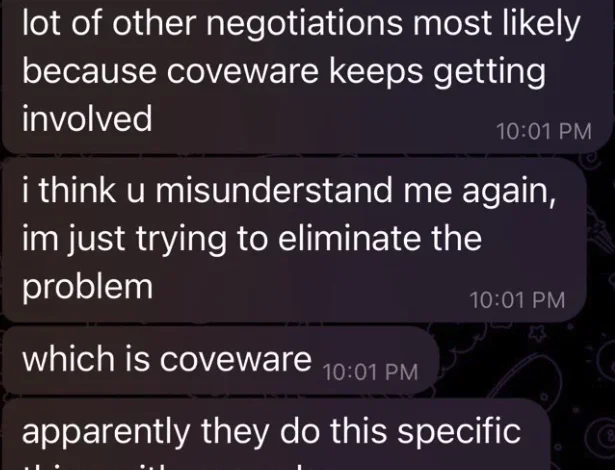
The case of PowerSchool, which saw 62 million students’ records exposed, serves as a grim case study for the risks of paying ransoms. Despite paying a $2.85 million demand in 2024, the company and its users continued to face extortion attempts using the same compromised data. This reality has led reputable firms like Coveware and Unit 221B to adopt a firm stance against paying ransoms, a position that earned them the ire of ShinyHunters. Internal Telegram communications reveal that the group viewed these ethical firms as "the problem" hindering their revenue stream, going so far as to discuss ways to "eliminate" the obstacle they presented.
The ongoing investigation into ShinyHunters is more than a pursuit of a specific hacking group; it is a reckoning for the entire cybersecurity consulting sector. As federal agencies like the FBI, CISA, and the Department of Justice continue to peel back the layers of this collusion, the industry is likely to face a new era of regulation. The era of "no questions asked" ransom payments is rapidly coming to a close, replaced by a mandate for transparency, accountability, and a complete separation between those who secure networks and those who negotiate with the criminals who breach them. For the victims of the future, the lesson from the fall of ShinyHunters is clear: the most dangerous threat may not be the hacker at the keyboard, but the "consultant" sitting at the table.