DevFest 2026 Kicks Off Globally as Nearly One Million Developers Gather for the World’s Largest Community-Led Tech Conference

The technology landscape is undergoing a profound structural shift, characterized by the rapid maturation of generative artificial intelligence, multi-agent frameworks, and decentralized cloud infrastructure. Against this backdrop, the global developer community has mobilized for DevFest 2026. Running officially from October 1 through December 31, 2026, the world’s largest community-led technology conference series has returned with an unprecedented scale, anticipating the participation of nearly one million developers, software engineers, designers, and technology builders across the globe.
Organized through the grassroots network of Google Developer Groups (GDGs), the three-month event series encompasses more than 800 distinct chapters spread across 115 countries. Since its humble beginnings over a decade ago, DevFest has evolved from a series of regional meetups into a massive, decentralized global movement. It serves as a vital bridge between cutting-edge enterprise technology and local developer ecosystems, ensuring that technical innovation is not confined to major tech hubs like Silicon Valley, London, or Tokyo, but is accessible to builders in emerging and established markets alike.
The Core Theme: Build, Secure, Scale in the Agentic Era
The overarching theme for DevFest 2026 is "Build, Secure, Scale: Developers and Builders in the Agentic Era." This focus directly addresses the changing paradigm of software engineering. As artificial intelligence transitions from conversational assistants to autonomous agents capable of complex workflows, reasoning, and multi-step execution, the demands on developers have fundamentally transformed.
Modern engineering is no longer just about writing lines of code or managing relational databases; it is about orchestrating agentic systems, guaranteeing system security in environments with autonomous actors, and scaling architectures to handle exponential increases in machine-generated API calls.
Throughout the 2026 season, event programming is heavily weighted toward practical, hands-on experimentation. Rather than relying solely on traditional keynote presentations or passive lectures, GDG chapters are prioritizing immersive learning formats. Attendees are engaging directly with Google’s expansive technological stack—including Gemini, Google AI Studio, Google Antigravity, Google Cloud, Firebase, Android, Flutter, Angular, and Web MCP—through live codelabs, technical workshops, and collaborative agent-athons. These formats allow participants to test new architectural patterns, build functional prototypes, and tackle real-world engineering challenges in real-time.
A Historical Retrospective: The Evolution of DevFest
To understand the cultural and economic significance of DevFest 2026, it is necessary to examine the historical trajectory of Google Developer Groups and the DevFest initiative. GDGs originated as Google Technology User Groups (GTUGs) in the late 2000s, driven by a desire to create localized spaces where developers could share knowledge about emerging web and mobile technologies.
As the developer ecosystem expanded with the rapid adoption of Android and cloud computing, Google formalized and scaled the program, rebranding it as Google Developer Groups. DevFest was subsequently introduced as an annual flagship celebration—a localized event managed entirely by volunteer community organizers known as GDG leads.
Over the past ten years, DevFest has scaled dramatically:
- 2015–2018: The conference transitioned from a loose collection of European and Asian meetups into a truly global phenomenon, crossing the milestone of 300 international chapters and hundreds of thousands of annual attendees.
- 2020–2022: Navigating the global COVID-19 pandemic, the community demonstrated remarkable resilience by pivoting rapidly to hybrid and fully virtual formats, maintaining global engagement, and introducing virtual codelabs that actually expanded access for developers in remote regions.
- 2023–2025: As generative AI emerged as the dominant force in technology, DevFest adapted its core curriculum to focus heavily on machine learning integration, large language models, and cloud-native development.
- 2026: The current season marks the largest deployment in the history of the initiative, uniting nearly one million developers under the unified banner of the "Agentic Era."
Grassroots Leadership and Localized Impact
One of the defining characteristics of DevFest is its decentralized governance model. While Google provides foundational developer resources, technological tooling, and branding support, each DevFest event is uniquely curated by its local GDG chapter.
This hyper-local approach ensures that the content delivered at a DevFest in São Paulo, Nairobi, Warsaw, or Jakarta directly addresses the specific economic, educational, and infrastructural realities of those regions. For instance, a GDG chapter in Southeast Asia might emphasize mobile-first development using Flutter and Firebase to serve rapidly expanding digital economies, while a chapter in Western Europe might dive deep into enterprise-grade cloud security, AI governance, and regulatory compliance frameworks.
Furthermore, GDG organizers actively foster inclusive environments designed to lower barriers to entry for underrepresented groups in technology. By partnering with local universities, coding bootcamps, and women-in-tech organizations, DevFest acts as a critical talent pipeline, helping junior developers and emerging solution builders gain the credentials, confidence, and professional networks needed to accelerate their careers.
The Technological Stack at DevFest 2026
The breadth of technologies featured at DevFest 2026 reflects the multi-faceted nature of modern software engineering. The curriculum is structured around several critical pillars:
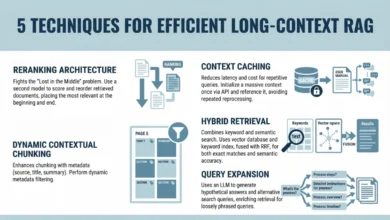
- Artificial Intelligence and Agentic Frameworks: Through Google AI Studio and the Gemini model family, developers are learning how to integrate multimodal capabilities into their applications. Sessions focus on prompt engineering, retrieval-augmented generation (RAG), and the creation of autonomous agents capable of performing complex enterprise tasks.
- Cloud Infrastructure and Scalability: Google Cloud and Firebase remain foundational tracks, teaching engineers how to build resilient, serverless, and globally distributed backends capable of supporting high-throughput AI workloads.
- Cross-Platform and Web Development: With robust sessions on Android, Flutter, Angular, and Web MCP (Model Context Protocol), developers are exploring how to unify user experiences across mobile, desktop, and web environments while incorporating cutting-edge AI features directly into the client-side interface.
- Security and Governance: Given the complexities introduced by autonomous software agents, dedicated workshops focus on secure coding practices, data privacy, identity management, and threat modeling for AI-driven applications.
Economic and Industry Implications
The timing of DevFest 2026 coincides with a critical inflection point in the global tech economy. Enterprises across all sectors—from finance and healthcare to logistics and retail—are racing to transition from experimental AI proofs-of-concept to production-grade deployments. However, industry analysts note a persistent skills gap, with organizations struggling to find talent capable of managing the intersection of cloud infrastructure, security, and artificial intelligence.
By training nearly one million builders over a three-month period, community-led initiatives like DevFest play an indispensable role in democratizing access to high-demand technical skills. Rather than requiring expensive enterprise training programs or advanced degrees, DevFest provides free or low-cost, peer-driven education that empowers developers to upskill in real-time.
Industry observers suggest that the proliferation of agentic workflows showcased at DevFest will accelerate the deployment of intelligent automation in small and medium-sized businesses (SMBs). When developers at the local level master tools like Gemini and Google Antigravity, they bring those capabilities back to their respective companies, driving bottom-up innovation rather than top-down mandates.
Looking Ahead: The Road to 2027 and Beyond
As the DevFest 2026 season progresses through its final months, the organizing committees and Google Developer Groups are already evaluating the long-term impact of this year’s record-breaking turnout. The shift toward agentic systems is expected to accelerate further, permanently altering how software is conceived, tested, and maintained.
For developers wishing to participate in the remaining events of the 2026 calendar, local schedules, registration details, and ticketing information can be accessed via the official DevFest Event Directory hosted on the Google Developers community portal. Participants and observers are also tracking global conversations, project showcases, and workshop highlights across social media channels using the universal hashtag #DevFest.
As the technology sector continues to navigate the complexities of the AI revolution, initiatives like DevFest underscore the enduring value of human connection, community-driven education, and collaborative problem-solving in shaping the future of global software engineering.