Federal investigators uncover deep ties between cybersecurity executives and the notorious ShinyHunters hacking group in a massive breach of trust.

The investigation into the prolific cybercriminal syndicate known as ShinyHunters has taken a dramatic turn, shifting from the pursuit of teenage hackers to the indictment of high-level industry professionals. U.S. federal authorities have identified executives at two prominent ransomware negotiation firms who allegedly maintained clandestine, symbiotic relationships with the extortionists. Sources close to the federal probe indicate that these executives did not merely advise victims; they reportedly facilitated the operational infrastructure of the hacking group, including the maintenance of extortion-focused web portals designed to pressure victims into payment.
This revelation marks a significant escalation in the government’s efforts to dismantle a group that has allegedly extorted over $70 million from organizations this year alone. The scope of the group’s reach, combined with the betrayal of trust by those tasked with defending against such threats, underscores a systemic vulnerability in the multibillion-dollar ransomware response industry.
A Chronology of Escalation
The ShinyHunters saga began in 2019, primarily driven by actors based in France. As those early members faced international law enforcement actions, the brand evolved, eventually falling under the control of a teenage hacker from Amman, Jordan, known by the alias "Rey." Rey’s leadership was characterized by a brazen disregard for traditional cybercriminal boundaries, culminating in the September 2026 compromise of fbijobs.gov, the FBI’s official recruitment portal. The breach exposed sensitive personnel records, including medical histories, Social Security numbers, and specialized unit information, forcing the bureau into a high-speed intelligence-gathering operation.

The investigation accelerated on September 15, 2026, when Dutch authorities, utilizing flash-bang grenades, arrested Pepijn van der Stap, a convicted hacker and core member of the ShinyHunters operation. The seizure of Van der Stap’s electronic devices—specifically his active Signal messaging sessions—provided law enforcement with a roadmap of the group’s communications. These messages not only exposed the hierarchy of the hacking ring but also revealed a disturbing murder-for-hire plot, allegedly ordered by Van der Stap, targeting individuals abroad. While there is no evidence the plot was executed, the documentation provided authorities with the leverage necessary to flip key suspects, leading to the rapid identification of accomplices in the Western cybersecurity sector.
The Anatomy of the Betrayal
The most startling development in the investigation is the arrest of Edward Dubrovsky, a 54-year-old Canadian cybersecurity executive. Dubrovsky, who had recently published a text advocating for active engagement with cyber-extortionists, was arrested on October 9, 2026. Court documents allege that he used his position to facilitate extortion and interfere with interstate commerce. Investigators found that Dubrovsky’s communications with Van der Stap were frequent and intimate; he was often privy to the details of new hacks before the victims themselves were notified.
Perhaps most damning is evidence suggesting that Dubrovsky was aware of the FBI server breach long before it became public. Instead of alerting the bureau, he allegedly remained silent as the group threatened to release deeply personal files of FBI employees on social media platforms.
Beyond Dubrovsky, investigators are currently scrutinizing at least one U.S.-based consulting firm with a workforce exceeding 1,000 associates. This firm is under suspicion for its alleged role in operating "shinywire.com," a now-defunct portal that functioned as a central repository for victim shaming. The site listed nearly 100 victim organizations, provided samples of stolen data, and enforced a seven-day ultimatum for payment, effectively streamlining the ransom collection process for the hackers.

Historical Context and The Ghostbyte Connection
The infiltration of the cybersecurity industry by these actors appears to have deep roots. Former colleagues of Daniel Tobok, the former CEO of the firm Cypfer, have identified him by the nickname "Ghostbyte." Records indicate that as far back as 2018, the Russian-language ransomware group Dharma directed victims to contact a specific email address—[email protected]—to guarantee that their files would be decrypted upon payment.
While Tobok has denied wrongdoing and maintains that his firms operate independently of these illicit activities, the intersection of these aliases with known cryptocurrency wallets used by ransomware syndicates raises significant regulatory concerns. The broader industry, including firms like Cypfer, now finds itself under a microscope as investigators untangle the complex web of business relationships that linked security consultants to the very criminals they were hired to thwart.
The Conflict of Interest: A Broken Ecosystem
The current ransomware response model is plagued by an inherent conflict of interest that federal prosecutors are now actively challenging. When firms charge a percentage of the final ransom payment as their fee, they are financially incentivized to discourage negotiation and encourage payment. This model directly contradicts the advice of established industry leaders like Coveware and Unit 221B, who have long advocated against paying ransoms, noting that "destroyed" data is rarely deleted and frequently repurposed for secondary extortion.
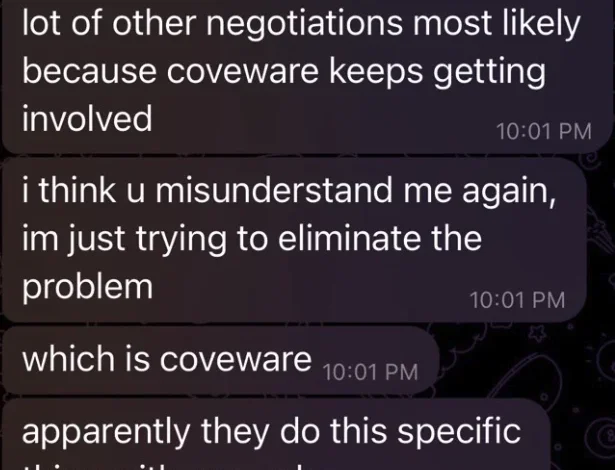
ShinyHunters themselves explicitly recognized this friction. Internal communications seized by investigators show the hackers lamenting the influence of ethical firms like Coveware, which the group blamed for declining payment rates. The hackers expressed a clear desire to "eliminate" such entities, viewing them as the primary obstacle to their profitability.

Regulatory and Legal Implications
The Department of Justice has signaled a new phase in its enforcement strategy. The recent charging of MonsterCloud CEO Zohar Pinhasi for wire fraud and the sentencing of negotiator Angelo Martino for conspiring with the Blackcat/ALPHV group demonstrate that the government is no longer limiting its sights to the hackers themselves. Prosecutors are now targeting the intermediaries who act as double agents, exploiting their clients’ desperation to pad their own commissions.
The implications for the insurance and cybersecurity sectors are profound. Mark Camillo, CEO of CyberAcuView, has called for radical transparency in the transaction process. "No one in the ecosystem should be profiting purely on the size of the ransomware transaction," Camillo stated, advocating for a shift away from percentage-based fees that align the interests of the security firm with those of the attacker.
Broader Impact and Future Outlook
The fallout from the ShinyHunters investigation is likely to trigger a wave of new regulations concerning incident response. Corporations are now being forced to re-evaluate their reliance on third-party negotiators, with many moving to bring forensics and communication protocols in-house or strictly vetting the fee structures of their security partners.
Furthermore, the case of PowerSchool, which paid $2.85 million only to see the stolen data resurface months later, serves as a grim case study in the futility of negotiating with bad-faith actors. As the FBI continues to dismantle the infrastructure behind sites like Shinywire, the cybersecurity community is left to grapple with a sobering reality: in the current landscape, the line between the protector and the predator has become dangerously blurred. The ongoing judicial proceedings against individuals like Dubrovsky will likely set a landmark precedent for the accountability of cybersecurity professionals, ensuring that the "industry of extortion" faces the same scrutiny as the hackers they once called colleagues.
Related posts: