Mastering Content Curation in the Age of AI: A Strategic Guide for Modern Marketing Teams


The digital landscape of 2026 presents marketing and social media professionals with a paradox of abundance. With generative artificial intelligence continuously flooding online feeds with automated articles, images, and video clips, audiences are experiencing unprecedented levels of information fatigue. Recent data underscores this challenge: roughly 38 percent of U.S. adults regularly consume news on Facebook, while 35 percent turn to YouTube for current events. Amid this relentless ocean of machine-generated noise, digital strategists are increasingly pivoting toward a time-tested yet modernized tactic to capture and retain audience attention: strategic content curation.

Far from being a mere shortcut for a depleted content calendar, modern content curation acts as a crucial editorial filter. By acting as trusted guides who separate signal from noise, brands can establish genuine authority, foster deeper community engagement, and maintain a consistent publishing cadence without overextending internal production budgets.
Defining Content Curation and Its Value Proposition

Content curation is the deliberate process of discovering, organizing, and sharing high-quality material created by external sources, paired with original commentary or context that adds unique value for a specific audience. Analogous to a museum curator who selects and arranges artifacts rather than manufacturing them, a digital content curator provides the essential editorial layer that transforms raw internet data into meaningful insights.
The distinction between content curation and content creation is fundamental to a balanced marketing blueprint. Content creation involves building original assets—such as deep-dive blog posts, product videos, and proprietary research—which require substantial investments in writing, design, and production. Conversely, content curation demands a lower expenditure of time and financial capital, relying primarily on human judgment, taste, and contextual framing.
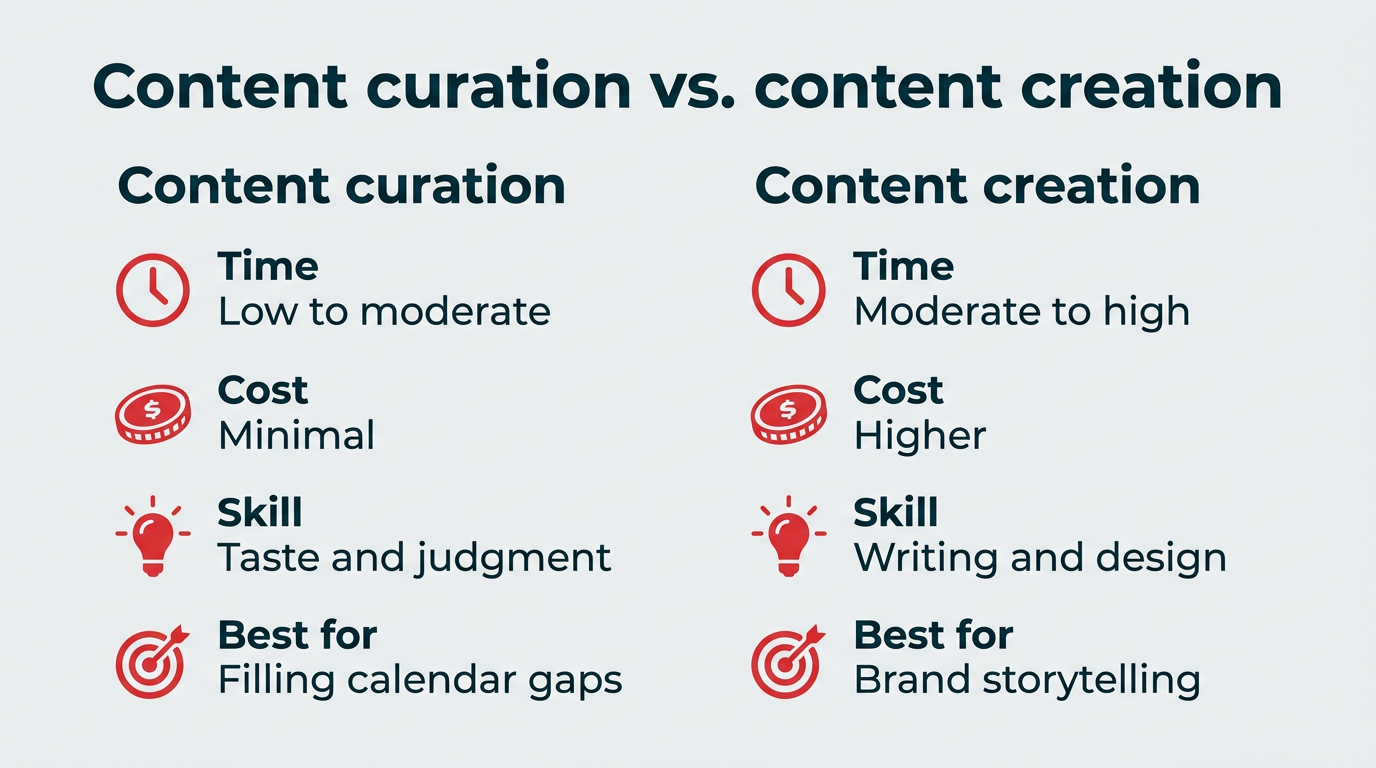
Rather than competing against one another, these two strategies function synergistically. Original content defines a brand’s unique voice and story, while curated content diversifies the feed, highlights industry peers, and keeps communication channels active during heavy production cycles. According to industry benchmarks, a sustainable social media calendar often allocates roughly 40 to 60 percent of its volume to curated materials, though these ratios must be continuously calibrated against native analytics and audience response.
The Five Core Methodologies of Curation
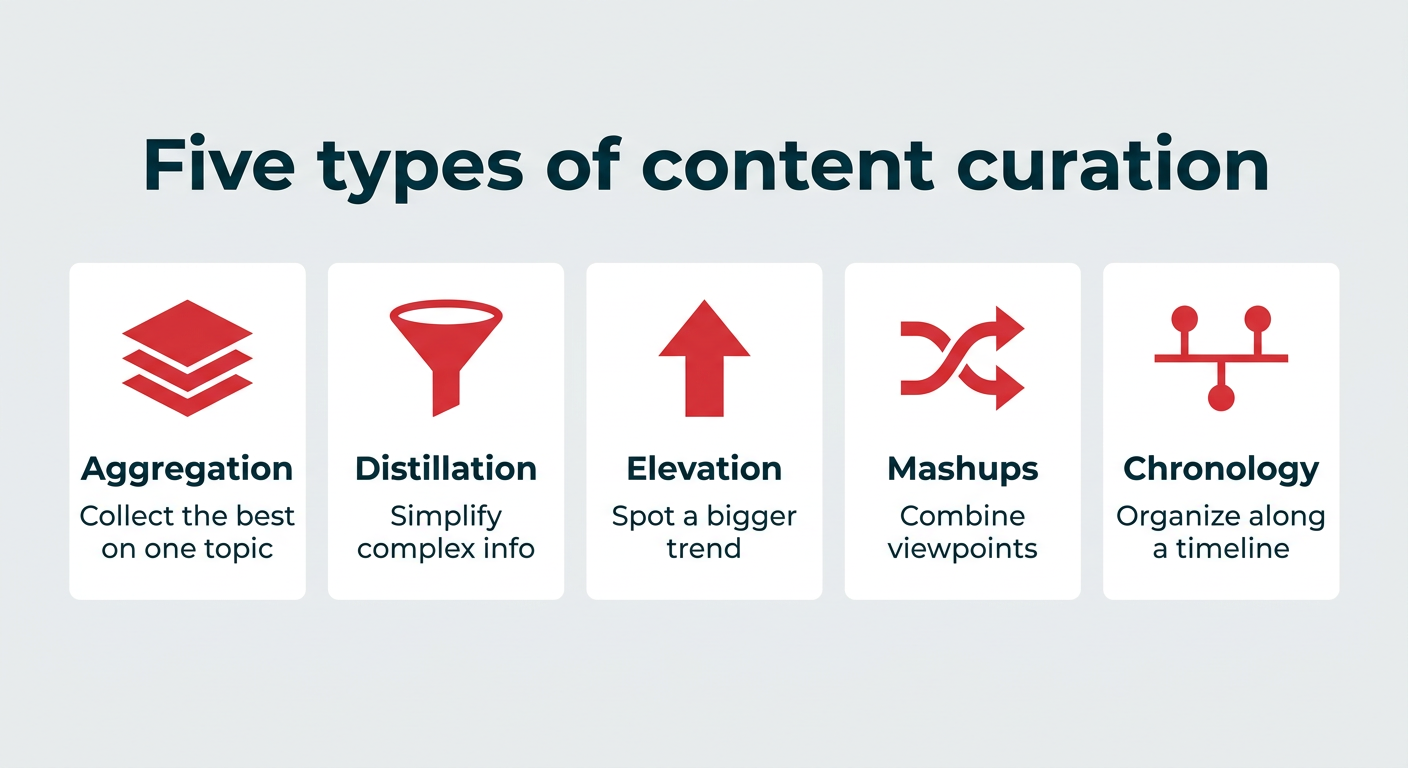
Curation is not a monolithic tactic; rather, it encompasses distinct operational formats, each serving a unique strategic objective. Understanding these methodologies allows social media managers to determine the appropriate depth of commentary and the ideal publishing medium.
Aggregation represents the most common form of curation, involving the collection of the industry’s best content on a single topic into a centralized digital destination, such as a weekly link roundup or a multi-slide social carousel. Distillation, meanwhile, focuses on summarization. It strips away the dense complexity of exhaustive documents—such as converting a 60-page whitepaper into a graphic highlighting four key statistical takeaways.

Elevation introduces a higher level of editorial analysis. By observing micro-trends across various scattered online discussions, a brand names a broader cultural or industrial shift, presenting the underlying evidence to substantiate the claim. Mashups combine complementary or competing viewpoints on a single subject to generate fresh perspectives, frequently seen in expert roundup articles. Finally, chronology arranges historical or developing content along a timeline to illustrate how a specific platform, algorithm, or industry has evolved over time.
Strategic Imperatives: Why Brands Must Curate

For communications teams operating under strict budgetary constraints, the advantages of content curation extend far beyond simple time management. First and foremost, curation delivers immense operational efficiency. While producing a single original asset demands multi-departmental review cycles and dedicated creative resources, sharing an insightful industry report can be accomplished efficiently while still delivering high utility to followers.
Furthermore, curation serves as an organic networking engine. When brands deliberately share external content and tag the original creators, they initiate professional relationships without transactional expectations. This etiquette-driven approach builds goodwill across digital ecosystems, frequently opening doors to collaborative partnerships and cross-promotional opportunities.

From an audience perspective, curated content prevents insular echo chambers. By introducing outside voices, diverse perspectives, and respectful debates, brands enrich their communities and stimulate robust discussion in comment sections. This heightened engagement signals algorithmic favorability, driving organic visibility and positioning the publishing brand as an objective thought leader rather than a self-absorbed promoter.
A Seven-Step Workflow for Effective Curation
Executing an effective curation strategy requires a structured, repeatable framework rather than reactive, last-minute posting. Industry standards dictate a disciplined seven-step workflow:
- Define Content Pillars and Audience Personas: Establish three to five core themes that align with brand objectives. Before sharing any external link, evaluate whether it serves the documented needs and interests of the target buyer persona.
- Establish a Content Mix Ratio: Pre-determine the balance between original and curated assets within the editorial calendar to prevent feed inconsistencies and easily identify scheduling gaps.
- Cultivate High-Quality Sources: Build an expansive input directory encompassing respected industry publications, analyst reports, niche newsletters, RSS feeds, and the social profiles of trusted domain experts.
- Add Original Perspective: Avoid blank reposts. Provide explicit context in the caption detailing why the audience should care, utilizing formulas that pose provocative questions, extract striking quotes, or synthesize complex arguments.
- Provide Transparent Attribution: Always credit, tag, and link the original creator. Passing off external work as proprietary content damages brand integrity and violates digital ethics.
- Schedule and Publish Consistently: Utilize unified social media management platforms to queue curated assets in advance alongside original campaigns, ensuring a steady, predictable stream of communication.
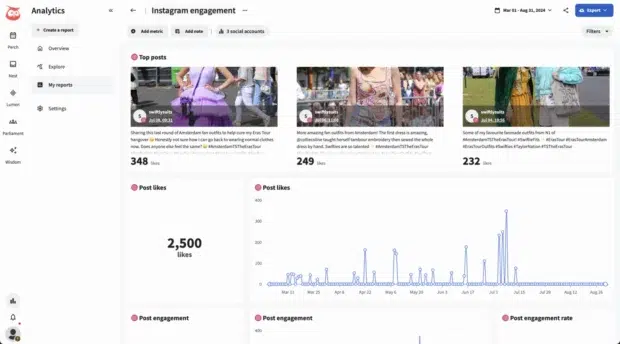
- Track Performance and Refine: Closely monitor engagement metrics—such as clicks, shares, and referral traffic—comparing curated posts against original content to continuously optimize the strategy.
The Integration of Modern Technology and AI

The integration of artificial intelligence and sophisticated social listening platforms has significantly accelerated the mechanics of content curation. Modern listening tools and insights applications can rapidly index millions of digital touchpoints—including websites, forums, product reviews, and social feeds—to surface emerging conversations and trending topics in real time.
Artificial intelligence aids marketing teams by swiftly clustering data, identifying high-potential sources, and drafting initial commentary frameworks. However, industry experts emphasize that the final editorial judgment must remain strictly human. While automation manages volume and data processing, human oversight guarantees empathy, contextual accuracy, and brand alignment.

Common Pitfalls to Avoid
Despite its operational efficiency, content curation carries specific risks if executed carelessly. The most frequent error is intellectual dishonesty: failing to properly attribute or credit original authors. Plagiarism erodes audience trust instantly and can trigger legal repercussions or public backlash.
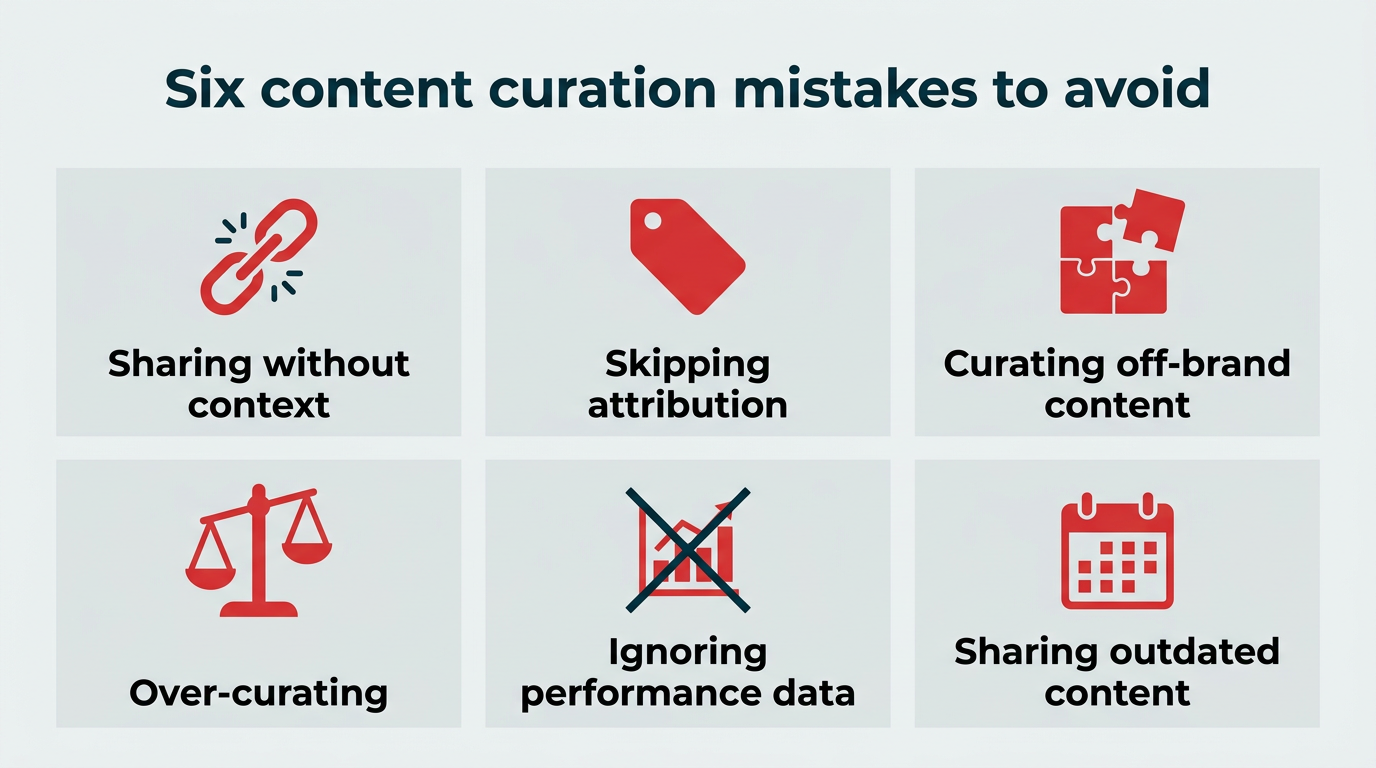
Another common pitfall is the absence of context. Dumping unverified links into a feed without explaining their relevance offers little value to followers, often registering as spam. Additionally, failing to audit source credibility can lead brands to inadvertently propagate misinformation or competitor messaging that contradicts overarching strategic goals. Finally, relying excessively on automation without human review risks turning active social channels into robotic, uninspired echo chambers.
Conclusion: Balancing Automation and Human Insight

As the digital landscape grows increasingly crowded with synthetic media, the role of the human curator becomes more indispensable than ever. By thoughtfully selecting, contextualizing, and crediting external expertise, modern marketing organizations can cut through the noise, build lasting authority, and cultivate vibrant digital communities. Content curation, when executed with precision and strategic intent, remains a cornerstone of sustainable, high-impact social media management.
Related posts: