Mastering Social CRM: How Brands Turn Real-Time Social Conversations Into Actionable Customer Insights


The modern digital landscape has fundamentally transformed the relationship between businesses and consumers, shifting primary points of interaction away from traditional channels like email and telephone calls and directly onto public social media feeds, direct messages, and comment sections. For decades, traditional Customer Relationship Management (CRM) systems functioned as repositories of historical, structured data—logging past purchases, support tickets, and direct email exchanges. However, as consumer habits have evolved, this backward-looking framework has proven increasingly insufficient. In response, enterprises across sectors are turning to Social Customer Relationship Management (Social CRM) to capture, analyze, and operationalize the wealth of unstructured data generated by daily social media interactions.

By bridging the gap between social media platforms and core enterprise databases, Social CRM empowers marketing, sales, and customer service departments to operate with a unified, real-time understanding of their audiences. This strategic convergence addresses a critical challenge in contemporary business: the widening gap between the customer experience brands intend to deliver and the actual experiences consumers receive. As market expectations rise and response times shrink, integrating social intelligence into daily workflows has transitioned from a competitive advantage to an absolute operational necessity.
The Evolution of Customer Relationship Management

To understand the rise of Social CRM, one must first examine the limitations of legacy systems. Traditional CRM architectures were built for a slower-paced commercial environment. They excelled at tracking structured transactions, such as invoice dates, email inquiries, and logged phone conversations. These systems were predominantly reactive, managed largely by single departments—such as sales or customer support—and updated periodically based on historical actions.
Social CRM expands this scope exponentially by incorporating unstructured, real-time data. This includes public brand mentions, peer-to-peer conversations, direct messages, dynamic sentiment signals, and broad-scale social listening metrics. Rather than merely recording what a customer did months ago, Social CRM captures what a consumer is saying, feeling, and experiencing right now.
Industry analysts categorize modern social CRM implementations into three primary archetypes. Built-in options integrate basic social management directly into existing CRM platforms, keeping all data under one roof though occasionally lacking advanced social depth. Standalone platforms specialize in comprehensive social media management and sync data back to central databases via integration pipelines. Meanwhile, a hybrid approach—exemplified by advanced social operating systems—acts as an intelligent intermediary. These systems handle native publishing, listening, and engagement, layer advanced artificial intelligence on top of the data stream, and route actionable intelligence directly into enterprise systems such as Salesforce or Microsoft Dynamics 365.
Closing the Consumer Expectation Gap
The urgency behind adopting Social CRM is underscored by shifting consumer behavior and rising expectations. According to global research indices, the disparity between corporate customer experience goals and actual customer satisfaction is widening. Public social platforms are frequently where this friction becomes visible to a global audience.
Consumer surveys consistently highlight the high stakes of brand responsiveness on social media. A significant majority of consumers indicate that the most compelling action a brand can take is to quickly and effectively address direct questions and comments online. Conversely, corporate silence carries a tangible penalty. Data reveals that a substantial percentage of users will actively unfollow or abandon brands that fail to acknowledge community interactions or ignore negative feedback entirely.
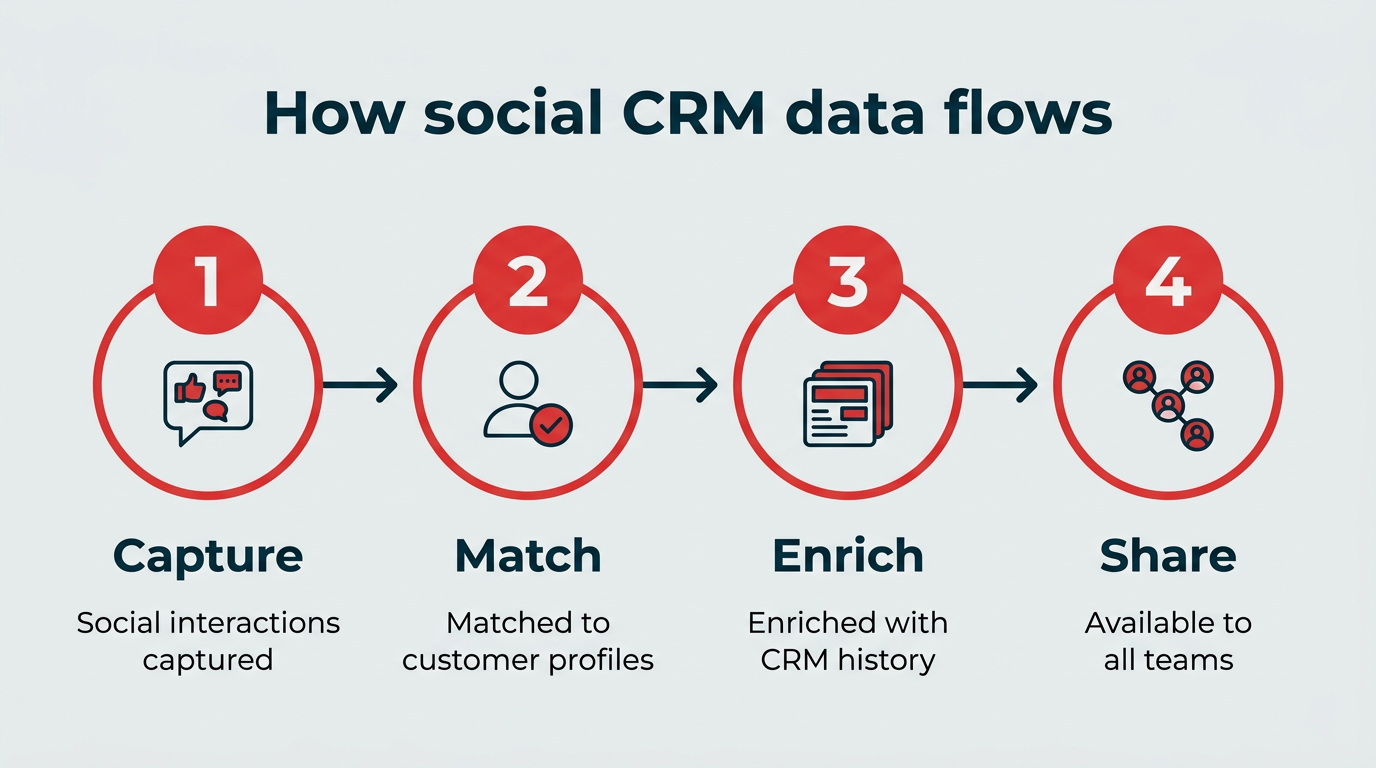
Furthermore, the sheer volume of modern digital communication has rendered manual data entry obsolete. In the past, support agents could manually copy social mentions into a CRM database. At today’s enterprise scale, that manual approach collapses entirely. Automated integration between social listening tools and customer records is now the only viable method for ensuring that inbound inquiries are matched with appropriate contextual history before a representative begins typing a response.
Operational Benefits Across Departments
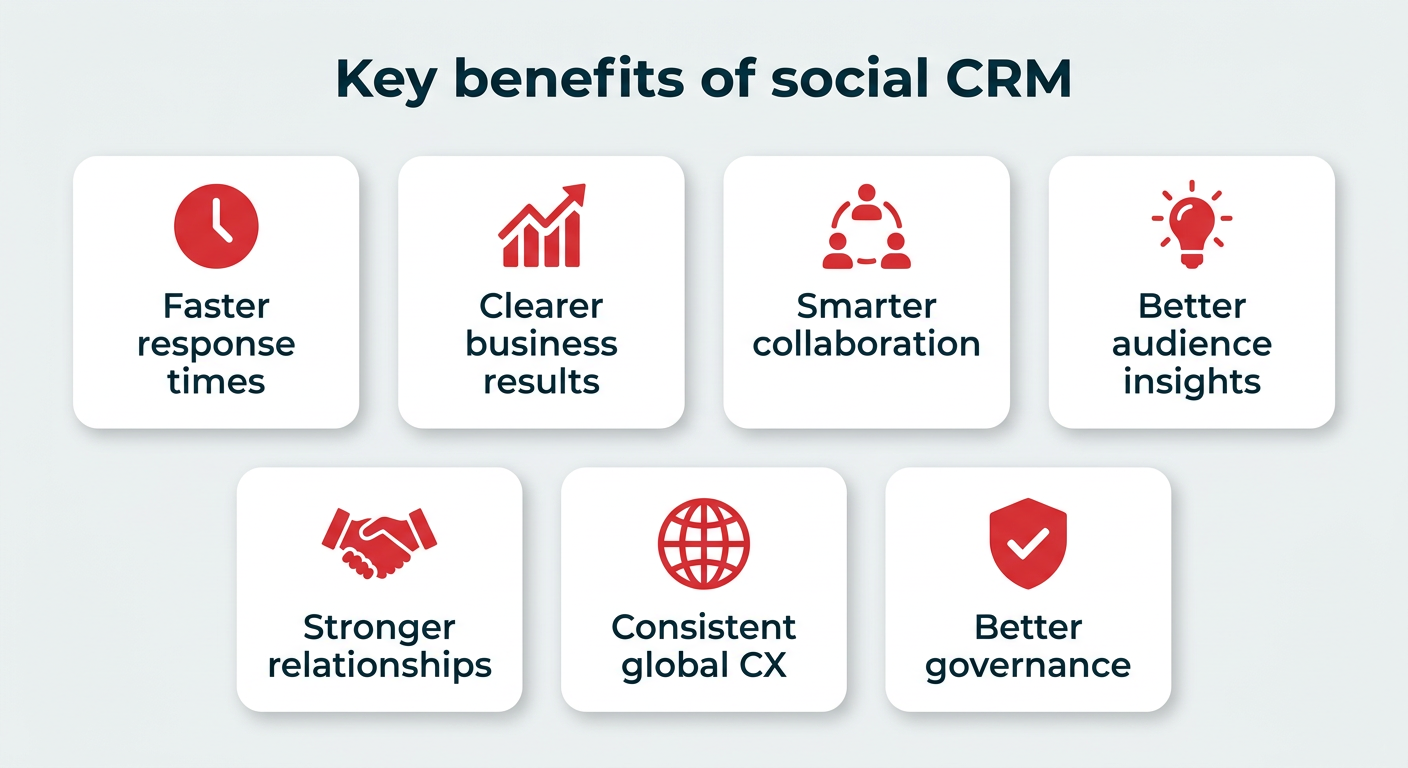
When deployed effectively, Social CRM breaks down traditional departmental silos, ensuring that marketing, sales, and customer service teams operate from a single source of truth. The operational benefits manifest immediately in response speed, cross-departmental collaboration, and service consistency.
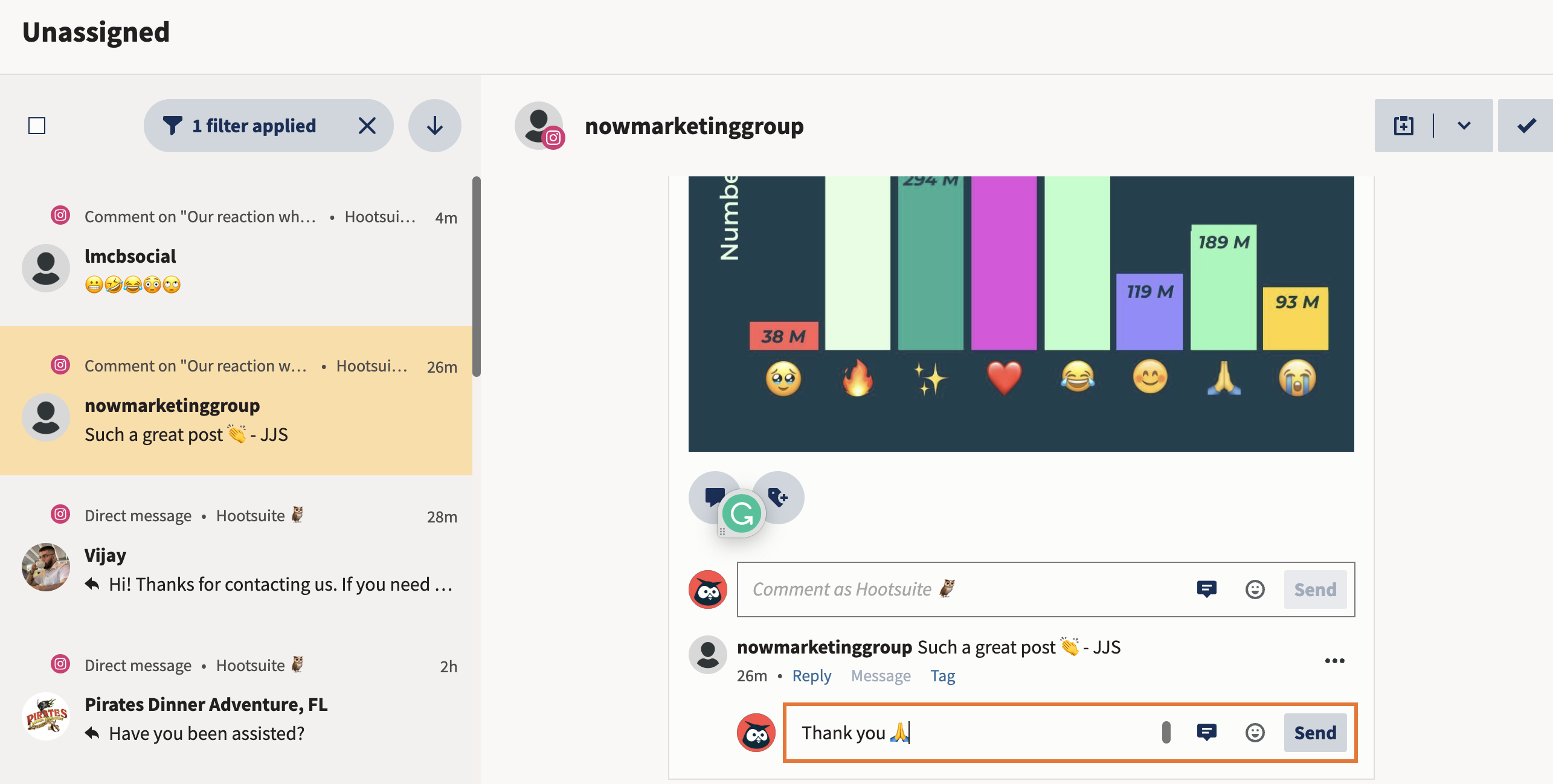
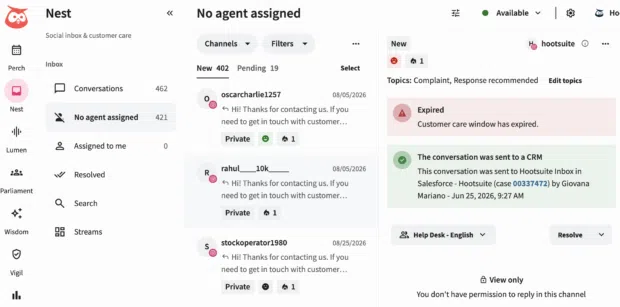
For customer service divisions, Social CRM enables seamless case management across multiple touchpoints. When a customer reaches out via Instagram direct message after submitting a support ticket via email, support agents can view the complete interaction history in a single pane of glass. This prevents customers from having to repeat themselves and ensures that replies remain consistent regardless of which team member handles the case.

Sales teams similarly benefit from enriched behavioral context. Traditional lead generation relies heavily on static intake forms and historical purchasing data. Social CRM, by contrast, introduces intent signals derived from active engagement. A prospect who repeatedly comments on product tutorials, shares promotional reels, and inquires about pricing via direct message exhibits a high degree of purchase intent. By syncing these social signals with core CRM profiles, sales representatives can prioritize outreach based on real-time engagement rather than cold calling down an alphabetical list.
Meanwhile, marketing departments leverage social CRM data to refine audience segmentation and content creation. Rather than relying on assumptions, marketing teams can analyze direct consumer feedback, sentiment shifts, and trending topics to produce targeted content that directly addresses audience interests. This precision significantly reduces audience churn and enhances the effectiveness of targeted social advertising campaigns.
The Integration of Artificial Intelligence
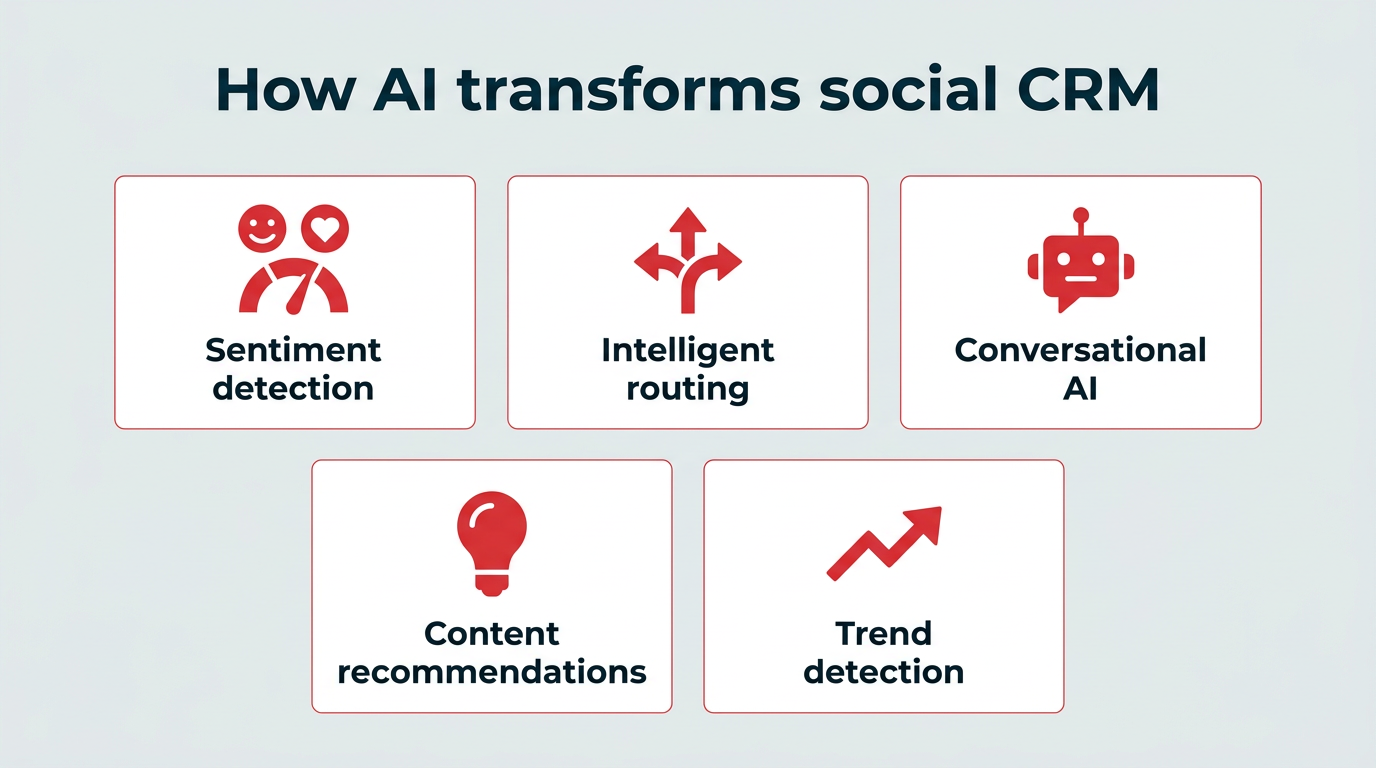
The sheer velocity and volume of unstructured data generated across social networks have made artificial intelligence an indispensable component of modern Social CRM architecture. Leading market research firms note that contemporary CRM platforms are rapidly evolving into AI-driven systems capable of sorting, analyzing, and prioritizing interactions at a scale that human teams alone cannot manage.

AI transforms the daily workflow of customer-facing teams by automating foundational tasks. Instead of opening an unorganized queue of hundreds of messages, agents receive pre-triaged lists where urgent complaints are prioritized at the top, repeat questions are automatically answered or flagged, and customer profiles are instantly enriched with relevant historical context.
Advanced AI agents and machine learning models also revolutionize social listening. Traditional keyword monitoring often misses sarcasm, nuanced sentiment shifts, or emotional drivers. Modern AI-powered listening tools analyze conversations across multiple languages and regional markets simultaneously, surfacing emerging frustration trends or brand sentiment shifts long before they manifest in formal monthly reports.

Industry experts caution, however, that the ultimate objective of AI integration is not to remove human empathy from customer relationships, but rather to equip human agents with comprehensive context instantly. Mismanaged AI self-service implementations risk damaging brand reputation; therefore, organizations must strike a careful balance between automated efficiency and human-led engagement.
Overcoming Implementation Challenges
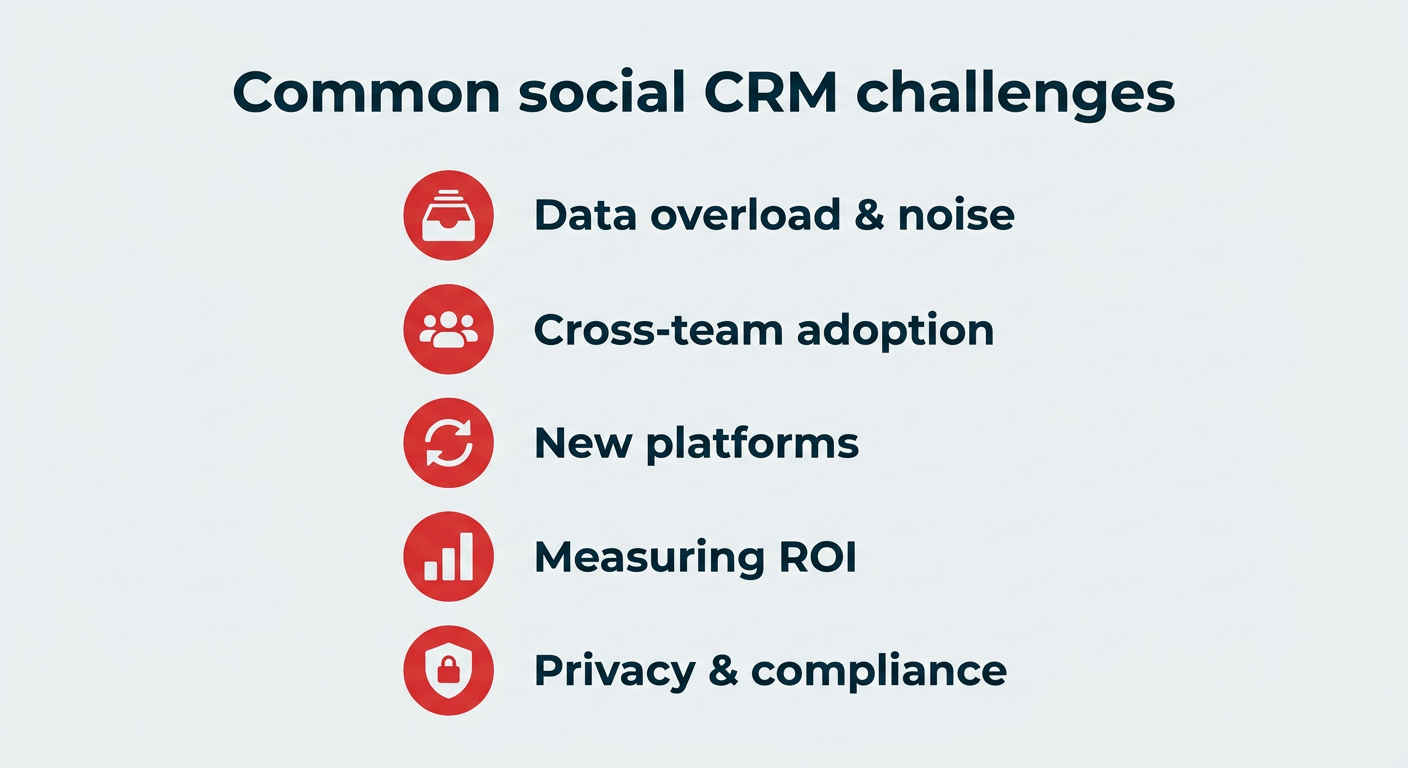
Despite the clear strategic advantages, implementing a Social CRM framework presents distinct operational challenges. Organizations frequently encounter hurdles related to data volume overload, cross-departmental alignment, data privacy compliance, and software adoption.
Managing large volumes of unstructured data requires robust filtering mechanisms and clear governance protocols. Without clearly defined routing rules and inter-departmental guidelines, messages can easily fall through the cracks or result in duplicate responses from different teams. Furthermore, aligning marketing, sales, and support around shared workflows demands comprehensive internal training and executive sponsorship.
Data privacy regulations also mandate rigorous planning. As enterprises capture, store, and analyze social interactions alongside personal identifiable information, adherence to global data protection standards—such as GDPR and CCPA—is paramount. Choosing scalable, secure platforms with enterprise-grade governance features ensures that customer data remains protected across all connected systems.
A Strategic Framework for Implementation
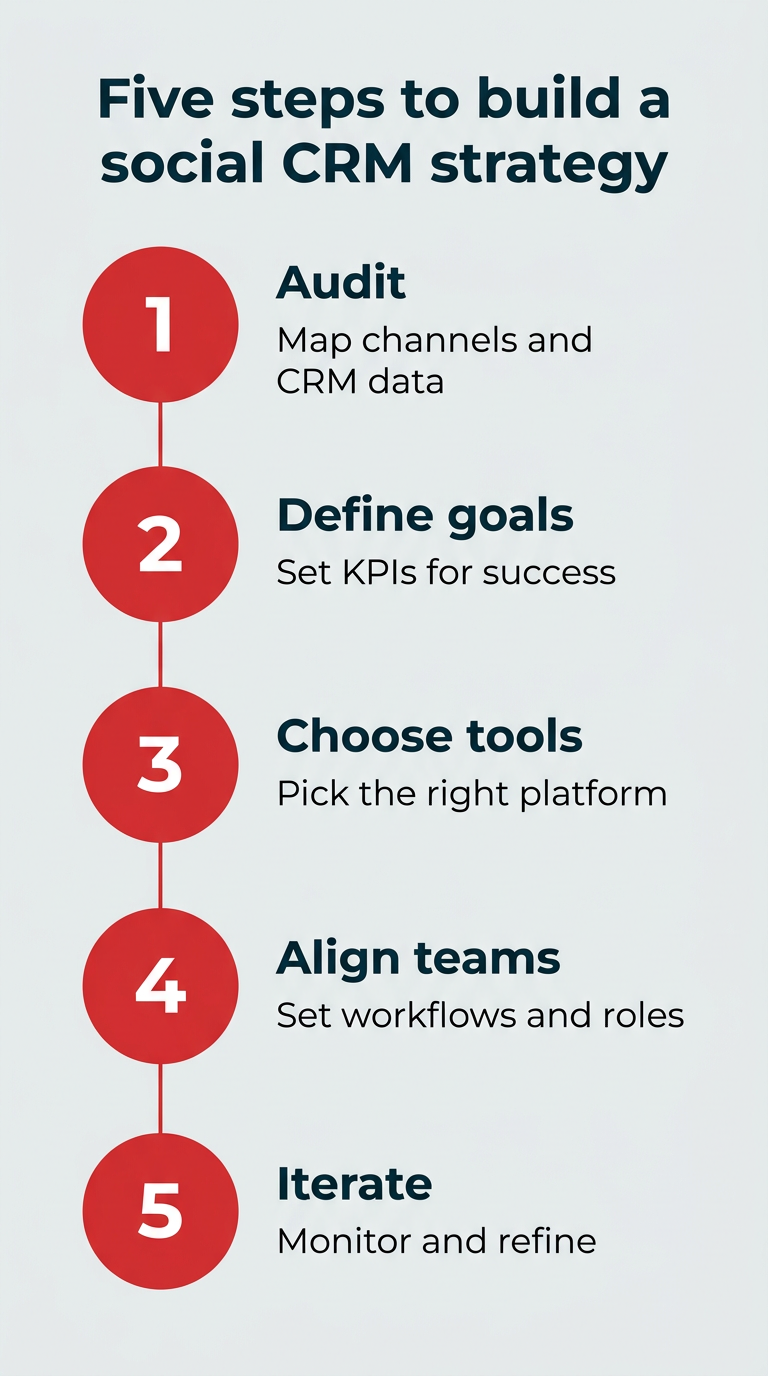
Deploying a successful Social CRM strategy requires a structured, phased approach that aligns technology investments with clear business objectives. Industry best practices suggest a five-step implementation framework:
- Audit Current Infrastructure: Map out existing social media channels, evaluate current customer data storage, and identify systemic gaps where social intelligence can add measurable value.
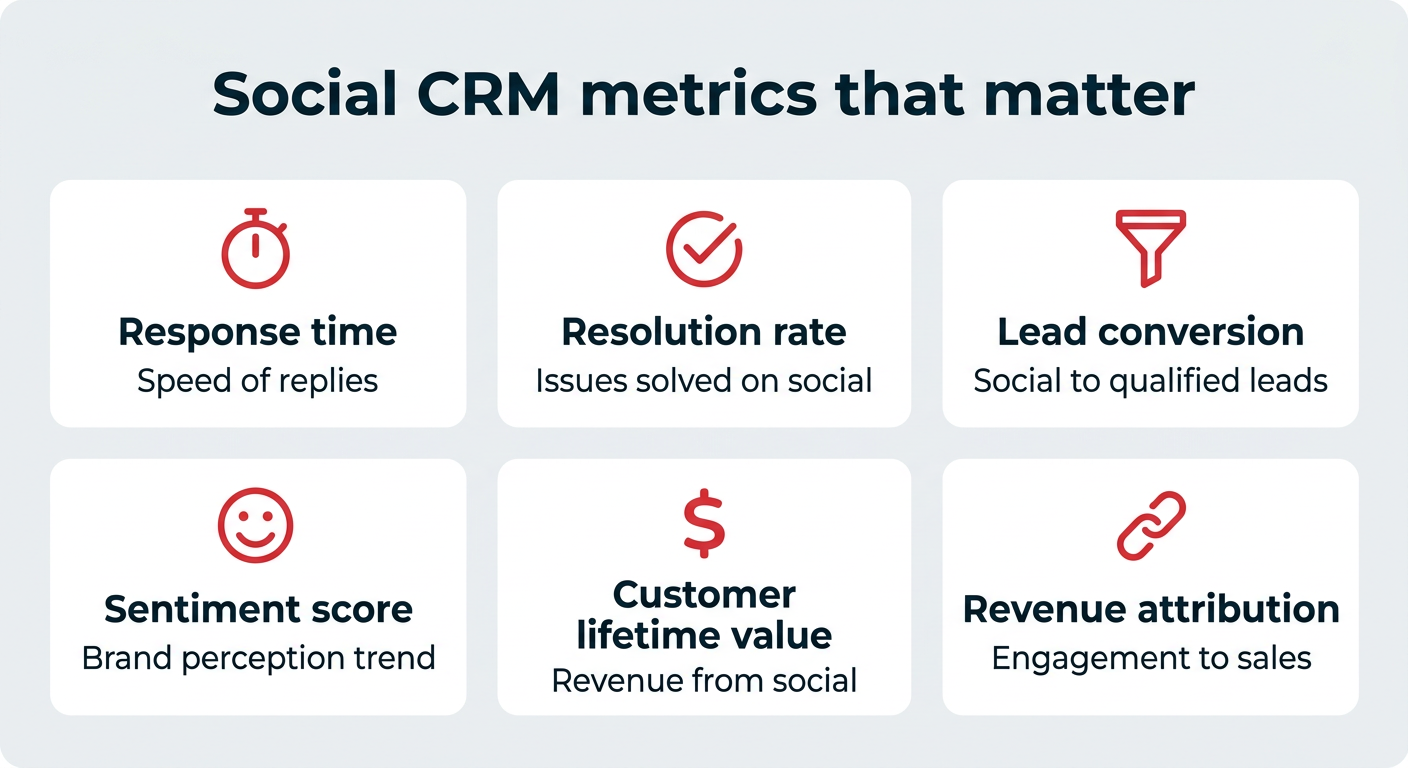
- Define Clear Goals and KPIs: Establish specific objectives—such as reducing first-response times, increasing qualified lead conversion, or improving customer sentiment scores—and select appropriate metrics to track progress.
- Select Integrated Technologies: Invest in software solutions that seamlessly connect social listening and engagement tools with core CRM databases, minimizing manual data transfer.
- Align Cross-Departmental Workflows: Establish precise routing rules, escalation protocols, and response guidelines to ensure seamless collaboration between marketing, sales, and support teams.
- Monitor, Measure, and Iterate: Review performance metrics regularly, utilize AI-driven insights to adapt to shifting market trends, and refine the strategy continuously.
By establishing rigorous tracking mechanisms—such as monitoring customer lifetime value, revenue attribution from social channels, and net sentiment scores—organizations can accurately measure the true return on investment of their social initiatives.
Conclusion
As digital channels continue to dominate the commercial landscape, Social CRM has evolved from an experimental marketing tactic into an essential enterprise architecture. By uniting real-time social conversations with historical customer data, businesses can bridge the gap between consumer expectations and delivered experience. Whether optimizing customer support, accelerating sales pipelines, or refining content strategies, organizations that successfully integrate social intelligence into their core CRM workflows are uniquely positioned to build lasting customer relationships and drive sustainable revenue growth in an increasingly competitive marketplace.