Mastering Social Media Automation: A Comprehensive Guide to Efficiency, Tools, and Strategy for Modern Businesses


The digital marketing landscape has evolved far beyond basic post scheduling, transforming into an ecosystem defined by artificial intelligence, real-time analytics, and agentic workflows. As companies across industries vie for consumer attention in an increasingly crowded online space, the sheer volume of daily tasks required to maintain a competitive brand presence has outgrown manual capacity. Social media automation has consequently shifted from a tactical convenience to a fundamental operational necessity for businesses seeking to reclaim valuable hours, optimize audience engagement, and scale their digital strategies effectively.
At its core, social media automation involves the deployment of specialized software and algorithmic tools to manage routine, repetitive digital tasks. These processes encompass everything from queuing multi-platform content and generating real-time performance analytics to routing customer service inquiries and tracking brand mentions across the web—all without requiring marketers to log into individual platforms separately. By offloading these time-intensive mechanics to automated systems, marketing teams can redirect their focus toward high-level strategy, creative campaign development, and authentic relationship-building with their audiences.
The Distinction Between Scheduling and Comprehensive Automation

A common misconception among marketing professionals is that simple content scheduling is synonymous with full social media automation. While scheduling answers the fundamental question of when a post goes live, true automation governs a much broader spectrum of operations throughout the entire content lifecycle.
Scheduling merely moves finished posts out the door. In contrast, comprehensive automation systems orchestrate the environment surrounding those posts. This includes drafting initial content via generative artificial intelligence, routing assets through multi-layered internal approval workflows, monitoring brand sentiment through social listening tools, and dynamically surfacing actionable insights from performance data. Relying solely on a calendar-based scheduler will typically save an organization a few hours each week, whereas implementing a fully integrated automation architecture fundamentally transforms how a marketing department operates, drives accountability, and scales campaign execution.
Anatomy of an Automated Workflow: What to Automate and What to Keep Human
Modern marketing automation is expansive, yet it is bound by clear operational boundaries. Knowing which tasks lend themselves to technological streamlining and which demand a human touch is critical for maintaining brand authenticity and avoiding public relations missteps.

Content creation and curation represent primary areas ripe for automation. Advanced artificial intelligence tools can now draft platform-optimized captions, suggest relevant hashtags, generate video scripts, and repurpose long-form assets—such as comprehensive whitepapers or blog posts—into digestible, multi-channel social formats in a single pass. For instance, a single corporate blog post can be algorithmically parsed and transformed into a LinkedIn carousel layout, a short-form video script for TikTok or Instagram Reels, and a series of concise platform-specific posts. While the initial creative direction, brand alignment, and final editorial review must always originate from human editors, automation handles the heavy lifting of adaptation and formatting.
Scheduling, reporting, and monitoring form the bedrock of daily marketing efficiency. Automated dashboards consolidate multi-platform metrics into centralized interfaces, replacing the tedious routine of logging into five or more distinct applications every morning. Automated alerts notify marketing managers of sudden spikes in brand mentions, trending industry keywords, or potential PR crises before they escalate.
In the realm of customer engagement and service, automation has experienced a dramatic technological leap. Industry forecasts from prominent research firms indicate that a significant majority of global brands will adopt agentic artificial intelligence to manage one-to-one customer interactions by the late 2020s. Unlike legacy chatbots restricted by rigid keyword triggers, modern AI-driven customer care systems can analyze audience sentiment and conversational urgency. They can execute multi-step workflows—such as querying an inventory database to check order statuses before responding—while intelligently routing complex, highly sensitive human interactions to the appropriate member of the support team.
The Strategic Payoff: Efficiency, Insights, and Compliance

Organizations that successfully integrate social media automation into their daily operations generally experience tangible returns across three distinct pillars: operational efficiency, analytical depth, and corporate governance.
From an efficiency standpoint, automated publishing queues and evergreen content recycling ensure an uninterrupted brand presence across global time zones without requiring teams to work around the clock. Consistency builds algorithmic favorability and keeps brands top-of-mind for consumers.
Regarding performance and insights, automated analytics engines process vast datasets faster and more accurately than manual spreadsheets. By continuously tracking engagement rates, click-through metrics, and audience demographics, these systems surface actionable recommendations regarding optimal posting times and high-performing content formats, allowing marketers to pivot strategies based on empirical evidence rather than intuition.
In terms of governance and compliance, particularly for enterprise-level organizations operating in regulated sectors such as finance, healthcare, and legal services, automation tools provide indispensable safeguards. Features such as role-based permissions, pre-approved asset libraries, and automated audit trails ensure that every piece of outbound communication adheres strictly to corporate compliance guidelines and regulatory frameworks.

A Strategic Roadmap for Implementing Social Media Automation
Transitioning to an automated social media framework requires a deliberate, phased approach to prevent operational overwhelm and team resistance. Industry experts recommend a three-step methodology: selecting the appropriate tooling, establishing core workflows, and scaling gradually.
Choosing the right automation software depends heavily on organizational scale, budget constraints, primary publishing platforms, and specific feature requirements. A solo entrepreneur managing a boutique e-commerce storefront has vastly different operational demands than an enterprise marketing department overseeing dozens of regional accounts across multiple continents. Decision-makers must evaluate platforms based on their user interface, cross-platform compatibility, depth of analytics, security protocols, and scalability.
Once a platform is selected, the integration process begins by linking active social channels and determining which operational silos to automate first—typically starting with publishing schedules and analytics reporting before layering in advanced social listening or customer service bots.

Rather than attempting to automate every process simultaneously, teams should begin small. By mastering basic scheduling and performance reporting first, organizations can accurately measure the hours saved and the resulting improvements in workflow velocity. Once these foundational systems run seamlessly, marketing leaders can gradually introduce AI-generated content workflows, direct message routing, and automated community management.
Comparative Overview of Leading Social Media Automation Platforms
The market for social media management and automation software features several robust options tailored to different organizational needs and budget parameters.
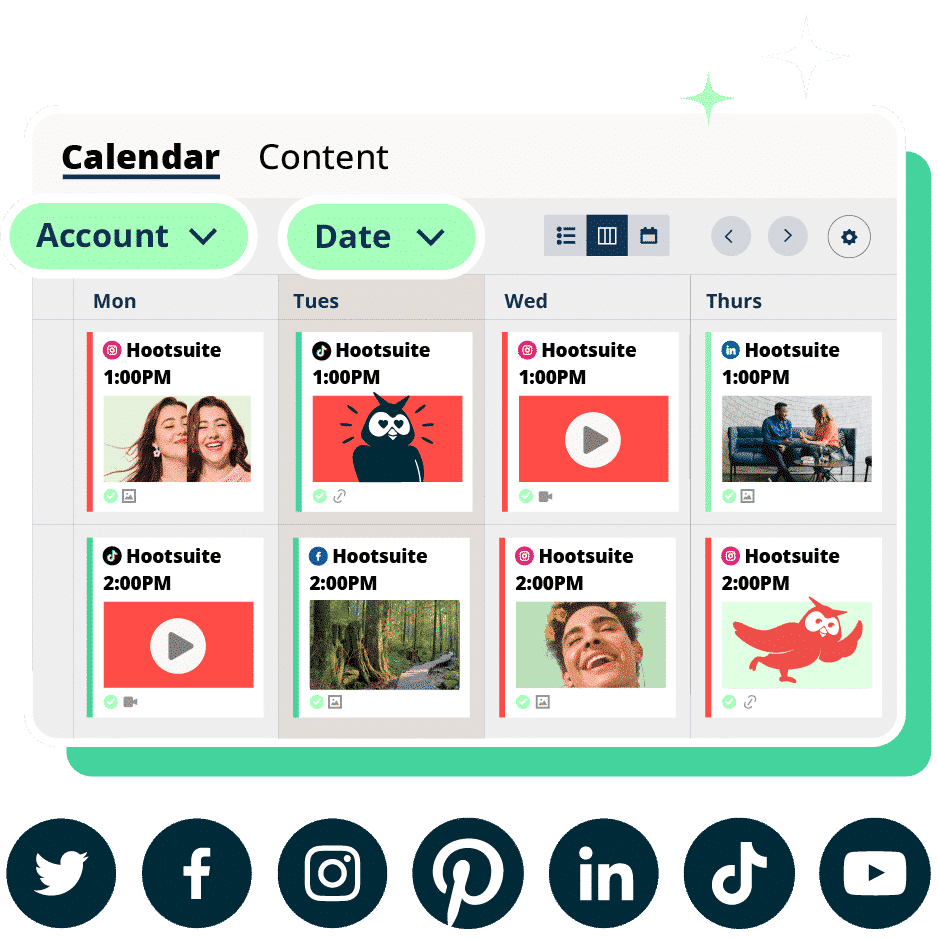
Hootsuite operates as an expansive social operating system designed primarily for medium-to-large teams and enterprise organizations. It offers advanced artificial intelligence content generation, predictive best-time-to-post algorithms, unified analytics, automated direct message management, and sophisticated internal approval workflows. Enterprise pricing typically scales based on user seats and feature tiers, supporting virtually all major global social networks including Instagram, Facebook, LinkedIn, TikTok, X, Pinterest, YouTube, and Threads.
Sprout Social is widely recognized for its exceptional reporting depth and presentation-ready analytics dashboards, making it a preferred choice for large corporate teams that must deliver defensible metrics to executive stakeholders. While its unified inbox and publishing tools are robust, its advanced social listening capabilities are often structured as separate add-on investments, resulting in higher overall software expenditures for comprehensive deployments.
Buffer offers a streamlined, user-friendly interface engineered specifically for small businesses, solo creators, and lean teams. Focusing on core functionalities such as content scheduling, basic analytics, and link-in-bio management, Buffer provides an accessible entry point into automation without the complex configuration requirements associated with enterprise systems. However, it lacks advanced governance features, multi-tier approval structures, and deep social listening capabilities.
Agorapulse positions itself as a specialized solution for mid-market teams centered around community management and customer engagement. Its standout feature is a highly efficient unified social inbox that consolidates incoming comments, direct messages, and brand mentions into a single chronological feed, though its AI capabilities and listening suites trail behind larger enterprise platforms.
Later is a visually focused scheduling platform tailored specifically for content creators and brands prioritizing aesthetic grid planning on visual-centric networks like Instagram and TikTok. While its visual calendar and auto-publish features excel for visual content, it lacks the multi-departmental collaboration tools and stringent compliance governance required by large enterprises.

Mitigating Risks and Avoiding Pitfalls in Automated Marketing
While the advantages of social media automation are substantial, marketing leaders must remain vigilant against potential operational risks. Over-reliance on automation can easily strip a brand of its human voice, alienating audiences and eroding trust.
A primary danger is the publication of unreviewed, generic artificial intelligence content that lacks contextual nuance or authentic brand personality. Automated tools should serve to accelerate production, not replace creative oversight. Furthermore, automating public engagement through rigid, robotic bots during critical customer service interactions or public relations crises can severely damage brand equity. Final editorial approval, empathetic conflict resolution, and strategic relationship-building must remain firmly under human direction.
Industry analysts emphasize that successful social media automation is not about removing humans from the equation, but rather liberating marketing professionals from repetitive administrative burdens. By striking the right balance between advanced technological efficiency and authentic human creativity, businesses can cultivate sustainable digital growth, maintain consistent brand governance, and foster meaningful connections with their audiences in an increasingly automated world.