How a 2019 Daytime TV Exchange Between Ellen DeGeneres and Dakota Johnson Sparked a Viral Social Media Phenomenon

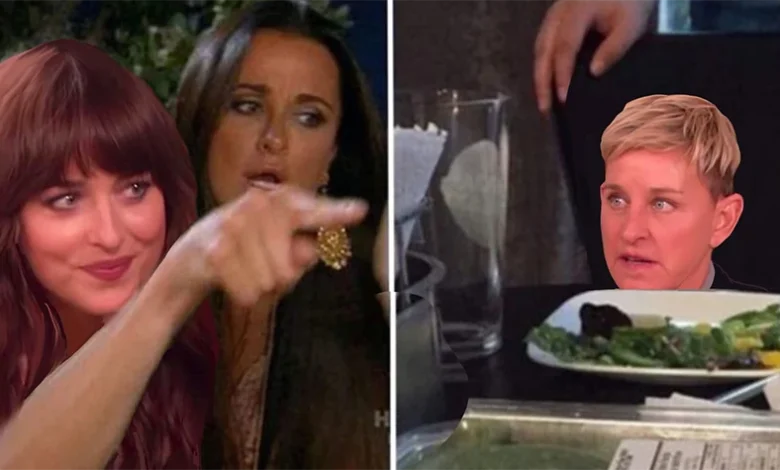
The intersection of daytime television and social media culture occasionally produces moments of unintended tension that captivate millions of internet users. A prime example of this phenomenon occurred in late November 2019, when a seemingly routine celebrity interview on The Ellen DeGeneres Show rapidly transformed into a viral digital event. The subject of the online fixation was an exchange between host Ellen DeGeneres and actor Dakota Johnson regarding a birthday party invitation. What began as a brief on-air disagreement quickly escalated into a widespread meme format, driving millions of views, widespread commentary, and renewed scrutiny of contemporary celebrity culture.
Main Facts of the Confrontation
The core of the viral moment centered on a live, on-air interrogation regarding guest etiquette and social exclusion. During an episode of her syndicated daytime talk show, Ellen DeGeneres directly asked Dakota Johnson about her recent 30th milestone birthday celebration. DeGeneres bluntly confronted the actor, asking why she had not received an invitation to the star-studded Malibu bash.
Rather than offering a polite evasion, Dakota Johnson stood her ground with unflinching directness. Looking squarely at the host, Johnson calmly replied that she had, in fact, invited DeGeneres. When the talk show host expressed skepticism and questioned the claim, Johnson leaned into the uncomfortable silence and suggested that DeGeneres check with her production staff. To heighten the dramatic irony, Johnson pointedly asked her producer, "Ninja, did I invite Ellen?" The producer’s off-camera confirmation that no invitation had been sent to DeGeneres’ office only added to the palpable awkwardness in the studio, creating a masterclass in deadpan television comedy.
Chronology of Events Leading to the Viral Explosion
The timeline of the controversy unfolded swiftly across late November and early December 2019, tracing a path from studio recording to digital saturation.
On October 5, 2019, Dakota Johnson celebrated her 30th birthday with a major star-studded party in Malibu, California. The guest list reportedly included high-profile figures such as Miley Cyrus, Robert Downey Jr., Gwyneth Paltrow, and Johnson’s partner, musician Chris Martin.
Just one day later, on October 6, 2019, Ellen DeGeneres made headlines for an entirely different reason. The talk show host was photographed attending a Dallas Cowboys football game alongside former U.S. President George W. Bush. Photographs of DeGeneres and Bush laughing together in a luxury suite circulated widely, sparking a separate wave of public debate and criticism regarding celebrity alliances and political decorum.
Weeks later, on November 27, 2019, the official YouTube channel for TheEllenShow uploaded the segment featuring the interview with Dakota Johnson, titled "Dakota Johnson’s Favorite Comedian Isn’t Ellen." Within five days of its publication, the video amassed over 2.7 million views and generated significant engagement, signaling that viewers had picked up on the palpable tension between the host and her guest.

By November 30, 2019, the conversation migrated heavily to Twitter, where users began dissecting Johnson’s visibly unimpressed demeanor throughout the interview. Early viral tweets highlighted the contrast between Johnson’s unbothered, deadpan delivery and DeGeneres’ insistent questioning. Social media users quickly connected the dots regarding the timeline: while Johnson was hosting her birthday celebration on October 5, DeGeneres was elsewhere, providing internet sleuths with rich material for commentary.
Supporting Data and Digital Metrics
The quantifiable reach of the Dakota Johnson interview meme demonstrated the immense appetite digital audiences have for unscripted, authentic expressions of social awkwardness. Within 72 hours of the video’s release on YouTube, view counts climbed past the 2.7 million mark, accompanied by tens of thousands of likes.
On Twitter, individual posts cataloging Johnson’s reactions achieved staggering viral metrics. A thread posted by user @parkchanwookss featuring a compilation of Johnson’s expressions accumulated over 128,500 likes and 12,300 retweets in just three days. Another post by user @alex_abads, highlighting the juxtaposition between Johnson’s birthday party and DeGeneres’ weekend outing with George W. Bush, earned thousands of likes and shares before being integrated into classic meme templates like "Woman Yelling at a Cat" by user @ckimberlinjr, which secured an additional 34,000 likes in two days.
Broader Cultural Implications and Public Analysis
Beyond the immediate humor and meme generation, the viral moment invited deeper cultural analysis regarding the power dynamics inherent in talk show interviews. Historically, daytime talk shows operated as tightly controlled promotional vehicles where celebrities adhered to a predictable script designed to charm audiences and promote upcoming projects. In this context, Dakota Johnson’s refusal to fold under the pressure of the host’s inquiry challenged traditional power structures.
Media analysts and cultural commentators pointed out that Johnson’s background as the child of A-list Hollywood actors (Melanie Griffith and Don Johnson) likely contributed to her poise. Having grown up surrounded by industry elites, Johnson exhibited an apparent lack of intimidation, treating the legendary talk show host not with deferential awe, but with casual, unflappable equality. This dynamic resonated strongly with younger digital audiences who increasingly favor authenticity, boundaries, and subtle subversion over forced enthusiasm in celebrity interactions.
Furthermore, the timing of the interview coincided with a period of shifting public perception regarding Ellen DeGeneres. As internet users increasingly scrutinized the curated images of powerful media figures, moments that exposed cracks in the polished veneer of daytime television gained disproportionate traction. The juxtaposition of a social snub at a birthday party with broader conversations about celebrity social circles allowed the public to project various narratives onto the interaction, transforming a minor conversational misstep into a cultural touchstone.
Conclusion and Legacy of the Interview Clip
Years after its initial broadcast, the Dakota Johnson and Ellen DeGeneres interview remains a defining artifact of late-2010s internet culture. It demonstrated the speed with which user-generated content can repurpose traditional media assets, turning a three-minute television segment into an enduring masterclass in deadpan delivery, boundary-setting, and digital satire. By standing her ground on national television, Dakota Johnson inadvertently provided internet users with a universal mood for managing unwanted social obligations, cementing the moment as an iconic piece of modern digital folklore.