The Evolution of Internet Folklore: How a 2006 Yahoo Answers Typo Became the Undying Viral Phenom ‘How Is Babby Formed’

In the vast and rapidly shifting landscape of early internet culture, few phenomena captured the chaotic, unpolished essence of Web 2.0 quite like a single, catastrophically misspelled query posted to a crowd-sourced advice platform. Nearly two decades after its initial publication, the phrase "How is babby formed?" remains a foundational cornerstone of digital folklore. What began as an obscure grammatical anomaly on Yahoo Answers in 2006 quickly transcended its humble origins to become a ubiquitous copypasta, a flash animation staple, and a cultural touchstone that continues to influence modern meme architecture.
The Main Facts and Origins of a Digital Artifact
The phenomenon traces back to a specific post submitted to the Yahoo Answers platform in 2006 by a user operating under the moniker "kavya." The user posed a fundamental biological question with a profoundly unorthodox construction: "how is babby formed? How girl get pragnent?" While the initial question itself was notable for substituting the word "baby" with "babby" and misspelling "pregnant," it was the accompanying responses and commentary that cemented the post’s legendary status within internet history.
The most infamous response to the query featured a cascade of surreal syntax, severe misspellings, and emotionally jarring tonal shifts. The reply read: "They need to do way instain mother> who kill thier babbys, becuse these babby cant fright back? It was on the news this mroing a mother in ar who had kill her three kids, they are taking the three babby back to new york too lady to rest. my pary are with the father who lost his chrilden ; i am truley sorry for your lots."
Although the original threads on Yahoo Answers were eventually lost to time and server purges—never achieving permanent archival status through official corporate channels—the text was immortalized through relentless manual copying, pasting, and screenshotting by amused digital spectators. The intrinsic blend of genuine confusion, dramatic solemnity, and bewildering syntax transformed the text into an early example of copypasta, a block of text that is copied and pasted repeatedly across various online forums, chat rooms, and social media platforms.
Chronology of Spread: From Niche Forums to Mainstream Viral Status
The propagation of the "babby" meme followed a distinct chronological arc, migrating from insulated internet communities to wider video-sharing platforms over the course of several years.
In late November 2006, just months after the original post surfaced, the prominent internet culture and comedy website Something Awful published a forum roundup titled "Yahoo! Answers Revisted" by user Johnny "Doc Evil" Titanium. This feature brought kavya’s post to a much wider, highly active audience of internet satirists and commentators.
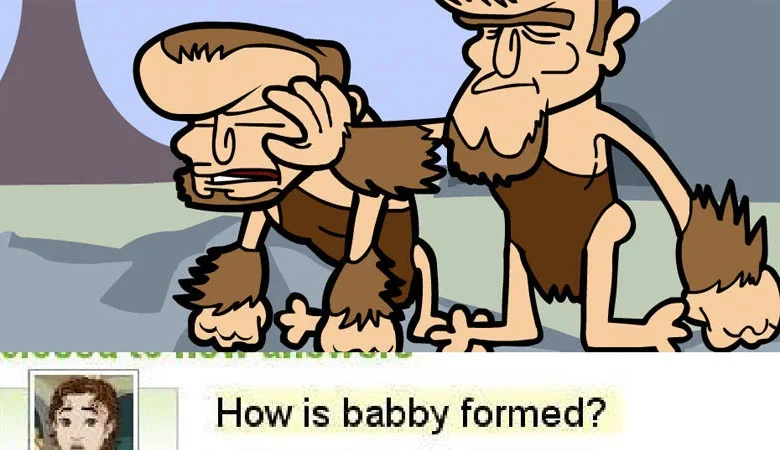
The momentum accelerated on February 5, 2007, when Something Awful contributor Dave "Shmorky" Kelly incorporated a dramatized reading of the Yahoo Answers thread into his "Flash Tub" animation series. In this adaptation, the user "kavya" was visually characterized as a crude, gruff-voiced caveman attempting to decipher the complexities of human reproduction. This creative interpretation provided a visual and auditory identity to the text, setting the stage for future multimedia adaptations.
By March 2008, the lexicon of the internet had officially expanded to codify the terminology. A user on Urban Dictionary submitted an entry defining "babby," citing the famous passage. Over the next decade, the definition accumulated more than 1,000 upvotes, demonstrating the staying power of the joke within the community’s collective memory.
The transition to YouTube represented the next major phase in the meme’s evolution. On June 29, 2008, YouTuber Chris Bixby published a standalone Flash animation video depicting a caveman reading the Yahoo Answers post and its surreal responses. The video struck a chord with a new generation of internet users, eventually accumulating over 1.5 million views.

The phenomenon experienced a massive resurgence in October 2016 when YouTuber J.T. Sexkik uploaded a video titled "how is prangent formed." The video compiled a curated retrospective of similarly ill-fated, phonetically mangled pregnancy questions from Yahoo Answers. Over the subsequent nine years, the video achieved mainstream viral saturation, gathering upwards of 51 million views and introducing the historical meme to millions of younger internet users who had missed the initial 2006 wave.
Supporting Data and Cultural Metrics
The longevity of the "How is babby formed" meme can be quantified through sustained digital engagement metrics across multiple platforms. Urban Dictionary engagement data indicates that interest in the specific sub-vocabulary generated by the post persisted for well over a decade after its inception. Furthermore, YouTube viewership analytics underscore the enduring appeal of amateur archival humor, with compilation videos dedicated to poorly phrased Yahoo Answers queries pulling in tens of millions of views collectively.
Media analysts and technology journalists have frequently examined the cultural weight of the phenomenon. In March 2017, technology publication Ars Technica published an in-depth retrospective piece titled "The one Yahoo meme that perfectly represents the faltering company." The article argued that the bizarre user-generated content hosted on Yahoo Answers served as an unintended mirror for the broader corporate trajectory of Yahoo! Inc. as it struggled to maintain relevance against competitors like Google. The chaotic nature of the platform’s user base, characterized by unmoderated, bizarre, and unfiltered human curiosity, made Yahoo Answers a unique incubator for early digital absurdity.
Official Responses and Corporate Context
At the height of its popularity, Yahoo! Inc. operated Yahoo Answers as a premier crowdsourced knowledge-market platform, boasting millions of active global users seeking advice on everything from academic research to interpersonal relationships. Because the platform relied entirely on user-generated content without aggressive real-time linguistic filtering, it inadvertently permitted the publication of anomalous queries that defied standard content moderation guidelines.
Representatives from Yahoo! rarely commented directly on viral anomalies born from the platform, as the sheer volume of daily submissions rendered individual threads statistically insignificant to corporate operations. However, the cultural impact of user-generated eccentricities ultimately outlived the platform itself. In May 2021, Verizon Media—which owned Yahoo at the time—permanently shut down Yahoo Answers, citing changing global user habits. The closure transformed the entirety of the platform’s historical archive into a lost digital library, elevating surviving screenshots and copied text snippets of queries like "How is babby formed?" from everyday web humor to treasured digital antiquities.
Broader Impact and Implications for Modern Internet Culture
The enduring legacy of the "How is babby formed" phenomenon offers valuable insight into the mechanics of viral communication and community building in the digital age. Long before algorithmic feeds dictated content consumption on platforms like TikTok and Instagram, early web users relied on forums, image boards, and flash animations to curate and amplify organic humor.
The transformation of a simple spelling error into an enduring copypasta highlights the human desire to find shared amusement in the unintentional absurdities of the internet. By converting a genuine expression of ignorance or confusion into a theatrical performance piece—such as the caveman adaptations popularized on early YouTube—communities learned to collectively mythologize everyday digital interactions.
Ultimately, "How is babby formed?" stands as an early monument to decentralized internet culture. It demonstrates how asynchronous communication platforms could bridge disparate online communities through shared laughter, turning a mundane database entry into an immortalized meme that continues to shape digital humor nearly twenty years after its creation.