Apple Reportedly In Talks With Openai For Ios 18 Chatbot
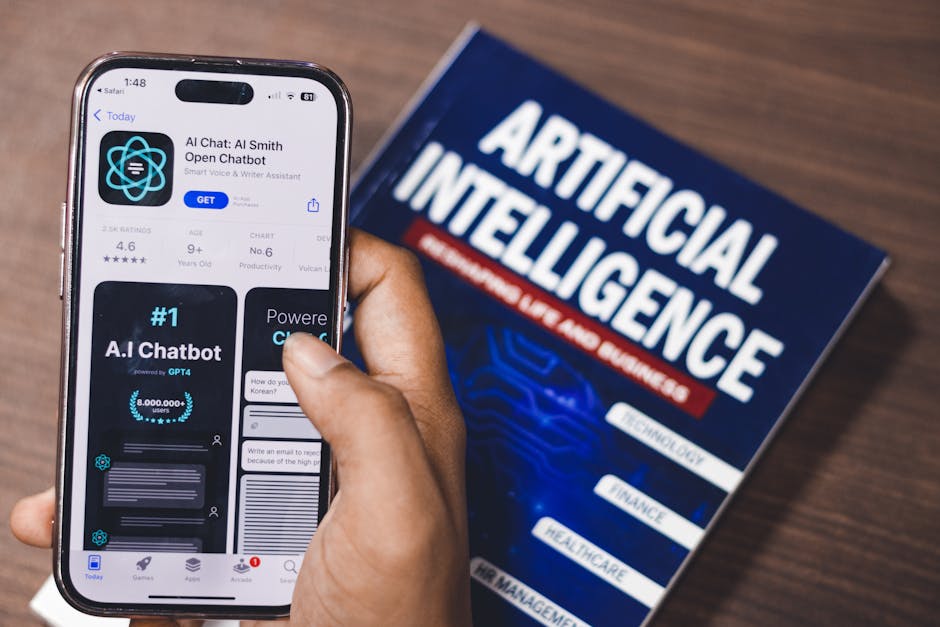
Apple Reportedly in Talks with OpenAI for iOS 18 Chatbot Integration
Apple, the titan of consumer electronics and software, is reportedly engaged in substantive discussions with OpenAI, the artificial intelligence research laboratory behind the groundbreaking ChatGPT, for a potential integration of advanced AI chatbot capabilities into its forthcoming iOS 18 operating system. This strategic move, if finalized, signifies a pivotal moment in Apple’s approach to artificial intelligence, potentially ushering in a new era of user interaction and functionality for its vast ecosystem of devices, including iPhones and iPads. The implications of such a partnership extend far beyond mere software updates, promising to redefine the user experience, challenge existing AI paradigms, and potentially reshape the competitive landscape of mobile operating systems and AI-powered assistants. Sources close to the matter suggest that the talks are advanced, indicating a serious consideration by Apple to leverage OpenAI’s cutting-edge large language models (LLMs) to power a more intelligent and conversational Siri, or to introduce a distinct, powerful AI chatbot feature within iOS 18. This development is particularly significant given Apple’s historically cautious and often in-house approach to developing core technologies, especially those as sensitive and rapidly evolving as artificial intelligence. The potential integration of OpenAI’s technology suggests a strategic pivot, acknowledging the rapid advancements and market dominance achieved by competitors who have already integrated sophisticated AI chatbots into their platforms.
The potential benefits for Apple users are multifaceted and could profoundly enhance daily device interaction. An AI chatbot powered by OpenAI’s models could imbue Siri with a level of contextual understanding, conversational fluency, and problem-solving capability that has thus far remained elusive. Imagine asking Siri complex questions with natural language, receiving nuanced and comprehensive answers, or having it assist with intricate tasks like drafting emails, summarizing lengthy documents, or generating creative content. This would elevate Siri from a command-execution tool to a genuine digital assistant capable of proactive and intelligent support. Furthermore, such integration could unlock new possibilities for app developers, providing them with powerful AI tools to build more intelligent and engaging applications. From enhanced customer service chatbots within enterprise apps to more personalized educational tools and sophisticated creative suites, the possibilities are virtually limitless. For Apple, the integration could also serve to counter the perception that its AI development has lagged behind rivals like Google with its Bard (now Gemini) and Microsoft with its Copilot, which is deeply integrated with OpenAI’s technologies. By partnering with OpenAI, Apple could rapidly deploy state-of-the-art AI capabilities, leapfrogging years of internal development and immediately offering users a compelling AI experience.
OpenAI, on the other hand, stands to gain immense exposure and a massive user base through this potential partnership. The integration into iOS, the operating system powering hundreds of millions of iPhones and iPads globally, would represent an unprecedented distribution channel for OpenAI’s AI models. This would not only solidify OpenAI’s position as a leading AI provider but also provide valuable real-world data for further model training and refinement. The partnership could also lead to a more symbiotic relationship, where Apple’s hardware and software optimization expertise could potentially be leveraged to enhance the performance and efficiency of OpenAI’s models, making them more suitable for on-device processing or highly optimized cloud-based interactions. The revenue implications for OpenAI are also substantial, as a licensing agreement or revenue-sharing model could be part of the deal, ensuring the continued funding and expansion of their research and development efforts. This move by Apple also signals a broader trend in the tech industry: a recognition that building cutting-edge AI from scratch is a monumental and resource-intensive undertaking, and that strategic partnerships can be a more efficient and effective route to market leadership.
The technical challenges and considerations for such an integration are significant, yet surmountable for a company like Apple. Ensuring seamless integration with existing iOS functionalities, maintaining user privacy and data security – a cornerstone of Apple’s brand – and optimizing AI model performance for a wide range of hardware are critical factors. The debate between on-device AI processing for enhanced privacy and speed versus cloud-based processing for greater computational power is a central one. Apple has historically favored on-device processing for many tasks, and it is likely that they would seek a hybrid approach, utilizing on-device models for simpler tasks and leveraging cloud-based OpenAI models for more complex computations. Data privacy will be paramount. Apple’s reputation for robust privacy protections would necessitate a clear and transparent approach to how user data is handled when interacting with an OpenAI-powered chatbot. This could involve anonymization techniques, opt-in data sharing policies, and a commitment to using data solely for model improvement and user benefit, with strict limitations on any third-party access. The potential for AI-generated misinformation or biases also needs to be addressed, with Apple likely to implement safeguards and moderation policies to mitigate these risks.
The competitive landscape of AI-powered assistants is intense, with Google’s Assistant and Amazon’s Alexa already established players. However, the current iteration of Siri has been widely criticized for its limitations in understanding natural language, its lack of contextual awareness, and its often rigid response patterns. A collaboration with OpenAI could dramatically alter this perception, providing Apple with a significant competitive advantage. Imagine an iOS 18 that offers an AI chatbot capable of understanding nuanced commands, remembering previous interactions, and proactively offering assistance based on user context and behavior. This could include features like personalized travel planning, sophisticated content creation tools, advanced language translation, and more intuitive smart home control. Such enhancements would not only make iOS more user-friendly but also solidify Apple’s position as an innovator in the AI space. The potential for this integration to influence the broader market is also considerable. If Apple, with its immense market share, successfully integrates a leading AI chatbot, it could set a new standard for what users expect from their mobile devices, forcing other operating system providers to accelerate their AI development and potentially leading to a new wave of AI-centric smartphone features.
Furthermore, the discussions between Apple and OpenAI could have broader implications for the future of AI development and deployment. OpenAI’s success with ChatGPT has demonstrated the power of LLMs in transforming human-computer interaction. A partnership with Apple could showcase how these powerful models can be effectively and responsibly integrated into mainstream consumer products. It could also lead to the development of specialized AI models tailored to Apple’s ecosystem, perhaps with a focus on creative tasks, productivity, or personalized learning experiences. The potential for Apple to influence the direction of AI research by providing unique datasets and feedback loops to OpenAI is also noteworthy. This could lead to the creation of AI models that are not only more powerful but also more aligned with user needs and ethical considerations. The economic impact of such a partnership would also be substantial, potentially leading to new revenue streams for both companies and spurring further investment in the AI sector. The success or failure of this proposed integration will be closely watched by the tech industry, as it could set a precedent for future collaborations between major hardware manufacturers and leading AI research organizations.
The strategic imperative for Apple to enhance its AI capabilities cannot be overstated. In an era where AI is rapidly becoming a defining technology, failing to keep pace could lead to significant market share erosion. While Apple has consistently excelled in hardware design, user interface, and ecosystem integration, its AI offerings, particularly Siri, have been perceived as falling behind competitors. This reported interest in OpenAI signals a clear acknowledgment of this gap and a decisive move to bridge it. The integration could lead to a more personalized and intuitive user experience, with the AI assistant capable of understanding complex queries, anticipating user needs, and offering proactive assistance across a wide range of tasks. This could include anything from intelligent content summarization and creative writing assistance to sophisticated personalized recommendations and enhanced accessibility features. The potential for generative AI capabilities to be embedded within iOS applications could also unlock new avenues for creativity and productivity, enabling users to generate text, images, and even code with unprecedented ease.
The success of this potential partnership hinges on Apple’s ability to integrate OpenAI’s technology in a way that aligns with its core values, particularly regarding user privacy and data security. Apple’s strong commitment to privacy is a key differentiator, and any integration must uphold this principle. This would likely involve a careful architectural design that prioritizes on-device processing where feasible and employs robust data anonymization and encryption for any cloud-based interactions. Transparency with users about how their data is being used will also be crucial in maintaining trust. Furthermore, Apple will need to ensure that the AI’s responses are accurate, unbiased, and safe, implementing safeguards to prevent the generation of harmful or misleading content. The ongoing development and refinement of AI models are also critical, and Apple’s involvement could provide valuable feedback and real-world usage data to OpenAI, accelerating the improvement of their models. This symbiotic relationship could lead to AI that is not only more powerful but also more responsible and user-centric.
The broader implications of this rumored collaboration extend to the competitive landscape of the entire tech industry. If Apple successfully integrates a leading AI chatbot, it could set a new benchmark for AI capabilities in mobile operating systems, forcing competitors to accelerate their own AI development efforts. This could lead to a more rapid evolution of AI-powered features across the board, benefiting consumers with more intelligent and intuitive devices. The partnership could also signal a shift in how major tech companies approach AI development, moving towards more strategic collaborations with specialized AI research labs rather than solely relying on in-house development. This could foster a more dynamic and innovative AI ecosystem. The economic ramifications are also significant, with the potential for new revenue streams and job creation within the AI sector. The success of this venture could inspire further investment in AI research and development, driving innovation and pushing the boundaries of what AI can achieve. The market reaction to this news, should it be officially confirmed, will undoubtedly be significant, reflecting the profound impact that such a partnership could have on the future of technology. The ongoing evolution of AI is a defining characteristic of the current technological era, and Apple’s potential embrace of OpenAI’s offerings signals a pivotal moment in its own AI journey and in the broader development of AI for consumer products. The integration into iOS 18 could redefine user expectations for conversational AI on mobile devices, ushering in an era of more intelligent, personalized, and capable digital assistants.


