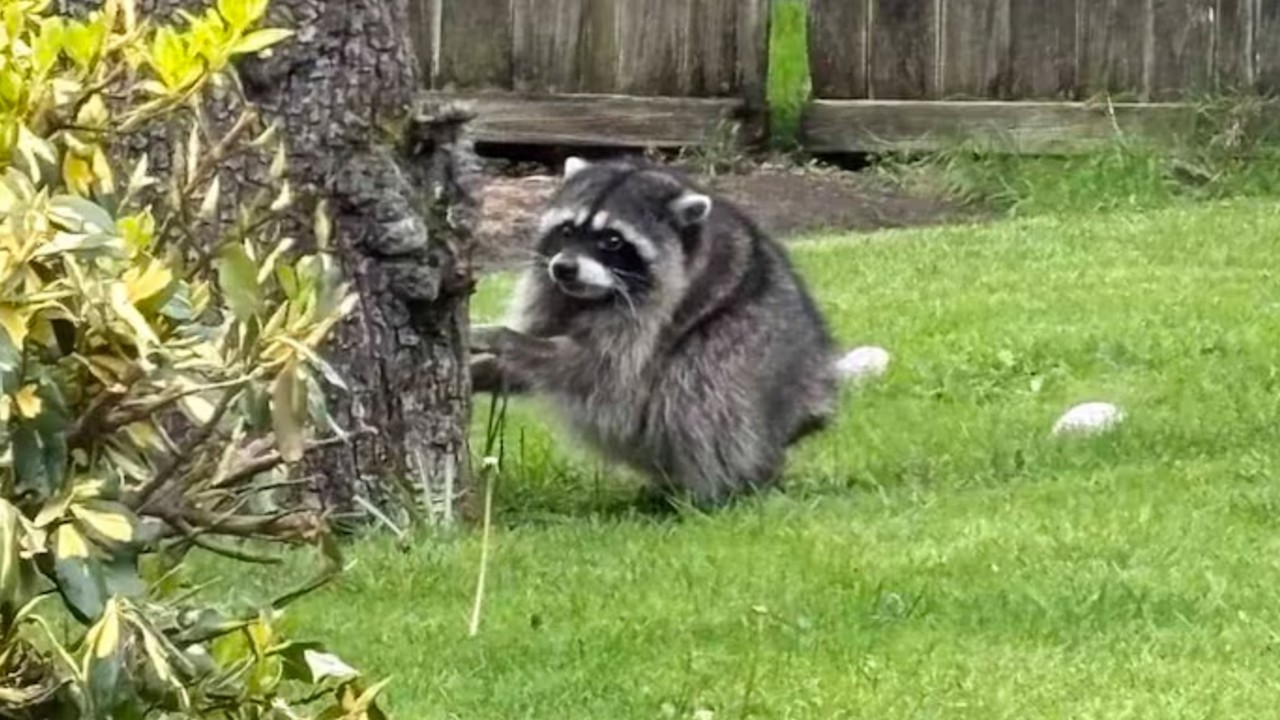
Seattle, WA – A wild raccoon, affectionately nicknamed "Jimothy," has captured the hearts and attention of internet users worldwide due to his distinctive appearance stemming from a rare medical condition. Living in Seattle’s Ballard neighborhood, Jimothy’s short spine syndrome has transformed him into a uniquely round and notably short raccoon, a visual characteristic that has propelled him to viral fame across social media platforms in July 2026. His unusual stature has sparked a wave of online content, from fan art and memes to widespread media coverage and endorsements from social media personalities.
The Genesis of a Viral Star
The phenomenon of Jimothy began on July 14th, 2026, when Instagram user Kiana Hall, under the handle c1vrgr1, shared a video of the unusual raccoon in her backyard. The accompanying caption, intended for her anniversary, read, "For our 13th anniversary, @ehhbahnan and I were graced with the presence of Jimothy the raccoon with short spine syndrome. Praise Jimothy!! 🦝" The post quickly garnered significant attention, accumulating over 398,000 likes within a mere six days, signaling the nascent stages of Jimothy’s internet stardom.
Short spine syndrome, the condition affecting Jimothy, is a congenital deformity characterized by the fusion or compression of an animal’s vertebrae during its developmental stages. While not always immediately painful for the affected animal, the condition can lead to certain mobility challenges. These limitations can potentially impact an animal’s ability to thrive in the wild, and over time, the condition can manifest as chronic pain. Medical experts note that while visually striking, the long-term prognosis for animals with short spine syndrome can vary, with some experiencing significant discomfort and reduced lifespan if not managed appropriately.
The Rapid Ascent to Online Fame
Following Hall’s initial post, Jimothy’s unique appeal led to his video being widely shared and reposted across various social media channels. This digital wildfire ignited a creative outpouring from the online community, resulting in a surge of original content celebrating the beloved raccoon. The widespread dissemination of Jimothy’s image and story demonstrated the power of social media to elevate even the most unexpected subjects to mainstream consciousness.
Within days of the initial Instagram post, the raccoon’s presence was further amplified. On July 17th, 2026, the X (formerly Twitter) account @dubseatv shared another video sighting of Jimothy, which rapidly amassed over 25,000 likes and 1,600 reposts. This further cemented his growing popularity and expanded his reach beyond the initial Instagram audience. The post itself, captioned "ANOTHER JIMOTHY SIGHTING JUST DROPPED," included a video clip that showcased Jimothy in motion, further endearing him to viewers.
Later that same day, X user @sitkapetrodolla contributed to the growing narrative by posting a video of Jimothy as a juvenile, captured in a friend’s backyard. This nostalgic glimpse into Jimothy’s past resonated with users, garnering an impressive 162,000 likes within three days. The accompanying caption, "Jimothy as a baby in my friend’s backyard," provided a tender dimension to the viral phenomenon, highlighting the creature’s journey.
The creative interpretations of Jimothy’s fame soon followed. On the same day, X user @Oatmeal posted a humorous drawing of Jimothy, accompanied by the witty caption, "I drew a police sketch of Jimothy in case the cops need it." This artistic rendition, which garnered over 20,000 likes, showcased the playful and imaginative engagement of the online community. The drawing depicted Jimothy in a stylized, almost cartoonish manner, emphasizing his distinctive silhouette.
The "everything reminds me of him" meme, a popular internet trope, also found its subject in Jimothy. On July 19th, 2026, X user @greg16676935420 posted a photograph of a short truck, with the caption, "Everything reminds me of him." This post, which quickly gained over 21,000 likes within a single day, drew a direct visual parallel between the truck’s compact form and Jimothy’s unique physique, illustrating the pervasive influence of the raccoon’s image in online discourse.
A Multifaceted Online Presence
The viral spread of Jimothy was not confined to static images and short video clips. The raccoon quickly became a central figure in a variety of online content formats, reflecting the diverse landscape of digital media. TikTok, a platform known for its short-form video content and trend-driven culture, became a significant hub for Jimothy-related material.
One notable TikTok video, posted by user @opinionatedhag, featured a simple yet heartfelt declaration: "I would die for him," accompanied by relevant hashtags such as #fyp, #jimothy, and #raccoon. This sentiment captured the endearing affection many viewers felt towards the unusual creature.
Another TikTok video showcased Jimothy’s connection to the city of Seattle, his home. User @acrossthemar_ posted a video highlighting "Jimothy the raccoon’s Mariners debut 🐾⚾️," thanking the Seattle Mariners for an invitation. This post suggested a level of integration into local events, a testament to Jimothy’s growing celebrity status within his community.
Further reinforcing his viral appeal, user @sydsks shared a TikTok video simply stating, "he’s back," accompanied by the #jimothy hashtag. This implied a recurring presence and a continued interest in Jimothy’s well-being and activities among his online fanbase.
Perhaps one of the most impactful pieces of content came from @fosterpetsofsac, a user focused on animal welfare. This TikTok post directly addressed the medical condition behind Jimothy’s appearance: "I’m sure you’ve seen all the posts about Jimothy the raccoon 🦝. He of course reminds me of a very special litter of puppies I fostered a few years ago with the same funny little body shape. These puppies had varying degrees of ‘Short Spine Syndrome’ and actually helped @UC Davis Weill Vet Med find the mutation that causes the syndrome!" This post not only drew a parallel between Jimothy and other animals with similar conditions but also highlighted the potential for such viral phenomena to raise awareness about rare medical issues. The user also provided a link to an article for those interested in learning more, demonstrating how internet fame can translate into educational outreach.
Broader Implications and Animal Welfare Considerations
The virality of Jimothy underscores a complex interplay between public fascination, the internet’s amplification capabilities, and the realities of animal welfare. While the widespread adoration for Jimothy is undeniable, his condition also raises important considerations regarding the well-being of wild animals with deformities.
Veterinary professionals and wildlife experts often emphasize that while some animals with conditions like short spine syndrome can adapt and lead relatively comfortable lives, the challenges they face in the wild can be significant. These can include difficulties in foraging, evading predators, and finding mates. The increased human interaction and attention Jimothy receives, while largely positive in sentiment, also carries potential risks, such as habituation to humans and increased exposure to dangers associated with urban environments.
The case of Jimothy also serves as a reminder of the scientific advancements made possible through observing and studying animals with rare conditions. As highlighted by the @fosterpetsofsac TikTok post, research into conditions like short spine syndrome can lead to breakthroughs in understanding genetic mutations and developing better care strategies for affected animals. The public’s engagement with Jimothy’s story, while driven by affection, indirectly contributes to a broader awareness of these scientific endeavors.
The online narrative surrounding Jimothy has, for the most part, maintained a tone of empathy and concern. This collective sentiment has likely contributed to a generally positive reception of his story, encouraging responsible online engagement. However, as with any viral sensation, there remains a potential for exploitation or misinterpretation. Responsible reporting and social media commentary play a crucial role in ensuring that the focus remains on Jimothy’s unique nature and, where appropriate, on raising awareness about animal health.
The phenomenon of Jimothy the raccoon is a contemporary illustration of how a single, remarkable individual can transcend its immediate environment to become a global internet phenomenon. His story, rooted in a rare medical condition, has blossomed into a multifaceted online presence, demonstrating the power of shared digital experiences to foster affection, creativity, and even a degree of public awareness about the natural world and its more unusual inhabitants. As Jimothy continues to navigate his life in Seattle, his legacy as a beloved internet icon is firmly established, a testament to the unpredictable and often heartwarming nature of online culture.
The ongoing fascination with Jimothy suggests a continued interest in his well-being and any further developments in his life. The convergence of cuteness, a compelling backstory, and the broad reach of social media platforms has created a perfect storm for a viral sensation, making Jimothy a unique and memorable figure in the annals of internet culture. The long-term implications for Jimothy himself remain a subject of ongoing observation by local wildlife enthusiasts and concerned citizens, who hope for his continued safety and well-being in his urban habitat.