The Evolution of LinkedIn in 2026: Financial Growth, Demographic Shifts, and B2B Marketing Strategies


LinkedIn has firmly established its position as the premier digital ecosystem for professional networking, corporate recruitment, and B2B marketing. As the platform navigates through 2026, recent financial reports, demographic shifts, and evolving user engagement metrics reveal an enterprise that has far outgrown its original identity as a simple online resume repository. Operating under the corporate umbrella of Microsoft, LinkedIn continues to experience robust expansion, driven by surging ad revenues, a booming subscription model, and an increasingly mobile, video-first user base.

To fully understand the current trajectory of the platform, industry analysts, marketers, and corporate strategists must examine the comprehensive data defining LinkedIn’s operational landscape in 2026.
Financial Performance and Corporate Milestones
LinkedIn’s financial trajectory underscores its critical role within Microsoft’s expansive portfolio of productivity and business processes. In fiscal year 2025, the platform generated a staggering $17.812 billion in revenue, marking a substantial increase from the $16.372 billion recorded in 2024. This year-over-year growth of approximately $1.4 billion set the stage for continued momentum, culminating in revenues reaching $19.8 billion in fiscal 2026.

This robust financial health is distributed across multiple business lines, including talent solutions, marketing solutions, and subscription services. Notably, subscription offerings have emerged as a significant financial engine. LinkedIn Premium surpassed the $2 billion threshold in annual revenue for the first time during the second quarter of 2025, signaling that an increasing number of professionals are willing to invest financially in enhanced search visibility, direct messaging capabilities, and professional development tools. Furthermore, Microsoft’s quarterly financial reports indicated a steady 12% year-over-year revenue increase for LinkedIn in the third quarter of 2026, demonstrating consistent quarter-over-quarter expansion.
Leadership transitions have also accompanied this financial growth. In April 2026, Daniel Shapero assumed the role of Chief Executive Officer of LinkedIn. Shapero, who previously served as the platform’s Chief Operating Officer and has maintained a tenure with the company since 2008, succeeded Ryan Roslansky. Under Roslansky’s leadership, LinkedIn navigated its most recent period of massive expansion, crossing major membership milestones and integrating advanced artificial intelligence tools for job seekers and recruiters.
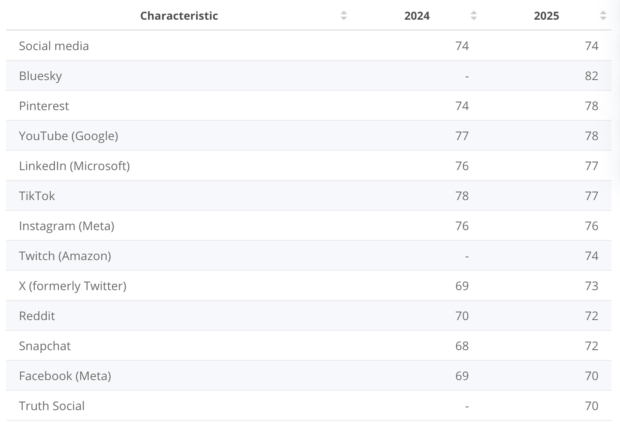
As the platform celebrated its twenty-third anniversary on May 5, 2003—having been originally founded by Reid Hoffman just months before the launch of early social competitors—it maintained exceptionally high consumer sentiment ratings. According to the American Customer Satisfaction Index for 2025, LinkedIn earned a customer satisfaction score of 77 out of 100. This figure not only surpasses the overall social media industry average of 74 but also places LinkedIn ahead of consumer-facing platforms such as Instagram, Reddit, Snapchat, Facebook, and X.
Global Demographics and Regional Expansion
LinkedIn’s user base has expanded to encompass over 1.4 billion registered members across more than 200 countries and regions worldwide, officially maintaining its status as the largest professional networking site on the internet. This milestone builds upon the platform crossing the coveted one-billion-member threshold in late 2023, reflecting an accelerating pace of global adoption.
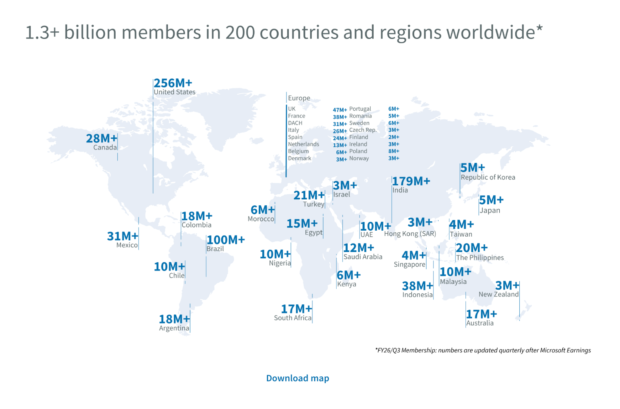
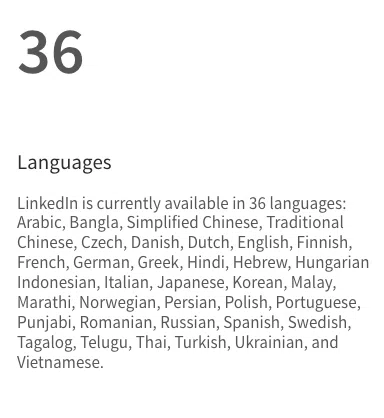
Geographically, the platform maintains a heavily international footprint, with more than 78% of its total user base located outside the United States. While the U.S. accounts for approximately 300 million members—generating roughly 34% of total web traffic to the site—emerging markets have displayed explosive growth. Notably, Brazil officially surpassed 100 million LinkedIn members by mid-2026, cementing its status as one of the platform’s top three global markets alongside the United States and India. Brazilians contributed significantly to global platform activity, generating over 11 million posts in the first quarter of 2026 alone. India follows the U.S. closely in web traffic share, capturing approximately 8.25% of overall visits. Regionally, the platform’s localized reach is supported by operations in 36 languages, managed by more than 15,500 full-time employees operating out of 36 global offices.
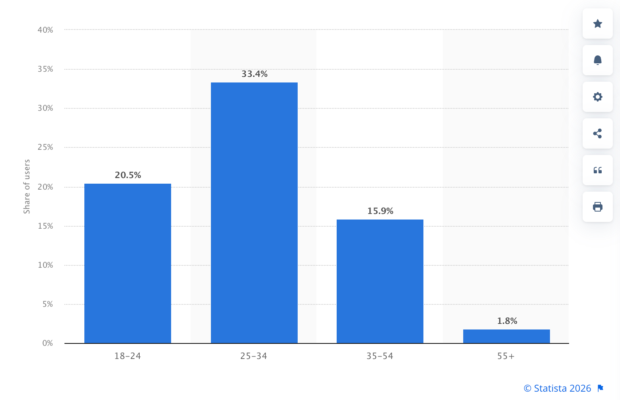
Demographically, user distribution skews heavily toward younger, highly educated professionals. Individuals aged 25 to 34 represent the single largest audience segment on the platform, accounting for 33.4% of global users. This demographic composition positions older Generation Z and younger Millennials as the core active users of the network. Furthermore, Generation Z has emerged as the fastest-growing demographic on LinkedIn. Given that Gen Z already constitutes roughly 27% of the global workforce and is projected to become the dominant working generation by 2035, this generational shift heavily influences the types of content and recruitment strategies deployed on the platform.
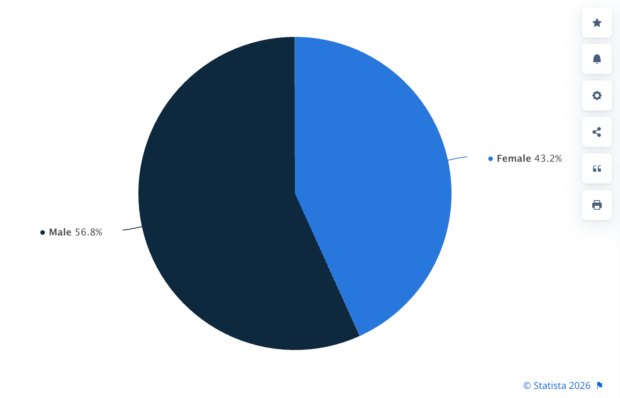
Regarding gender distribution, LinkedIn reports that 56.8% of its global user base identifies as male, while 43.2% identifies as female. Educational attainment among the user base remains exceptionally high. Data from the Pew Research Center indicates that 53% of American adults holding a bachelor’s degree or higher actively use LinkedIn, compared to only 10% of individuals whose highest educational attainment is a high school diploma or less. For corporate recruiters and B2B marketers, this educational skew serves as a clear indicator that the platform concentrates knowledge-worker populations who typically hold budgetary approval authority and participate directly in corporate procurement decisions.
User Engagement, Content Trends, and the Rise of Video
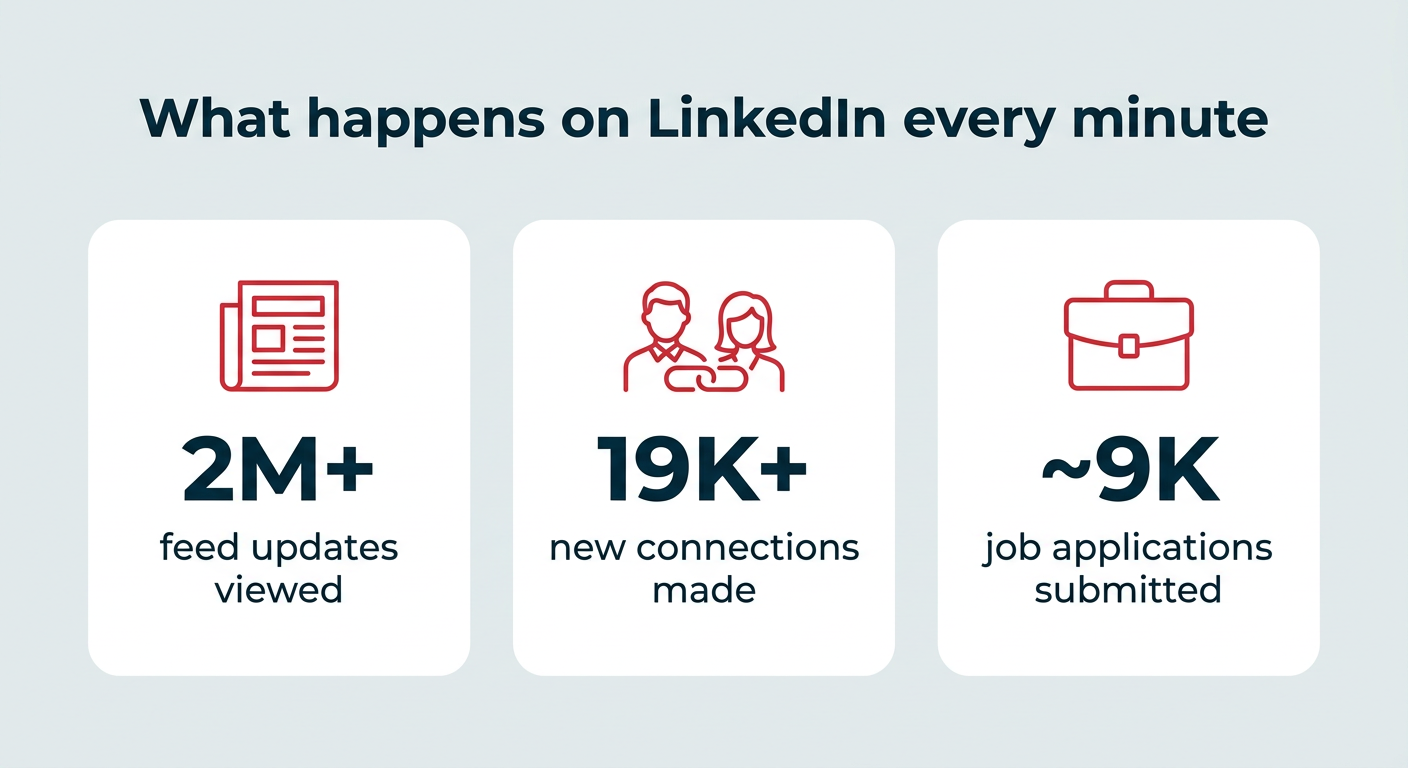
The sheer volume of daily activity on LinkedIn highlights a vibrant, highly active digital community. The platform records roughly 2.1 billion visits every month. A minute-by-minute breakdown of platform activity illustrates a bustling digital economy: users view over 2 million feed updates, establish more than 19,000 new professional connections—totaling over 1 million connections every hour—and submit approximately 9,000 job applications.
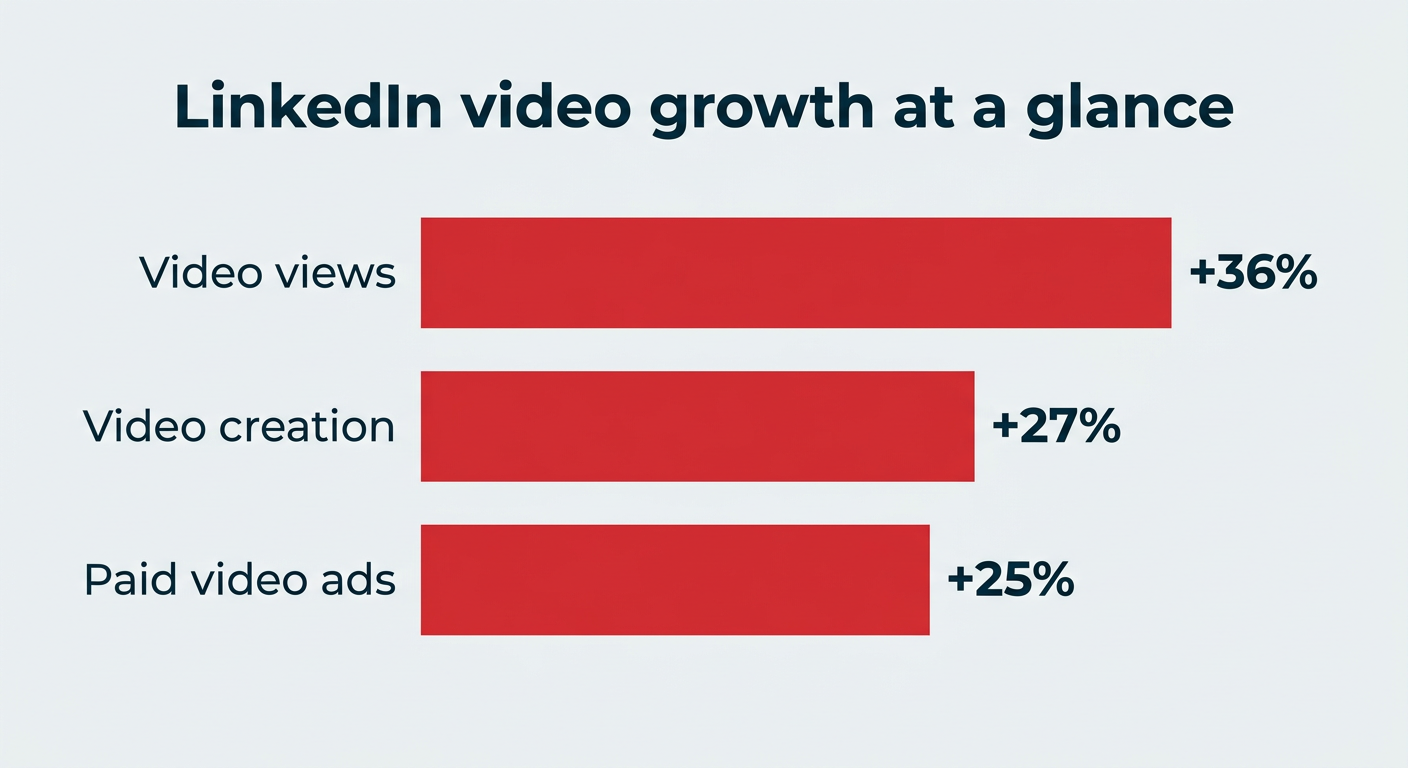
Content consumption habits on the platform have experienced a distinct visual transformation, with video emerging as the primary growth engine for both organic engagement and paid advertising. Internal LinkedIn data reveals that video creation surged by 27%, while overall video views rose by 36%. Furthermore, the platform reported its third consecutive quarter of double-digit growth in video uploads through early 2026. Paid video advertisements mirrored this upward trend, growing by 25% year-over-year. Industry analyses indicate that video content routinely generates up to five times more engagement than standard text-based posts on LinkedIn, proving exceptionally effective for stopping user scrolls amidst busy corporate schedules.
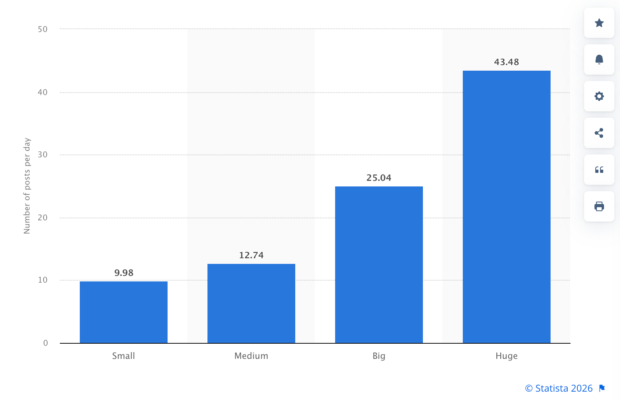
Beyond video, foundational posting cadence and media selection heavily dictate content reach. Accounts with more than 100,000 followers publish an average of 43 posts per month, operating at a near-daily publishing frequency. Conversely, smaller accounts averaging fewer than 1,000 followers post roughly 10 times monthly. However, data indicates that consistency supersedes sheer volume; organizations that commit to publishing at least once a week experience a twofold increase in content engagement.
Visual enhancements also yield measurable returns. Posts featuring images consistently achieve double the comment rates of text-only updates, with custom image collages containing three to four visual assets performing exceptionally well. Furthermore, executive visibility has become a dominant trend; posting activity by corporate Chief Executive Officers increased by 52% over a two-year observation window, demonstrating that humanizing executive leadership directly scales organizational reach and corporate credibility.
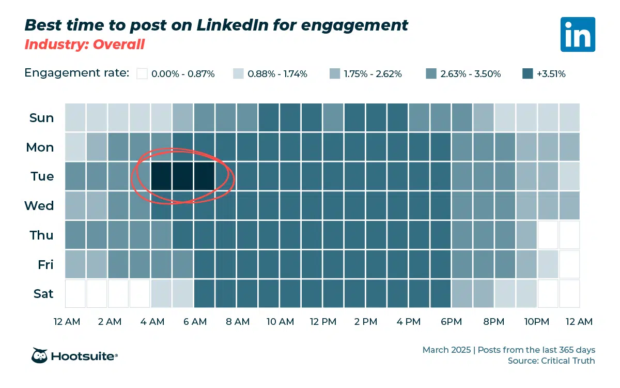
Chronologically and temporally, optimization plays a vital role in engagement success. Content analytics gathered by Hootsuite indicate that LinkedIn posts achieve peak organic engagement between 4:00 AM and 6:00 AM on Tuesdays and Wednesdays, capitalizing on early-morning professional check-ins before the workday begins. Conversely, engagement plummets during weekend hours and past 7:00 PM on weekdays.
Advertising Economics and B2B Marketing Efficacy
As corporate marketing budgets increasingly migrate toward specialized digital channels, LinkedIn Marketing Solutions has established itself as a cornerstone of modern B2B growth strategy. Driven by sophisticated professional targeting parameters—allowing campaigns to filter audiences by job title, seniority, industry, and company size—global advertising expenditures on the platform have escalated rapidly. Factor.ai benchmark data indicates that B2B LinkedIn ad budgets grew by 31.7% year-over-year, significantly outpacing the growth rates observed on general search engine advertising networks.
Simultaneously, the strategic intent behind these campaigns has evolved. The proportion of LinkedIn ad campaigns dedicated to brand awareness and top-of-funnel engagement nearly doubled year-over-year, rising from 17.5% to 31.3%. This strategic pivot illustrates that B2B marketers increasingly view LinkedIn as a long-term brand-building environment rather than a strictly bottom-of-funnel lead generation tool.
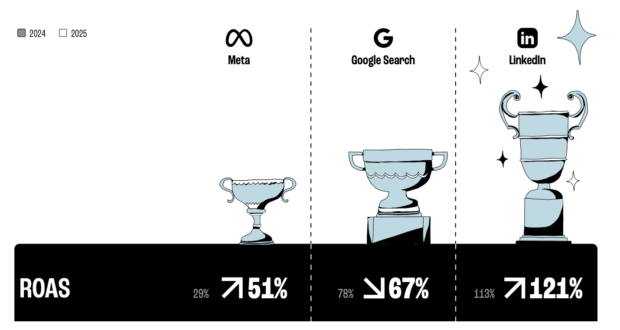
From an economic perspective, advertising on LinkedIn commands a premium. The average cost per click (CPC) on the platform hovers around $6.93 USD, making it one of the more expensive social media advertising channels available. However, comprehensive return-on-investment benchmarks—such as those published in Dreamdata’s 2026 LinkedIn Ads B2B Benchmark Report—demonstrate that this higher initial cost is offset by superior audience quality and financial return. The report found that LinkedIn ads delivered an
average Return on Ad Spend (ROAS) of 121% for B2B marketers, outperforming both Google Search (67%) and Meta (51%).
This financial return aligns with platform metrics indicating that LinkedIn users possess twice the purchasing power of the average online audience, and exposure to brand content on the site can increase prospective purchase intent by up to 33%. Nevertheless, marketers must account for extended sales cycles. Dreamdata’s analysis revealed that the average duration from an initial LinkedIn ad impression to realized revenue is 281 days, emphasizing the necessity of utilizing extended attribution windows when evaluating campaign performance.
Recruitment, Credibility, and Platform Verification
While marketing and advertising dominate commercial discussions, talent acquisition and career development remain fundamental pillars of the LinkedIn experience. The platform lists over 71 million corporate entities alongside 145,000 educational institutions, facilitating millions of employment transitions annually. The staggering statistic of approximately 9,000 job applications submitted every minute translates to roughly 540,000 applications per hour and nearly 13 million daily submissions.
To combat misinformation and foster a secure professional networking environment, LinkedIn has heavily emphasized account and page verification initiatives. By December 2025, the platform officially surpassed 100 million verified members, achieving a major milestone just two years after its initial rollout. The operational benefits of verification are substantial: verified individual members enjoy up to 60% more profile views and a 50% increase in post engagement. For corporate entities, verified LinkedIn Pages experience even more dramatic advantages, securing 10.9 times more page views and 7.7 times more followers compared to unverified competitors.
Strategic Implications for Businesses and Professionals
The comprehensive data defining LinkedIn in 2026 points to a mature, highly influential digital utility where professional credibility, rigorous data-driven advertising, and multimedia content converge. With 10 million C-level executives and 63 million primary decision-makers actively using the network, the platform serves as the definitive digital town square for global commerce.
As Millennials and Gen Z collectively account for 71% of all B2B purchasing decisions, organizations that fail to maintain a consistent, video-forward, and authentic presence risk losing mindshare to more agile competitors. Whether utilized for enterprise recruitment, executive thought leadership, or high-intent B2B advertising, LinkedIn has cemented its status not merely as a social media network, but as essential infrastructure for the global modern economy.