The Viral Rise of Relax Pal: How a University of Wisconsin-Madison Hazing Incident Spawned an Internet Phenomenon

The intersection of campus disciplinary action, local journalism, and internet culture produced a bizarre viral phenomenon in late September 2026, centering around an off-campus confrontation in Madison, Wisconsin. What began as a routine news report regarding a severe hazing investigation quickly mutated into an ubiquitous online meme, highlighting the unpredictable nature of modern digital virality. The phrase "Relax, Pal," uttered by an unidentified University of Wisconsin-Madison student allegedly affiliated with an unofficial fraternity, captured the attention of millions across TikTok, X, and YouTube, transforming a serious inquiry into an ironic badge of internet bravado.
The Genesis of the Controversy: Police Investigation and Arrests
The sequence of events leading to the viral moment began on Wednesday, September 25th, 2026, when local law enforcement in Madison, Wisconsin, responded to disturbing reports emerging from an underground and unofficial chapter of the Alpha Epsilon Pi fraternity. According to statements released by the Madison Police Department, officers intervened following an alarming discovery inside the basement of the fraternity house, where approximately 30 individuals were found gathered under questionable circumstances. Photographic and video evidence released shortly after the raid depicted numerous shirtless students bearing visible minor injuries, while heavily coated in various food items, condiments, and unidentifiable liquids—classic indicators of severe and degrading fraternity hazing rituals.
The fallout from the police intervention was swift. Fraternity leadership figures Brayden Klein and Samuel Vane, both 20 years old, were arrested on preliminary charges connected to the hazing infractions. While the arrests underscored the legal perils and institutional crackdowns facing unrecognized Greek life organizations on modern college campuses, both suspects were released on bail merely hours after being booked into custody. Despite the serious legal and safety implications of the investigation, the public eye rapidly shifted from the institutional dangers of hazing to the media circus that materialized outside the chapter house doors.
The Birth of a Catchphrase: Media Encounter and Digital Spread
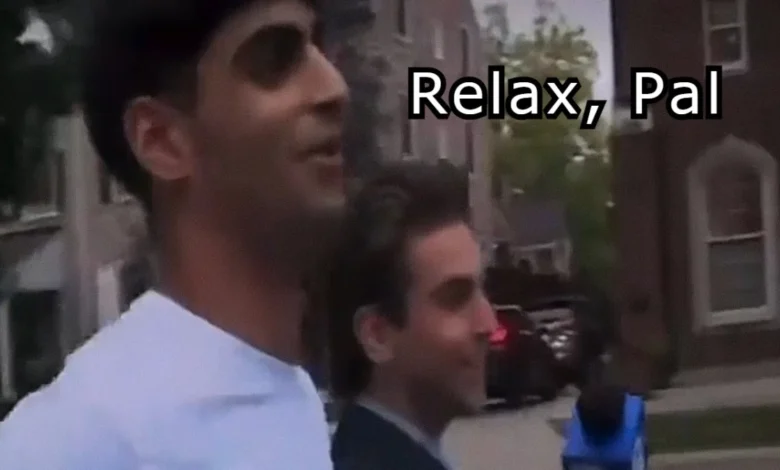
As news crews descended upon the Alpha Epsilon Pi property to capture coverage of the police raid and subsequent arrests, WISN 12 News reporter TJ Dysart attempted to interview individuals departing the premises. In footage that would soon command national attention, Dysart approached two students leaving the house, posing a direct and pointed question: "Were you hazed, or were you doing the hazing?"
Rather than offering a defensive statement, a legal disclaimer, or fleeing the camera’s view, one of the students delivered a deadpan, unflappable retort: "Relax, pal."
The nonchalant delivery, contrasted sharply against the gravity of a police investigation involving physical abuse and criminal charges, immediately struck a chord. The full interaction was uploaded to TJ Dysart’s personal TikTok account on September 25th, 2026, alongside broadcast clips shared across WISN 12 News’ digital channels. Within five days of its initial publication, Dysart’s TikTok video skyrocketed past 2.3 million views, serving as the ignition point for a massive wave of user-generated content, memes, and satirical commentary.
Chronology of the Viral Wave
Over the course of the final week of September 2026, the "Relax, Pal" clip transformed from a localized news clip into a foundational template for internet humor. The chronology of its spread illustrates the rapid velocity of modern meme generation:
- September 25, 2026: Madison police raid the Alpha Epsilon Pi basement; arrests of Brayden Klein and Samuel Vane are publicized. TJ Dysart uploads the confrontation to TikTok and YouTube, where it immediately gains traction.
- September 26, 2026: X (formerly Twitter) user @barryywhitee shares the video with the caption "Absolute chills from the boys of wisco," accumulating thousands of likes. Simultaneously, TikTok creator @fakeangularity publishes a breakdown of the interaction, analyzing the student’s demeanor through the lens of "looksmaxxing" and internet "mogging" subculture, driving the video to 2.9 million views.
- September 27, 2026: Video editors and content creators capitalize on the momentum. TikTok user @_finnvisualspart2 posts a stylized compilation edit featuring fraternity-themed imagery immediately following the "Relax, pal" prompt, securing over 2.6 million views. In a separate viral post, creator @lilyrzfdl uploads a video documenting her journey to Madison specifically to locate and meet the now-famous student, generating an additional 2.7 million views.
- Late September to Early October 2026: The format expands into multi-platform parody. Creators across UIUC, Nantucket, and various college towns adopt the "Relax, Pal" persona for accuracy reenactments, lifestyle mood boards, and satirical subcultural commentary, cementing the phrase in contemporary digital slang.
Cultural Analysis: Irony, "Mogging," and the Glorification of Detachment
The transformation of a hazing suspect into an ironic cultural icon sheds light on the complex mechanics of contemporary youth internet culture. Sociologically and culturally, the public reaction to the "Relax, Pal" video reflects a deep-seated fascination with absolute emotional detachment in the face of authority.
Rather than condemning the students for alleged participation in dangerous fraternity rituals, large segments of the internet reframed the interaction through competitive social frameworks such as "looksmaxxing" and "mogging"—terms derived from niche online spaces that measure perceived social dominance, physical posture, and psychological composure. Commentators on TikTok and X ironically lauded the student for maintaining supreme confidence while being interrogated by a credentialed journalist regarding a criminal investigation.
This tongue-in-cheek hero worship bypassed the underlying gravity of the hazing allegations. By reducing a serious institutional and legal failure down to a 3-second alpha-male performance piece, online audiences demonstrated a growing cultural preference for style over substance, where the aesthetic of unbothered coolness frequently overshadows ethical and legal misconduct.
Broader Implications and Institutional Responses
While the internet reveled in the absurd humor of the exchange, the underlying reality at the University of Wisconsin-Madison remained stark. Hazing continues to be a critical hazard within collegiate Greek organizations, prompting continuous crackdowns from university administrations, national fraternity headquarters, and local law enforcement agencies. Unrecognized or underground chapters, such as the unauthorized iteration of Alpha Epsilon Pi involved in this incident, often operate outside the direct oversight of university student life offices, creating environments where dangerous traditions can proliferate without institutional safety checks.
The legal proceedings for Brayden Klein and Samuel Vane are ongoing, and university officials have reiterated their zero-tolerance policies regarding student safety and hazing infractions. However, the unprecedented digital footprint of the case presents a unique challenge for public relations and institutional communications in the social media era. When a local news broadcast documenting criminal conduct can be instantly subverted into a viral meme glorifying the accused parties, educational institutions face an uphill battle in maintaining serious public discourse around campus safety.
Ultimately, the "Relax, Pal" phenomenon stands as a testament to the unpredictable currents of 2026 digital media. It underscores how modern audiences process heavy news events through layers of thick irony and memeification, turning a momentary lapse in journalistic cooperation into an enduring piece of internet lore.