Threads Integrates Playable Music Stickers, Enhancing In-App Engagement and Content Richness

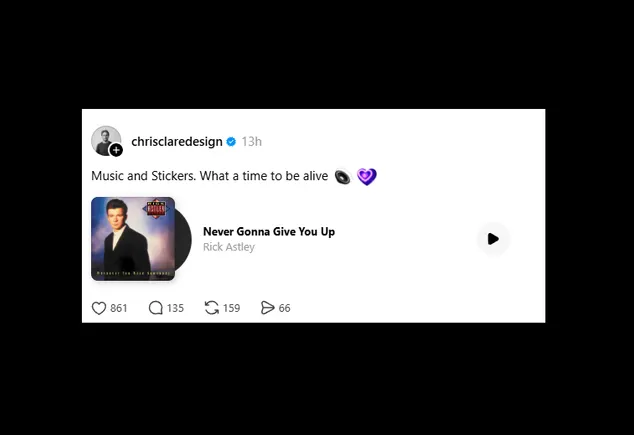
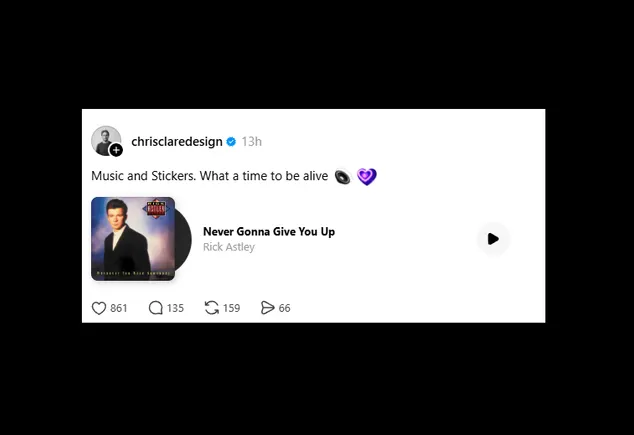
Meta’s text-based social platform, Threads, is currently in the testing phase for a new feature that will allow users to attach playable music stickers directly to their posts, enabling in-stream audio playback for any viewer. This development marks a significant step in Threads’ evolution, bringing it closer to the rich media capabilities found across Meta’s broader ecosystem and within the competitive social media landscape. The functionality, confirmed through an image shared by Threads designer Christopher Clare, illustrates how these interactive stickers will appear: a thumbnail of the song’s cover art accompanied by a prominent play button. Tapping this button will initiate playback of a sample of the track, offering a seamless way for users to share musical tastes and for others to discover new sounds without leaving the application.
This integration is not merely an incremental update but represents a calculated move within Meta’s overarching strategy to fortify its platforms with robust music-sharing capabilities. For years, music has proven to be a potent catalyst for user engagement, content virality, and cultural trend-setting on social media. The introduction of playable music stickers on Threads aligns the nascent platform with its more established siblings, Instagram and Facebook, both of which have long offered similar features to varying degrees of success. The move is particularly pertinent given the fierce competition from platforms like TikTok, which has masterfully leveraged music as a core component of its user experience, driving unprecedented levels of engagement and influencing global music charts.
The TikTok Challenge and Meta’s Response
The ascent of TikTok fundamentally reshaped the landscape of social media, particularly concerning music consumption and discovery. Launched internationally in 2017, TikTok quickly distinguished itself by integrating short-form video content with an expansive music library, allowing users to easily create lip-sync videos, dance challenges, and comedic skits set to popular tracks. This symbiotic relationship between user-generated content and music proved incredibly potent, transforming obscure songs into global hits overnight and making TikTok an indispensable promotional tool for artists and record labels. By 2023, TikTok reported over 1.5 billion monthly active users globally, with music being a central pillar of its appeal. Data from the IFPI (International Federation of the Phonographic Industry) consistently highlights the growing role of social media in music discovery, with platforms like TikTok leading the charge. A 2022 IFPI report indicated that social media was a top source for music discovery among younger demographics, surpassing traditional radio in many markets.
Meta, recognizing this shift and the immense gravitational pull of music, has been actively working to enhance its own music sharing infrastructure. Instagram, for instance, introduced music stickers for Stories in 2018, allowing users to add soundtracks to their ephemeral content. This was followed by features like Reels, a direct competitor to TikTok, which also heavily relies on music for content creation. The continuous refinement of these tools, coupled with Meta’s ongoing negotiations and licensing deals with major record labels (such as Universal Music Group, Sony Music Entertainment, and Warner Music Group) and independent distributors, underscores a concerted effort to provide a comprehensive and legally compliant music experience across its family of apps. These licensing agreements are complex, involving intricate royalty structures and regional availability considerations, but they are crucial for enabling legal music sharing and fostering artist partnerships.
Threads’ Journey Since Launch
Threads launched in July 2023 with unprecedented fanfare, quickly amassing over 100 million users within its first week, primarily by leveraging Instagram’s existing user base for seamless sign-up. Positioned as a direct competitor to X (formerly Twitter), Threads aimed to offer a more positive and less contentious text-based public conversation platform. However, the initial surge in sign-ups was followed by a significant drop in daily active users and time spent on the app, as users found the platform lacking in core features that defined its rivals, such as a comprehensive search function, trending topics, hashtags, and a dedicated "following" feed.
Since its launch, Meta and the Threads team, led by Adam Mosseri, Head of Instagram, have been diligently rolling out a steady stream of updates to address these shortcomings and build out a more robust feature set. Key additions have included a chronological "Following" feed, a full-text search capability, web access for desktop users, the ability to edit posts, and the introduction of polls. Each update has been a deliberate step towards making Threads a more sticky and engaging platform, capable of retaining users beyond the initial novelty. The introduction of playable music stickers fits squarely into this strategy. While perhaps not a "killer feature" in isolation, it represents a crucial enhancement in the platform’s content diversity, moving it beyond mere text and static images into the realm of rich, interactive media. By offering more avenues for personal expression and content creation, Threads hopes to foster a more vibrant and dynamic community, thereby improving user retention and attracting new demographics.
Music as a Driver of Digital Culture and Connection
The integration of music into social media transcends mere entertainment; it taps into fundamental aspects of human communication and cultural expression. Music is deeply personal, often serving as a soundtrack to our lives, reflecting our moods, identities, and shared experiences. On social platforms, sharing music becomes a form of self-expression, a way to communicate emotions, convey messages, or simply introduce others to something new and exciting. This act of sharing fosters connection, sparking conversations, building communities around shared tastes, and even influencing real-world friendships.
Furthermore, music is a powerful engine for virality. A catchy song snippet can turn an ordinary video into a global phenomenon, driving trends, challenges, and memes that ripple across the internet. For content creators, music provides an essential tool for setting the mood, enhancing narratives, and making their content more engaging and shareable. The ability to directly embed playable music within Threads posts offers creators a new canvas for storytelling, allowing them to pair specific tracks with their thoughts, photos, or videos, adding an emotional layer that text alone cannot achieve. This could range from sharing a new favorite song, promoting an artist, soundtracking a personal reflection, or participating in a musical trend.
Navigating Copyright and Licensing Landscapes
The seemingly simple act of embedding a song snippet within a social media post involves a complex web of legal and technical considerations, primarily centered around music licensing and copyright. For Meta to offer playable music stickers globally, it must secure comprehensive rights from a multitude of rights holders, including record labels (who own sound recording rights) and music publishers (who own publishing/composition rights). These agreements cover mechanical rights, public performance rights, and synchronization rights, among others. The process is often protracted and involves significant financial investment, reflecting the immense value of music intellectual property.
The challenge is magnified by the global nature of social media. Licensing agreements frequently vary by territory, meaning a song available in one country might not be accessible in another due to specific contractual limitations or differing copyright laws. Meta’s long-standing experience with Instagram Music and Facebook’s music features has provided it with valuable expertise in navigating this intricate landscape, establishing frameworks for royalty payments and content identification (e.g., through audio fingerprinting technologies). For Threads, leveraging these existing relationships and technical infrastructures will be crucial for a smooth and legally compliant rollout of the music sticker feature. Ensuring artists are properly compensated and that the platform adheres to copyright law is paramount for maintaining good relations with the music industry, which views social media both as a powerful promotional tool and a potential source of unauthorized usage.
Potential for Enhanced User Experience and Creator Tools
The introduction of playable music stickers is poised to significantly enhance the user experience on Threads. For the casual user, it provides a new, intuitive way to interact with content, adding an auditory dimension to their browsing. It transforms a passive scroll into an active discovery process, where a single tap can introduce them to new artists or rekindle memories of beloved tracks. This interactive element is crucial for increasing time spent on the app and fostering a more dynamic environment.
For creators, particularly those in the music industry or those who frequently incorporate music into their content, this feature opens up new avenues for promotion and expression. Artists could use Threads to directly share snippets of new releases, tease upcoming albums, or engage with fans through musical prompts. Influencers and content creators across various niches could integrate music to elevate their posts, making them more engaging and shareable. This could lead to a proliferation of new content formats and trends unique to Threads, further differentiating it from its competitors. The feature could also indirectly support creator monetization by increasing engagement, which is a key metric for brand partnerships and advertising revenue. While Threads currently lacks direct monetization tools like those found on YouTube or TikTok’s Creator Fund, enhanced engagement driven by features like music stickers lays the groundwork for future monetization opportunities.
Broader Implications for the Social Media Ecosystem
From a broader industry perspective, Threads’ adoption of playable music stickers reinforces several ongoing trends in the social media ecosystem. Firstly, it highlights the continued convergence of media types, where platforms are no longer solely focused on text, images, or video, but aim to offer a holistic, multi-sensory experience. Secondly, it underscores the intensifying competition among platforms, where feature parity and innovation are key to attracting and retaining users. As Meta continues to integrate rich media capabilities into Threads, it strengthens its position as a formidable player in the social media space, capable of challenging established giants like X and emerging threats like TikTok.
Furthermore, this move could have positive implications for the music industry. By providing another major platform for music discovery and sharing, Threads could contribute to increased streaming numbers, greater exposure for artists, and potentially new revenue streams through expanded licensing agreements. It democratizes music promotion, allowing both established artists and emerging talents to reach new audiences directly through social engagement.
Industry Reactions and Analyst Perspectives
While official statements from the music industry regarding this specific Threads feature are yet to emerge, the general sentiment among record labels and artists towards Meta’s music integration efforts has been largely positive. Industry executives often welcome new platforms and features that expand the reach of music and offer additional promotional channels. For artists, every new avenue for fan engagement and music discovery is valuable in an increasingly fragmented media landscape.
Social media analysts are likely to view this as a strategically sound, if not groundbreaking, move for Threads. It signals Meta’s commitment to building out the platform with features that are proven to drive engagement on its other successful apps. Analysts might emphasize that while the feature itself is not revolutionary, its implementation on Threads is crucial for making the platform more competitive and sticky. They would likely analyze its impact on user metrics, such as daily active users, time spent in-app, and content creation rates, as indicators of its success. The challenge, as always, will be to see if this feature, combined with others, can truly differentiate Threads and carve out its unique niche in the crowded social media market.
Conclusion
The introduction of playable music stickers on Threads is more than just a new button in the app; it is a strategic maneuver by Meta to enrich its nascent platform, enhance user engagement, and solidify its position in the fiercely competitive social media landscape. By leveraging its extensive experience with music licensing and integration across Instagram and Facebook, Threads is poised to offer users a dynamic new way to express themselves and discover music. This feature aligns Threads with current trends in digital culture, where music plays a pivotal role in content creation, community building, and personal expression. As Threads continues to evolve, such enhancements are critical for fostering a vibrant ecosystem that can attract and retain a diverse user base, ultimately contributing to Meta’s broader vision of interconnected social experiences. While the full impact remains to be seen upon its wider rollout, the playable music sticker feature is a clear indication that Threads is actively striving to become a comprehensive and engaging platform, ready to harmonize with the diverse interests of its growing audience.