Transport for London Faces Public Backlash and Controversy Following Unintended Misinterpretation of Public Safety Poster

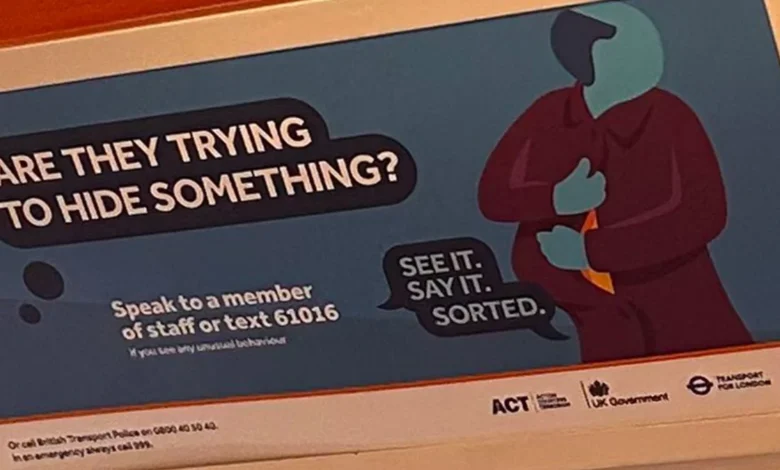
Transport for London (TfL) has found itself at the center of a public relations crisis after commuters across the capital flagged a contentious public safety advertisement displayed on the network. The poster, which featured minimalist illustration techniques, was widely misconstrued on social media platforms, leading to accusations of cultural insensitivity and fueling a heated debate surrounding the limits of abstract design in public messaging.
The incident underscores the delicate balance required when deploying public safety announcements (PSAs) in diverse, high-volume transit environments. By relying on ambiguous artistic interpretations, the campaign inadvertently triggered widespread confusion, public outrage, and intense scrutiny regarding transit advertising approval processes.
The Anatomy of a Misunderstanding: Design and Public Reaction
At the core of the controversy is the geometric, featureless art style frequently referred to as "Corporate Memphis." This design trend, characterized by flat vectors, exaggerated proportions, and non-descript human figures, is commonly utilized by corporations and public entities alike to convey friendly, universally relatable concepts without relying on specific ethnic or demographic markers. However, in the context of this specific TfL-network poster, the minimalist execution produced an unintended optical illusion.
The poster featured a stylized figure accompanied by the provocative interrogative tagline, "Are they trying to hide something?" Due to the abstract rendering of the graphic, numerous commuters scrolling through X (formerly Twitter) and other social media channels interpreted the illustration not as a generic individual looking over their shoulder, but rather as a depiction of a Muslim woman wearing a hijab.
Given the loaded phrasing of the accompanying copy, the combination was swiftly interpreted by several observers as a targeted, hostile insinuation directed at Muslim women. The backlash was immediate and severe. Critics took to social media to voice their dismay, with one user condemning the campaign as a "disgusting insinuation" and another drawing dystopian comparisons, writing, "Suspicion, paranoia and ethnically ambiguous abstract art—1984 is here in full force." Another viral post noted the ambiguity itself, describing the ad as a "wonderful Rorschach test" that highlighted the pitfalls of relying on ultra-minimalist vector art for serious public campaigns.
Chronology of Events and Escalating Confusion
The controversy unfolded rapidly across a single autumn weekend, marked by conflicting statements and mounting confusion regarding the provenance of the poster.
The timeline of the incident developed as follows:
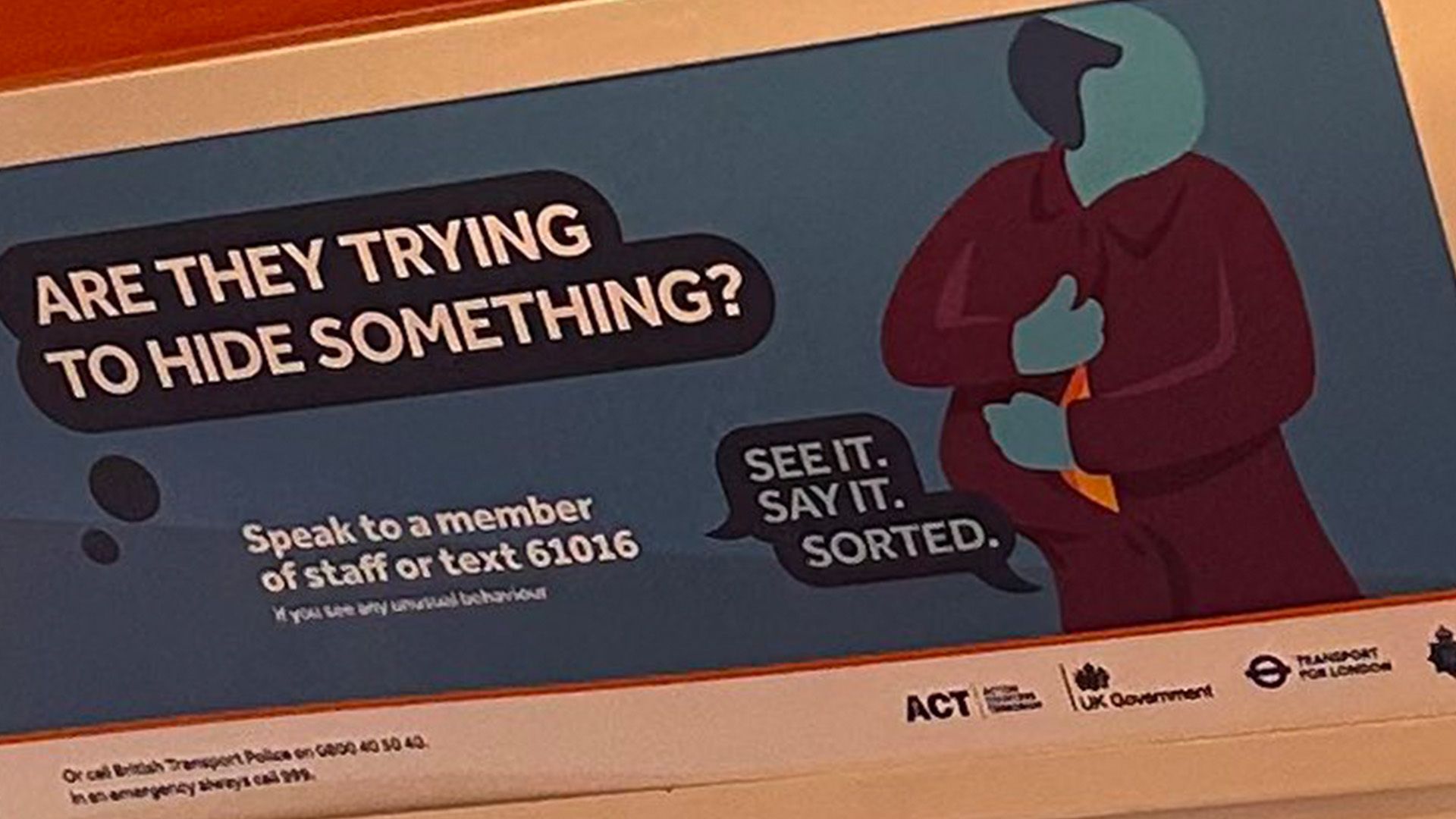
- Initial Discovery: Commuters first spotted the poster inside London Underground or commuter rail carriages, capturing photographs and uploading them to social media to express outrage over the perceived message.
- Public Outrage Peaks: Tagging official accounts including Transport for London, the Mayor of London, and transport authorities, users demanded immediate removals and public explanations throughout the weekend.
- TfL Initial Response: Responding to inquiries on X, TfL representatives stated that the poster was under investigation. Shortly thereafter, TfL claimed that the graphic had been "installed without TFL’s permission," characterizing the display as unauthorized flyposting.
- Escalation to Law Enforcement: TfL formally announced that the incident had been reported to the British Transport Police (BTP), noting that illegal flyposting on the transport network constitutes a criminal offense.
- Growing Skepticism: Observers quickly pointed out discrepancies in TfL’s official narrative. Archival news reports and documentation from public safety campaigns suggested that official channels—or variants managed by transport-adjacent entities—had previously run similar creative assets. Speculation mounted that the campaign may have originated from official sources rather than rogue actors, casting doubt on the "unauthorized flyposting" defense.
Official Responses and Accountability Gaps
As public pressure mounted, TfL’s crisis management strategy shifted, raising more questions than answers. The transit authority initially sought to distance itself completely from the creative asset, asserting that unauthorized third parties had breached network security to post the material.
In a subsequent statement issued on social media, TfL elaborated on its enforcement protocols: "Our media partner, our teams and contractors have been instructed to inspect trains and remove any unauthorised posters that are found on our network. The incident has been reported to the British Transport Police as flyposting is an illegal activity."
However, this explanation faced immediate skepticism from commuters and transparency advocates. Digital investigators and regular transit users noted that official news sources and campaign variants closely mirrored the aesthetics and messaging of established security initiatives. Critics argued that labeling the ad as mere "flyposting" was an attempt to deflect institutional accountability for a poorly vetted creative concept that had cleared internal approval stages before facing public backlash. The British Transport Police have yet to release a detailed public statement regarding the status of the investigation into the alleged unauthorized installations.
Broader Implications for Public Sector Advertising
The TfL poster controversy serves as a cautionary tale for municipal governments, transit agencies, and public sector organizations regarding the risks associated with ambiguous visual communication. In urban environments as diverse as London, where millions of passengers from myriad cultural, religious, and ethnic backgrounds utilize public transit daily, the resonance of visual messaging is magnified.
Advertising experts point out that public safety campaigns must prioritize absolute clarity over artistic ambiguity. When a public service announcement relies on unsettling or paranoia-inducing copy—such as "Are they trying to hide something?"—paired with minimalist or abstract illustrations, the potential for misinterpretation multiplies. If an ad requires viewers to decode complex visual metaphors under the time constraints of a busy commute, the messaging has failed its primary objective.
Furthermore, the incident highlights vulnerabilities within transit advertising supply chains. Whether the poster was the result of an internal oversight during the standard procurement and sign-off process or an actual breach by external actors bypassing digital and physical security controls, the fallout demonstrates how quickly institutional trust can be eroded.
As public sector bodies face increasing scrutiny over their communication budgets and creative partnerships, the TfL episode is likely to prompt stricter oversight guidelines. Agencies will likely re-evaluate the use of abstract vectors like Corporate Memphis in sensitive security contexts, ensuring that all future campaigns undergo rigorous cultural and contextual sensitivity reviews before deployment across public networks.
Related posts: